Dear Grandchildren 1,000 Years Hence
Look at the world 1,000 years ago, wouldn’t you love a letter?
Seasons change
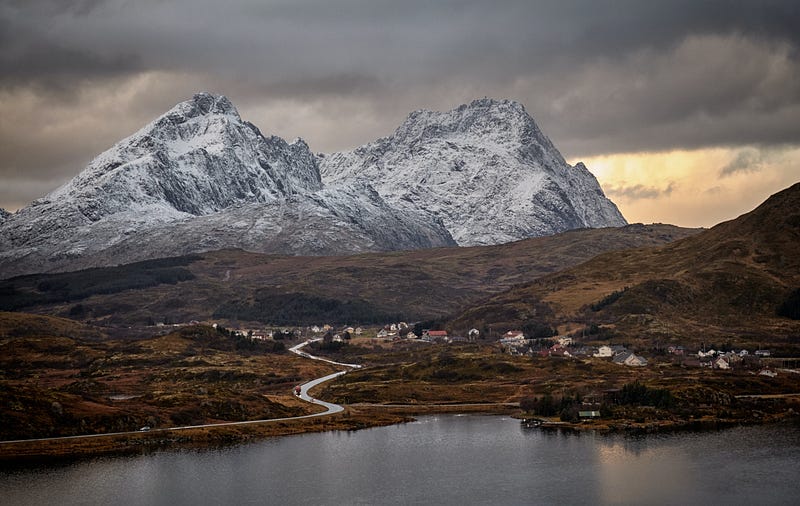
Do you have snow? We still have snow. A little. I hope the climate has readjusted just enough that there are places on your earth where you have rivers of ice — glaciers — and snow.
When I was a very small child we ice-skated on the little creek beside the hill house in Puget Sound. I hope you can do that. Winter is warmer now, and the snow is more gloppy. It breaks more trees.
In summer it’s much hotter and drier. In winter it’s warmer and wetter.
Spring, summer, and fall were the most glorious of all. Spring in the Cascades meant thawing, and blustery, days. Tiny buds popped out on shrubs, trees, and some grasses. A daffodil opening her frilly collar trumpeted that the sun would return and life would burst forth. Then, a great Daffodil festival unfolded. They were gathered, set upon floats and costumes, and our marching bands lined all of Puyallup and Tacoma with song and celebration.
Summer meant walking to the lake, and watching the forest unfold with new life. There were even deer sometimes, and chirpy squirrels crept out from shadowy tree trunks. Sometimes, it got up to ninety-plus degrees, but never for more than a day, at most two. Now we have to hide from ninety, and even 100+ degree heat, because we have “heat domes.” We also now have drought, and that makes our food less certain in the great network of the living biosphere. Not just in the northwest, of course.
With fall came a new school year. Do you go to school? We walked down a quarter mile and waited for a big, yellow school bus. It quickly filled with shrieking kids and all sorts of hi-jinks. The first few days, we had new clothes and lots of excitement. We learned spelling, arithmetic, science, social studies, music, and lots of English stories. I am so curious about what language you speak, and what things you learn.
I guess I will never know.
A day in the life
While I was growing up I always wished to have a letter from a great-grandparent describing their world, what they did, and why. Their lives were very different. There were far fewer people then, and many more forests, plains, and animals. There was new industry and manufacturing. Most still knew about food growing and distribution. This had already changed greatly by the time my family lived at the hill house. All the oldest people had lived through plagues and two great world wars.
Get up in the morning and there were kiddie shows, or cartoons, blaring from the little cart beside the dining table. We had a bowl, usually of crunchy cereal, but sometimes oatmeal or wheat mush was laid out before us. Mother was a teacher and had to be ready to leave before we did. Dad was already at work, stocking shelves.
I had five brothers and sisters. My brother and I were the youngest. The idea of contraception was relatively new, so our poor mom had six kids, and six grandkids. (I don’t have kids. It’s about infertility, but also overpopulation. I was a ‘mother’ while pregnant. We painted an animal-filled African Savanna in her nursery. But we lost her, like the others. )
Growing up was chilly.
It was very cold in the fall and winter, and we heated our home with wood. There was also an old oil furnace, but the wood was free, so we all worked to gather it around the acreage when trees blew down in November.
When I got to middle and high school, I was wearing braces on my teeth, and eyeglasses. I still had red hair and freckles. Very skinny. Almost everybody was very skinny. I was a nerd. I sat at the freaks and geeks’ table. I hope that reference can be researched, it’s too long to explain.
I played clarinet but the orthodontist urged me to stop. We still largely played outdoors. The world was so beautiful, especially a sunlit Tahoma (Mt. Rainier it was then called) set like a gigantic mounded pearl against dark blue upon the ramparts of the Cascade foothills.
I also loved the ocean beaches. We wandered, wondering, at the great expanse of clumpy weeds and critters that covered the shores. There is nothing I wish more for you than masses and masses of life, creeping, cluttering, hopping, slithering, climbing, drooping, sweeping, soaring, scenting, entangled, and thriving.
That is the world we were given. I wonder how your world is?
Do you have the old-growth Olympic rainforest? It’s a towering garden bursting with life.
There is nothing more gratifying than walking through landscapes, so I became a mountain climber. I moved to Colorado after college graduation and found a whole other kind of drier, but adequate majesty there.
The world changed steadily while I grew. We had set foot upon the moon. Earth Day had been born. Women won more rights. Civil rights were fought for, and LGBTQ+ people had begun to be seen as full persons. People stood up against illegal wars, and it was a time of massive social upheaval.
We, as a family of experimental flower children, Christians, veterans, schoolmarms, and loggers were a mixed bunch.
I went to Sunday school, but all my friends went to catechism. Religion is a very versatile beast. It will be very different 1,000 years from now.
The dark side of the source
There was also a darker side to my childhood. Polluters and profiteers told the tale that all progress meant a growing economy. All places and people far and near became exploited resources, and even the land, plants, and animals were up for grabs. Unlike a world grounded in — well, the ground — we founded our network of global connections on commerce.
This is how the climate crisis came about. Not because people were evil. It was because they were convinced to make a living it was necessary to change their values from the natural sustenance of Earth and connection therein, to profit. So people invested in stuff rather than substance.
The source of all energy, and therefore commerce, was fossil fuel.
Exploitation did not begin in the 20th century, of course, but the discovery of oil taking the place of human energy borrowed what we pulled from the ground, from you, the future, and spent it on what was called development.
Ever so slowly, so gradually it was almost imperceptible, we lost connection to the physical world and entered a tech world exploding with abstract forms of communication. We no longer gathered fallen wood for heat. We got natural gas. My Aunt and uncle, and our neighbors, gave up their dairy cows for good. Food came now only in plastic packages and cans. My mother and many “liberated” women discovered convenience foods. Our horses aged out. Parents drove kids to school. Kids grew fat and played video games. The hay farm was sold.
I lost the freedom to ramble without even knowing it was possible.
I always wanted just one child to teach to ramble. I may have to adopt one as soon as we have three million dollars because it’s costly.
The rise of technology
The biggest change I saw was access to wild places cut off. More fences, more houses, more people, more indoors, less outdoors, more cars. Many, many more cars.
Soon, even the cars were stuffed with computers.
After the 1980s and through to today, wildlife and wild places disappeared. Scientists began to warn the world in earnest about climate heating, climate injustice, pollution, and the importance of a sustainable biosphere.
But, people had lost sight of Earth ever since we went to the moon. They were constantly on computers now, losing touch with the world of senses and reality. We were told everything is still progressing nicely. The world of “science” turned to the world of tech, and the world of possibility turned to entrepreneurial start-ups and service jobs for everyone else.
Today, we go “online.” I type out stories like this one. I launch it into the void. Many others use Instagram, TikTok, Tweeting, or so many other things. I try not to live in the artificial world too much, but it’s quite addictive.
It’s not as real as the real world we once had.
Paradise lost and found
I lived in Alaska, Colorado, Hawaii, California, and now back to Washington state. I am not afraid to tell you, (now that I am sure the population has either crashed or burned and you can’t move here in my time), that this is the best state in the world. Even with our present droughts, fires, earthquakes, floods, and storms.
We have volcanoes, geology, forests, streams, shores, deserts, orchards, and so much more. All of the life I told you about; for now, is mostly still here, but diminishing quickly.
Maybe you no longer call it Washington. This would not be shocking. The founding fathers, like all people of the past, are not to be forever held in high esteem, and names of things have a way of changing.
A teacher I had told me “Paradise found is paradise lost.” He is long dead now. I am still alive, but when you read this, I will be long dead.
I hope that by then, you and all beings of Earth will have reclaimed harmony and balance. Most of all, I wish you belonging.
Belonging is what drives our species to everything we have ever done. We just lost track of what it means to belong.


