Dear Democracy, We Need More Than “Rights”
Why are most Asian societies having a hard time justifying liberalism?
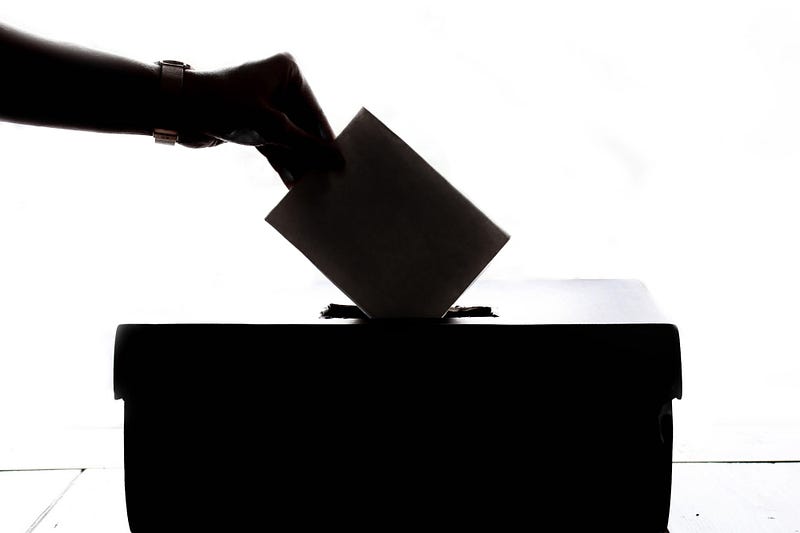
In the past few decades, many Asian societies are fighting their own government against allegedly tyranny and suppression against individual liberty. Most involve the fight for a version of the First Amendment. Most demanded some form of freedom of speech and expression.
Hong Kong made headlines in 2019 in its protest against the tyranny of mainland China. Myanmar is now making headlines for its fight against a military dictatorship.
You’d think the biggest failure that happened in 1989 Tiananmen would deter any forms of future public protests, but it didn’t.
Social reforms don't happen overnight. One of the biggest problems we face right now is the struggle between two sets of values: some variations of liberalism and some variations of authoritarianism.
It’s not a simple question of changing constitutions or governments. It’s about radically shifting values and beliefs. In fact, for most of our modern history, many (former) Asian leaders have criticized Western liberalism. For instance, former PM of Malaysia, Mahatir, once criticized “human rights” as “a tool Western governments use to subvert Asian countries.”
While I advocate for democracies in Asian societies, I think we have to rethink how we’re actually constructing intellectual grounds for them.
As such, I want to convince us of two things in this article.
First, the typical notions and concepts of liberalism aren’t sufficient to ground ideas of democracy in Asia. This has much to do with how many concepts in liberalism are largely unintelligible to societies outside of the West.
Second, and consequently, we need to be culturally sensitive to the political philosophies of these societies. It is not impossible to construct democratic systems in Asia. We just need different intellectual materials to do so.
Unintelligible Rights
Western democratic ideals are grounded on modern conceptions of liberalism. I’m referring to the traditions of liberalism founded by John Locke, J.S. Mill, John Rawls, and the like. For most of their work, they often reduce normativity and moral obligations down to “rights.”
And if we’re sensitive about the works of these famous liberalist thinkers, we find that they’ve largely taken for granted the ideas of “rights” and “liberty.” It’s the assumption that individuals are free and atomic beings.
In this famous passage from On Liberty by Mill, he writes:
… the only purpose for which power can be rightfully exercised over any member of a civilized community, against his will, is to prevent harm to others .…The only part of the conduct of anyone for which he is amenable to society is that which concerns others. In the part which merely concerns himself, his independence, is, of right, absolute. Over himself, over his own body and mind, the individual is sovereign. — On Liberty, Chapter 1
Mill argues that state intervention upon an individual’s being is only justifiable because he causes harm to others. Logically, if he so causes harm to himself, no one can stop him. Because “the individual is sovereign,” the individual has “rights” over his own being.
If I were to ask you what justifies democracy, you’d probably give a response reducible to “It’s our basic human rights!” Rights are basic freedom everyone, regardless of race, gender or religion, is entitled to.
Where do we get these rights?
Those of us who believe in God will have no problem answering this question. But how about those who don’t?
It may be difficult to believe that “rights” and “liberty” can be foreign to some societies. Linguistically and historically, these terms aren’t “universal” insofar as every society and political philosophies adopted them.
Linguistically, many Asian societies have no immediate translatable term for “rights” and “liberty.” For example, in Chinese, the common translation for “rights” is 权力 (read quan li). But the immediate, literal translation of the term is “power” or “authority”. Neither carries the precise meaning of “rights.
Terms like these were largely imported from the West by missionaries during Western imperialism in the late 19th and 20th centuries. Terms such as “liberalism,” “freedom,” “autonomy,” etc., were all imported from the West. They were then culturally appropriated and translated locally in China.
In Malay (Malaysian’s), “rights” directly translates to “hak,” which is derived from the Arabic word “حق.” Unsurprisingly, it means “to be true” or “to be obligatory.” Similarly, It doesn’t carry any notions of liberalism necessary for a precise conceptualization as “rights.”
Historically, many normative terms loose rational justification following rapid changes in social orders. In A Short History of Ethics, moral philosopher Alisdair MacIntyre observes that three main concepts of moral import emerged from the Reformation period that developed for the rest of modern Western intellectual history.
- Moral rules as being at once unconditional in their demands but lacking any rational justification. This has much to do with how Christian ethics and the idea that an all-knowing Creator is responsible for moral law intertwined with secular political philosophy.
- Moral agents are sovereign in their choices. This means that individuals are “free” in their actions. This was later inherited by our modern liberalist thinkers.
- The realm of secular power has its own norms and justifications. This is best manifested in the conception of “natural laws” in Hobbes and Machiavelli.
Combine all three of these historical observations, and we can infer that many modern ethical terms and notions were mere products of history. To anyone who hasn’t descended from that history, these terms remain largely intelligible.
The Problem of Cultural Indifference
Trying to brutely force culturally foreign terms into an intellectual system is like trying to preach to a kid by bashing him with the Bible. It likely wouldn’t work. It’s also why many of the voices of liberal activists in Asia tend to land on deaf ears.
Furthermore, those who advocate a radical adoption of Western democratic values at any cost of traditional values are no different from advocating cultural genocide. Those who cling to the belief that democratic values simply trump any other values should also reevaluate their faith in the democratic system.
Cultural sensitivity is crucial to the harmonious integration of Western democratic values with our various Asian cultural values. On the other hand, cultural indifference wouldn't work.
A Solution In History?
Professor Li Chenyang suggests studying the history of cultural interactions may provide a solution to cultural indifference. In his paper “Confucian Value and Democratic Value,” he argues:
History hints at how to balance the values. The three major existing value systems in China, Confucianism, Taoism, and Buddhism, have co-existed for a long time. As Wing-Tsit Chan observed: “most Chinese follow the three systems of Confucianism, Taoism, and Buddhism, and usually take a multiple approach to things.”
Indeed, contemporary Chinese culture, though still commonly referred to as Confucianism, is a blend of Confucianism, Daoism, and Buddhism. If one studies each of these philosophies closely, one will realise that they possess contradictory values and commitments insofar as mutual integration is intellectually (and logically) impossible.
Classical Daoism was made popular by its ruthless critique of Confucianism. And when Buddhism first entered China, many concepts and ideas were unintelligible. Many were translated with Confucian and Daoist interpretations.
Li continues to critique the way we think about values.
Thinking is not a linear process that always follows a consistent pattern. In the West, people tend to overlook this by overemphasizing a unitary rationality. People have different values, desires, and needs which can be alternately pursued.
Li is amongst many contemporary Chinese philosophers attempting to vindicate traditional Confucian values with modern liberalism and democratic values.
Will “Rights” Work?
When the first Catholic missionary, Francis Xavier, entered Japan to preach Christianity to the Japanese, he asked the local Buddhist priests for a local term that translates to “God.”
A Japanese translator who bumped into Xavier in Asia said, “Dainichi.”
Dainichi was the Christian God for some time before a second missionary realized who Danichi really was.
Well, the Supreme Buddha of the Cosmos, whom the entire universe emanates from, really did possess the Creator’s vibes.
We should expect that “rights” (and many more Western liberal ideas) resist immediate translation. It should remain unintelligible for many societies outside the West.
Values need to be culturally interpreted before a culture could meaningfully adopt them. The best one could hope for is a somewhat precise conceptualization of the terms and an appreciation for those values.
We’ve seen many movements in Asia today that justify the establishment of democracies with “rights,” “justice,” “equality,” etc. No doubt, these are the fundamental values one should be preaching in a democratic society. But one must also realize that these terms will remain largely unintelligible to them.
Moving forward, we have to properly reconstruct democratic ideas and concepts so that different cultures could interpret them accordingly. One common approach in Chinese philosophy is to reconstruct and reinterpret these liberalist concepts with traditional Confucian values.
This task is undoubtedly lofty. There are many tenets and values in Confucian philosophy that are fundamentally irreconcilable with Western democratic values.
Li believes that even though these are irreconcilable, it doesn’t mean that liberalism cannot add value to Chinese society. He writes,
Some people are more Confucian than democratic, and value Confucian values more than democratic values, while others are more democratic than Confucian, and value democratic values more than Confucian values. Perhaps more importantly, the values of Confucianism and democracy may co-exist in the same individual. Various values that are not consistent with each other may be worth pursuing. Where that is the case, we need to achieve a delicate balance among them.
Conclusion
I’m not arguing against democracy in Asia — quite the opposite. What I’m arguing for is a more culturally sensitive approach to construct it. To do so, I propose two small theses.
First, many Western liberalistic values (those fundamental to democracy) are largely unintelligible outside the West. Most of Asia is linguistically and historically excluded from the proper development of Western liberalism. Concepts of liberalism largely imported from the West.
Second, we need to be culturally sensitive to the socio-political climate of Asian societies. Most do not share liberalistic inclinations. But that doesn’t mean it’s impossible to construct a democracy. We need to interpret and construct it based on the already available cultural and intellectual materials.
The Apeiron Blog — Big Questions, Made Simple.
We know that Philosophy can seem complicated at times. To make things simple, we compile together the best articles, news, reading lists — and other free resources to guide you on your journey. To continue with us, follow us on Medium and sign up to our free mailing list.