
Dear Angry Moms: You’re Not a Bad Parent.
It’s not your fault that you are expected to nurture in a world that doesn’t nurture you back.
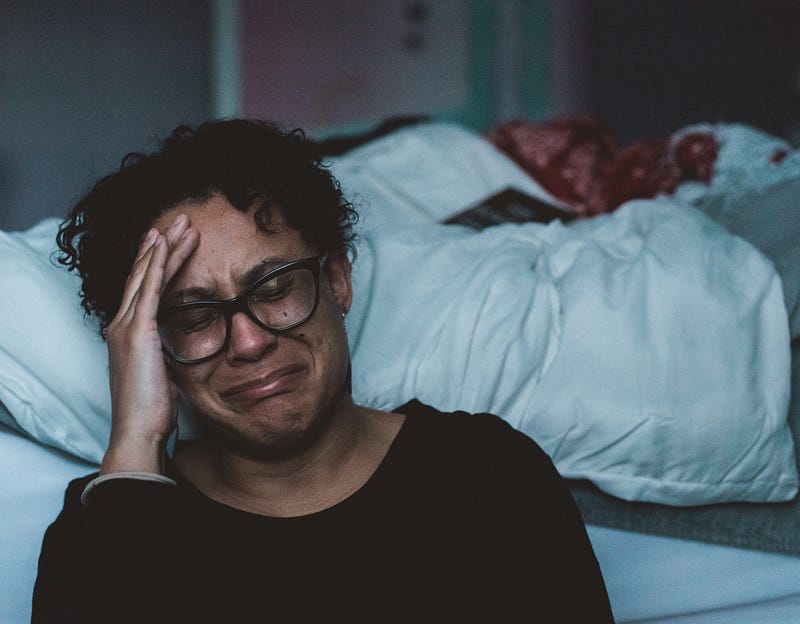
Since my daughter became a toddler, I feel like all I do is yell. It’s difficult to get anything done when you have a little one trying to climb into the bin or parkour off the sofa. And I need to get things done. People dish out advice that these tasks can wait and to enjoy my time with my little one.
Time? What time? There aren’t enough hours in the day to get everything done. And what people don’t understand is things need to be done. And the mother is usually the only person who will take the responsibility of getting them done.
The mother is often the primary caregiver. And they are often the parent who reduces their hours at work or gives up their career. According to the Office for National Statistics, 58.7% of mothers of children between three and four years old work part-time. This group of mothers also has the highest unemployment rate. Due to this, the responsibility for “getting things done” often falls to the mother.
Sometimes this happens naturally due to the father working full time and the mother being at home more often. Sometimes it doesn’t happen naturally, and the mother is forced into taking on all of these responsibilities without support. Regardless, this easily becomes overwhelming and stressful.
“Getting things done” often means very little time is left for self-care. A study found that on average, mothers only get seventeen minutes of “me time” per day. But due to them taking on 78% of the housework, this “me time” is often spent “getting things done.”
It’s understandable that mothers get stressed and overwhelmed. A survey by Motherly.com found that 85% of mothers feel that society doesn’t understand or support motherhood. Is it any wonder mothers feel angry?
And mothers feel judged and criticised by society too. According to a poll, two-thirds of mothers feel judged for their parenting. The findings were that mothers felt the most criticism came from their family.
It is unsurprising that maternal mental illness is prevalent. According to a survey by YouGov and BBC Radio 5 Live, a third of mothers experience mental health problems. The survey also found mothers generally have a tougher time in society than fathers, with 14% of mothers said they had been criticised by strangers, compared with 5% of fathers. The findings also showed that 30% of mothers said they had felt discriminated against at work because of being a parent, compared with 14% of working fathers.
This judgment from society creates pressure to be a “perfect mother”. A survey by TIME Magazine found that 70% of new mothers felt pressure to parent in a certain way and the research suggests that mothers have lower self-esteem than women of generations before. This could be partly due to social media.
“Coupled with the beautiful images we see on social media and the glorified accounts of people in various internet forums, even the smallest deviation from the “correct course” can feel like a failure.”
New report: The pressures on moms are stronger than ever — By Emily Glover
Is it any wonder that mothers get angry? If this level of pressure was applied to anyone else, society would most likely be more understanding if that person reacted angrily. But when mothers feel angry, it’s quickly followed by shame.
Feeling anger doesn’t make you a bad person. And it doesn’t make you a bad mother. And it most certainly doesn’t make you an abusive mother. In “The Silent Shame of the Angry Mother”, Sarah writes:
“These are not mothers who are systematically abusing their children. These are wonderful, caring mothers who wholeheartedly love their children, would do anything for them. But they’re just not coping.”
There is a difference between systematically abusing your children, and flying off the handle because you are struggling to cope or feeling angry because you are unsupported.
As a survivor of child abuse, what damaged me was not my mother getting stressed and shouting sometimes. It was how she treated me over a long period of time. It was the repeated acts of cruelty with no remorse. To mothers who are questioning whether they on the same level as abusive mothers, know this: feeling angry because you are expected to nurture in a society that doesn’t nurture you back is not the same as systematically abusing your child.
Anger is a signal that something isn’t right. I know when I shout at my daughter, I’m not actually that angry with her. I’m angry because a need isn’t being met. Usually, it’s multiple needs and they haven’t been met over a long period of time.
In an article by Motherly called “Mom Rage is Real — Here’s What to Do About It”, maternal anger is described as a symptom of anxiety:
“Anger is one way in which parental anxiety tends to express itself. This is especially the case if we don’t have a regular way to release our worries and fears — self-care rituals that sustain us, a supportive partner, an understanding friend group or a rock-solid therapist.”
Anger can also be a symptom of grief. We lose so much to motherhood, like our identity, bodies, careers, and hobbies. Sometimes motherhood doesn’t meet our expectations and we grieve for what we dreamed it would be like.
Many moms feel angry. But we don’t talk about it. We are so afraid of being judged as bad parents, we respond to our anger with shame and harsh self-criticism. But a bad parent wouldn’t feel guilty for their actions. The saying “if you worry about being a good mom, you already are one” applies here.
What truly makes a good mom is putting in the effort to address the anger and heal from whatever the anger is a symptom of. This journey is different for everyone. For me, it is addressing my own childhood trauma through therapy as that is often the reason for my anxiety, which manifests as anger.
Whatever your journey looks like, you’re not a bad mother for feeling angry. You’re not a bad mother because you flew off the handle. You’re not a bad mother for saying things you didn’t mean. You are a human being who is expected to handle an incredible amount of pressure, often unsupported. And although it doesn’t feel like it because no one talks about it, most mothers experience this rage and are feeling the exact same way as you do.
It’s okay to admit to yourself you are angry. It’s okay to admit to yourself you are overwhelmed. It doesn’t make you a bad mom. In fact, it takes a good mom to be brave enough to admit these things. And a brave mom cannot possibly be a bad mom.