
Deadly Laboratory Fires and Explosions
Fatal Incidences in University Labs
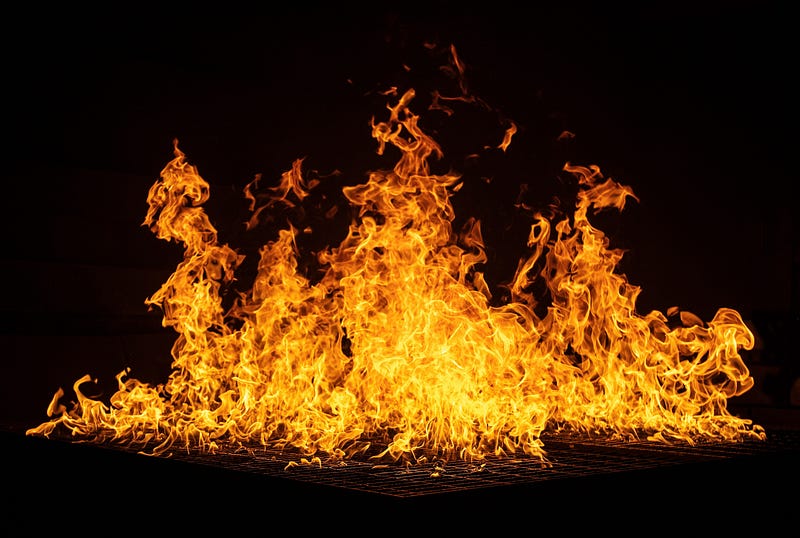
BOOM! This is not what you want to hear or experience when you are a student or scientist working in a chemical laboratory. University laboratories in particular are safe havens for learning and research. It is never the norm to experience fires or explosions in a laboratory setting. But, what if it all goes wrong and the consequences become deadly?
Fatal fire
The day of December 29, 2008 will forever be etched in the history of the University of California, Los Angeles and in the minds of the family and friends of a young woman called Sheri Sanji. Sheri Sanji was a 23 year old research assistant working in the organic chemistry lab headed by Professor Patrick Harran at the University of California, Los Angeles. On December 29, 2008 everything seemed to be normal and she was performing an experiment as usual in the lab. However what happened next changed everything. Suddenly, the sounds of her screams split the air. Sheri Sanji had caught on fire! Her co-workers in the lab attempted to put out the fire with a lab coat and then douse out the flames with water from a sink. However, by the time the fire department arrived, it was too late. Sheri Sanji ended up with painful second and third degree burns over half of her body and died some days later in the hospital.
“Her clothing from the waist up was largely burned off, and large blisters were forming on her abdomen and hands — the skin seemed to be separating from her hands.”- Sanji’s supervisor, Professor Patrick Harran
The culprit (t-butyllithium)
On that fateful day, Sheri Sanji was working with a chemical called t-butyllithium. T-butyllithium is a chemical compound with the formula (CH₃)₃CLi. In chemistry, t-butyllithium is used in the synthesis of organic compounds and polymers. The material safety data sheet for t-butyllithium states that it is highly flammable and catches fire when exposed to air. Also, when it comes into contact with water, it creates flammable gases which could ignite spontaneously. This is an extremely dangerous chemical.
The fatal accident happened when Sheri Sanji was transferring a solution of the t-butyllithium to another bottle using a plastic syringe. The syringe plunger came out of the barrel and the t-butyllithium spilled out and was exposed to the atmostphere. This caused it to ignite and set her ablaze.
Could it have been prevented?
The accidental death could definitely have been prevented. It was reported in follow-up investigations that Sheri was not wearing the appropriate personal protective equipment (PPE) for the dangerous procedure. At minimum, this would have included goggles, a labcoat and some type of flame-retardent gear. There was also evidence that she was not trained in the proper handling and the use of the t-butyllithium. There was much blame to go around citing the lax safety standards at the University of California, Los Angeles as well as the possible negligence by Sheri’s supervisor, Professor Patrick Harran, to uphold safety standards in the lab. The onus was also placed on Sheri herself that as a trained scientist, she should have been knowledgeable of all safety procedures.
Fatal explosion(s)
On 18 December, 2015, an explosion was heard on the campus of Tsinghua University in Beijing. The blast and fire killed postdoctoral researcher Meng Xiangjian who was working in a chemistry lab. There was also substantial damage done to the lab. In a similar incident on December 2018, an explosion at the Indian Institute of Science in Bengaluru cost scientist Manoj Kumar his life. His 3 coworkers were also injured in the blast that was so strong, it threw them 20 feet away.
The culprit: hydrogen gas
Both laboratory accidents were due to hydrogen gas leaking from gas cylinders. Hydrogen gas has many applications in the chemical industry such as in the manufacture of fertilizers, oils, methanol, the synthesis of ammonia, and even as rocket fuel. The gas is also a key requirement for the operation of certain laboratory equipment. Because hydrogen is the lightest element in the periodic table, it is highly flammable. In the laboratory, the gas is usually compressed in a cylinder for storage and use.
The material safety data sheet states that compressed hydrogen is extremely flammable and may explode if heated. It has the capability of forming explosive mixtures with air and can burn with an invisible flame. Thus, any leak or damage to the gas cylinder is highly dangerous. In the last few years alone, there have been quite a few accidents involving hydrogen gas explosions. However, the cases at Tsinghua University and the Indian Institute of Science resulted in fatalities while some of the other cases just involved injuries.
Could it have been prevented?
Without knowing the specifics of the investigation, there is no way to assign the blame on any one party. However, there are some common safety precautions that should have been taken when working with hydrogen gas cylinders. It is not known if those precautions were taken in the laboratories that exploded.
First, hydrogen gas cylinders should only be handled by trained personnel and inspected on a regular basis. Second, it is more prudent to use small cylinders of hydrogen instead of full-sized cylinders which cause more serious explosions. A third step would be to completely eliminate the use of hydrogen gas cylinders and replace them with hydrogen gas generators. With a hydrogen gas generator, there is a reduced risk of accidents because the hydrogen is produced in a safer manner by the electrolysis of water. Lastly, if at all possible, the hydrogen gas cylinders should be placed away from the lab.
In conclusion, these incidents showcase the dangers of working in university laboratories. The good news is that fatalities due to accidental fires and explosions are very rare. More often than not, there have been more injuries reported than deaths. Also, in the majority of cases, the accidents could have been prevented by following the proper safety protocols, becoming knowledgeable about the chemicals, and wearing adequate PPE.
If you enjoy reading about science, here is more from Anita Durairaj: