
Dead Is Dead
Or is it?
On December 9th, 2013, Jahi McMath, a thirteen-year-old Black female, underwent one of the most common pediatric surgeries: a tonsillectomy. Only this tonsillectomy was more complicated than most. In addition to her tonsils, Jahi’s surgeon removed the adenoids, uvula and soft palate, and other nearby tissues. This was considerably more invasive than your run-of-the-mill adenotonsillectomy and radical treatment for Jahi’s obstructive sleep apnea.
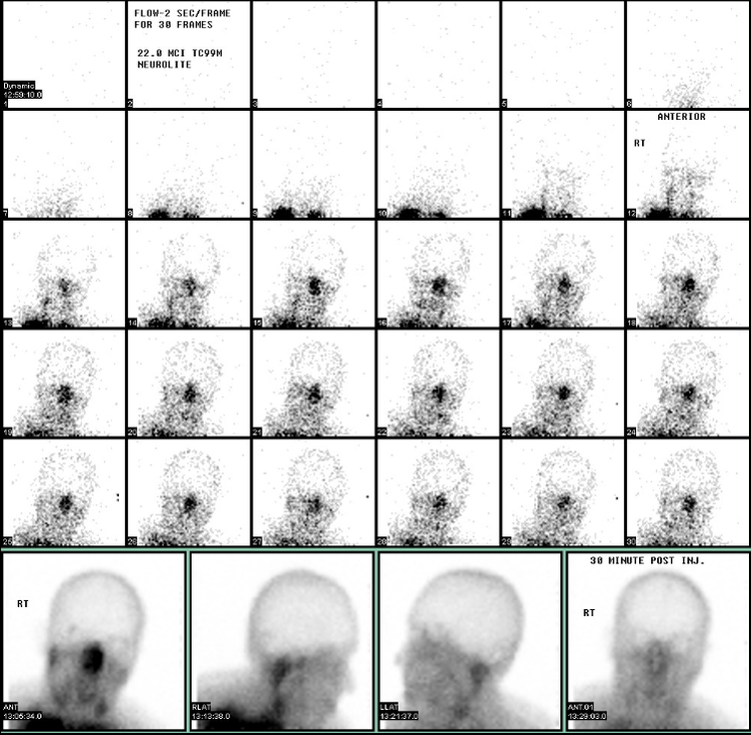
Seemingly unbeknownst to everyone but the surgeon, Jahi’s right carotid artery was unusually close to her pharynx, significantly increasing the risk of bleeding. As the anesthesia wore off, Jahi began bleeding profusely from her mouth and nose. By the time she was assessed by a physician, she had been hemorrhaging for hours. The massive blood loss led to shock and cardiac arrest. By the time Jahi was resuscitated, her brain was severely damaged by profound hypoxia. On December 12th, after initial and “confirmatory” testing, she was declared brain-dead.
Following protocol, the hospital prepared to remove Jahi from the ventilator. Her family refused and retained an attorney who later issued a cease-and-desist order. The court was asked to intervene, and Jahi was subjected to another round of brain death exams. A judge upheld the hospital’s decision and allowed them to proceed with removing Jahi’s ventilator. After some legal back-and-forth, the hospital agreed to release Jahi to the family who arranged medical transport to New Jersey, where patients and families have the right to outright deny a diagnosis of brain death. Jahi remained in New Jersey where, with the help of 24-hour nursing care, a ventilator, and tracheal and feeding tubes, she lived for nearly five years until biologically dying from liver failure. She has two death certificates — one from California dated December 12th, 2013, and another from New Jersey, dated June 22nd, 2018.
Is brain death equivalent to biological death? How you answer this question says a lot about your own values and how you define identity and personhood. The intense scrutiny and media attention patients like Jahi receive demonstrates just how vital this question is. We therefore have a responsibility to critically evaluate the concept of brain death and whether or not it is a valid, ethically permissible reason for withdrawing care.
A clash of values
How did Jahi’s family and the hospital end up on opposing sides? How is it that medical professionals can declare a patient dead despite the presence of a heartbeat?
In 1981, Congress passed the Uniform Definition of Death Act (UDDA). The law defines death as the irreversible cessation of cardiopulmonary function or a permanently unconscious state resulting in the loss of brainstem reflexes and the neurological drive to breathe. Jahi’s hospital adhered to the latter definition, arguing that medically and legally, Jahi was dead. Under the UDDA, hospitals in California (and every other state besides New Jersey and New York) are under no obligation to provide life-sustaining treatment to patients like Jahi. The law is based on a non-peer-reviewed proposal drafted by a Harvard committee in 1967. The group proposed loosening the definition of death to include the irreparable destruction of brain tissue. The hope was that such a change would increase the pool of suitable organ donors while freeing hospitals and loved ones from the burden (and liability) of caring for an individual deemed beyond repair.
The hospital prioritized resource allocation and protecting its staff from moral distress. Continuing to provide care for a brain-dead patient like Jahi, they argued, would have diverted resources from patients who were conscious and more likely to meaningfully recover. Such care might also have led to feelings of anxiety, guilt, and remorse among Jahi’s physicians and nurses who believed that having lost all characteristics of personhood, was dead.
Because Jahi did not have an advanced directive, we can only speculate about what her preferences might have been. Jahi’s mother, Nailah Winkfield, took on the role of medical proxy. In conjunction with the medical team, she made decisions based on substituted judgment and best interests. Nailah held firmly to her religious belief that so long as Jahi’s heart was beating she was alive, consistent with Christian doctrine that views all life as sacred and worthy of preservation. Jahi’s family rejected the hospital’s reasoning, unable to reconcile the diagnosis of death with the body lying in front of them, its heart pumping, lungs breathing (albeit mechanically), bowels moving. In their view, the life-sustaining care doctors and nurses provided was an unquestionable benefit to Jahi. To Nailah, withdrawing care was not in Jahi’s best interest because doing so would quite literally kill her.
Brain-dead ≠ dead
Was the hospital correct in its assertion that Jahi was for, all intents and purposes, dead? I don’t think so. Jahi was very much alive in the years leading up to her actual death in 2018. Had Jahi’s family been unable to relocate her to New Jersey, she would have been, legally speaking, murdered.
The same year the UDDA became law, the United States President’s Commission for the Study of Ethical Problems in Medicine recommended the adoption of uniform legislation that would “enable people to be declared dead if tests established the irreversible cessation of all brain function”. The report was championed by the American Medical Association and became the law of the land. The President’s Commission held that brain death really is the death of the human organism because absent brain function, the body is nothing more than a collection of cells and tissues, something made of disparate parts instead of an integrated whole.
This false understanding of human physiology and brain death is not supported by medical science. Integrated organic functioning can and often does persist despite the irreversible cessation of brain functions. Perhaps the most dramatic example is that of T.K., a four-year-old boy who was declared brain-dead (i.e., dead) and lived for another twenty years. Extensive testing concluded that T.K. lacked all brain function. Yet his body grew from a toddler into a young adult as his immune system fought infections and healed wounds.
Is brain death equivalent to biological death?
T.K.’s is not the only case that challenges our assumptions of brain death. Neurologist Alan Shewmon has meticulously documented hundreds of cases of brain-dead patients “surviving” long after being pronounced “dead.” Such cases date back to the late 90s, long before Jahi underwent surgery. Even in cases not as extreme as those of T.K. and Jahi, the argument that the loss of integrative function equals death rests on unstable ground. For example, patients with high spinal cord injuries, such as those with a severed brain-lung connection, cannot breathe independently. These patients remain conscious as the brain chugs along. However, because the highway connecting the brain to the rest of the body is destroyed, it loses its integrative function and cannot coordinate actions. To say that these fully conscious patients are dead because the brain has lost its integrative function would be absurd.
Dr. Shewmon would later examine Jahi and analyze videos of her allegedly responding to motor commands. Shewmon concluded that the great majority of these movements were purposeful and highly unlikely to be random. The video evidence alone is enough to label Jahi as minimally conscious and, therefore, alive. Shewmon and other neurologists question brain criteria for death and note that the methods currently utilized are incapable of identifying patients whose brain function may recover to such a degree they are no longer meet the criteria for brain death.
The UDDA draws a sharp line across an inherently unfixed diagnosis, as Jahi’s story tragically illustrates. Before being flown to New Jersey, Jahi’s multisystem failure was viewed as the irreversible sequelae of catastrophic brain injury. Were that indeed the case, hospital administrators and physicians must explain how Jahi’s condition significantly improved once she arrived in New Jersey. In hindsight, her deterioration was due not to brain death but rather weeks of inadequate nutrition and untreated hormonal insufficiency. Once these needs were met, Jahi was far from brain-dead.
The UDDA’s perceived infallibility is further eroded by its belief that once brain function is lost, a body’s vital functions “cannot be sustained indefinitely — typically no longer than several days.” It is unlikely that the authors of the UDDA would have considered someone like Jahi, a teenager who, despite being ventilator-dependent, underwent puberty and menstruated while living at home for years in relatively good health, to be dead. Similarly, the UDDA likely didn’t anticipate documented instances of pregnant women who tragically become brain-dead yet go on to give birth to healthy infants.
More than semantics
As Michele Goodwin astutely points out, Jahi’s experience touches on more than just the definition of brain death. Many Black Americans and other minorities see Jahi McMath as yet another example of racial bias and unequal treatment in medicine. Like other illnesses influenced by social determinants of health, Jahi’s initial diagnosis of sleep apnea is more prevalent in Black and Hispanic communities. In fact, Black children and teens are 3.5 times more likely to develop sleep apnea than white kids.
Based on court documents and interviews with Jahi’s family, racial bias likely played a role in the care Jahi did (or did not) receive. When Jahi was coughing up blood, a nurse told her to “calm down.” Despite the desperate pleas from her mother and grandmother, Jahi was not assessed by a physician for hours after the hemorrhaging had begun. It’s quite possible that had she been assessed sooner, she would not have suffered hypoxia. Sadly, it’s no coincidence that nearly all highly publicized end-of-life cases involve women and/or BIPOC.
Brain death is a self-fulfilling prophecy. Once the diagnosis is made, life support is terminated, thus causing biological death. Even when families, such as Jahi’s, push back, they are usually overridden because brain death is legal death in just about every state. The inescapable fact is that by withdrawing life-sustaining care from these patients, hospitals are committing state-sanctioned murder. If medical institutions continue to insist that brain death is biological death, they must provide conclusive evidence justifying their claim. Until then, the termination of life support cannot be morally permitted by a diagnosis of brain death alone.
References
- McMath v. California, Case No. 15-cv-06042-HSG (N.D. Cal. Dec. 12, 2016).
- Truog R. Defining Death: Lessons From the Case of Jahi McMath. Pediatrics. 2020;146(Supplement 1):S75-S80.
- Aviv R. What Does It Mean to Die? [Internet]. The New Yorker. 2021 [cited 14 March 2021]. Available from: https://www.newyorker.com/magazine/2018/02/05/what-does-it-mean-to-die
- Singer P. The challenge of brain death for the sanctity of life ethic. Ethics & Bioethics. 2018;8(3–4):153–165.
- Shewmon D. The Case of Jahi McMath: A Neurologist’s View. Hastings Center Report. 2018;48:S74-S76.
- Shewmon D. Truly Reconciling the Case of Jahi McMath. Neurocritical Care. 2018;29(2):165–170.
- President’s Commission for the Study of Ethical Problems in Medicine and Biomedical and Behavioral Research: 1981, Defining Death, Government Printing Office, Washington, D.C.
- Goodwin M. Revisiting Death: Implicit Bias and the Case of Jahi McMath. Hastings Center Report. 2018;48:S77-S80.
- Childhood Sleep Apnea: Practice Essentials, Background, Pathophysiology [Internet]. Emedicine.medscape.com. 2021 [cited 14 March 2021]. Available from: https://emedicine.medscape.com/article/1004104-overview#a5
- Field D. Maternal brain death during pregnancy. Medical and ethical issues. JAMA: The Journal of the American Medical Association. 1988;260(6):816 — 822.


