
“How the Mighty” Chapter 1 — Rudi
Daybreak
A candle before the storm
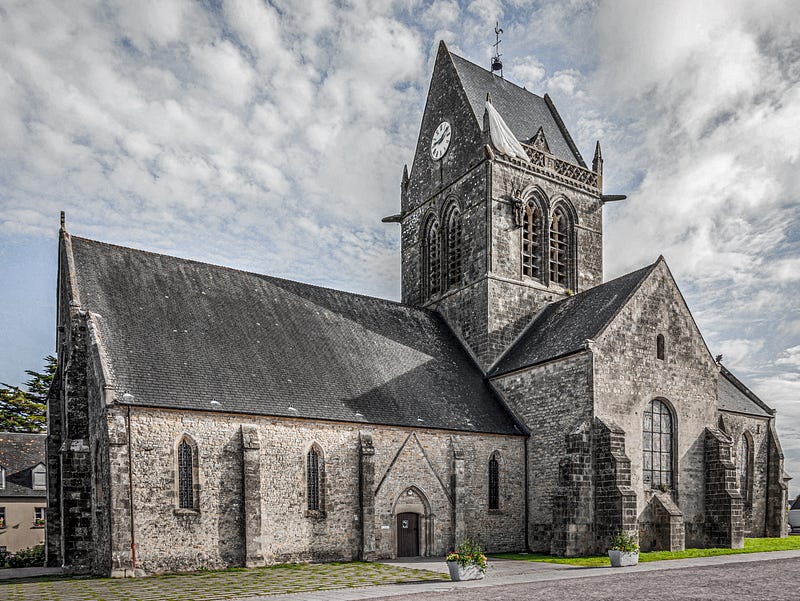
The first rays of the rising sun struck the stone cross at the peak of the spire, turning it to flame against the pale sky. Below, in the narrow interior, a few candles gave a soft, living glow.
Rudi stopped where the stone floor had been worn smooth, dropped a coin in the box, and set a fresh candle, tilting it to light from one about to expire, keeping those prayers alive a time longer, while he added his own.
He stepped back, crossed himself, and sat down, bowing his head as he addressed himself to the Holy Virgin.
May you be with my mother in Frankfurt, he thought. Every day there are new bombings, new shortages, new disasters. My mother is all alone now that my father in Stalingrad vanished, and I was from school taken and sent here.
My mother needs someone to stand by her side and to comfort her. Please, Holy Mother, be with her, bring her peace and may this terrible war soon be over and all of us together again be.
In the dark and quiet, his thoughts were wisps of love, rising up. The Holy Family must be busy in these days, but surely his heartfelt prayers would reach the ears of Christ’s own mother, who would understand best.
He allowed himself a few minutes of silence. This was the sweetest part of the day; a pause before the work and bustle began.
“Sale Boche!” someone hissed beside him — filthy German! — and he looked up, his meditation broken, at the angry face of a Frenchwoman.
The priest silently appeared, tall in his black robes.
“Voici la paix et la dévotion, mère. Ici dans la maison du seigneur, nous sommes tous ses enfants ensemble.” Peace and love in the Lord’s house, where we are all his children.
The priest took the woman’s arm, and guided her away.
Rudi closed his eyes in silent prayer again, but it was no use. The stillness had been broken, and he needed to be on duty for the morning’s tasks. He rose, gave reverence to Christ on his cross and to his sorrowing mother, and turned to the growing light.
At the door, the priest waited with a weary smile. He has his own troubles, Rudi thought, and took the offered hand in friendship. This was a difficult time for all of them, and the priest was always there with a kind word. The Germans were not welcome at Mass, but the church was otherwise open to all for prayers and a blessing.
“Mein Sonne. Möge Jesus Christus Sie beschützen und Sie zum ewigen Leben führen,” the priest said, taking the hand of the young soldier between his own, and looking into his eyes. My son, may Jesus guard and guide you. There was worry there, but also kindness and attention. Rudi wondered again, how a country pastor had such good German despite his horrid accent, but it was another small comfort here, so far from home.
“Merci, mein père, tu bist très gentil.” His own French was good for no more than a few phrases. Thank you, Father, you are kind.
The priest looked up at the tower, now fully in light. There were two men up there, staring north to the English Channel. He fell into French, but the words were easily understood. “Vas, jeune soldat.” Go, young soldier.
I was worried that I’d lost this chapter, but I found it, and now I have multiple versions of the story to reconcile. Chronologically, it comes first.
The German soldiers defending the Normandy invasion beaches were a mixed lot. Hitler was fighting a full-on war against Russia in the East — and slowly losing — and he had assessed these particular beaches as unlikely targets for the coming invasion, reasoning that the Allies would choose the shortest sea crossing to land at the Pas de Calais, with all the advantages that would give them, not least the ready availability of air support, and the ability to quickly reinforce initial landings by air and sea.
He was aided in this assessment by a massive disinformation campaign, and some days after the actual invasion was still not convinced that the Normandy thing was not just a diversion.
Consequently, the best German units were deployed some distance from the initial battlefields, and while those defending the invasion beaches were capable enough, they were not the highest quality, including young soldiers with little or no combat experience, veteran soldiers not 100% medically fit, and soldiers from allied nations whose dependability was questionable.
It goes without saying that they were not loved in France.
The church in the photo is a long way from Omaha, but is one strongly associated with the invasion, and when I went looking on Flickr for a church in Normandy, I could not resist. It is reasonably typical: a graceless pile of grey stones, more of a barn than a church, at least on the outside.
But even German occupiers desired spiritual comfort, and I wanted to make my teenaged soldier a bit more than a cardboard Nazi.
Britni
The whole story:


