
Day Tripping: February 8
Old news and recurring themes
Welcome to my daily feature where each day on the calendar marks a part of our shared history.
No Love Lost
In 1587, the execution of Mary, Queen of Scots was carried out on the orders of her cousin, Queen Elizabeth I of England. Mary was beheaded after being convicted of plotting to assassinate her royal cousin. Even while being imprisoned for nineteen years by the Protestant Queen of England, the Scottish royal conspired with her fellow Catholics including the Pope and King Phillip II of Spain, to carry out a plan that would restore Catholicism throughout the realm.
Elizabeth’s spies uncovered the Babington Plot in a letter that was decoded, uncovering the treasonous conspiracy to overthrow the British monarch. Mary’s ultimate execution was the culmination of years of conflict between religious factions. For most of Elizabeth’s reign, non-Catholics were regarded as heretics within the Vatican and beyond.
Dubious Film Debut
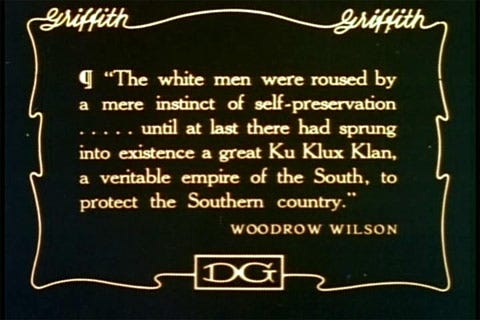
Not only did The Birth of a Nation have the longest running time of any film produced in the early days of cinema, but it also remains to this day, one of film’s most controversial. Premiering in Los Angeles on this day in 1915, this original epic by D. W. Griffith cannot be denied as a landmark in transforming film into an art form.
Sadly, it’s this film’s blatantly racist depiction of post-civil war era America that makes it so widely vilified. Griffith’s portrayal of the Ku Klux Klan as heroes and black men as sexual deviants only interested in the conquest of white women puts such a distasteful stamp on the feature, it is for most now rendered unwatchable.
Film critic Andrew Sarris summed it up best when he wrote, “Classic or not, ‘Birth of a Nation’ has long been one of the embarrassments of film scholarship.”
Roger Ebert also wrote, “That this achievement was made in a film marred by racism should not be surprising. As a nation once able to reconcile democracy with slavery, America has a stain on its soul”
History Sadly Repeatable
On the heels of an earlier protest against segregation by a group of university students in South Carolina, members of the State Highway patrol opened fire on a crowd of two hundred students who were protesting on campus that night in 1968. Three young black men were killed in what was later called “The Orangeburg Massacre”, and it was widely unreported at the time.
One of the victims was a high school student who was quietly sitting on some steps waiting for his mother. Like a ghostly reminder of how little has changed since when the incident occurred the Governor of South Carolina utilized National Guard troops to quell any further uprisings of protest. All of the white shooting officers were later acquitted from a lack of evidence.
Musical Milestones
1965 — Motown’s most successful singing group, The Supremes starring Diana Ross, release Stop In the Name of Love. The trio is still listed as the top singing group of all time for the label.
1972 — The Royal Albert Hall cancels Frank Zappa’s 200 Motels concert after the venue learns that the music lyrics contain “obscene” language. They obviously never heard Zappa before.
1982 — As if a stellar singing career wasn’t enough, Cher debuts as a Broadway actress in Come Back To The Five And Dime, Jimmy Dean, Jimmy Dean. The play was also made into a highly acclaimed film by Robert Altman, with Cher in her first film role.
Narratives
1976 — Taxi Driver, Martin Scorsese’s morbid tale of a Vietnam vet turned New York City cab driver opens as a world premiere. The film went on to critical acclaim and solidified the careers of Scorsese, the film’s star Robert Deniro, and a very young Jodie Foster.
1955 — Lawyer turned successful novelist John Grisham was born.
Remembrance
Musician and songwriter of the hit song Runaway, Del Shannon, is found dead from suicide in 1990.
Former Playboy playmate of the year and actress, Anna Nicole Smith was found dead in her hotel room in Hollywood, Florida, 2007.
Notable Births
Jack Lemmon — Oscar-winning actor for Mr. Roberts and Save The Tiger.
James Dean — The original movie misfit and star of Rebel Without A Cause
Ted Koppel — Television journalist who brought Nightline to airwaves which began with the Iran hostage crisis of 1980.
Thanks for taking the time to read this article dedicated to the days of our history. I hope to see you tomorrow for another installment.