
David vs Goliath- What Color is Your Slingshot?
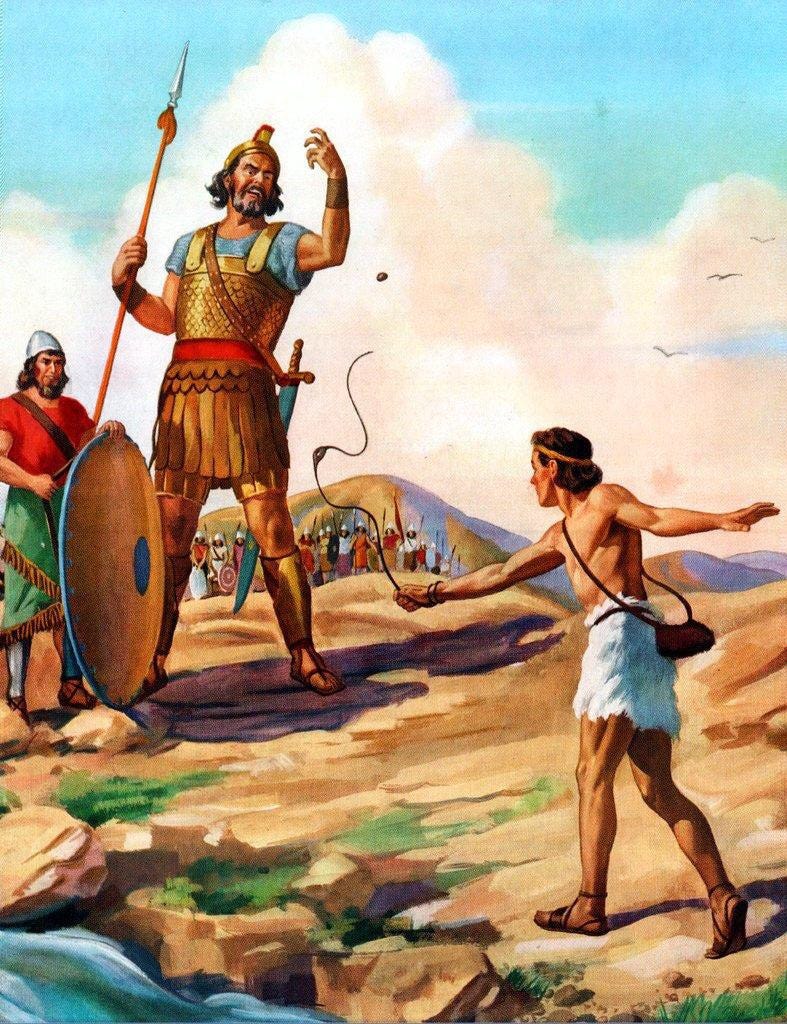
In “David and Goliath”, Malcolm Gladwell’s recent best-seller, he writes about underdogs, misfits, and the art of battling giants. As the back cover explains:
“Three thousands years ago on a battelfield in ancient Palestine, a shepherd boy felled a mighty warrior with nothing more than a stone and a sling, and ever since then the names David and Goliath have stood for battles between underdogs and giants. David’s victory was improbable and miraculous. he shouldn't have won. Or should he have?”
The stories Gladwell recounts in David and Goliath illustrate the point that speed and surprise are often superior to size and strength in battles, if the underdog knows how to turn disadvantages into advantages. David’s ability to launch a stone with a slingshot at a target 35m away with the impact and accuracy of a 45mm bullet overcame his disadvantage of small size and lack of battle experience. Goliath’s advantages of size, armour, weapons and strength were turned into disadvantages by his slowness and blurred vision, due to acromegaly caused by a tumour on the thyroid.
So, while Damon Runyon sarcastically noted that:
“The race may not always be to the swift, nor the battle to the strong, but it pays to bet that way”,
we learn that a clever underdog, suitably prepared, can overcome a well-equipped giant, whether it be David in Palestine, Lawrence of Arabia defeating the Turkish Army with his Bedouin soldiers, the heroic Spitfire pilots of England in the Battle of Britain in the summer of 1939, or the hundreds of examples of successful guerrilla warfare against superior firepower, from the American Revolution, China, Cuba, to Vietnam and through to modern times.
So, what does this have to do with you and I, now? Who are the Goliaths of the 21st century, and who are its Davids? How can we all become like David?
In one sense, every single individual who has experienced setbacks and failures is David. That is most of us. In one or more areas of our lives and work, we usually find challenges and superior competitors we do not know how to match, let alone overcome. In Canada, as a young immigrant from South Africa, I was always first in my class but bullied due to being two years younger and smaller than everyone else in my year. It definitely did not help having an ultra high IQ but a very average EQ. So, until I figured out how to gain the respect of my peers (the clue lay in my boxing lessons, athletics prowess and strategic defence moves), I was an underdog. But the bullies were often big, slow and luckily, not highly motivated.
Then, as a university student and soon to be lawyer, I was one of the leaders of the anti-apartheid and Free Mandela movements in the late 1970’s. The bully was the apartheid regime and in particular, the Bureau of State Security, who spied on, arrested and tortured many of my friends, especially if they were considered “lefties” or “communists”. Of course the Afrikaner elite had spent many decades planning socialism for themselves through their “Broederbond” (band of brothers), which they deployed effectively against the more liberal and cosmopolitan Anglo-Saxon consensus that had ruled the country until 1948.
Life as an Exile
In the middle of the brutal civil war that engulfed South Africa in the 1980’s, I left for London to take up a new job in early 1986, after having tested the waters as a young investment banker posted there with with Citicorp in 1983. I remember handing over the keys to the motorglider I owned a share in to an IT billionaire pilot friend, who asked me, after I’d returned from my last trip to the Victoria falls and Lake Kariba in Zimbabwe: “Robin, why are you leaving- you have everything- this plane, a dream lifestyle, the country club, a superb job, girlfriend….?”
I replied that I saw no future in the country, and that it seemed black power and white power would either annihilate each other, or that the birth rate being twice the rate of economic growth meant that the country would slide into a future dominated by joblessness, crime and an absence of a sense of security, of being safe, anywhere. After decades of fighting to change the system, it was time to admit defeat.
So, in 1986, in the middle of the raging civil war, I left South Africa aged 29, to start a new career, in a country where I was once again, yes, you guessed it, an underdog. But an underdog happy to be able to look out at the Houses of Parliament from my office window, and to feel free of the burden that the legacy of apartheid and colonialism had placed on my soul since I was a very conscious teenager who could not believe that the adults thought their game could continue forever, simply because they thought Goliath was always going to win.
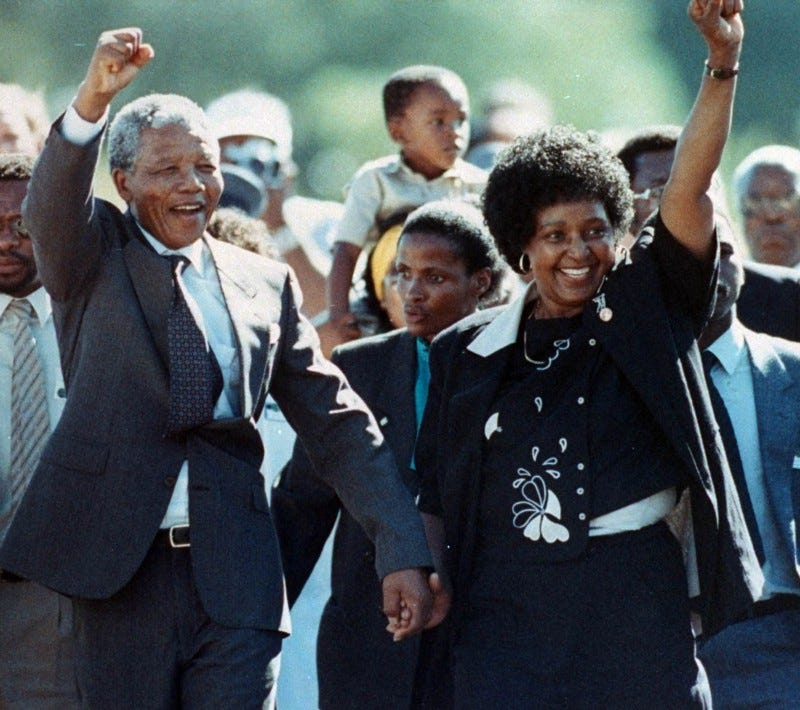
Nelson Mandela was released from prison in 1990 to take part in peace talks with the apartheid regime. He was the quintessential underdog, having spent 27 years in prison for his commitment to the “struggle” for a truly democratic South Africa. His wisdom, humility and commitment to a peaceful transition quelled a deadly civil war and led to a decade of hope and prosperity as South Africa opened up to the world. Despite the miracle of his election as the first President of a democratic South Africa in 1994, a birthrate twice the rate of economic growth, and the corruption that lay at the heart of the governing ANC after he retired, very rapidly turned the country into a hot, if beautiful, mess, a situation it is still struggling to recover from today.
I had done my best for South Africa, and although it was nowhere good enough, in London I now felt free to just be me and follow my own destiny in a country that looked like it had a future. I had the rest of my life ahead of me, and how that turned out, was entirely up to me.
And that, in hindsight, was an excellent decision. I was being well paid for work I loved in strategy and technology, traveling extensively, completing a part-time PhD and starting a family. I became an entrepreneur at 33, and my business in collaborative transformation took off. It had it’s nail-biting moments, for sure, but they were much outweighed by the thrills of winning major contracts against McKinsey, IBM, AD Little, Booz-Allen, Stanford Research Institute and other Goliaths. I had learned how to use a slingshot very effectively against these often anachronistic and hyper-conventional giants- smaller, faster, more innovative and also highly effective in building long-lasting partnerships with global corporations, banks and INGO’s.
By the millennium, I was leading EY’s e-business group in London and headhunted to become MD of a major global e-business company called Scient. I had officially “made it”, with rave reviews for my first solo book with the Economist, “Managing Complexity”, and unable to spend my salary it was so generous. Then came the dotcom crash. Scient was taken over, and I had to fall back on my academic links with London Business School, running well paid but intermittent executive education programs for CEO’s, and giving celebrity speeches on the digital economy. If I had not written an award winning book and completed a backbreaking PhD over 8 years part-time, I might have had to face a number of years without income.
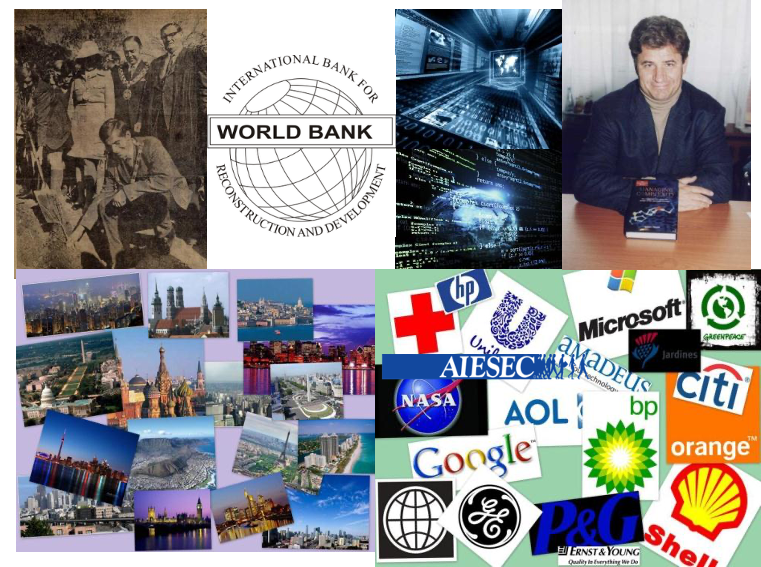
Something one learns as an underdog is that nothing good lasts forever, and just when you think you’ve reached the mountain peak and can start coasting a little, another range of even higher mountains beckons on the horizon. And, most importantly, what equipped you to be a “star” in the good times was not necessarily what would make you a star again in a turbulent world being constantly reborn. Always, always, like NASA, have backup.
When Scient was taken over, it was generous with those of us it retrenched. I had harbored a dream for decades of setting up a think-do tank between the mountains and the sea somewhere in the world with a pleasant climate, where transformative minds and worldshifters could come together and relax, refresh and reinvent. Following 9/11, the sudden death of my father and a difficult and expensive London divorce, this dream slowly metamorphosed into reality via several highly synchronistic, mysterious pathways- a process I describe in greater detail in my book: “The Trouble with Paradise”.
Realising a Lifelong Dream
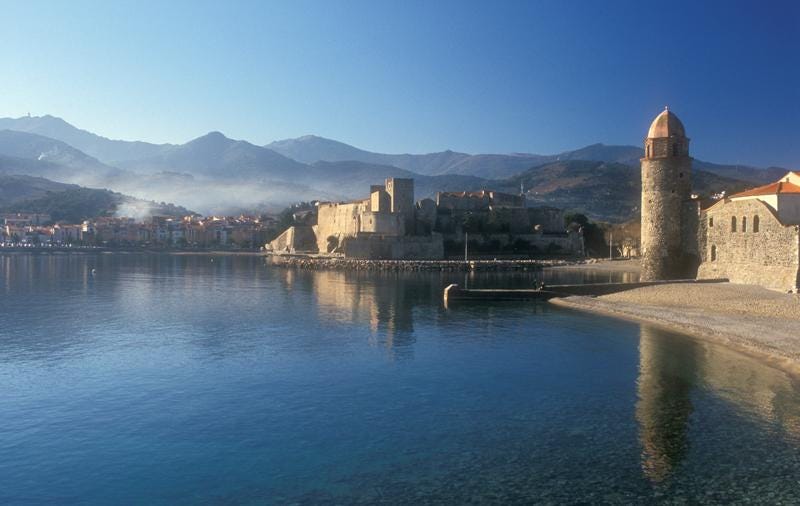
Having learned during the course of my life, in five to ten year cycles, how to go from being an underdog to a “star” roughly half a dozen times, I needed all my learning and wisdom to make it through this next transition. I moved from London to Perpignan, a small town in France between the Pyrenees Orientales and the Mediterranean , and bought an ancient ruin of a chateau for a bargain, to realise “Project Oasis”.
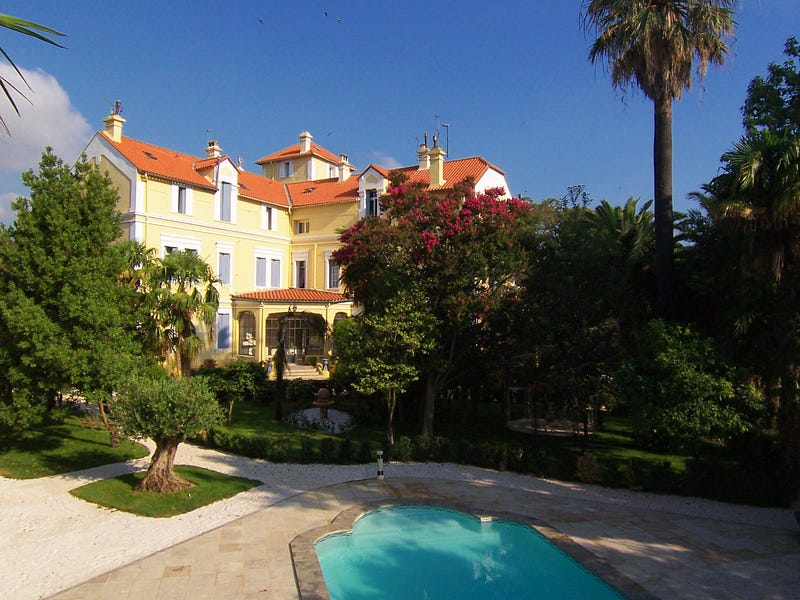
It took three years of hard work to turn the ruin into a small corner of paradise, during which I met and married the love of my life. We held many large and successful events, conferences, celebrations, weddings, launches and more over twelve years, birthing amongst many things Integral Without Borders, Renaissance2, the Thriveability Foundation, the Balancer App and Thriveworld Game. We hosted close to ten thousand very happy guests in that time, and at our peak, were rated the top place to stay in our region by Trip Advisor and other sites.
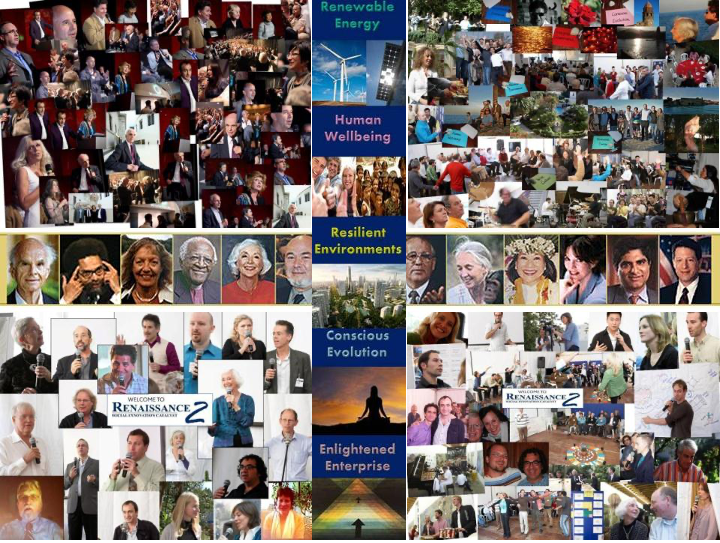
I received several gifts from this rollercoaster ride. The first was that I could focus on the personal development of myself and others as major part of my work for the first time- having spent the previous 30 years on organizational and business development and innovation, where personal development was essentially a personal matter, something that rubbed off of the organizational work. I also made many new and long-lasting friendships with some very fine upstanding worldshifting leaders I would never have otherwise met.
The second gift was realising my ambition to reduce the number of planets my life and work required. In London I had calculated that it took five planets to support the lifestyle of my family and my frequent international business trips, even if I bought carbon credits for my flights and used public transport extensively. Developing a carbon-neutral property in a region blessed with wind and solar power, meant I could halve my foot print on planet earth.
Not only that, but the ban on pesticides, organic farming and “biodynamique” fruit, vegetables and wine prevalent in our region’s agricultural landscape, plus fresh mountain water and fresh air, meant that the usual toxins of city life were almost completely eliminated from our lives. Old friends remarked that I looked much younger than when they last saw me in London, ten years after I had left London.
The third gift was learning how to operate in a completely different culture and social system. The difference between the Anglo-Saxon world and the world of the French and in particular the Catalan French, is literally like chalk and cheese, in this case very smelly, but incredibly tasty cheese.
Very Smelly Cheese: the Delights of Culture Shock
The French Goliaths are very big, very tough and quite hungry for your money. True, most giants are. But in France, running a business, they take money from you before you make a cent. And they have the right to take it straight our of your bank account too- no lawyers, no court- you are basically guilty until proven innocent. That is a common shock factor for most Anglo-Saxon immigrants. And the banks, accountants, utilities and old-style insurance companies treat you much like the government too- with the odds always firmly on their side. Although that has changed slowly and for the better during our time in France.
According to INSEAD Professor Erin Meyer’s book, ‘The Culture Map’, the French are way up there with the Israelis, Russians and Dutch for being the most direct when it comes to giving negative feedback. In the working world, you may find that your quick wins, big successes and a job well done go seemingly unnoticed, yet if there’s a mistake or improvement to make, you’ll hear about it faster than the time it takes you to inhale an almond croissant. The most wonderful presentation you’ve ever delivered will just be ‘pas mal’ (translation = excellent) so you should be prepared to feel like it’s never quite good enough at all times.
The French also tend to make friends for life from their primary school days to their university chums. They keep their circles of trust very tight, and as a foreigner it is very difficult to make good friends, though we’ve luckily made a few over the decades- but that’s how long it takes, decades. And speaking good French is essential. It is a demanding language, and despite having taken it at school, I struggled for many years to do simple things with translation devices and dictionaries, until I took a year long part-time course.
So, where is the gift in all that? Well, I’ve learned to slow down, live in the moment, and not worry about impressing anyone or being liked any more. With the French, both of those come naturally, whereas in the Anglo Saxon, positive thinking/self-improvement culture, we are brought up to create a good impression, win friends and influence people. The French do that very differently- they really don’t give a damn what anyone else thinks.
It is often said that the French love big ideas and movements, while Anglo-Saxons are more pragmatic and prefer common sense compromise. It is true that the French do swing faster one way or the other than the British and Americans, and they love debating, often getting quite heated. I’ve learned to shrug my shoulders like they do, quite often, and simply stay quiet unless the topic is important to me.
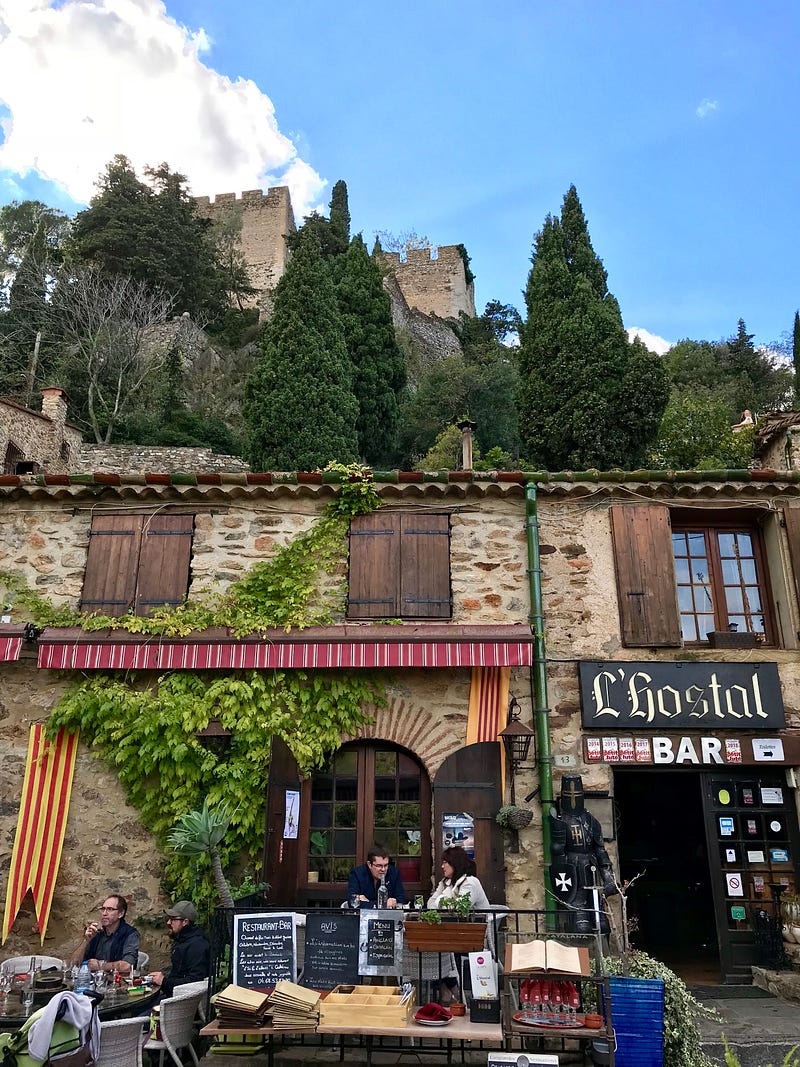
The greatest gifts of France, though, are its natural beauty, cuisine, wine and general appreciation of the good life, along with the two hour lunch breaks enjoyed by those outside of Paris and other major cities. Luckily businesses in the south-west, where we live, have learned to operate in shifts in the past few decades so you can actually get what you need any hour of the day. But most people still take a decent lunch break, and in good weather, eat outdoors. Dining al fresco is one of the greatest pleasures, whether at the beach, on the river banks in the town centre, or in the small and ancient villages in the mountains.
Thriveable Transformation- The Ultimate Slingshot
The greatest giant we face today, is the global addiction we have to never ending growth through business-as-usual and lifestyles-as-usual. Despite the breakthroughs emerging in our global transition from degenerative, exclusive, hyper-competitive mono-capitalism, to a more regenerative, inclusive, collaborative multi-capitalism, we have almost run out of time to avoid runaway global warming and the acceleration of the sixth mass extinction.
The elites running our governments, big banks and big corporations have known of the “Limits to Growth” since 1972, when the Club of Rome produced a report with that title. So why has it taken half a century to respond appropriately? A short summary of the report reveals the following conclusions:
The human footprint cannot continue to grow as fast as it has in the 20th century
It is likely that sustainable limits will be overshot
There is then likely to be a crisis/collapse in the 21st century as there will be delays in responding to this information
It is important to act as soon as possible
Scientists running the original Club of Rome model on new supercomputers 40 years later confirmed the accuracy of the original model, much to their surprise. The observed data from 1972 to today indicates that we are following the comprehensive technologies scenario, which is set to crash later in this century. “There will be delays in responding to this information” was the understatement of the 20th century.
Perhaps the primary cause of delay has been our personal and social obsession with growth. Although personal, social and organizational development have been around for several decades, development is a much less well understood phenomenon. Basically, growth is more of the same stuff; development is the same amount of better stuff (or at least different stuff). And transformation is what enables us to shift personally, organizationally and socially from a growth to a developmental way of thinking, doing and being.
The remaining natural world no longer is able to provide the sources and sinks for the metabolic throughput necessary to sustain the existing oversized economy — much less a growing one. Economists have focused too much on the economy’s circulatory system and have neglected to study its digestive tract.
Throughput growth means pushing more of the same food through an ever larger digestive tract; development means eating better food and digesting it more thoroughly.
Clearly the economy must conform to the rules of a steady state — seek qualitative development, but stop aggregate quantitative growth. GDP increase conflates these two very different things. We have lived for 200 years in a growth economy. That makes it hard to imagine what a steady-state economy (SSE) would be like, even though for most of our history mankind has lived in an economy in which annual growth was negligible. Some think a SSE would mean freezing in the dark under communist tyranny. Some say that huge improvements in technology (energy efficiency, recycling) are so easy that it will make the adjustment fun.
Regardless of whether it will be hard or easy we have to attempt a SSE because we cannot continue growing, and in fact so-called “economic” growth already has become uneconomic. The growth economy is failing. In other words, the quantitative expansion of the economic subsystem increases environmental and social costs faster than production benefits, making us poorer not richer, at least in high consumption countries.
And even new technology sometimes makes it worse. For example, tetraethyl lead provided the benefit of reducing engine knock, but at the cost spreading a toxic heavy metal into the biosphere; chlorofluorocarbons gave us the benefit of a nontoxic propellant and refrigerant, but at the cost of creating a hole in the ozone layer that protects us from too much ultraviolet radiation. It is hard to know for sure that growth now increases costs faster than benefits since we do not bother to separate costs from benefits in our national accounts.
These were some of my thoughts a decade ago as I reflected deeply on what it would take to make sustainability desirable. I came up with a supercharger for sustainability, “Thriveability”, and began including this in my conference presentations and writing. Over the next few years this led to me partnering with some of the pioneers in sustainability to develop new models and equations for what is now called “Multicapitalism”, as illustrated in the diagram below.
In enhancing the ability of individuals, communities, organizations, and societies to thrive, thriveability requires us to value natural, human, relationship, social and intellectual, capitals as much as infrastructure, manufactured and financial capitals. i.e. People, Principles, Purpose, Planet have to be honored in generating Profit- what we might call “True Profit” and “True Impact”.
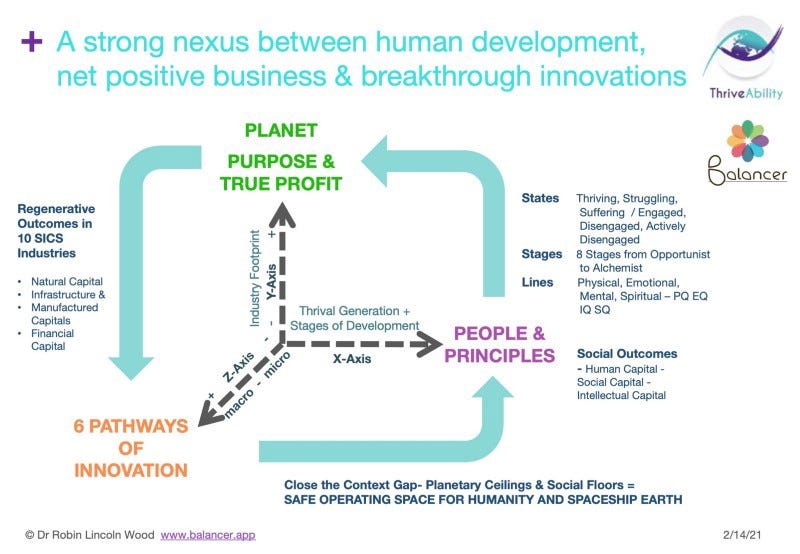
The thriveable transformation journey is described in “A Leaders’s Guide to Thriveability”; “Synergise!” and “Making Good Happen”, including the six pathways to a thriving future we need to activate and synergise.
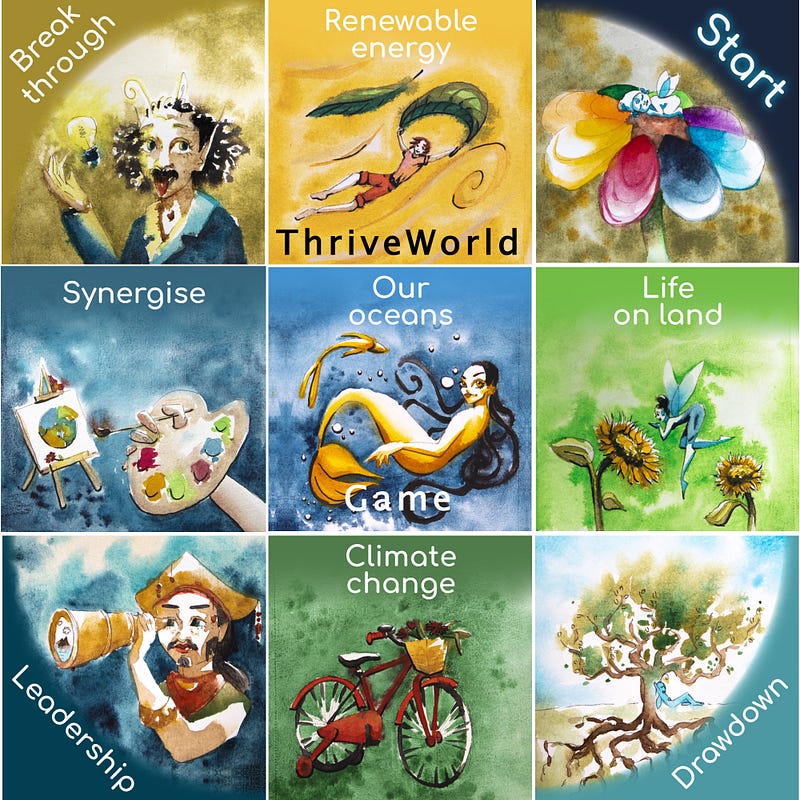
In the past few years we’ve embedded these approaches into the Balancer App (click on appstore and playstore icons to download for free), and the ThriveWorld game which is included in the app. The objective is to scale these up to be used by many millions of personal users, and hundreds of thousands of medium to large organizations.
Final Thoughts
I’ve been extraordinarily lucky to have been moulded in several evolutionary crucibles, because crises accelerate both evolution and our own development. As the old Nietszchean quote goes: “What does not kill us makes us stronger”.
As a result of having been an underdog having to develop ever more effective slingshots to deal with bigger and tougher Goliath challenges in each of the successive crucibles in my journey, I’ve also been fortunate to have had a fascination with psychology, leadership and personal development from a young age. I am by nature a warrior, activist, innovator, strategist, healer and peacemaker. I certainly do not take things “lying down” :-)
I’ve also been addicted to the study of evolution since my father explained the concept to me when I was ten years old, standing washing the dishes together at the sink in our home in Toronto. Here is one big thing I’ve learned about evolution:
Evolution has largely progressed by the dominance paradigm which in turn has been based on the principles of survival of the fittest or might makes right. This has created a power hierarchy in which qualities like strength, size, aggressiveness etc. dominate collective and unitive qualities like wisdom, altruism and humanism. This power hierarchy, as one of the principles of evolution, worked reasonably well for lower orders of animal life, but for the higher orders, and particularly for the evolution of the human species, it has become increasingly counterproductive.
Can the energy of money and human desire be disassociated from power-over so that it is just energy itself, free to be applied when and how it is needed? The answer is probably not, at least not without changing the nature of the dominance paradigm itself. We have to move from this dominance paradigm and its associated power hierarchy to a sapiential hierarchy.*
A hierarchy is a vertically organized system of holons in which the whole system is directed by the uppermost holon. A power hierarchy is a hierarchy directed by the most powerful holon. Sapient means wise or knowing. A sapiential hierarchy is a hierarchy guided by the wisest or most knowledgeable holon, i.e., the highest consciousness.
As my friend evolutionary biologist Dr Elisabet Sahtouris put it:
Human history repeats evolutionary history, with all its problems and technological solutions- diversification from the unity of the earliest human family, all the old patterns of competition and negotiation played out in wars, conquests and assimilation for the thousands of years in which we have built the empires of individual rulers, then of nations and now of corporations.
Finally we recognize that we need a co-operative world-unity at a higher level, a new multi-creatured cell the size of our entire planet. And gradually we see that just as our beautifully evolved body cannot be healthy if one or more organs are ill, so our global economy can thrive only if all local economies are healthy as well. Thus, we become concerned with the ecosystems we have damaged and with the economic inequities we must solve.”
As I approach my 65th birthday this year, I am still an underdog in many ways, and still fight for underdogs everywhere, especially for environmental and social justice. But I have slowly, even if at great cost on occasion, developed an inner peace and ability to live in the moment and love life to its fullest wherever I am, and whomever I am with. And I always have a slingshot handy, because I know Goliath never really sleeps.