
David and Goliath in Antarctica
Where Size Doesn’t Matter.
I first met Doug in college and thought he was a big loudmouth, emphasis on big. Years later when he began lifting weights, the emphasis switched to big first, the loudmouth had become bone-cracking funny and whip smart. Intimidating was the operative word, however, whenever he crossed your path. From the scowl when someone said something stupid–he had a prodigious intellect and no tolerance for fools–to the roll of the eyes at cheap, commercial-he was a fine artist–to the terrifying if you challenged him to a bar fight. We were in college and on Friday nights at the local pizza hangout things could get dicey.
Let’s say little girls in ballet tutus didn’t come to mind when you first met the big hulk of a guy.
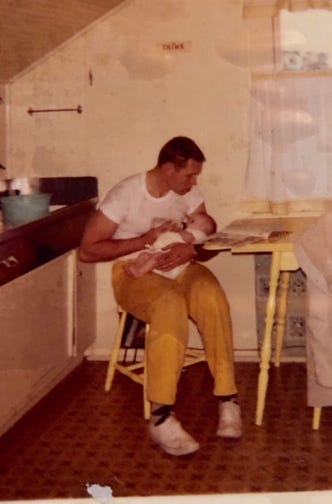
But in a typical David and Goliath scenario, when I gave birth to my daughter, and Doug and his wife Wendy had become our best friends, our little bundle of sweet-smelling, irresistible baby deliciousness could bring Doug cooing to his knees.
But little girls bringing big men to their knees is a proven trope in fiction and in real life. However, I never thought I’d see it at play in the frozen wastes of Antarctica.
I know what started my obsession with polar exploration, but I can’t figure out why. I couldn’t get out of New York City fast enough back in the day when frigid weather threatened to send me to the ER each winter, my lungs shutting down in the cold. California here I come I said, when the opportunity to relocate to its the sunny clime opened up.
Yet Mawson’s Will, an account of a dreadful trek accross Antarctica in 1912 that I read curled up under a blanket on my comfy couch in front of a warm fire spawned my fascination with the glaciers, snow packs, a drift ice that choked and swallowed the early explorers’ ships. By the end of the book a fierce determination to see the poles took hold, though it seemed the most far-fetched of my typically wild dreams.
Thirty-some years later, however, I found myself sailing off from Rio de Janiero with my dear friend and favorite traveling partner for Antarctica. The three-week Princess cruise would shield us from the near-death experiences of Shackleton, Scott, and the others who made those first intrepid journeys. Chamber music charmed us in the main dining room at tea-time when we came in from gazing like tourists do at ice bergs and penguins to warm our hands and toes. For Mawson–no music. No tea-time. No relief from the murderous cold. Penguins, though? If they could catch one. Well, that was dinner.
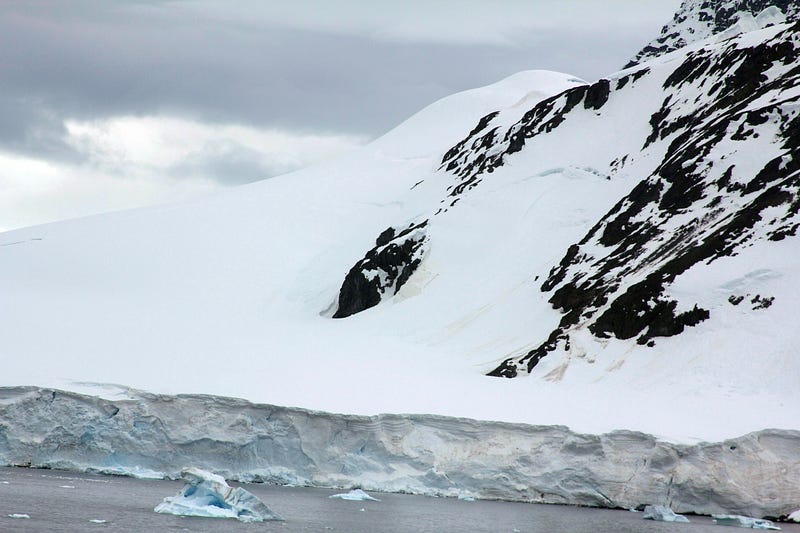
I can’t possibly do justice to the sight that greeted us when we entered Antarctica’s waters. I get choked up nine years later just thinking of it. You’ve seen pictures and films. Go see it for yourself before its wonders melt away. Suffice to say, it didn’t disappoint my forty-year fantasies.
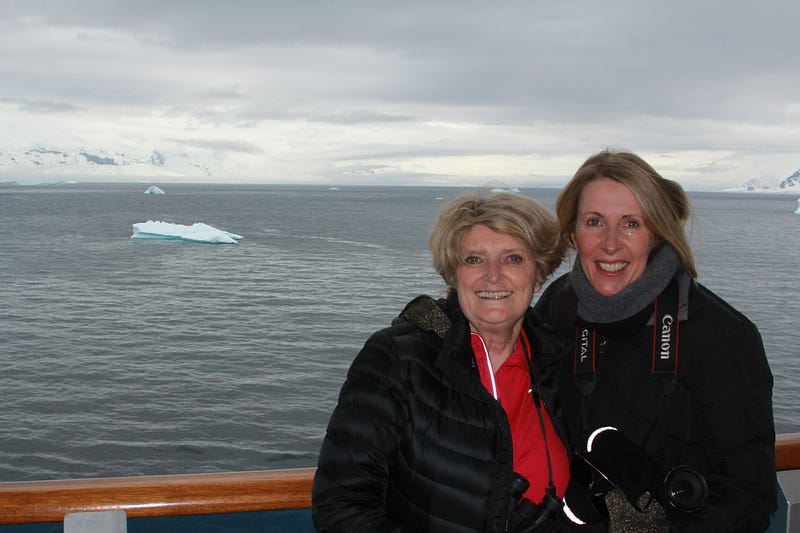
Our ship? Well, like my dear, late friend Doug, every square inch of it intimated me at first. The size, the scope, the way it cut through the ice as it sailed silently past icebergs that dwarfed it.
Then on one memorable day this Goliath met its David. The wind threatened to blow us off the deck, and the cold pierced every layer of clothing I’d packed to ward off the sub zero temps. But I’d dressed for the weather and walked as far up to the bow as they’d let us to see the ship cutting through the ice as it passed through channels and around bends to reveal sixty-story snowbanks piled up against the shoreline, the wonders of the southern lands.
As I stood at the rail with my fellow passengers I felt us all take a collective intake of breath as we saw the horror in front of us. Dead ahead on an ice floe was a native of these waters, a leopard seal, taking a post-prandial nap perhaps, unaware of the behemoth approaching and about to suck him under its wash.
Get out of the way, some of us called. Of course, the animal couldn’t hear us, or maybe it did. Because, it woke and raised its sluggish head, looked up at the bridge, and with a look of colossal indifference, rolled over and went back to sleep.
The ship’s horn began blaring. Minutes later the seal checked us out again. The ship was much closer now. My heart began to pound. We hadn’t changed course, and neither had he. Get out of the way, I pleaded silently. We’re going to run you over.
And so much more was at stake, as we’d already been warned.
Once we entered Antartica’s waters rimmed with miles of snow-studded black and white mountains regal as an ice queen, the ship’s captain gave the order forbidding us from taking anything out onto the decks. No napkins, swizzle sticks, drinks, cigarettes. Nothing that could blow over the side.
The stewards collected and locked up all the playing cards, as well as puzzles and games with pieces such as Monopoly. If anything were thrown or blown into the water, Princess would lose its permit to travel to Antarctica. The entities governing access to this desolate place are dead serious about keeping its land and sea pristine. What would they say about running over the wild life?
But what could the ship do I fretted as we came closer and closer to the ice floe? The seal wouldn’t move. Even if it couldn’t hear the ships whistle over winds and waves, surely it could feel the vibrations of the massive engines. Yet it was impervious to our presence. It had staked its turf, and why not? We were the interlopers, not him. Or her.
My heart was somewhere near my mouth as the passengers and I exchanged frantic glances. It seemed we could almost touch the seal. That is, if we weren’t on a deck thirty stories above sea level.
What happened next I wouldn’t have believed if I hadn’t seen it with my own eyes. Goliath blinked.
I wasn’t sure it was happening at first. But then, yes, the ship began changing course. Gradually, this ship, the size of the biggest sky scraper in San Francisco if laid on its side, started to turn away from the seal. It was as if the ship said, I gave you every chance to move. And the seal had taken a look at it and said, Go around.
And we did. Would we make it in time? Or would the ship suck the ice floe and seal under its propellers?
Oh, ye of little faith, the captain might have said. Been here, done this before. Gotta love those leopard seals, but they’re stubborn little buggers.
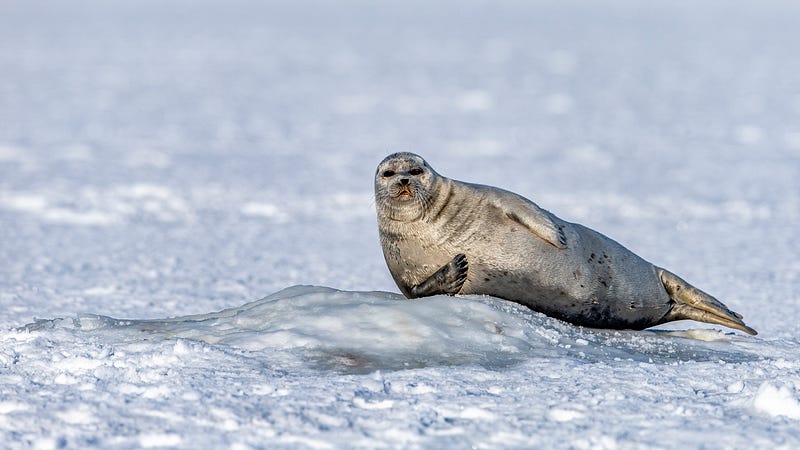
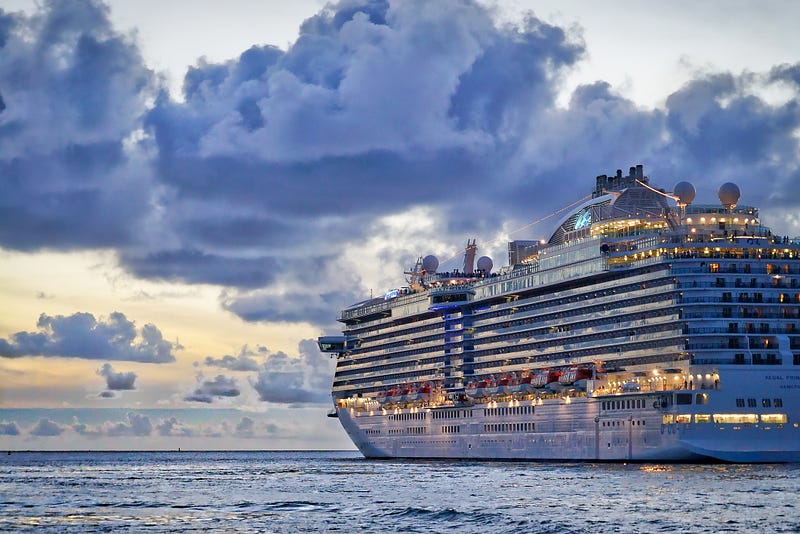
He had turned that gargantuan ship around–just enough–so that we now had the seal on our port side and the seal finally troubled himself to turn and look up at us. And as we all watched open-mouthed, snapping our photos, I thought, there’s more than one way to slay Goliath.
In the bible, David did it with a stone.
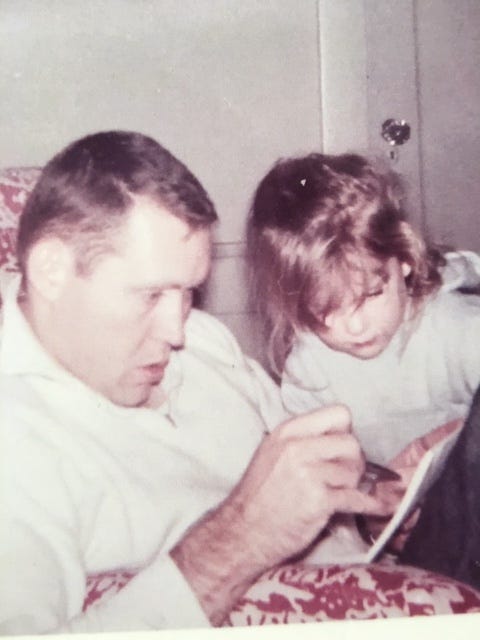
My baby daughter did it with an eager smile while scrambling onto the prestigious Dr. Cramer’s lap. She’d clap gleefully and say, “Thank you, Uncle Dougie,” when he’d hand over a favorite balloon, laughing like a fool.
In Antarctica, a seal reached into the moral center of a beauracracy and said don’t s**t where I live.
Sometimes, size doesn’t matter.