
Dave Chappelle’s SNL Monologue Has Me Tied in Knots
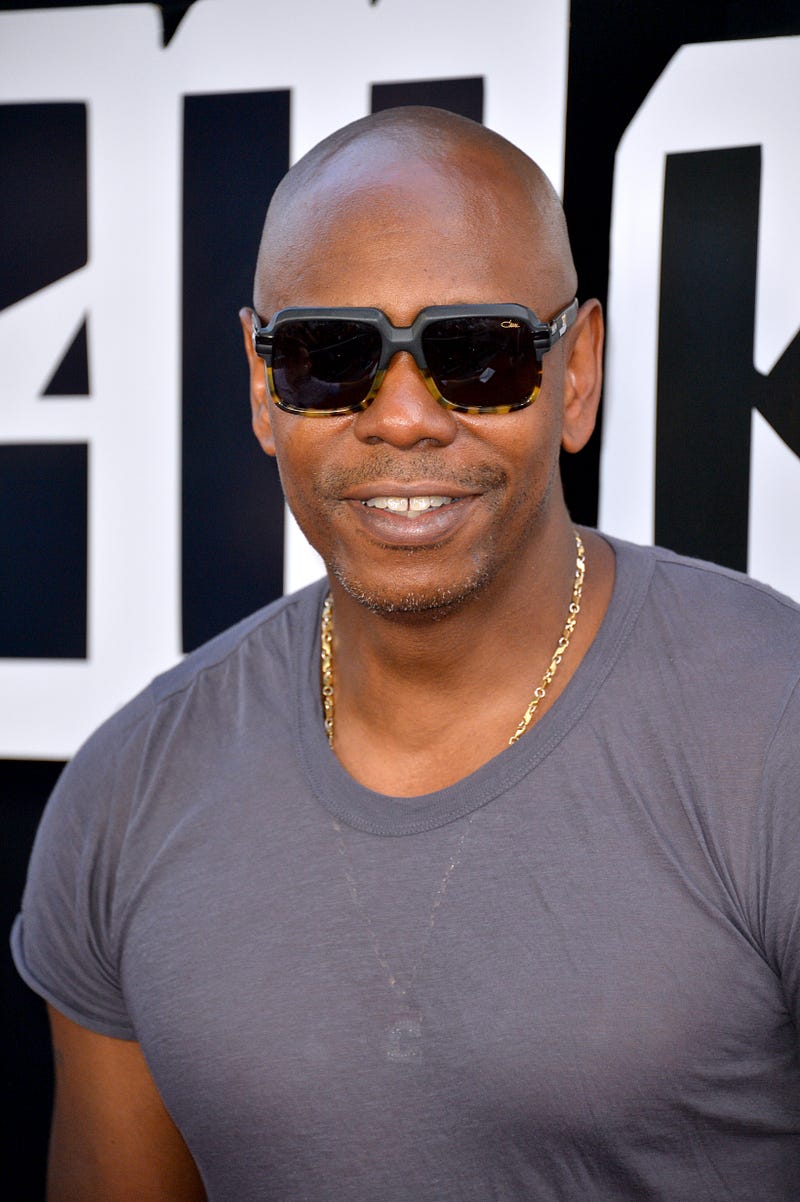
I’d love to be a fly on the wall when African-American comedian Dave Chappelle talks to his close buddy, Jewish-American comedian and activist Jon Stewart, about Chappelle’s provocative SNL monologue last weekend joking about the penalties Kanye West and Kyrie Irving have recently suffered for spreading anti-Semitic venom through their public remarks and social media content. “It’s not crazy to think” that maybe there’s something to the conspiracy theories about Jews controlling things, Chappelle said. “But it’s a crazy thing to say out loud.”
I also would like to have eavesdropped on Chappelle’s conversation after the show with Lorne Michaels. Michaels is the Canadian-American creator and multiple-Primetime-Emmy-Award-winning producer of Saturday Night Live. And, he’s a Jew, a member of the purportedly show-business-controlling cabal that Chapelle threw tomatoes at from the window of his his edgy comedy tour bus on Saturday.
A Comedic Bait and Switch According to Justin Rowles, writing in Pajiba, an online site covering film, tv, politics and social media, Chappelle tricked Michaels and the entire SNL staff by doing a fake routine at the dress rehearsal about another subject he’s been criticized about: transphobia, which one trans SNL writer had reportedly objected to during the week. The bait-and-switch rehearsal monologue, wrote Rowles, “means that Chappelle knew exactly what he was doing, and he didn’t want SNL staff to shut him down before he was given the opportunity to piss off the Jewish community and the Anti-Defamation League.”
Outrage from the Jewish community and Anti-Defamation League predictably followed. But so did a lot of serious soul-searching on the part of people like me, and a fair number of others, who attempted to keep their knee-jerk taking of offense at bay for long enough to examine what the sometimes cringe-inducing monologue, and the SNL audience’s mostly laugh-filled reaction to it, actually means to our society and culture today.
Twisted into Knots Over the past few days since watching the routine and then reading about the fallout that ensued, my mind has bounced from mildly amused to uncomfortable to agitated to offended to disappointed to total absorption in the intellectual and emotional debate raging inside me. It’s twisted me into knots.
I like Chappelle. I liked Chappelle’s Show on Comedy Central, which made him successful and famous, but which he walked away from in 2006 at great personal cost — estimated at $50 million — to pursue his own sense of peace. He’s always been a sort of equal-opportunity satirist, making fun of his own people as well as white supremacists and elements of the LGBTQ+ community.
I’ve liked his Netflix specials, which have sometimes come close to my own boundaries of free expression by taking nasty pokes at the trans community. Chappelle has declared himself a “trans-exclusionary radical feminist” (TERF) — a term associated with Harry Potter author JK Rowling for saying that gender is a fact. He seems to be accepting of trans individuals, but hostile to the more aggressive, impatient and demanding wing of the trans rights movement, given the long, hard slog African-Americans have endured in their ongoing battle against oppression and discrimination
But he also seems to be stealthily suspicious of Jews, saying things in the SNL monologue like, “I’ve probably been doing this for 35 years now, and early in my career, I learned that there are two words in the English language that you should never say in sequence, and those words are ‘the’ and ‘Jews.’ Never heard someone do good after they said that,” said Chappelle, drawing spontaneous laughter from the audience.
A Painful Flash from the Past It reminded me of one night many years ago when I was watching Burt Reynolds in one of his 61 appearances on The Tonight Show with Johnny Carson. As I remember it, the two somehow got to talking about some promising new movie director who had a Jewish last name. “That’s just what Hollywood needs,” quipped Reynolds — “another Jew director!” Johnny howled. The audience roared. I felt uncomfortable and insulted, thinking back to anti-Semitic comments and slurs I’d heard in my childhood, before I could process the pernicious nature of prejudice.
So, how did Chappelle’s routine square with my positive feelings about him, and my generally unshakeable support of freedom of expression? Did he get too close to my own trigger point this time?
Let’s Try This Again To find out, I had to go back and watch again. Here’s the link, if you haven’t seen it or want to give it a second viewing. If you’d prefer, here’s a link to the transcript.
On second go-around, I have to give a nod to NBC Online reporter Will Heath, who said, “No one walks a rhetorical tightrope as deftly as Dave Chappelle.” In the 15-minute-and-21-second monologue, the audience mostly laughed at almost all of Chappelle’s jokes. I myself found much of it humorous, except for two or three instances when I felt uncomfortable. I would guess that if and when Chappelle ever has those conversations with Jon Stewart and Lorne Michaels, they’ll point out a spot or two where Dave crossed a line, and maybe he’ll know better next time.
I also realized on second viewing that the monologue shifted to the midterm elections and Donald Trump at about the 10-minute point and was pretty consistently funny after that. On further consideration, I do NOT think that Chappelle’s routine will exacerbate the rising tide of anti-Semitic violent incidents or lead to significant harm, as the ADL and other groups have warned. I don’t see it in the same light as Kanye and Kyrie’s transgressions, which I believe are both considerably more objectionable and more explosive as accelerants of the lunatic fringe.
A few weeks ago I argued in a post that The New York Times should not have pulled an op-ed by Senator Tom Cotton in the summer of 2020 that advocated calling in the National Guard to protect people’s lives and property following the murder of George Floyd and Black Lives Matter protests. I’d rather know what people of power and influence think than silence them for fear of making some people uncomfortable. Having put myself through the ringer of my own mind, I am surprised myself to conclude that I come down feeling more or less the same way about the Chappelle monologue. It made me uncomfortable for a few seconds, it made me think a ton, and it caused me to question and validate my lifelong commitment to free expression, even in these volatile times.
Dave may have come perilously close to falling off the rhetorical tightrope this time, but in my opinion, he managed, for now, to keep his footing.