Databases for Finance and Accounting Professionals
As a Chief Financial Officer (CFO), finance or accounting professional, understanding the landscape of database technology is crucial for strategic decision-making, especially when it comes to investments in IT infrastructure and data management solutions.
I found this infographic on LinkedIn and it provides a concise overview of the various types of databases available and how they can be leveraged within your organization.
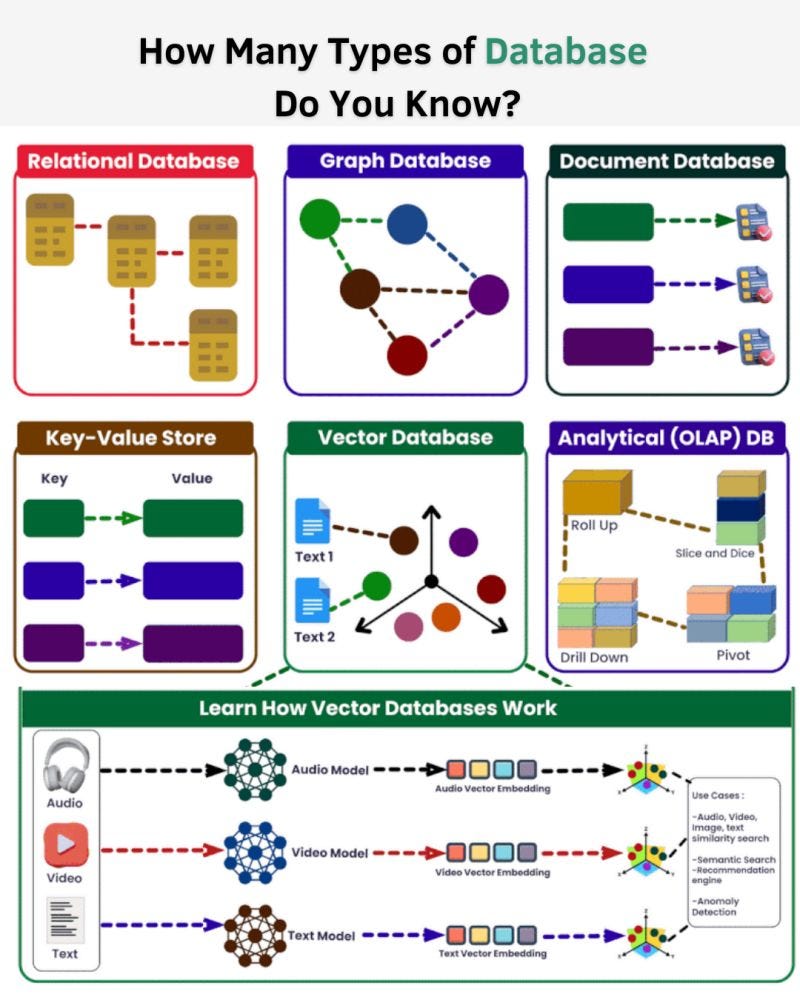
Image credit to Jillani Soft Tech
Relational Database
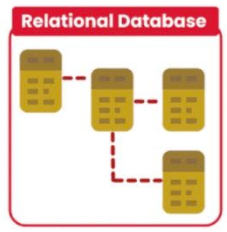
At the core of traditional data management lies the relational database. It organizes data into tables, which can be linked by defined relationships, making it excellent for structured data.
Finance professionals often rely on relational databases for precise, complex queries that require data accuracy and integrity, such as in accounting systems or transaction processing.
Graph Database
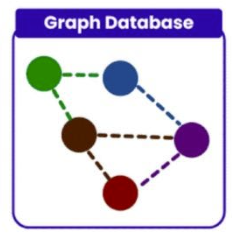
Graph databases are designed to handle data whose relationships are as important as the data itself.
They are ideal for understanding and navigating connections, which is beneficial for financial fraud detection, network analysis, and risk management.
Document Database
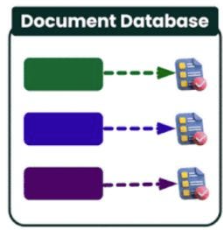
For CFOs looking to manage semi-structured data such as invoices, financial reports, and compliance documents, document databases offer a flexible schema that adapts to data diversity.
They allow for the storage, retrieval, and management of data in a format similar to how it’s used within the business, easing integration with existing document-based processes.
Key-Value Store
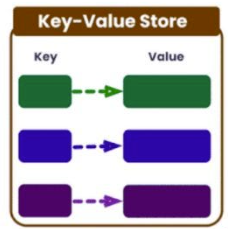
The key-value store is a straightforward database type where each item contains keys and values.
For high-speed requirements, such as caching financial data for real-time analytics or quick access systems, key-value stores provide the necessary performance and scalability.
Vector Database
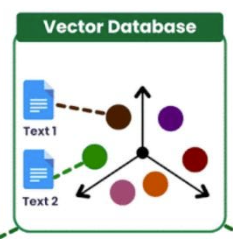
A vector database allows for the storage and search of data through vector embeddings, which can represent complex data in a form that machines can understand.
In finance, this can be used for semantic search across audio, video, images, and text, making it easier to extract insights from various data formats.
Analytical (OLAP) Database
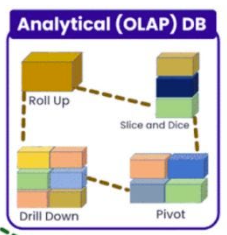
Lastly, Online Analytical Processing (OLAP) databases are specialized for complex analytical queries.
They are structured to deliver quick responses to multidimensional queries, such as time-series analyses, financial forecasting, and scenario planning.
Learning Vector Databases
Learning about vector databases is an essential step for CFOs and finance professionals who are looking to leverage the latest in database technology to enhance their company’s data capabilities.
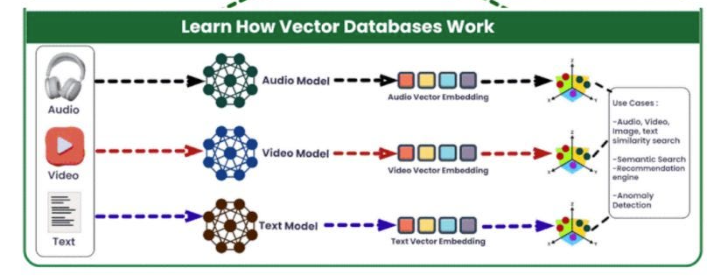
Vector databases are at the forefront of facilitating complex data analyses and searches through the use of vector embeddings.
Here’s how to get started on understanding this innovative approach to data management.
Key Concepts on Databases
Vector Embeddings
Vector embeddings are representations of data in a high-dimensional space where similar data points are closer together. This concept is vital because it allows complex data to be searched and compared in a way that traditional databases cannot.

Semantic Search
Semantic search refers to the ability to search based on the meaning and context of the words rather than just the keywords.
In finance, this enables professionals to find information that traditional keyword searches might miss, such as searching for “market volatility” and finding relevant documents that discuss “financial fluctuations.”
Machine Learning Models:
Understanding the basics of machine learning models is important since they are used to create vector embeddings from raw data.
CFOs don’t need to be data scientists but should grasp the significance of how these models can transform data into a format that can be easily indexed and searched by vector databases.
And some key concepts are:
- Indexing: The process by which a database organizes information. In vector databases, data is indexed by its vector representation.
- Nearest Neighbor Search: A method used in vector databases to find the closest data points in vector space, which equates to the most relevant search results.
- Dimensionality Reduction: Techniques such as PCA (Principal Component Analysis) used to simplify the data while preserving its structure, which is crucial for creating efficient embeddings.
Use Cases of Databases in Finance
- Risk Management: Vector databases can analyze unstructured data to identify patterns that might indicate risks, such as fraudulent behavior or credit default.
- Customer Service: They can enhance customer service by quickly finding the most relevant information to a customer’s query, improving response times and accuracy.
- Financial Research: For research analysts, vector databases can sift through vast amounts of market data and research papers to find connections and insights that would take humans much longer to uncover.
By understanding these concepts, words, and use cases, CFOs and finance professionals can better grasp the potential impact of vector databases on their organization.
Investing time in learning about these technologies can yield significant strategic advantages in data processing and analysis, leading to more informed decision-making and potentially transformative business outcomes.