
Data Protection Laws in the Global South
TL;DR (Article Summary)
The Global South faces a myriad of challenges in establishing robust data protection laws akin to Europe’s GDPR. With evolving technological landscapes and political instability, countries within Africa, Latin America, and Asia are at varying stages of legal framework development to ensure data privacy. Regional collaborations, public awareness, and leveraging emerging technologies are pivotal in navigating the complex realm of data protection, emphasising the importance of context-specific solutions and citizen engagement in safeguarding personal data.
https://www.youtube.com/shorts/39WlyBNYTho
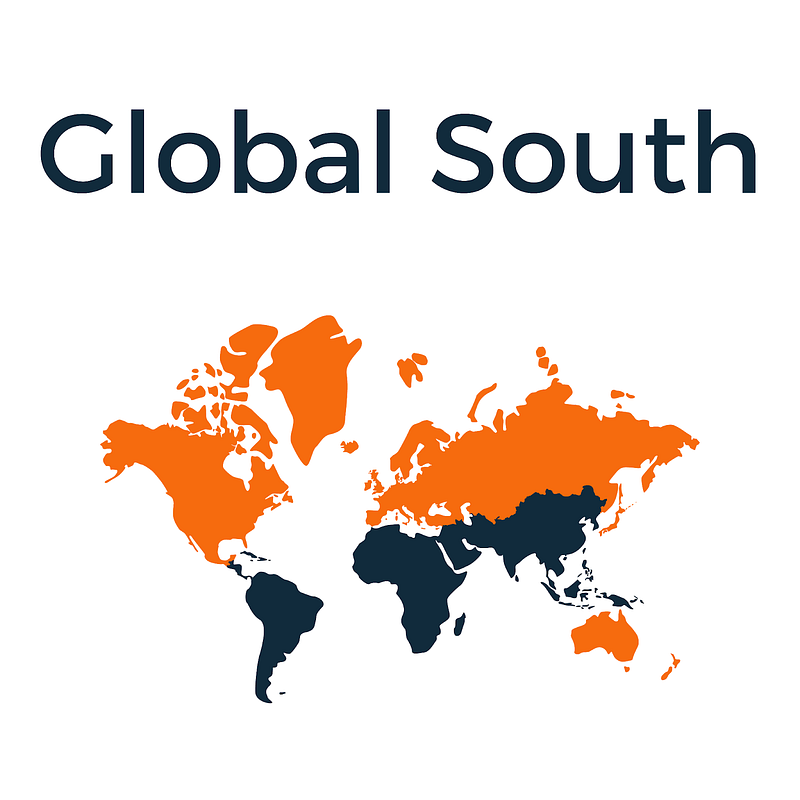
In an age where data is often referred to as digital gold, the Global South is in a precarious position. While Europe’s General Data Protection Regulation (GDPR) set an international benchmark, lower and middle-income countries are still formulating and implementing robust data protection laws. This article reviews the landscape of data protection laws in a few regions in the Global South, offering a nuanced understanding of the challenges, successes, and the road ahead.
The Existing Legal Frameworks: A Kaleidoscope of Efforts and Gaps
Africa: The Duality of Progress and Stagnation
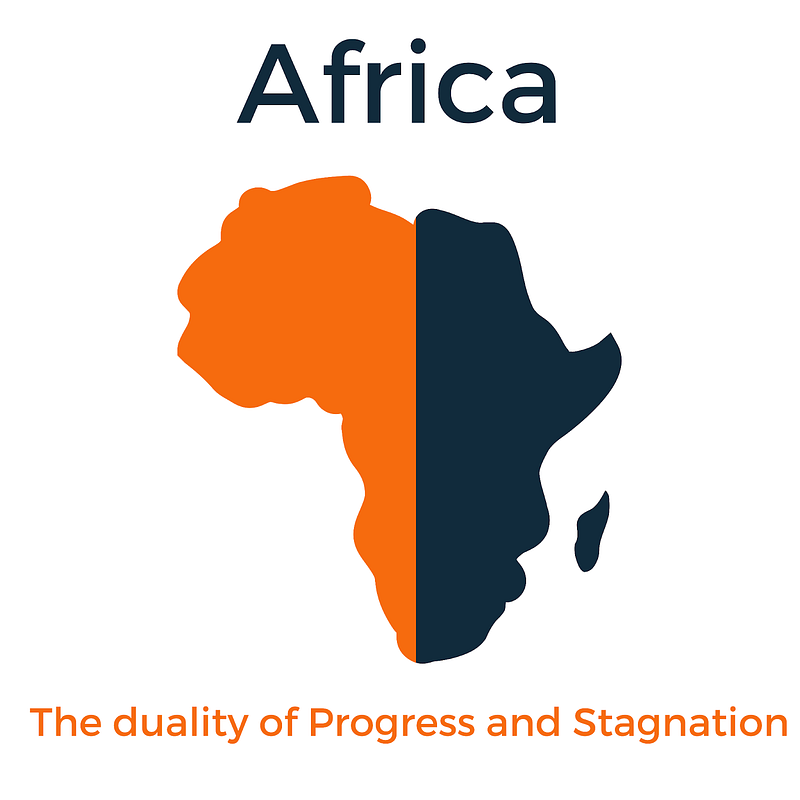
The increasing prevalence of digitally enabled markets has made data protection regulations paramount, leading to a rise in the number of African nations with specific data protection laws. As of August 2020, 31 out of 55 African countries had implemented such laws, with most having done so by 2019, although some are not yet in effect.
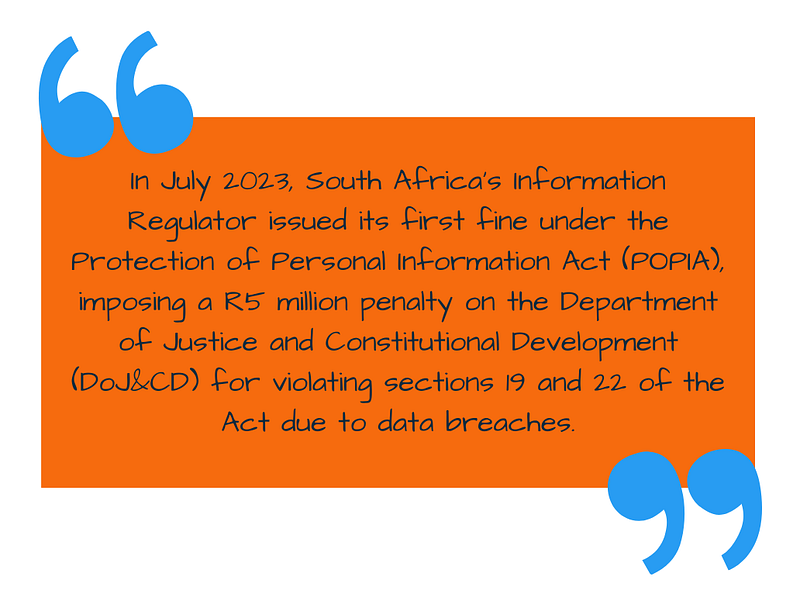
The Protection of Personal Information Act (POPIA) in South Africa has seen both progress and stagnation since its enactment in 2013. The law officially commenced on July 1, 2020, and covers various topics related to data protection, including regulations and other unique aspects for South Africa. In July 2023, South Africa’s Information Regulator issued its first fine under the Protection of Personal Information Act (POPIA), imposing a R5 million penalty on the Department of Justice and Constitutional Development (DoJ&CD) for violating sections 19 and 22 of the Act due to data breaches.
More generally, the regulator’s efforts to uphold data protection laws included launching public awareness campaigns, approving Codes of Conduct, and establishing an Enforcement Committee to handle complaints. However, challenges persist in the effective implementation of POPIA, such as DoJ&CD’s failure to renew security licenses, which led to the compromise of approximately 1,200 files containing personal data. Furthermore, the DoJ&CD missed a 31-day deadline for corrective action following an enforcement notice, highlighting ongoing issues with compliance and the effectiveness of enforcement mechanisms.
https://www.youtube.com/shorts/K-6Tq6g5W20
Latin America: Brazil’s LGPD as an Emerging Beacon
Since its enactment in 2020, the Lei Geral de Proteção de Dados (LGPD) has been a transformative force, drawing inspiration from the EU’s GDPR to elevate data protection standards in Brazil. The law is comprehensive, covering data processing principles, security measures, and the mandatory appointment of a Data Protection Officer (DPO) to oversee compliance. It is enforced by the National Data Protection Authority (ANPD), which has the power to impose fines and mandate protective actions. The ANDP’s first fine under the LGPD was issued to a small telemarketing firm for a data breach. While the incident was relatively minor compared to other data breaches, it serves as a cautionary tale for all organisations, emphasising the tangible consequences of non-compliance and thereby reinforcing the law’s efficacy.
Asia: The Fragmented Landscape
In Asia, countries such as India and Indonesia are in the nascent phases of developing robust data protection frameworks. India’s Digital Personal Data Protection Bill recently passed legislative approval and has ignited significant public discourse. Critics, including legal scholars and digital rights organisations, contend that the legislation contains provisions that could be exploited for government surveillance. The bill permits data processing for state security and criminal investigations, thereby posing a risk to individual privacy. Furthermore, the law’s regulatory structure has been criticised for lacking independence and for its potential to enable extensive government access to personal data. These concerns underscore the need for further refinement to ensure that the legislation effectively safeguards citizens’ digital freedoms without compromising their privacy.
Some Underlying Challenges
Technological Infrastructure and Innovation: The Achilles’ Heel
The rapid evolution of technology presents a formidable challenge to enforcing personal data protection and privacy laws. While digital advancements offer unprecedented benefits, they also exacerbate vulnerabilities in information security. For instance, the digital age has ushered in complex technologies such as cloud services, the Internet of Things, and Big Data Analytics and Artificial Intelligence, which can compromise privacy due to instances of unrestricted access to personal data across global networks.
Moreover, the inadequacy of Information and Communication Technology (ICT) infrastructure contributes to the difficulty in enforcing data protection laws, particularly in the face of cross-border data requests. Regulatory frameworks like the GDPR strive to harmonise data protection, but they often need to catch up to the pace of technological innovations, resulting in legal gaps. Thus, the dynamic nature of technological infrastructure necessitates constant vigilance and adaptation in data protection and privacy laws.
Political Instability: The Unseen Adversary
In nations grappling with political instability, such as Zimbabwe, the prioritisation of data protection often takes a backseat to more immediate concerns like national security and political control. This is not merely an oversight but can be a calculated move with dire consequences for individual privacy. For example, an article by The Africa Report noted that “[Zanu-PF] is sending campaign messages to registered voters, including those who are not their members, and identifying their constituencies. This shows that the ruling party mined the critical data gathered by the Zimbabwe Electoral Commission, activists say”.
This behaviour is paradoxical in the context of the country’s recently enacted Data Protection Act. While a step in the right direction, the Data Protection Act has been criticised for its potential to infringe on citizens’ rights, particularly in its provisions related to cybersecurity and cybercrimes. This situation is further complicated by the country’s ongoing political instability, including factionalism within the ruling party and economic challenges threatening the nation’s stability. Thus, the urgency for robust data protection laws in politically unstable countries is not merely a matter of privacy but a critical issue intertwined with democratic integrity and human rights.
The Road Ahead: Strategies for a Secure Digital Future
Regional Collaboration: Strength in Unity
The Malabo Convention, established in 2014, is a groundbreaking framework for standardising data protection laws across its 15 ratifying member states in Africa. This Convention criminalises various forms of cyber activities, lays down procedural guidelines for investigation and prosecution, and mandates secure data handling, thereby recognising the fundamental right to privacy.
The Malabo Convention offers a comprehensive approach to data protection that could serve as a blueprint for other continents. This convention fosters a collaborative environment to promote more robust data protection measures, including employee education about cyber risks and developing incident response plans. Compliance with this convention safeguards personal data and fortifies defences against cyber threats, making it a model worthy of global consideration. It is unclear if the convention has made any real impact, but there is a point to be made about the value of standardising regional policy.
Public Awareness: The Catalyst for Change
Educational initiatives can be transformative in shaping public attitudes and enhancing awareness, particularly in public health. For example, regional cooperation among countries in the Global South has effectively addressed health emergencies. The Association of Southeast Asian Nations (ASEAN) convened a meeting during the Severe Acute Respiratory Syndrome (SARS) outbreak in 2002 to develop practical advice and strict measures to contain the spread of the disease. This collaborative effort was praised by the World Health Organization as an example of effective international cooperation, contributing to the minimal spread of SARS globally. Such initiatives not only demonstrate the power of education and collaboration but also serve as a testament to the role of regional organisations in elevating public consciousness, especially in countries with limited resources.
Leveraging Emerging Technologies: The Frontier of Possibilities
Technologies like Blockchain and Artificial Intelligence (AI) offer promising avenues for automating data protection. For instance, Estonia has successfully implemented blockchain technology to secure its citizens’ health records, a model that could be replicated in lower and middle-income countries.
The Imperative of Contextual Solutions
While GDPR and other advanced frameworks offer a valuable blueprint, lower and middle-income countries must develop context-specific solutions. The Global South must carve its own path in this critical journey towards safeguarding personal data, considering the unique challenges and opportunities within its socio-political landscape. Individual citizens, too, have an essential role to play, as governments alone cannot dictate privacy laws and regulations; we must understand our rights and hold public and private institutions accountable!


