
Data Liberation in Event-Driven Architecture: Bridging the Old and the New
Data liberation, a critical aspect of event-driven architectures, refers to identifying and publishing cross-domain data sets to their corresponding event streams. This concept plays a vital role in integrating with legacy applications during a migration strategy.
It involves making data stored in one domain available to other systems that require it, thereby addressing the limitations posed by point-to-point dependencies in traditional systems.

Traditional architectures, like MVC, have tightly coupled components, making scaling and updating difficult. Event-driven architecture fosters independence and responsiveness by allowing components to react to events, making the system dynamic and adaptable.
In general, Event-driven architecture thrives on two primary features enabled by data liberation:
- Single Source of Truth: Data liberation creates a unified point of reference for data, ensuring consistency across different systems.
- Elimination of Direct Coupling: Systems are decoupled, promoting flexibility and scalability. Instead of relying on direct connections to data sources, systems interact through event streams.
Data Liberation Patterns
There are three main approaches to data liberation:
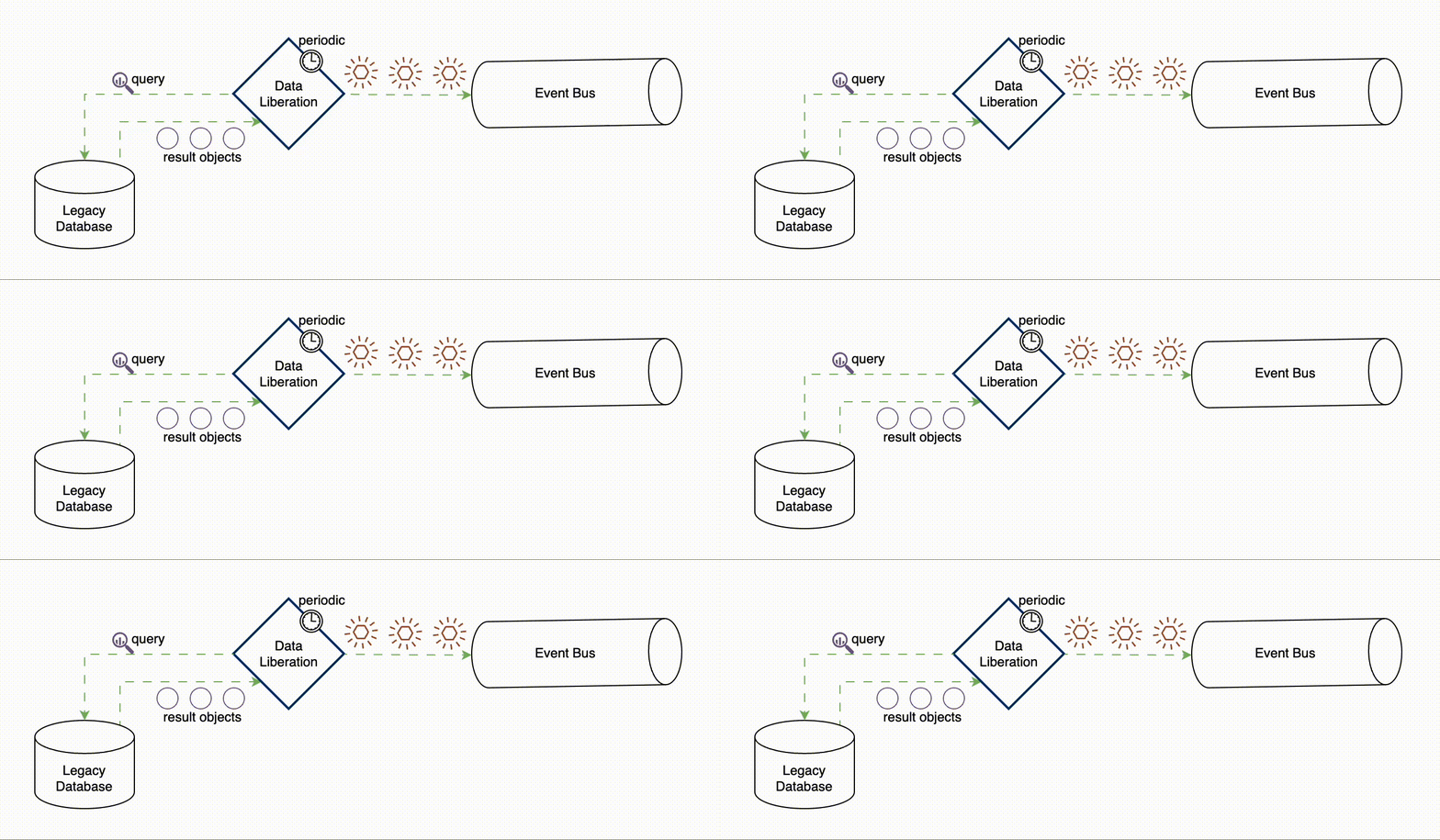
1. Query-Based Data Liberation
Data is extracted by performing queries against the state store of the application or database.
Example Product: Oracle CQN
Use Cases
- Ideal for systems where data changes are not frequent or are predictable.
- Suitable for applications where there’s a need to extract specific data sets based on certain criteria or conditions.
Selection Criteria
- The underlying database or data store should support efficient querying capabilities.
- It is best used when data consistency requirements are not stringent or when the application can tolerate some latency.
Considerations
- This method can be resource-intensive, especially if the queries are complex or the data volume is large.
- There’s a risk of impacting the performance of the primary database, primarily if the queries are run frequently.
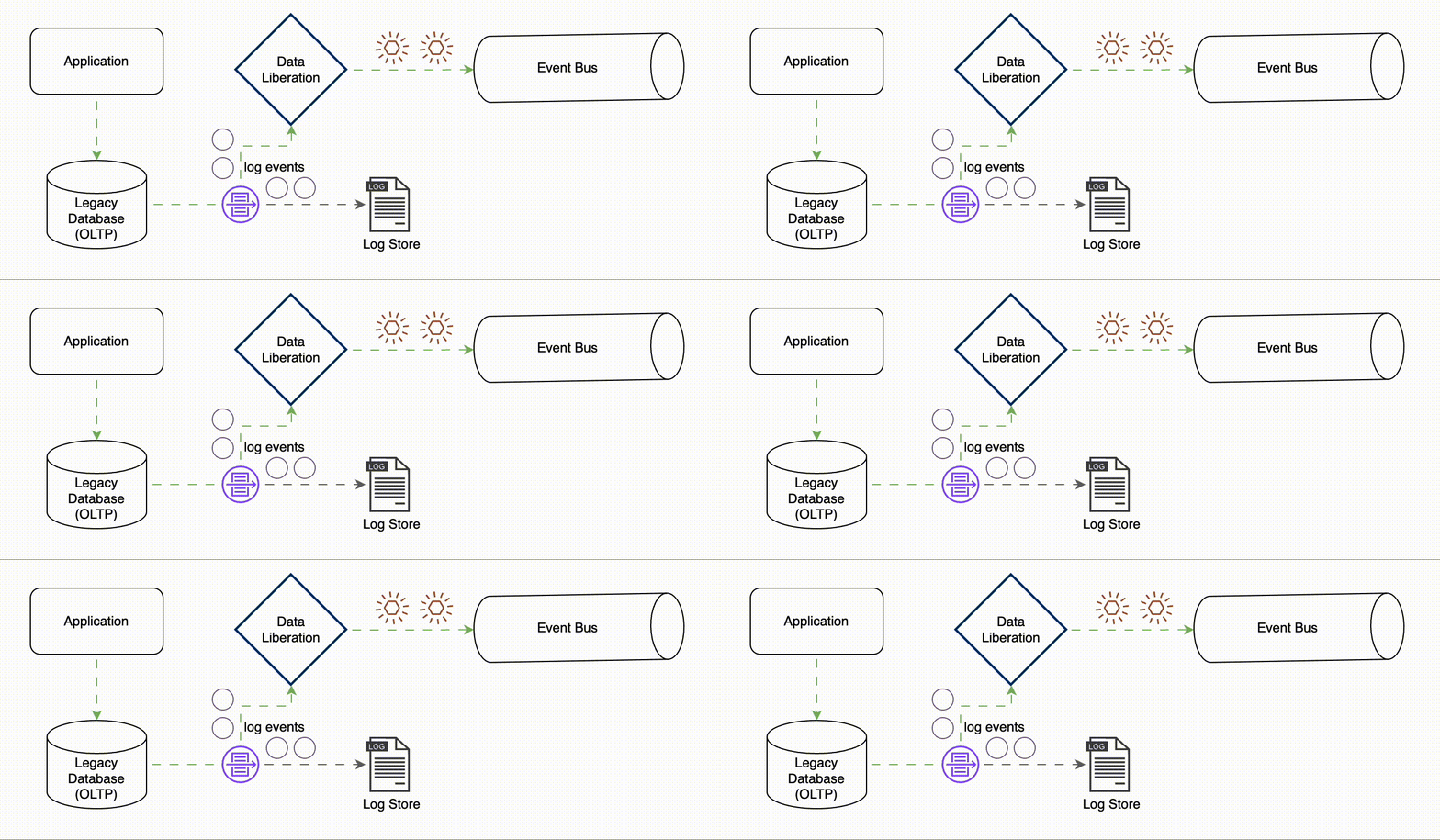
2. Log-Based Data Liberation
This pattern involves extracting data by following the append-only log of the database. This log records all changes made to the data, including inserts, updates, and deletes.
Example Product: Debezium
Use Cases
- It is highly effective for databases that maintain a detailed transaction log.
- Suitable for scenarios requiring real-time or near-real-time data updates.
- Ideal for applications that need to track every change made to the data for auditing or synchronization purposes.
Selection Criteria
- The data store must maintain a comprehensive and accessible transaction log.
- Recommended for systems where maintaining data integrity and consistency is critical.
Considerations
- Implementation can be complex, requiring a deep understanding of the database’s logging mechanism.
- The system needs to handle the potentially large volume of log data efficiently.
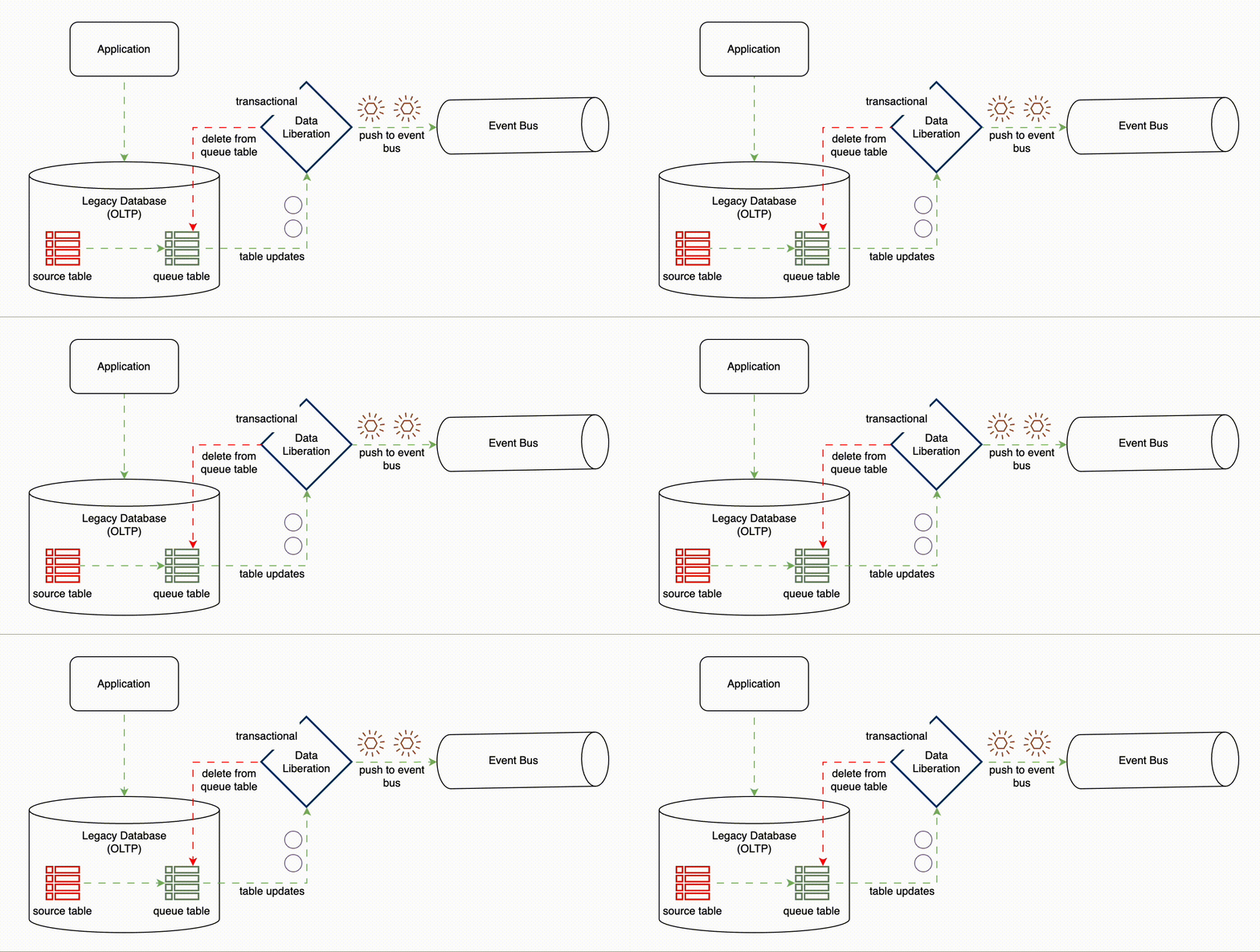
3. Table-Based Data Liberation
This method involves pushing data changes to a dedicated table (serving as an output queue) and then emitting the data from this table to the relevant event streams.
Example Product: Oracle Advanced Queuing
Use Cases
- It is useful when the primary data store doesn’t support tracking changes efficiently.
- Applicable in scenarios where changes to data need to be batch-processed rather than handled in real-time.
Selection Criteria
- Requires the data store to support transactions and can implement an output queue mechanism.
- It is best suited for systems where the data liberation process can afford to have some latency between the data change and its availability in the event stream.
Considerations
- Moving data to the queue table and the event stream can add latency.
- Careful management is needed to ensure the queue table becomes a manageable bottleneck.
Strategies for Integrating Legacy Systems
Integrating legacy systems into an event-driven architecture can be challenging due to their often rigid and outdated structures. Here are detailed elaborations on the strategies to facilitate this integration:
1. Unidirectional Architecture
In a unidirectional architecture, legacy systems contribute data to event streams but do not consume or react to data from these streams.
Use Cases
- It is best suited for stable legacy systems that are not undergoing frequent changes.
- Ideal for systems where the primary requirement is to share data with modern applications rather than to engage in two-way communication.
When to Use
- Use this approach when the legacy system is complex or risky to modify.
- Appropriate when the data flow is predominantly from the legacy system to other parts of the architecture.
Considerations
- Ensures minimal disruption to the legacy system.
- This may limit the extent to which legacy systems can participate in dynamic, event-driven processes.
2. Controlled Publishing
This strategy involves carefully managing the publication of data from the legacy system to the event stream, ensuring synchronization between the internal and external data set.
Use Cases
- Suitable for systems where data integrity and consistency between the legacy system and event-driven components are critical.
- Applicable in scenarios where the legacy system undergoes occasional updates that need to be reflected accurately in real-time systems.
When to Use
- When there is a need for tight control over what data is published and when.
- In situations where the legacy system can handle some level of integration.
Considerations
- Requires a mechanism within the legacy system to trigger data publishing.
- The synchronization process must be robust to handle discrepancies and errors.
3. Low-Effort Solutions
These solutions involve minimal changes to the legacy systems, focusing on quick wins that enable some level of integration without a significant overhaul.
Use Cases
- Ideal for legacy systems that are critical to business operations and cannot be extensively modified due to risk or resource constraints.
- It is useful when the goal is to achieve some level of modernization with limited investment.
When to Use
- In scenarios where the budget or resources for a full-scale integration are limited.
- When the legacy system is scheduled for replacement or decommissioning shortly, immediate integration is still necessary.
Considerations
- Solutions might include simple adapters or connectors that interface with the legacy system.
- The approach might not fully leverage the benefits of an event-driven architecture, but it can be a pragmatic first step.
Advantages of Data Liberation in Event-Driven Architecture
- Flexibility in Integration: It enables easier integration with various systems, including legacy applications.
- Improved Scalability: Systems can scale independently without being hindered by dependencies.
- Real-Time Data Processing: Event streams allow for real-time data processing and decision-making.
Potential Pitfalls and Challenges
- Consistency Management: Keeping the data set and event stream in sync is crucial but challenging, especially in achieving consistency.
- Legacy System Integration: Due to their inherent rigidity and technical debt, integrating with legacy systems can be complex, costly, and risky.
- Schema Management: Ensuring that event data adheres to a well-defined and evolving schema is essential for maintaining data quality and reliability.
Frameworks are here to help
Frameworks like Gobblin and Apache NiFi play a significant role in data liberation. These centralized frameworks facilitate data extraction into event streams, offering scalability and integration capabilities.
Framework Features:
- Scalability: They can handle increasing amounts of data by adding more instances.
- Integration with Schema Registries: These frameworks support and can be customized to work with various schema registries, ensuring data consistency and quality.
Framework Usage Considerations:
- Direct Ownership vs. Framework Dependency: Some systems might benefit more from managing their event stream data production directly rather than relying on a dedicated framework.
- Avoiding Anti-Patterns: Care must be taken to avoid exposing internal data models to external systems, which can inadvertently increase coupling rather than decrease it.
Data liberation in event-driven architecture represents a paradigm shift in how systems interact and manage data. Organizations can achieve greater flexibility, scalability, and real-time responsiveness by liberating data from siloed stores and promoting a single source of truth through event streams. However, the journey involves navigating the challenges of integrating with legacy systems, maintaining data consistency, and choosing the right frameworks and strategies. As organizations move towards this architecture, a thoughtful, well-planned approach to data liberation can pave the way for a more interconnected, dynamic, and efficient system landscape.
Remember, the journey to data liberation and event-driven architecture is not a one-size-fits-all solution.
It requires a careful assessment of existing systems, a clear understanding of the organization’s goals, and a strategic approach to integrating new technologies with legacy applications.
Thanks for reading so far. If you like our content, please follow us for more informative articles and hit that clap button to show your support. Loved this article, show your support by me buying a coffee.