
Deciphering the 2023 Data Job Market: Do the Numbers Suggest Oversaturation or Opportunity?
From everything I’m hearing, the data job market is in a brutal spot. To understand the employment outlook for data professionals right now, I conducted an in-depth analysis of the trends, challenges, and prospects of the data job market.
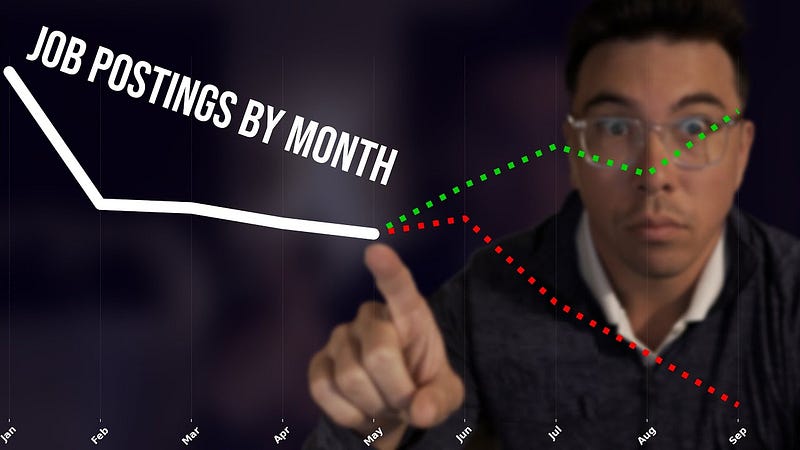
Table Of Contents
• • • Postings By Role
• • • Postings By Seniority
• • • Global Job Postings
• • • Full-Time Vs. Non-Full-Time
Everywhere I look, it seems like people are having a really hard time landing data jobs. On Reddit and in my YouTube comment section, I’m seeing everyone from beginners all the way to seasoned experts struggling to land roles.
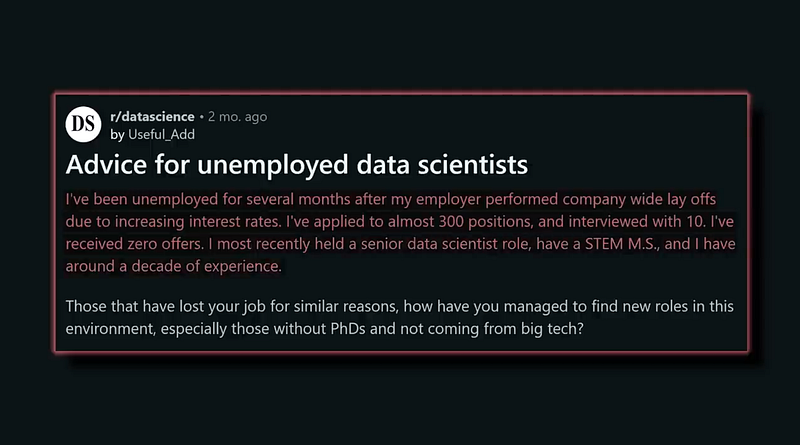
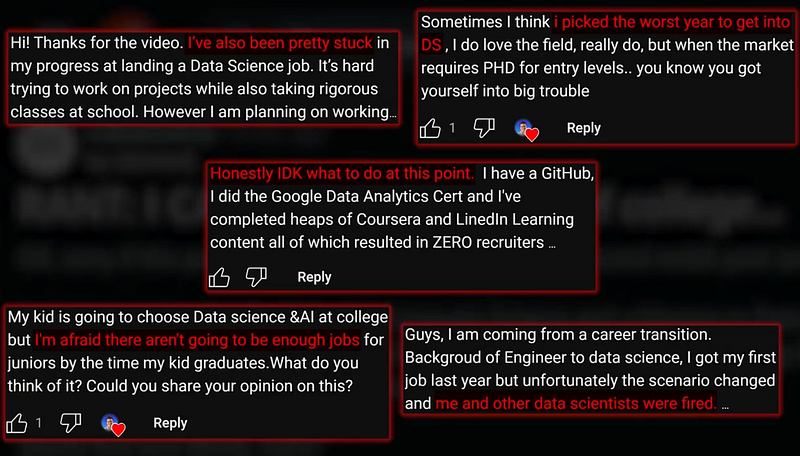
This begs the question: how bad is the data job market? Is it hopeless to land a job in the field or is it more promising than many people are making it out to be?

Let’s dive into the data and see. I’ll look into the overall trends in the market. What types of data roles are employers hiring for and would make a good career right now? And even which specific companies are hiring at the very end. So, you’ll want to stay tuned for that.
Data related to the data job market was very difficult to find. So, please bear with me. I did the best I could with what I could scrounge up from a couple of different resources. The first data I found on the job market was from an Interview Query blog, which I’ve linked in the references below. It only goes through March of this year, but it still helps to paint a decent year-over-year picture of the job market for data roles.
FAANG Vs. Non-FAANG
From March 2022 to March 2023, we see that there’s a massive decrease in job postings (i.e., a roughly 90% reduction) from Big Tech companies known under the acronym FAANG (or MANGA). On the other hand, other companies have actually increased their hiring by a few percentage points (i.e., an approximately 7% improvement).
There is about the same number of job postings available overall in the market as there were in the previous year. And that’s because non-FAANG companies make up a far larger proportion of total jobs (i.e., in the tens of thousands) than their FAANG counterparts (i.e., in the hundreds).
Current Job Landscape
I’m sure you’re thinking, “Ken, this is old data. What about now? I bet the market has completely fallen off a cliff since March.” This is where some great data that I got from Luke Barousse comes into play. Here’s his tool datanerd.tech if you want to play with this data yourself.
We can look at where the Interview Query data leaves off and see how the market has changed since then. It looks like, since March, the job market really did take a dive until May, at least in the number of total job postings available in Luke’s data. On the other hand, now it looks like it’s starting to recover.
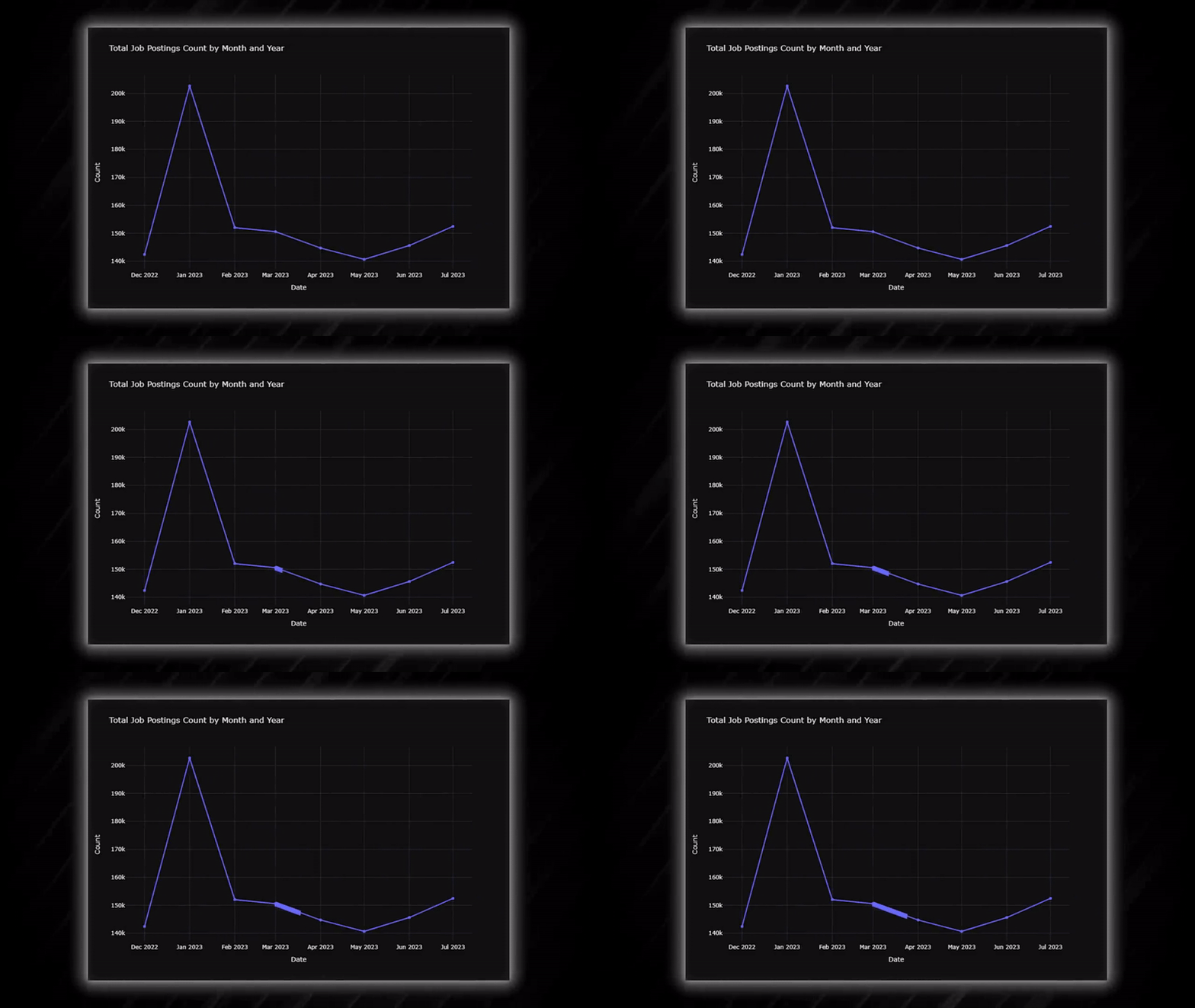
If we look at this critically, we can see that perhaps much of the negative sentiment around the job market is a remnant of the massive low point during May.
This could be promising for people who are still in the market as it does seem like it’s trying to correct.
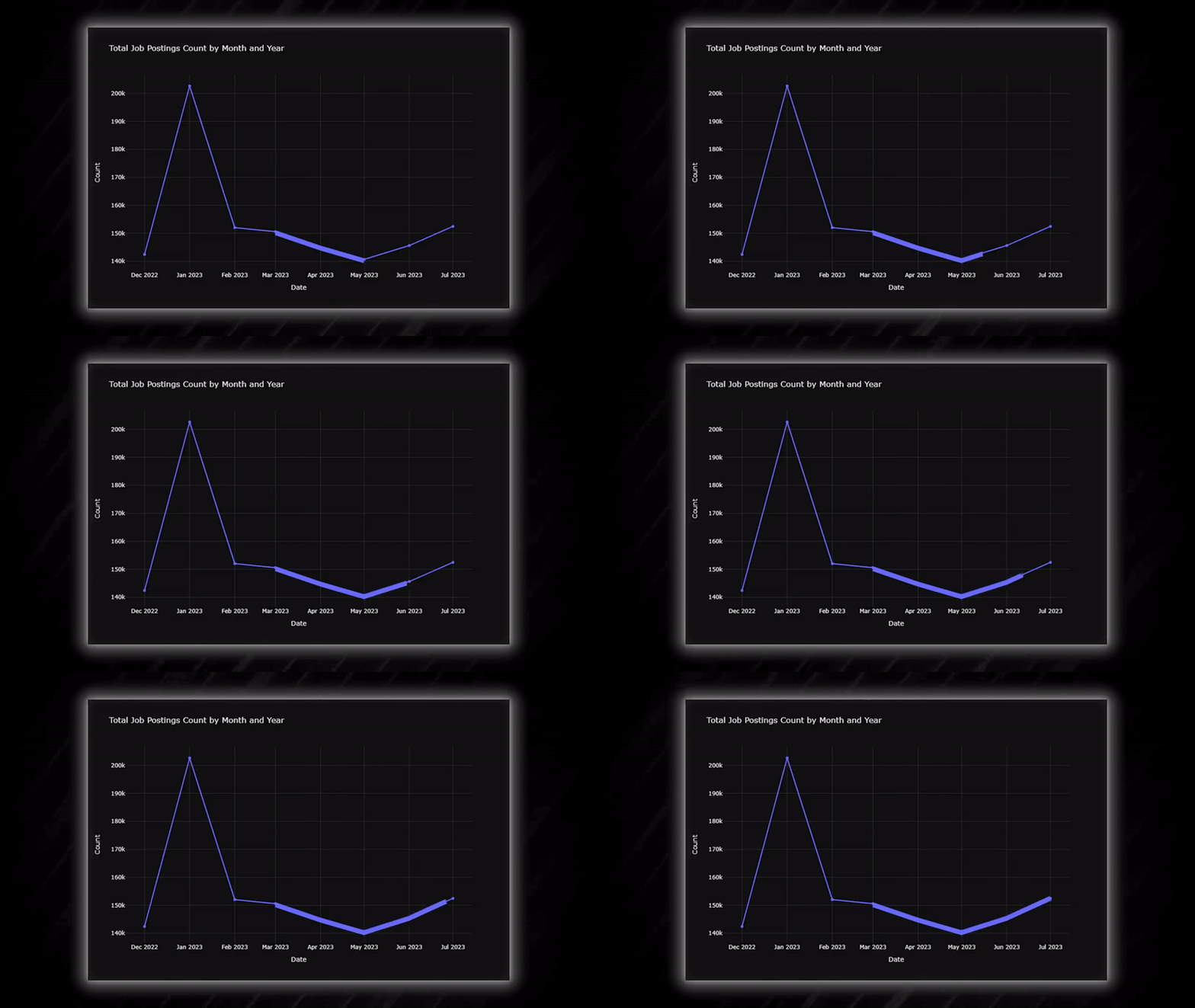
I do want to note that Luke and Interview Query’s data are from different sources, so there are obviously discrepancies in the numbers here.
However, this is still the best quality data that I could find. Now let’s take a look at this data by various characteristics.
Postings By Role
This might be surprising, but there are far more data-engineering opportunities than data-scientist or data-analyst positions. All these roles seem to be following the same upward trend after a low point in either April or May.
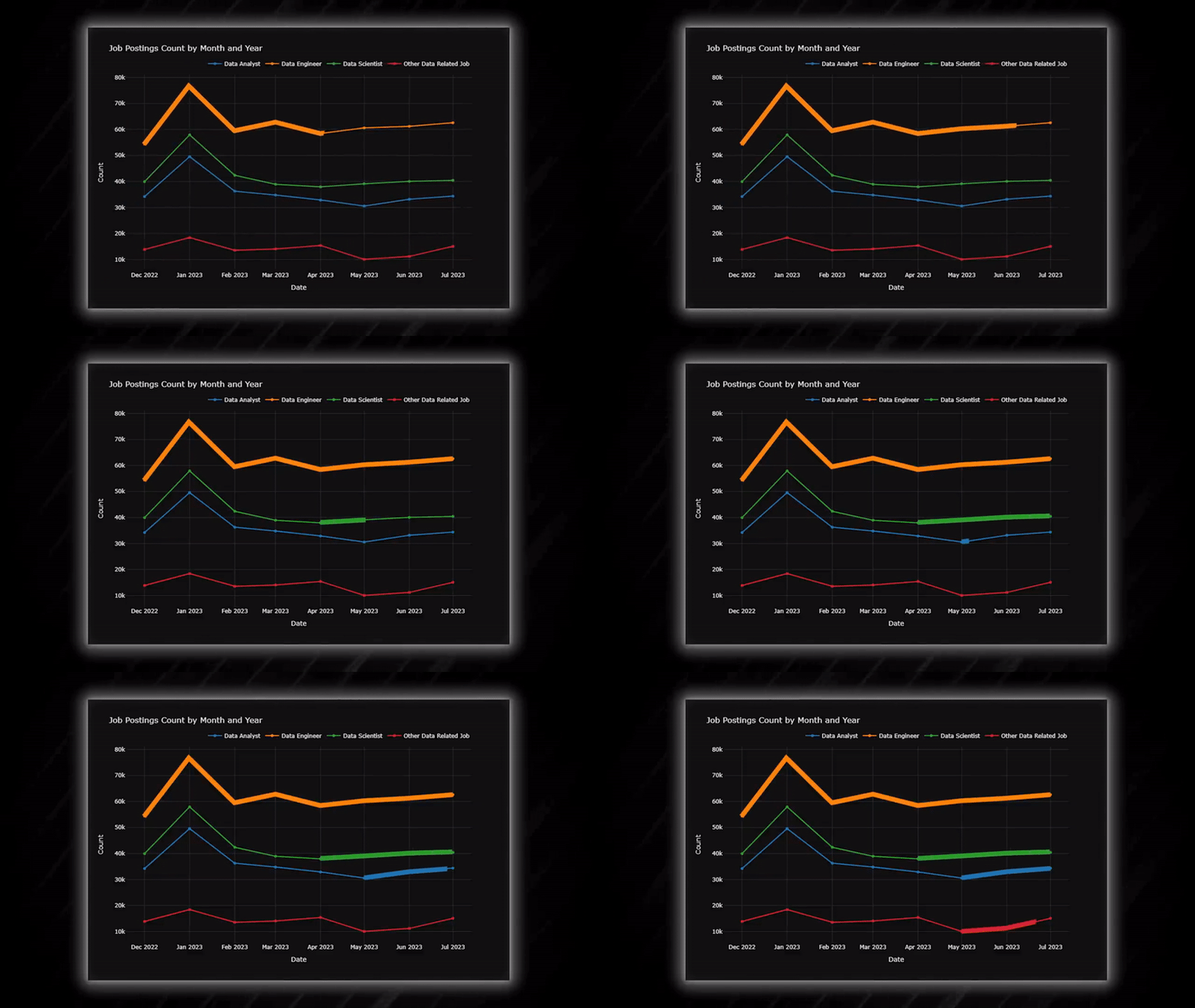
Just like many companies can’t seem to get enough data engineers, we can never have enough claps for the Medium algorithm. So if you’re finding this useful, feel free to drop one.
Postings By Seniority
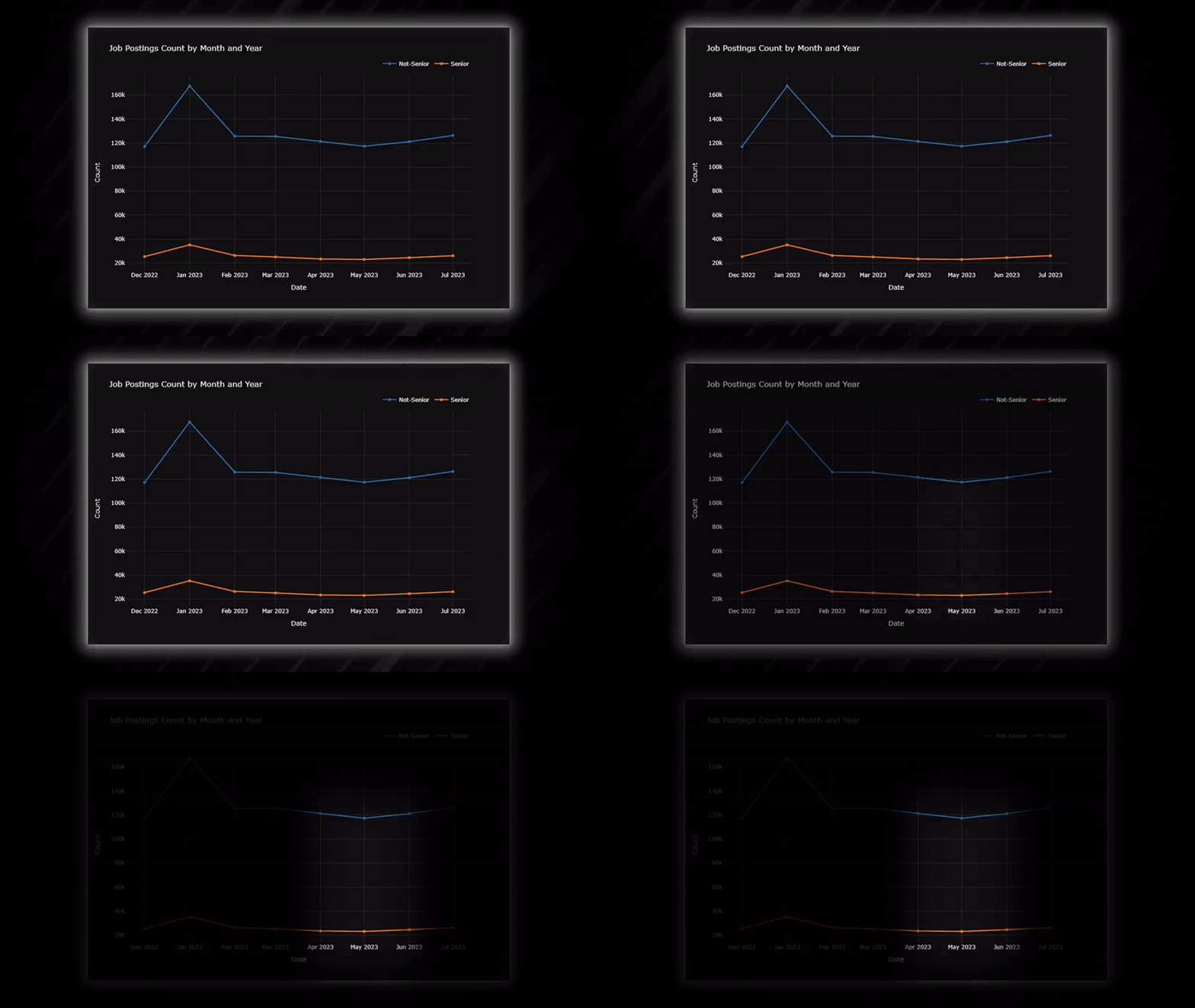
Let’s also explore the seniority of positions that are being hired for. Not sure if this is a surprise or not, but there are significantly more non-senior roles that are being hired for in the market. This is across the board for data engineers, data analysts, and data scientists.
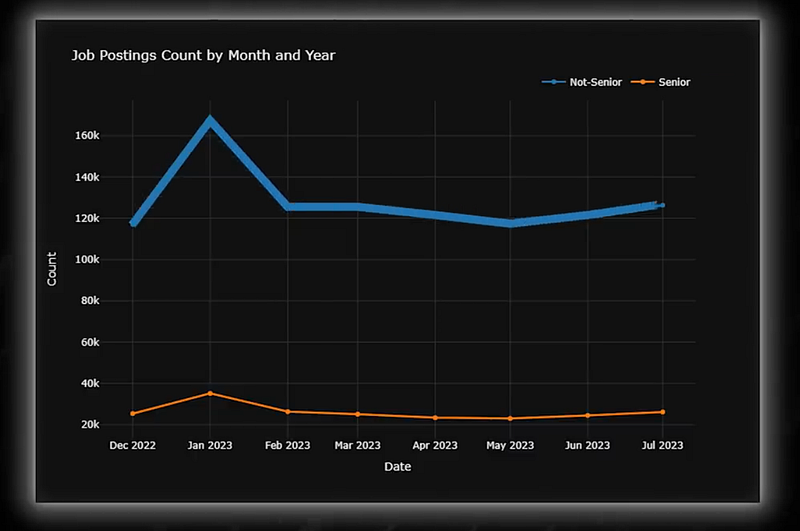
Unfortunately, this data doesn’t show the demand on the other side of the market. So, if you’re applying for a junior role and it seems saturated, it’s likely because the supply of entry-level talent is far greater than that of senior-level talent.
A quick Google Trends search for entry-level data jobs does anecdotally suggest that the supply of people interested in these could be increasing since the beginning of the year.
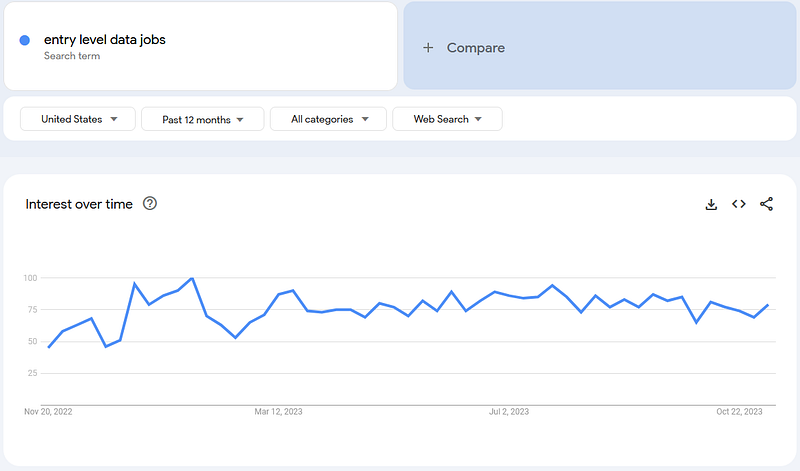
This could explain some of the difficulties landing entry-level data jobs, especially in May of this year.
Global Job Postings
I think that many people might say, “This is true for the U.S., but that’s not true for where I live. The job market where I live is still terrible.”
So, let’s take a look at some other common places for data jobs. Admittedly, this data is collected from global job-posting websites, not local ones. So, it might not be completely representative.
This is the list of job postings for the top 10 countries with the most postings since December.
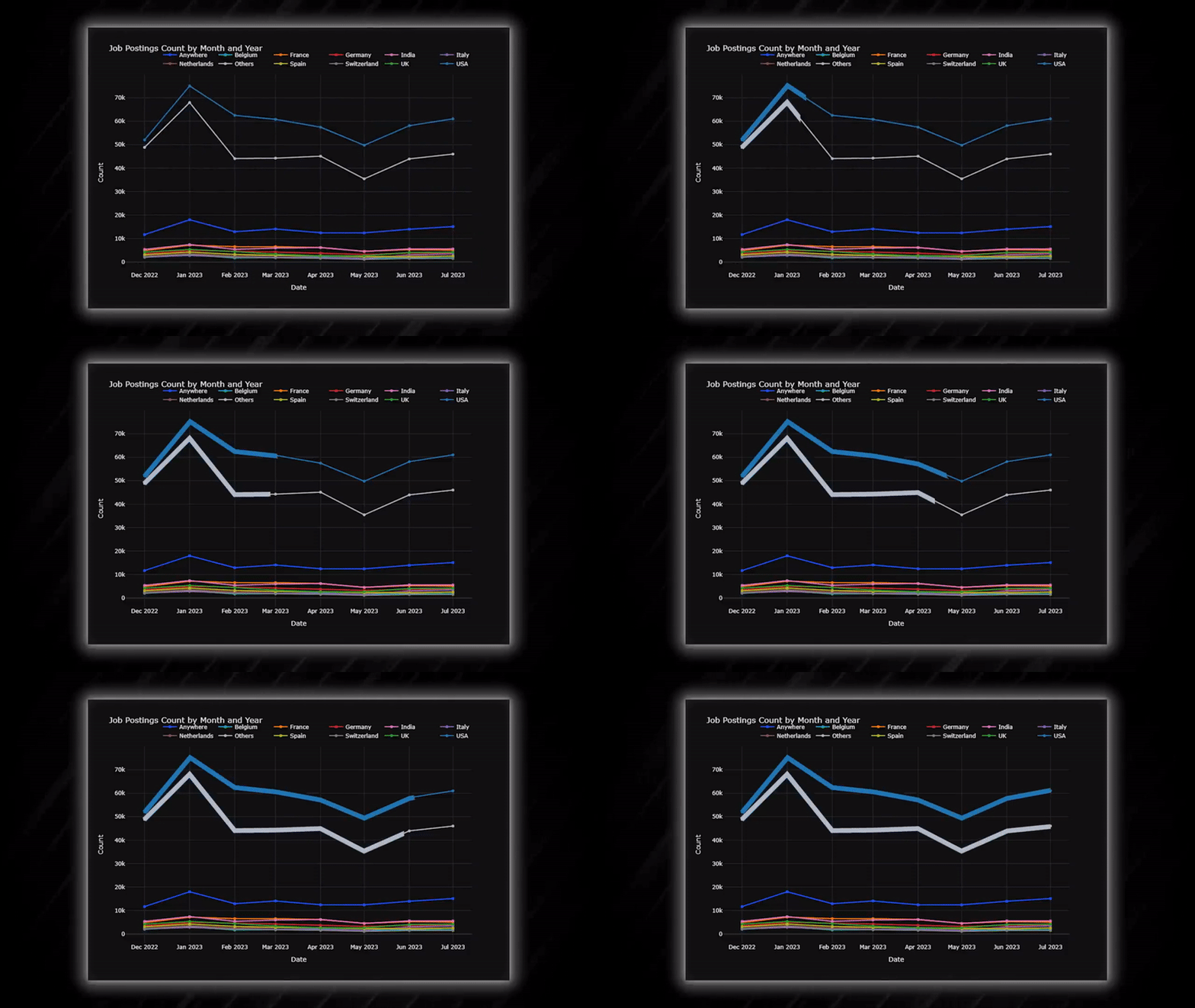
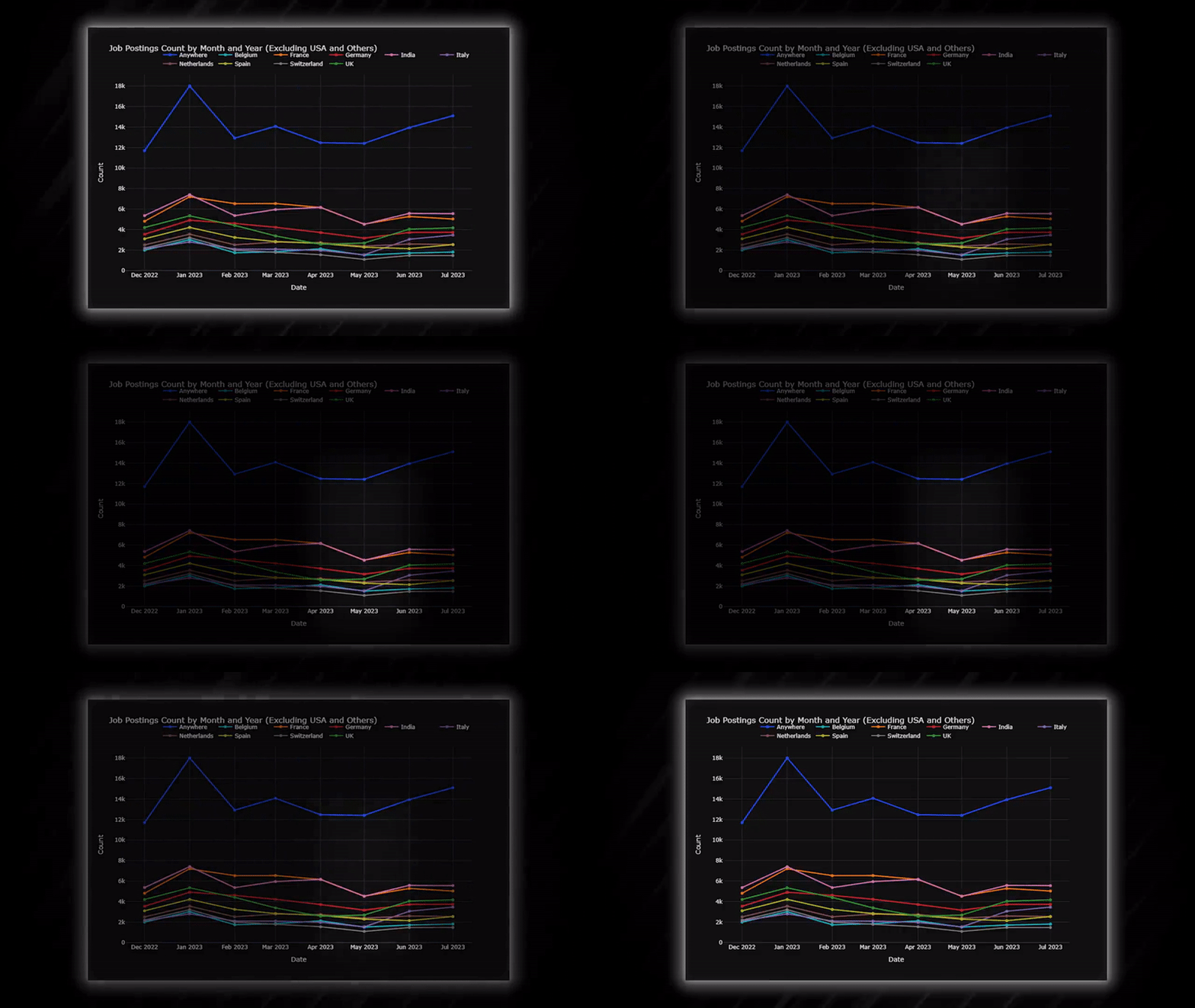
Obviously, the U.S. and all other countries outside of the top 10, in aggregate, carry the brunt of the jobs, but let’s explore what data job markets are looking like in some of these other countries.
Again, it appears that May really was the bottoming out point for almost every country, and the majority of them are rebounding reasonably well.
Full-Time Vs. Non-Full-Time
Now, I wanted to explore a little hypothesis as well. So, let’s look at non-full-time positions, because I know many of you are applying for internships and part-time work.
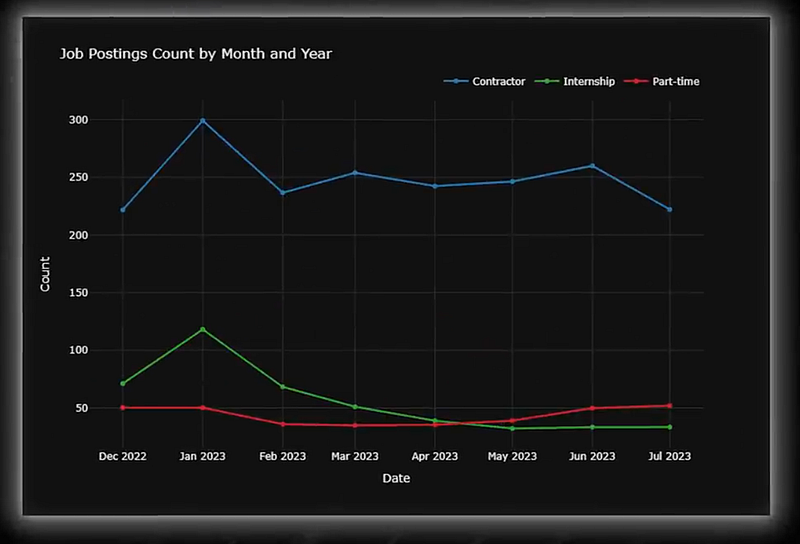
Although it does look like contract positions did take a downturn in July, this could very likely be related to six-month contract positions being filled or removed for the second half of the year.
I find it pretty interesting to see the stability of contract or part-time work during the largest downturns, considering many people believe contract work to be less reliable than full-time work.
Let me know if you want an article about my views around the redefinition of the modern contractor in the comments section.
Who Is Hiring Now?
We saw from the Interview Query data that Big Tech has dramatically lowered their postings. Which companies are demanding the most jobs? Right now, these are the top 20 that are hiring the most positions. It looks like it’s mostly large companies, many in the consulting and financial services.
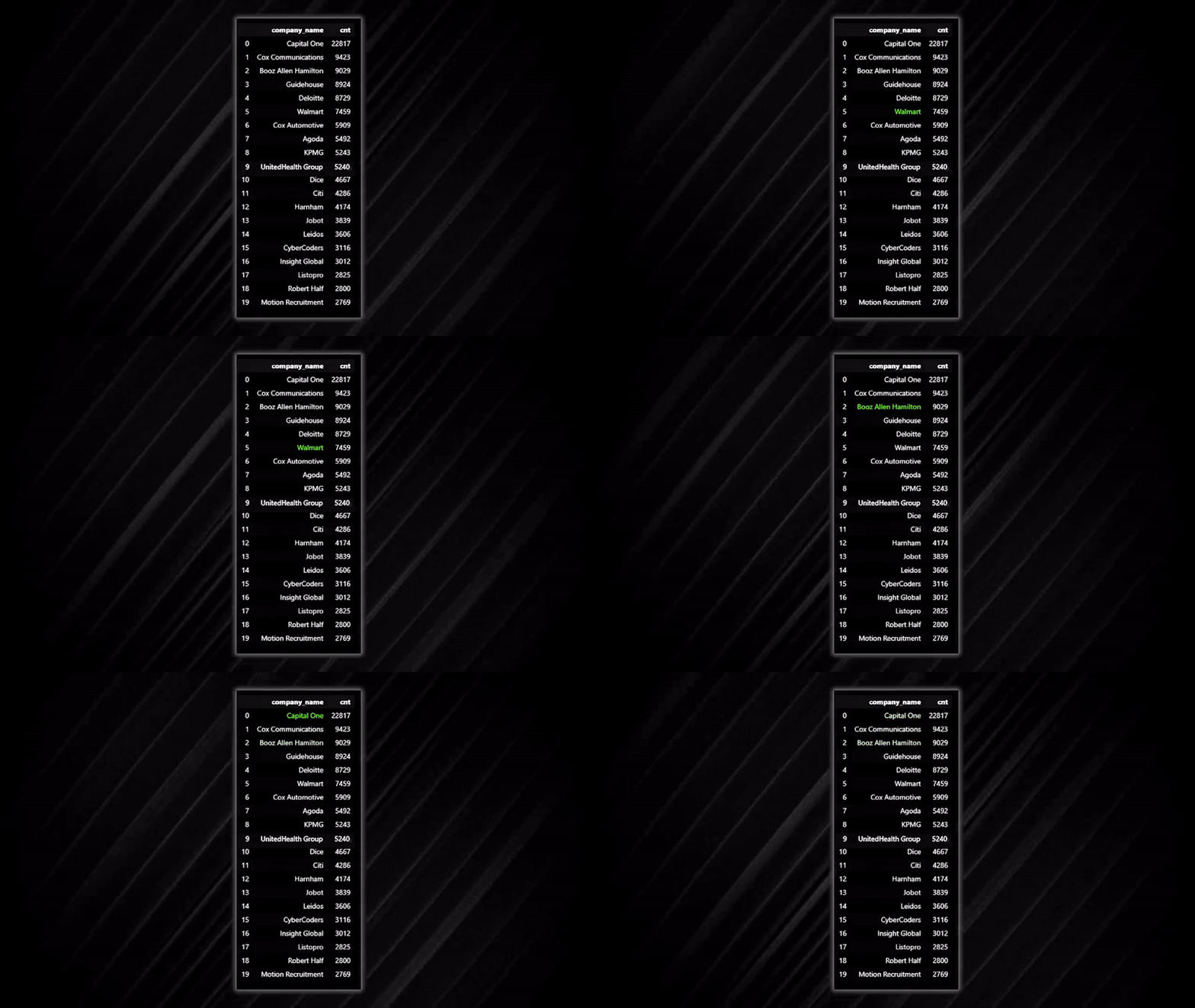
You’ll notice that FAANG companies are not in any of the top 20. Actually, the only ones that crack the top 100 are Apple and Amazon in the 33rd and 95th spot, respectively.
What Does It All Mean?
Even though we’d always love higher quality data, I think the job postings do tell an interesting story.
The job market really did get quite bad during May, but everything that I’m seeing suggests that it’s rebounding almost uniformly across the board.

To me, this suggests that this is probably a cyclical downturn, not a structural one (at least, I don’t have any evidence of structural change in demand for the roles as of right now). This suggests potential recoveries in the future.
There also seems to be a greater overall need for data people in industry, finance, and consulting compared to Big Tech and a variation in demand among different roles within the data field, which favor data engineering.
If you are in the market for a job and have been stressed about it and the future of this career, you should be prepared to adapt to areas where opportunities are more abundant by acquiring skills beyond your core and considering diverse sectors to broaden your job prospects. Furthermore, building a strong network can provide insights, job leads, and support during challenging times.
Hopefully, this article paints a bit more of a data-driven and complete picture of what’s happening. I, myself, am a bit more optimistic about the improvement of many of the circumstances in this domain based on what I’m seeing from this data in the market.
Until next time, good luck on your data science journey.
References
- Interview Query (2023). Data Science Job Market — March 2023 Update. Interview Query. https://www.interviewquery.com/p/job-market-update-march-2023
If you enjoyed this article, remember to follow me on Medium for more content like this or subscribe to me via email. You can additionally share and recommend this article to your network that’s interested in data science!
If you like fun, informative videos on data science, machine learning, and AI, check out my YouTube channel, where I provide commentary, tutorials, and other educational videos.
To get weekly updates on my content creation and on additional learning resources in the data science industry, sign up for my newsletter, the Data Dribble!


