
Data-Driven Decisions Over my Outfits with AI
I’m not exactly the best at putting outfits together. I’ve stuck to a closet full of black clothes and plaid tops. The worse outfit I wore included combining a plaid top with vertically striped pants. I barely shop for clothes and I did one major shopping spree for clothing for about 8 years where I went to H&M and spent 1000 dollars from my first paycheck to update my wardrobe to all-black clothing. So in an attempt to save me from putting together the worse outfit combinations, I got the help of my talented fashionista of a sister to put outfits together that do not go beyond my comfort zone.
Initially, I started recording all the outfits my sister put together using a word document. I took pictures of the outfit and then added them to the document with a description including the occasions to wear it. But managing outfits from a word document got clunky so I browsed around for an app to better manage my clothes. I stumbled upon Acloset.
Managing Outfits with Acloset
Cataloging My Clothes
Like any AI-based app, I needed to provide data to the AI so it can start to help me manage, suggest, and create outfits. I catalog all the individual clothing items my sister had made an outfit for. This included taking pictures of the clothes I had or finding a picture of the clothing item on the internet. Given that most of my clothes were from either H&M or Shein, I was easily able to screenshot the image. And the cool thing about Acloset is that it is able to automatically extract the clothing item and remove the background.
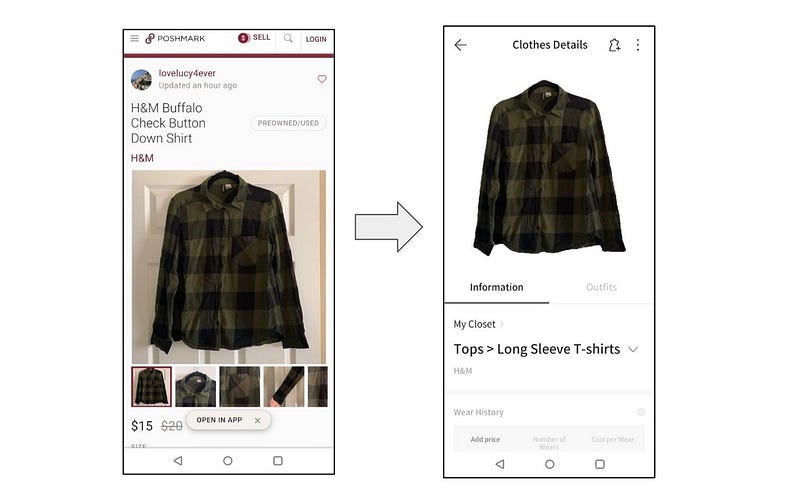
Cataloging my clothes was easy as I do not have a large number of clothing items. By cataloging my clothing, I was able to discover how I had multiple duplicate items: 3 pairs of black joggers, 3 pairs of black jeans, 2 polka dot clothes, 2 black scarves, and much much more.
By the end of cataloging my closet, I had a total of 74 pieces of clothing items, including shoes, headscarves (I’m a hijabi), coats, pants, and tops. After uploading my closet into Acloset, it generated a couple of interesting stats:
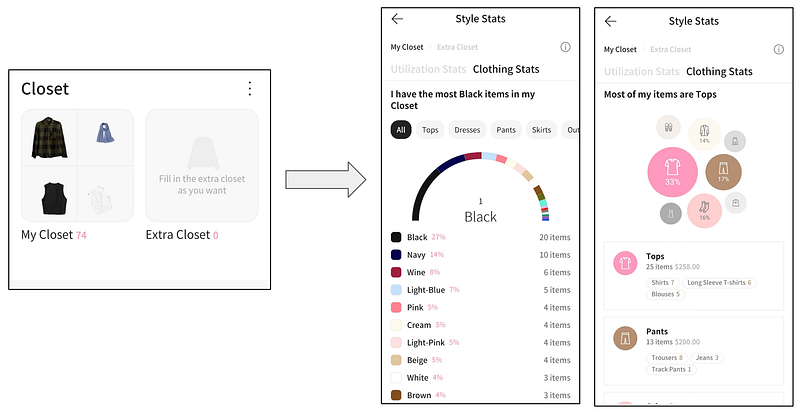
There were obvious stats. I owned a lot of black clothing. I didn’t know I owned a lot of tops. The takeaway here is I should probably invest in more pants.
Another interesting statistic was how Acloset allowed me to enter how much I paid for each piece of clothing. Acloset also showed me statistics regarding cost:
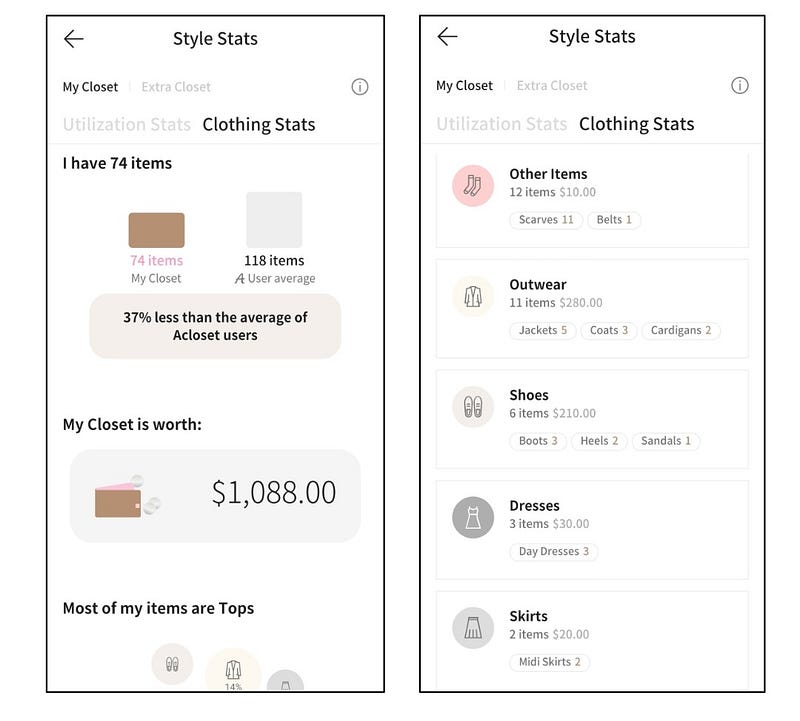
My wardrobe was worth about 1000 dollars. Although not too fancy or crazy, my wardrobe stuck to my somewhat aspirations for a minimalist lifestyle.
Creating Outfits
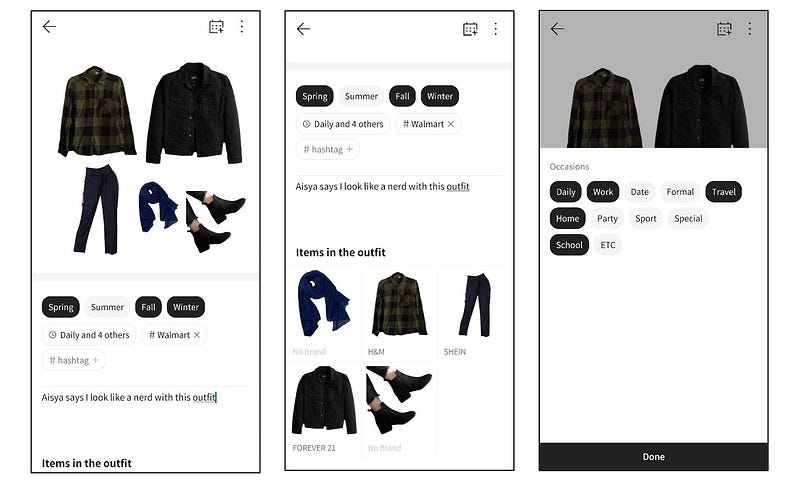
The next step was to create an outfit from the clothing items in Acloset. Creating an outfit entails adding the clothing items onto a canvas. I recreated the outfits from my word document in Acloset. It took a couple of hours, but Acloset’s feature of duplicating an existing outfit and then editing the duplicate to create a whole new outfit made it much easier to recreate the outfits in Acloset.
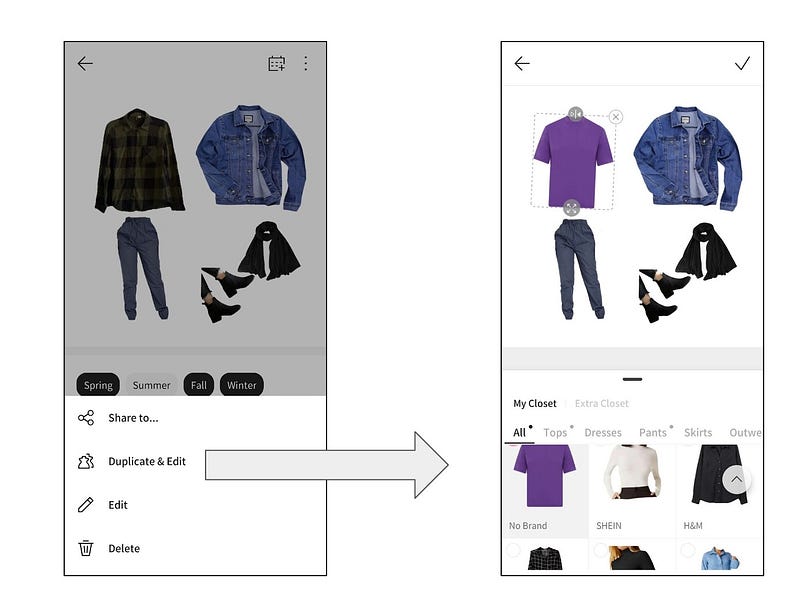
Another cool feature includes adding in commentary and tagging the occasions and seasons the outfit is best for. This helped me quickly find outfits to wear when I’m in a rush to leave the house for specific occasions.
Generating outfits with AI
One cool thing I like about Acloset is its AI-based feature for automatically generating outfits. Given a piece of clothing, it is able to create outfits with that outfit. So far, I’ve noticed that it seems to put together outfits based on color rather than the clothing item type or fabric. I may be wrong about that explanation on how the AI puts together outfits. I also do not have much diversity in terms of fabric clothing in my closet as I generally stick to polyester, cotton, and denim. Additionally, I stick to clothing item types that are generally considered basic items, such as basic tops, overcoats, and basic pants.
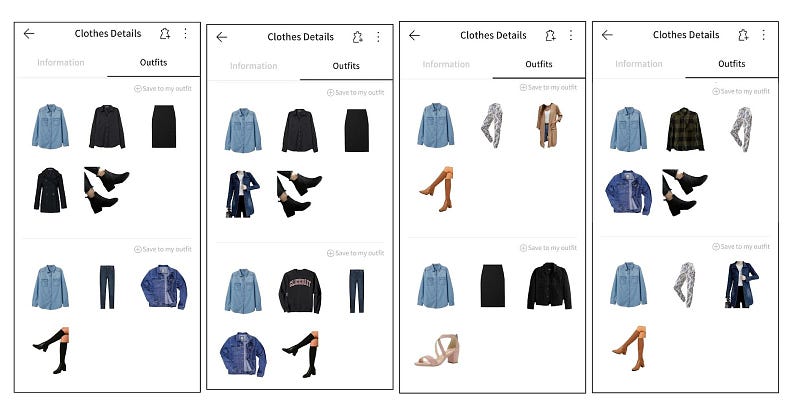
For instance, some outfits were glaringly bad, as Acloset picked two button-downs for one outfit. Another instance of a bad outfit was when it picked knee-high boots to wear with floral tapered pants. Another bad outfit had two denim coats.
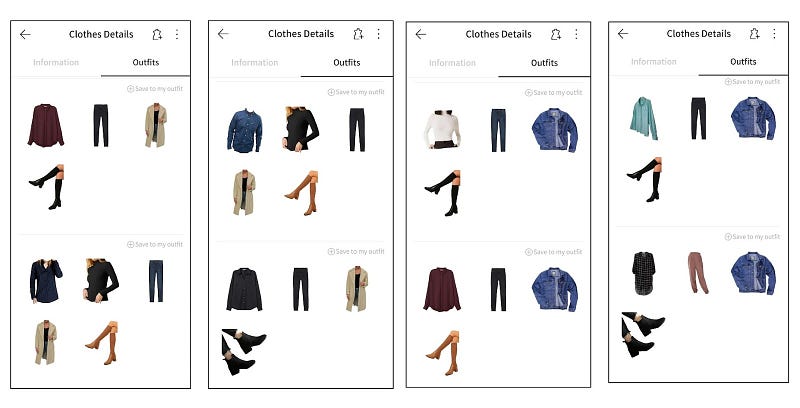
I think Acloset picks outfits based on color rather than anything else because visually, the colors of the clothing items put together in an outfit go really well. The colors complement each other and the colors are well coordinated. I did not see an instance of a weird color combination. Again my non-diverse closet may contribute to Acloset just using color as a metric to putting outfits together.
Regardless of Acloset’s flaws, sometimes the AI generates well-put outfits that my sister the fashionista expert did not realize would work well together:
Using both the AI and my sister, I was able to put together a total of 375 outfits:
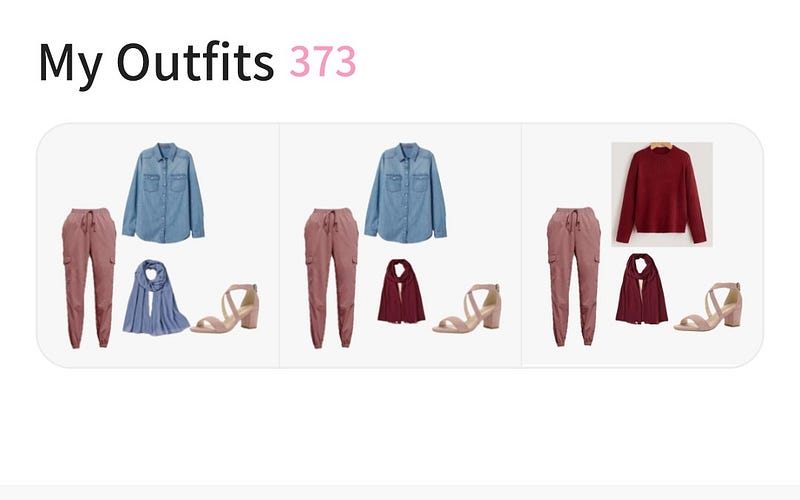
Although I don’t have an exact number, I would estimate about 20 to 30 percent of my outfits were inspired by the AI which I then manually edited to add a headscarf. The rest of the outfits were either created by my sister or inspired by outfits on Lookastic which searches for outfits from influencers given a particular piece of clothing.
I am not too surprised that Acloset is unable to generate outfits with scarves, particularly headscarves. I expected that since that might have been out of scope for the initial set of features developed. But it would really be cool if that feature was added. For all of my outfits, I had to manually add a headscarf and I picked one based on the colors of the clothes in the outfit.
Selecting an outfit to wear
Ever since using this app, I never have had to think much about putting an outfit together before going out. Usually, I would put an outfit together based on the pants I happen to wear that day.
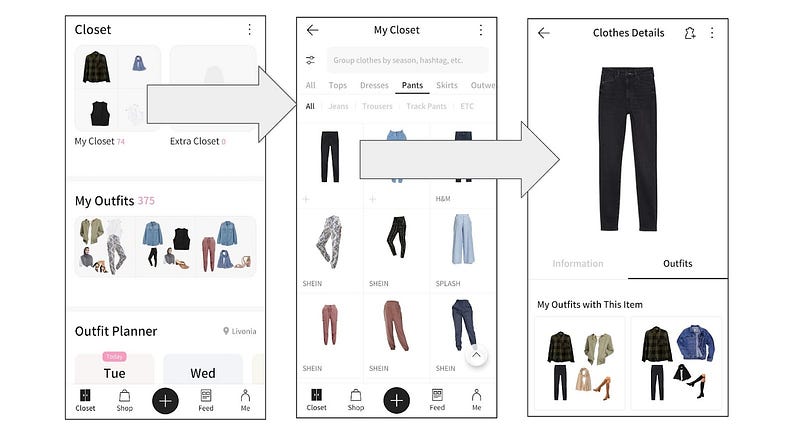
Sometimes I would not know what to wear for a particularly special occasion and then look at my catalog of clothes on Acloset and remember clothes I totally have forgotten I owned. This really helped me best utilize the entirety of my closet and not put the time, effort, and money into obtaining my clothes to waste.
Keeping track of outfits worn
Another cool thing about Acloset is the ability to log your outfit of the day.
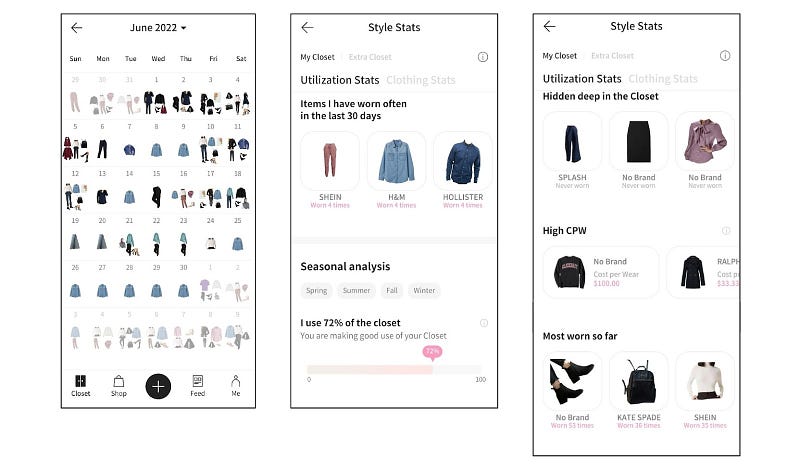
Logging your outfits allows Acloset to calculate some utilization statistics. Some of the useful statistics I like to help me attain a minimalist close I aspire to:
- Calculate the CPW or cost per wear of each piece of clothing you’ve put a price on.
- Calculate which clothes you have worn the most and least.
These statistics also help me identify which clothes I should wear more or which clothes I should donate away.


