
Darwin’s Horrid Doubt: Why Monkey Brains Troubled the Great Man of Science
Can random accumulations of particles or close relatives of monkey brains produce reliable, rational thought? Even today’s physicalist scientists, when honest, share Darwin’s “horrid doubt.”
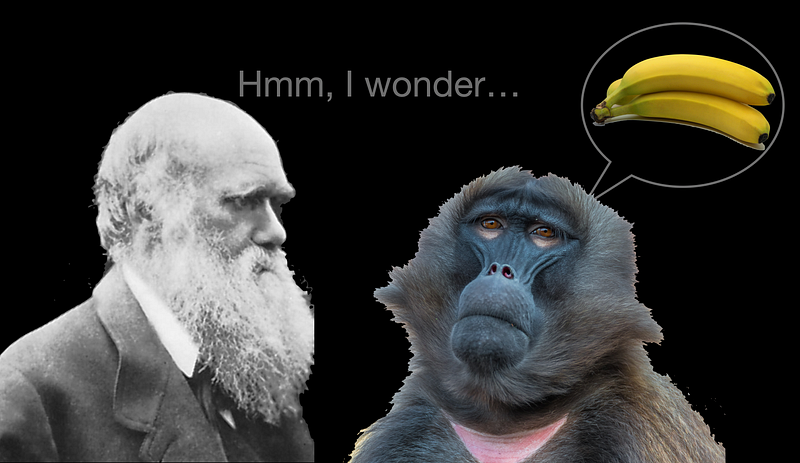
There was one thought that deeply troubled Charles Darwin. He called it a “horrid doubt.” If he knew what scientists and philosophers today were saying about the problem he identified, he would be even far more troubled. Because, it suggests that there is a fatal flaw in today’s scientific orthodoxy of physicalism.
Physicalism is the dominant presupposition in science today. Otherwise called materialism, naturalism or methodological materialism, physicalism is simply the idea that there is nothing outside of physical matter and the laws that control them. Physicalism strictly adheres to empiricism in science and most believe it requires the elimination of free will. There can be no external causality, indeed, nothing external to matter and forces.
But, is there a fatal flaw in physicalism? Reality is limited to matter and forces operating without direction or purpose. But, can completely random collections of particles lead to mental processes that are reliable and rational? Does this reductive, deterministic view of mind mean that we cannot possibly know if what we think is real is really real? Or, in Darwin’s terms: how can we trust the convictions of a descendant of monkeys’ brains?
Darwin’s worry has the potential to upend science. Does the rational process of empirical, physicalist science lead inevitably to the conclusion that such thought and what it produces are irrational? Does it in turn make those who reject a physicalist approach and subscribe to “something more” at work in the universe the real rationalists?
The absolute commitment to physicalism was perhaps best expressed by Richard Lewontin:
“We take the side of science in spite of the patent absurdity of some of its constructs, in spite of its failure to fulfill many of its extravagant promises of health and life, in spite of the tolerance of the scientific community for unsubstantiated just-so stories, because we have a prior commitment, a commitment to materialism. It is not that the methods and institutions of science somehow compel us to accept a material explanation of the phenomenal world, but, on the contrary, that we are forced by our a priori adherence to material causes to create an apparatus of investigation and a set of concepts that produce material explanations, no matter how counter-intuitive, no matter how mystifying to the uninitiated. Moreover, that materialism is absolute, for we cannot allow a Divine Foot in the door.”
Note, in his first sentence he equates “science” with physicalism. This eliminates anything non-physicalist as unscientific, or worse, pseudoscience. In another article he strongly suggests that social science is not really science. For Lewontin and other true believers physicalism has established many important and useful facts about nature and therefore only through its methods can real science be done. It’s an a priori commitment. He also provides the pure and honest reason: to keep any thoughts of God at bay.
The physicalist story as I understand it is that the universe we know popped into existence 13.8 billion years ago — maybe through quantum fluctuations. From a singularity, all particles and the laws of physics emerged. These then dictated the emergence of the cosmos including our solar system and with it this now very hospitable tiny blue planet we call home which coalesced about 4.5 billion years ago. About a billion years later something rather strange happened in that these laws and matter formed life which then evolved into a myriad of wonderful expressions through a process of very small modifications that over time add up to very great changes. Today, we live in a mostly very friendly and hospitable environment with enough wealth to support the millions of smart people who are dedicating their lives to rationally explaining it all.

All of this occurred through random, purposeless processes involving particles that exist in multiple states at the same time, bump into each resulting in amazing combinations, and are tied up together so that they continue to act as one regardless of how far they may be separated in spacetime. Out of this accidental bumping and jumping evolved a gelatinous computer of remarkable complexity. That computer, once it reached the complexity of big brained humanoids, began to experience experience. It became aware of its own thought processes. As part of that awareness it asked questions about where it all came from, how it all arrived and what it all means. Because of what we know about the random nature of particles and forces the best answers to those questions today appear to be: it just came, it arrived through random processes, it will slowly decay and die and any meaning to it is an illusion.
What’s the flaw in this? It is in answering how a completely irrational random process can result in the formation of a clump of wet matter that produces reliable, rational thought and the answers to these questions. Is it fatal? While Darwin had little idea of the complexities of life and matter that science has revealed when he wrote his thoughts on evolution, the implications bothered him deeply:
“With me the horrid doubt always arises, whether the convictions of man’s mind, which has been developed from the mind of the lower animals, are of any value or at all trustworthy. Would anyone trust in the convictions of a monkey’s mind, if there are any convictions in such a mind?”
Darwin’s horrid doubt still raises serious questions. Much attention is being paid to how the descendant of the “monkey mind” gives rise to conscious experience. But, what is ignored in that search is the question of how that monkey mind and its descendants give rise to rational thought and convictions about truth. How can it even have the capacity to understand so much about the universe through numbers, mathematics, or the various forms of logical reasoning?
Non-human animals are not known to do math (excepting perhaps the horse that stamps out numbers). Math has proven to be a mental tool of nearly unlimited application in understanding the world we inhabit and revealing answers to untold mysteries. This has not gone unnoticed by some of our greatest thinkers and scientists, like Eugene Wigner:
“the enormous usefulness of mathematics in the natural sciences is something bordering on the mysterious and that there is no rational explanation for it.”
Wigner went further from this mysteriousness to calling it a miracle:
“The miracle of the appropriateness of the language of mathematics for the formulation of the laws of physics is a wonderful gift which we neither understand nor deserve. We should be grateful for it and hope that it will remain valid in future research and that it will extend, for better or for worse, to our pleasure, even though perhaps also to our bafflement, to wide branches of learning.”
Of course, in the naturalist view, miracles are impossible so a physicalist explanation is needed for this almost-miraculous occurrence. But physicalist explanations of the fact that our brains are capable of far more than enabling us to survive attacks from predators on the African savannah seem to run stuck. Brian Greene is one who defends the idea that the random action of forces and particles fully determines our brain activities and the products of those activities. Randomness, in other words, produces rationality. In Until the End of Time, Greene is categorical about these processes and the determinism they require:
“…you and I are nothing but constellations of particles whose behavior is fully governed by physical law. Our choices are the result of our particles coursing one way or another through our brains. Our actions are the result of our particles moving this way or that through our bodies. And all particle motion — whether in a brain, a body, or a baseball — is controlled by physics and so is fully dictated by mathematical decree…the big bang is the ultimate source of all particles, and their behavior over cosmic history has been dictated by the non-negotiable and insensate laws of physics, which determine the structure and function of everything that exists. Our sense of individuality, value and esteem rest on our autonomy. But faced with the intransigence of physical law, our autonomy withdraws. We are no more than playthings knocked to and fro by the dispassionate rules of the cosmos.”
Given this picture, it is a bit sad to see Greene struggle to find a way to create meaning in this picture of a pointless universe — and us along with it — coming into existence for no reason and dying a slow, inevitable death by entropy.
Physicalism rests firmly on two foundations: one is the remarkably effective way in which science by using the fixed laws of nature has revealed the workings of our universe and converted that knowledge into technologies that have benefited (mostly) our lives. The second foundation is Darwinian evolution. Without Darwin’s remarkably successful ideas about change over time through the creative power of natural selection, we would be forced to look for non-physicalist answers. As Richard Dawkins famously claimed, Darwinian evolution allows one to be an intellectually fulfilled atheist.
But, there is a problem. Evolution is wholly directed by the selfish gene to facilitate survival. Natural selection chooses those modifications that are productive in terms of reproduction and survival and then the code must be passed on to the next generation. A beauty of evolution in this view is its parsimoniousness. It has no need or desire to create life that can appreciate its generosity. It does not desire worship. It has no reason to add anything beyond what is needed for survival and increased chances of survival for its offspring. There are no accoutrements, no bling, no useless additions. There is no need to have capabilities or equipment to find truth beyond whether that shape in the tree is a shadow or a crouching panther.
Cognitive scientist Donald Hoffman used this very rational understanding to explain why we have no idea what reality really is, or ask if it even exists. His book The Case Against Reality argues that evolution made it possible for us to perceive symbols but not reality. Perceptions that support for fitness for survival are not the same as cogitating for truth or what is real.
He uses the example of a desktop icon representing a file or files on our computer. The blue rectangle is not the file and does not describe the file. Let’s say it’s an icon or symbol for a collection of articles called Top-Down or Bottom-Up. That simple shape tells me what I need to know but it tells me nothing about the words on the screen, the individual letters, the bits and bytes coding those images on the screen, nor certainly the activation of neurons in the thought process involved in constructing the arguments presented by those bits and bytes. Then, it tells nothing about the atoms that make up the neurons and ions, the physical device presenting the symbol, the photons that emanate from the screen, or the quarks and gluons and the superposition state they are in. You get the picture. The icon is a shortcut. It works. To see it all would be taxing, to say the least. The mental image in our brains of a panther up in a tree under which we were about to walk does not need to be tied in any real way to reality. It just has to convey what is most important and that is: “I see a panther, if I stay here or walk under that tree it will eat me, run like hell!”

Hoffman appears ambivalent at times in whether there is or is not some form or real objective reality. But, he is quite clear that we cannot know what it is and bases that on physics. In a Quanta article from April 21, 2016 titled the Evolutionary Argument Against Reality, Hoffman states:
“The idea that what we’re doing is measuring publicly accessible objects, the idea that objectivity results from the fact that you and I can measure the same object in the exact same situation and get the same results — it’s very clear from quantum mechanics that that idea has to go. Physics tells us that there are no public physical objects.”
Following this logic, he declares that we have no brains:
“Neurons, brains, space … these are just symbols we use, they’re not real. It’s not that there’s a classical brain that does some quantum magic. It’s that there’s no brain! Quantum mechanics says that classical objects — including brains — don’t exist. So this is a far more radical claim about the nature of reality and does not involve the brain pulling off some tricky quantum computation. So even [Roger] Penrose hasn’t taken it far enough. But most of us, you know, we’re born realists. We’re born physicalists. This is a really, really hard one to let go of.”
Hoffman suggests there is no objective, third person reality. If there was, we wouldn’t be able to know it because the only things our brains (oops, if we had them) could show us are the super-simplified symbols needed to keep us alive and reproducing. That apparently, is what the random accumulation of particles assembled by forces put in place at the big bang leads us to.
Brian Greene in Until the End of Time doesn’t appear to agree with Hoffman that physics leads us to the conclusion there is no such thing as a brain. In fact, he thinks that given the length of time available to us in our dying universe that there will be conditions in which random particles come together in just such a way that they will think, and maybe even think our very own thoughts long after our thoughts have been lost in entropy. It’s a sort of entropic resurrection of thought, at least. These random conglomerations of particles that will think are called Boltzmann brains. Greene explains (p. 299):
“Over an even longer temporal expanse, the atoms will randomly join into an array of ever-more-complex configurations, ensuring that every now and then on the road to eternity a collection will coalesce into this or that macroscopic structure — bobbleheads to Bentleys. In the absence of thinking beings, all of these will come and go without notice. But every so often the randomly formed macroscopic structure will be a brain. Long extinct, thought will make a momentary comeback.”
He admits it will take a long time. 10(10)(68) years. (That’s ten to the tenth to the 68th.) But, he says, given enough time
“the total population of Boltzmann brains far exceeds the total population of traditional ones.”
Since Greene is logically consistent (not sure how) in concluding that our ideas, memories and thoughts consisting of random particles and motions are an illusion:
“Your brain just spontaneously formed from particles in the void, with all of its memories and other neuropsychological qualities imprinted through the particular configuration of the particles. The story you told of how you came to be is touching but false. Your memories and the various chains of reasoning that have led to your past knowledge and beliefs are all fictitious. You do not have a past. You have come into existence as a disembodied brain endowed with thoughts and memories of things that never happened.”
Then, he notes the devastating conclusion (his words) of this line of thought:
“If a brain, yours and mine or anyone’s can’t trust that its memories and beliefs are an accurate reflection of events that happened, then no brain can trust the supposed measurements and observations and calculations that constitute the basis of scientific understanding…the deep skepticism that emerges from the possibility of spontaneous brain formation forces us to be skeptical of the very reasoning that led us to entertain the philosophy in the first place.”
Greene puts his finger squarely on the dilemma. Follow physicalism to its logical conclusion and you must logically conclude there can be no logical conclusions. Darwin was right to have a “horrid doubt.”
Greene was not the first to realize this consequence of exclusive physicalism in science.
Thomas Nagel is a philosopher who has rejected the story that physicalism and its foundation in evolution tells. In doing so, he rejects the conclusions that inevitably arise from the logical result of following physicalism to the bitter end. In a review of Nagel’s book Mind and Cosmos in the New Yorker, Richard Brody falls over himself to distance Nagel from the religious who have seen in Nagel’s argument support for theistic beliefs. Nagel is a confirmed atheist, but he is not a physicalist in any sense that Greene would recognize. In Nagel’s view rational thinking is done by a mind that does not emerge from the brain. Further, there is a direction to the universe made clear in what we observe — an unexplained teleology. It’s going somewhere in a way that appears intentional. Brody writes:
“He argues that the faculty of reason is different from perception and, in effect, prior to it — ’an irreducible faculty.’ He suggests that any theory of the universe, any comprehensive mesh of physics and biology, will need to succeed in ‘showing how the natural order is disposed to generate beings capable of comprehending it.’ And this, he argues, would be a theory of teleology — a preprogrammed or built-in tendency in the universe toward the particular goal of fulfilling the possibilities of mentality. In a splendid image, Nagel writes, ‘Each of our lives is a part of the lengthy process of the universe gradually waking up and becoming aware of itself.’”
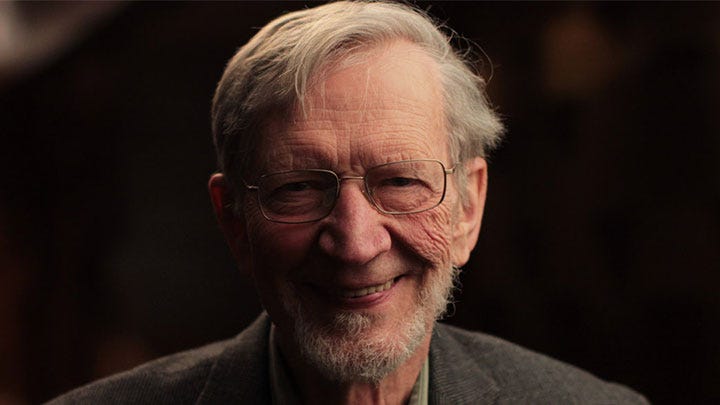
An esteemed philosopher of religion, Alvin Plantinga, most forcefully established the argument that physicalism, or naturalism as he refers to it, is self-defeating. It has a fatal flaw, the very one which Greene appears to acknowledge. In his 2011 book Where the Conflict Really Lies: Science, Religion and Naturalism Plantinga argues that science and religion are not in conflict, but that naturalism as a belief system is. Naturalism is not science, but the widespread belief in the conflict between religion and science demonstrates how successful the physicalist narrative equating that particular view with science has been. Plantinga suggests that naturalism constitutes a quasi-religion and that naturalism, not science, conflicts with religion. It’s a conflict between two opposing religious views. He develops an argument for the concord of religion and science to support his position that the facts of science do not conflict with religion. But our interest here is his argument for why naturalism inherently is self-defeating. Here is his basic argument is his words:
“(If) we and our cognitive faculties have been cobbled together by natural selection…can you then sensibly think that our cognitive faculties are for the most part reliable? I say you can’t. The basic idea of my argument could be put (a bit crudely) as follows. First, the probability of our cognitive faculties being reliable, given naturalism and evolution, is low…But then according to the second premise of my argument, if I believe in both naturalism and evolution, I have a defeater for my intuitive assumption that my cognitive faculties are reliable. If I have a defeater for that belief, however, then I have a defeater for any belief I take to be produced by my cognitive faculties. That means that I have a defeater for my belief that naturalism and evolution are true. So my belief that naturalism and evolution are true gives me a defeater for that very belief; that belief shoots itself in the foot and is self-referentially incoherent; therefore I cannot rationally accept it.”
If you are a committed physicalist, you may disagree with this conclusion and the way it is derived. But physicalists like Greene have come to very similar conclusions. While this argument supports a theistic understanding, it is not of necessity theistic. Thomas Nagel is an atheist and strongly separates himself from Plantiga’s theistic belief, but he also accepts the logic of the argument. In his review of Plantinga’s book, Nagel acknowledges Plantiga’s abilities and suggest secular readers will find value in his work:
“The interest of this book, especially for secular readers, is its presentation from the inside of the point of view of a philosophically subtle and scientifically informed theist — an outlook with which many of them will not be familiar. Plantinga writes clearly and accessibly, and sometimes acidly — in response to aggressive critics of religion like Dawkins and Daniel Dennett. His comprehensive stand is a valuable contribution to this debate.
I say this as someone who cannot imagine believing what he believes. But even those who cannot accept the theist alternative should admit that Plantinga’s criticisms of naturalism are directed at the deepest problem with that view — how it can account for the appearance, through the operation of the laws of physics and chemistry, of conscious beings like ourselves, capable of discovering those laws and understanding the universe that they govern. Defenders of naturalism have not ignored this problem, but I believe that so far, even with the aid of evolutionary theory, they have not proposed a credible solution. Perhaps theism and materialist naturalism are not the only alternatives.”
Perhaps there is a third way. I, for one, would like to explore it and would enjoy hearing from anyone else who shares an interest in such a discovery. Until then, we are left with two essentially religious alternatives: physicalism and “something more.” Darwin’s horrid doubt appears justified.


