
Dark Web Marketplaces in 2024
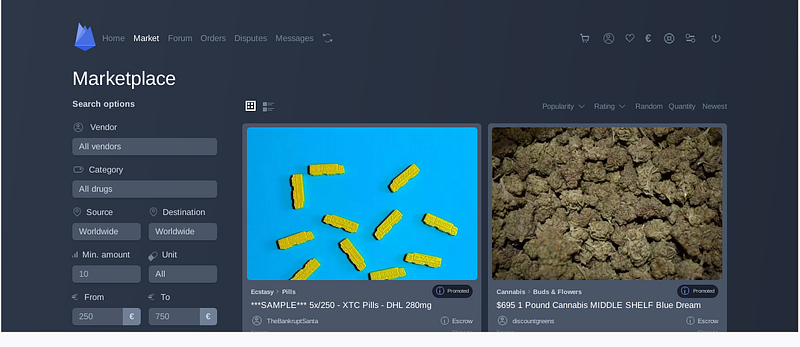
The last time I weighed in publicly on the state of dark web markets (1), the world was still under a crushing pandemic, and there were no wars in Ukraine or the Middle East. Most of my professional work since has focused on managed detection and response, with the occasional view into threat hunting through weekly threat reports. As far as dark web onion sites, I’ve mostly kept up with activity on ransomware data leak sites and their many changes, occasional takedowns, and resurrections.
Having studied TOR markets and services since 2013, and having created annual dark web reports (2) about their state in the past, I decided to take a fresh look at these marketplaces in 2024. Surprisingly, there have been fewer annual reports over the last two years directly related to the activity on dark markets, despite their impact on cybercrime, and despite the fact they continue doing business over a decade since the creation of the Silk Road.
TLDR: Why You Should Care Many talk about dark web markets — credit agencies and cybersecurity companies offer dark web monitoring — but not many people have actually seen the upside down.
- They exist, thrive, and are innovative with customer service teams, marketing programs, and professionally designed websites.
- Markets play an eternal game of whack-a-mole, with exits and takedowns, only to spawn new competitors.
- Fewer exit scams now occur and private shops are trending.
- Products have always included drugs and data, but cheap malware including RATs and infostealers are abundant.
- Transactions that used to occur on markets continue to migrate to encrypted messaging apps and other platforms.
The State of Cryptocurrency
No discussion about underground marketplaces would be complete without including the state of cryptocurrency. The Silk Road was the first real-world test case for bitcoin. Despite crypto skeptics and outright deniers, the large majority of bitcoin transactions are not used to buy drugs or exact ransom. Current stats show more bitcoin is “spent” trading on its $1.2 trillion market capitalization (3) than illicit activity (not withstanding illicit trading). At the time of my last markets post in October 2020, the bitcoin market cap was only $378 billion.
Estimated Bitcoin in Illicit Activity
According to cryptocurrency tracking company Chainalysis, $1 billion of bitcoin was utilized for ransomware payments in 2023 (4), with bitcoin the primary crypto for ransom demands. That one billion means less than .0001% of bitcoin was used for ransom payments. Since Chainalysis reports that ransomware was the only cybercrime growth area, one might assume that less is going to marketplaces, but the evolution of markets and the potential volume traded directly on forums or through messaging platforms make it impossible to know for sure.
Today while some dark web marketplaces accept bitcoin, most also accept and prefer Monero (XMR), a cryptocurrency that has long included additional anonymity features. The market cap for Monero is currently $2.2 trillion (5). I’m sure analysts are looking for ways to quantify the extent to which Monero has grown for illicit marketplace use. Surely they are analyzing crypto wallets, especially since they have become bigger targets for crypto-stealing malware.
The State of TOR Onion Sites and I2P
Private communications platforms like the Onion Router (TOR) and Invisible Internet Protocol (I2P) host an entirely different world that the clear net. The dark markets discussed here reside in these platforms. Both have limited availability, and sites often change their address — sometimes every fifteen minutes. Both platforms require some technical knowledge, but only as much as any junior high school student could acquire.
TOR was developed in the mid-1990s by the United States Naval Research Laboratory, mathematician Paul Syverson, and computer scientists Michael G. Reed and David Goldschlag. Designed to protect American intelligence communications online, it has been valuable for journalists and dissidents in countries where internet and other communications are widely restricted. I2P is similar: an anonymous peer-to-peer distributed communication layer that can run typical internet functions. Cumbersome to access for most people, I2P offers even less availability and more complexity than TOR from my experience.
While a majority of users on these platforms are not involved in criminal activity, it is interesting to understand daily volume. By contrast 5.3 Billion or 65% (6) of the world’s population uses the clear net every day.
Breakdown of 2023 Daily TOR Users
Country Mean Daily Users Germany 1,430,955 (38.93 %) United States 638,305 (17.37 %) Finland 115,030 (3.13 %) India 97,932 (2.66 %) Russia 81,723 (2.22 %) Indonesia 75,891 (2.06 %) France 75,628 (2.06 %) Netherlands 71,454 (1.94 %) United Kingdom 65,388 (1.78 %) Iran 53,118 (1.45 %)
The Many-headed Hydra of Dark Marketplaces
The average lifespan for underground marketplaces on TOR is 55 days. However, some of these marketplaces become sizable, with over 20,000 products and more than 200,000 users. The typical lifespan of a successful marketplace is one to three years. Here are just a few of the 35–40 large markets that have existed since the closure of the Silk Road (2011–2013):
- Black Market Reloaded (2012–2013): Voluntarily closed.
- Sheep Marketplace (2012–2013): Voluntarily closed.
- DeepBay (2012–2013): Voluntarily closed.
- BuyItNow (2012–2013): Voluntarily closed.
- Valhalla (2012–2013): Voluntarily closed.
- Agora (2013–2015): Raided by law enforcement.
- Evolution (2013–2017): Raided by law enforcement.
- AlphaBay (2014–2017): Raided by law enforcement.
- Hansa Market (2015–2017): Raided by law enforcement.
- White House Market (2016–2017): Voluntarily closed, exit scam.
- Wall Street Market (2016–2019): Raided by law enforcement.
- Empire Market (2017–2020): Raided by law enforcement.
- CannaHome (2019–2020)
- Hydra (2008–2022): Longest running Russian marketplace, raided by law enforcement.
Recent Comings and Goings
In 2023 several large exits or takedowns occurred, for reasons including internal disputes and extortion attacks, as well as potential law enforcement activities and outright seizures.
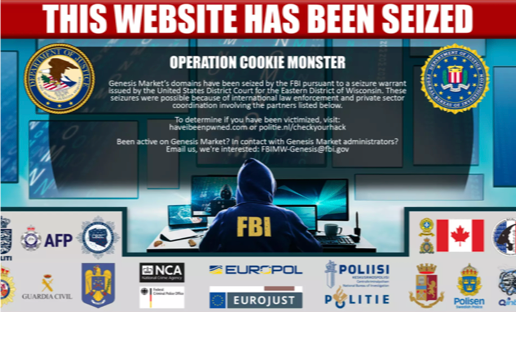
- Genesis Market, Closed, law enforcement takedown.
- TOR Market, Voluntarily closed, no exit scam.
- Vice City, Closed, suspected exit scam.
- ASAP Market, Closed, no exit scam.
- Tor2Door, Closed, suspected exit scam.
- Royal Market, suspected exit scam.
- Incognito, exit scam February 2024
The most notable was AlphaBay 2.0. The admin “confirmed” as DeSnake from the original AlphaBay appeared to return in 2022 to capitalize on the brand. He claimed to offer new features including one that would kill the dreaded “exit scam” — the practice of absconding with funds in escrow when sites bail or get seized. The new feature would allow vendors to still receive funds via a protected escrow. AlphaBay 2.0 disappeared in February 2023, but it is unclear if they exit-scammed vendors and users. We still don’t know why they exited, but there is also a chance it was merely a honeypot.
Surprisingly, two closures in 2023 — TOR Market and ASAP Market — were NOT exit scams. When the sites were closed, in an act of customer service, all escrow funds held at the time the site went down were returned to vendors and buyers.
Possibly the most embarrassing fail of 2023 involved the unskilled administrator of Apocalypse Market who oversaw a major security breach by allowing the site’s IP address to be leaked, then openly admitting he didn’t know how to fix the problem.(8)
Other notable exits include the site Recon, which included vendor ratings and links. It was also taken down in 2023. An anonymous hosting site Anonfiles, used by malware sellers and pornographers alike, was shut down in February 2024. Criminal Services & Products
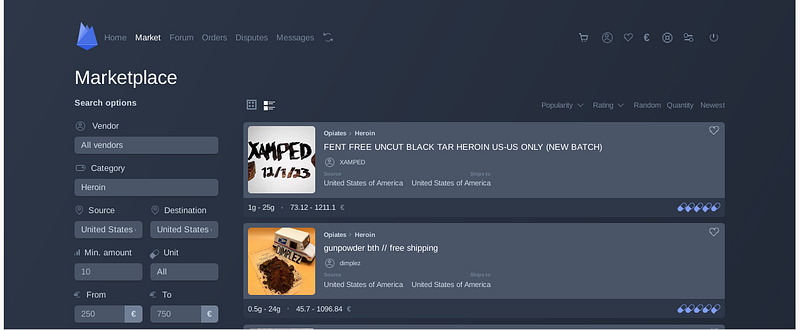
So what’s for sale? Drug vendors marketing “fent-free” heroin and pills. Data dumps from 70 million AT&T customers. A malware toolset from a certified ethical hacking course. RATs, keyloggers, and ransomware source code are all available.
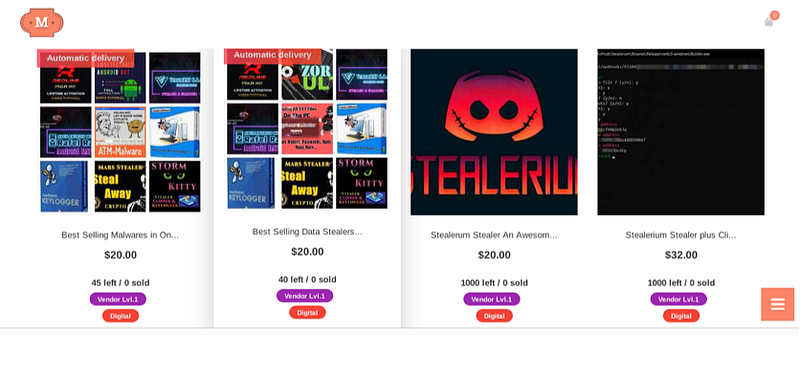
Sample of Digital Goods available on MGM Grand:
- Voice-changing software — $6
- Spoofing software for biometric digital fingerprints — $16
- RevengeRAT — $20
- Hack Megapack w/ RAT and Keylogger — $40
- 2024 Bitcoin Stealer — $79
- Meganz Auto-spreading Malware — $120
- OTP Bot for 2FA Bypass — $150
- Mirai Katana Source Code — $700
Which Markets Are Currently Thriving
In the past, many dark web marketplaces were hosted in Russia (Hydra) and Eastern Europe. The wars in Ukraine and Palestine may be having an effect, directing cybercriminal resources to other nefarious efforts. Other markets have originated in the United States, Europe, and the Netherlands. As of this writing, no single market appears to have the volume of markets like AlphaBay, White House, or Empire Market. Based on forum posts, more private shops exist between buyers and sellers, and more activity is conducted through Telegram, SnapChat, and Discord. Archetyp and MGM Grand are two markets growing in popularity based on Dread forum discussions.
2024 Predictions
In 2024 new markets will continue to appear and disappear. Past years indicate one or more will grow substantially large. Many private shops will surface for brief periods then disappear. The nature of encrypted messaging, bulletproof hosting of anonymous sites, and the sheer supply and demand for drugs, stolen credentials, and malware guarantee these sites will continue to operate. While many think of drug sales on dark markets, the larger concern will be the sale of stolen data, credentials, malware, and access. These marketplaces will continue to provide tools for less technical users and script kiddies, as well as guides for using malware.
Of course the sale of drugs will continue on markets, but many drug consumers will continue to migrate to encrypted communication apps such as Telegram, SnapChat, WhatsApp, and platforms such as Discord. This has been a growing trend for the last three years, and based on forum and vendor discussions, the largest increase in consumers is occurring off market.
Artificial Intelligence and Dark Web Markets One new challenge for markets, like everything else, is the introduction of generative artificial intelligence (GAI). Kaspersky warns of an increase in forum discussions on how to use GAI for criminal activity. Cybercriminals are increasingly turning to tools like ChatGPT to automate and enhance their attacks. I suggest there are a number of ways cybercriminals might use GAI on dark web markets. First, AI can craft convincing content for dark web listings. Imagine a tool that generates unique product descriptions for stolen credit cards, weaving believable narratives to bypass suspicion. AI can churn out variations on the fly, making it harder for automated filters to flag them. This injects a layer of professionalism, potentially luring in more buyers.
Secondly, AI streamlines social engineering, a dark web mainstay. Phishing scams become nightmarishly effective. AI can personalize emails with details gleaned from data breaches, making them appear to come from trusted sources. Imagine crafting thousands of these emails, each with perfect grammar and customized urgency, to maximize the chance of a successful attack that fuels their dark web market activity.
Finally, AI can anonymize malicious content. We’ve seen deepfakes used to spread misinformation. In the dark web, AI could create fake reviews or endorsements for illicit products, further blurring the line between truth and manipulation. This can trick potential buyers into trusting dubious sellers.
Digital Speakeasies
Much like those elusive speakeasies during Prohibition, dark web markets operate in the shadows and constantly evolve. Law enforcement agencies around the world are forever on the hunt, shutting down established markets and forcing them to relocate or reinvent themselves. However, just as the thirst for illicit goods and services never truly disappeared during Prohibition, these markets find new ways to operate, adapting their technology and exploiting vulnerabilities in the constantly changing digital landscape.
As long as there’s a demand for the goods and services these digital speakeasies offer, they will find a way to keep their doors open, albeit in a shadowy corner of the internet. Understanding this dynamic is crucial for crafting effective strategies to combat the criminal activity that thrives within them.
Disclaimers
Research purposes only. Take product offers discussed here with a big dose of salt, none were purchased, many product listings are merely scams. No Onion site addresses are included here, DYOR. To the general public: do not conduct business as a vendor or consumer on dark web marketplaces. To enterprises, your security program must include threat intelligence including dark web monitoring.
Sources
- Mayes. (2020). Thriving Through Chaos: Darknet Markets Innovate and Grow.
- Armor. (2019). Dark Market Report.
- CoinMarketCap. (April 17, 2024).
- Chainalysis. (2024). Ransomware Payments Exceed $1 Billion in 2023, Hitting Record High After 2022 Decline.
- Coinmarketcap. (April 17, 2024).
- Kaspersky. (2024). Dark web market trends: last year in review and projections for 2024.
- Demandsage. (2024). Internet User Statistics In 2024 — (Global Demographics).
- TOR Metrics. (2024). https://metrics.torproject.org/userstats-relay-table.html?start=2023-1-01&end=2024-01-01
- DarknetEye. (2023). The Darknet Markets That Exited in 2023. https://darkneteye.com/news/2023/darknet-market-exits-2023/
- Kaspersky. (2024) Dark web market trends: last year in review and projections for 2024.
- Darkfail[.]io
- Dread forums
- Darknet Live
- Observation of dark web markets.
- Observation of ransomware data leak sites.


