
Dark Skies 25th Anniversary
TV’s Most Subversive UFO Series Turns 25
The landmark NBC series Dark Skies had a subversive on-air storyline matched only by its off-air intrigue with real Men-in-Black. The alternate history cult-hit is more relevant than ever.
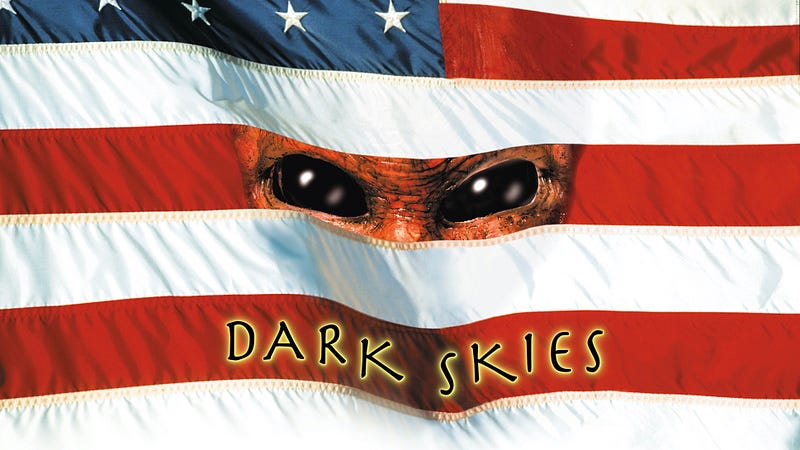
Twenty-five years ago this fall, Dark Skies came to public attention in all its radical, revisionist glory. It said that because the secret of extraterrestrial reality had been covered up for many decades that “history as you know it is a lie.” A major American broadcast network devoted over forty million dollars producing twenty hours of dramatic programming on that concept, and many millions more promoting its subversive slant through bus posters, magazine ads, and a collection of outrageously in-your-face network promo spots.
It was a thing to behold back in 1996 and 1997 and, given where we stand now on the edge of finally revealing to ourselves what we’ve known all along, it still is. Dark Skies remains a seminal moment, not just in television history, but in UFO history.
I lived through this whirlwind. In fact, I’m responsible.
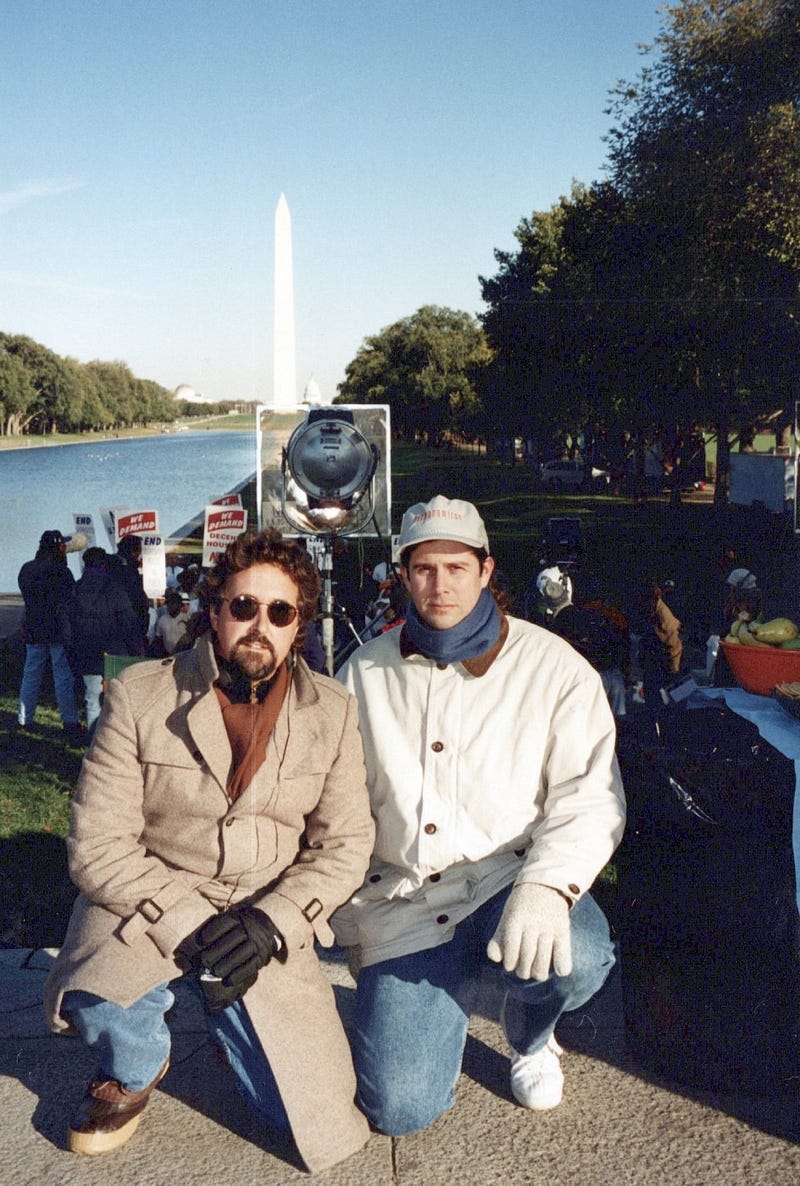
Right before Thanksgiving in 1995, I was in Washington, D.C. producing the pilot of the NBC primetime television series Dark Skies. During some freezing November weather, my co-creator Brent Friedman and I watched director Tobe Hooper shoot key scenes from our pilot script, “The Awakening,” in front of the White House, Capitol Hill, and even the Reflecting Pool on the National Mall.
All of it was in service of a TV concept we’d cooked up the year before that said an extraterrestrial species known as the Hive planned to take the Earth away from humans by placing themselves into our populations before we could even recognize the danger.
The spin we put on that ball is that the series took place in the 1960s and every episode would twist actual history with legitimate UFO events, and we would use actual historical figures and name names.
Teasing our audience was not for us. We had zero interest in placing our characters on the outside looking in. Our opening scene was U-2 pilot Gary Powers encountering a massive UFO at 65,000 feet over the Soviet Union. We were going to take viewers directly inside the cover-up.
Series Concept
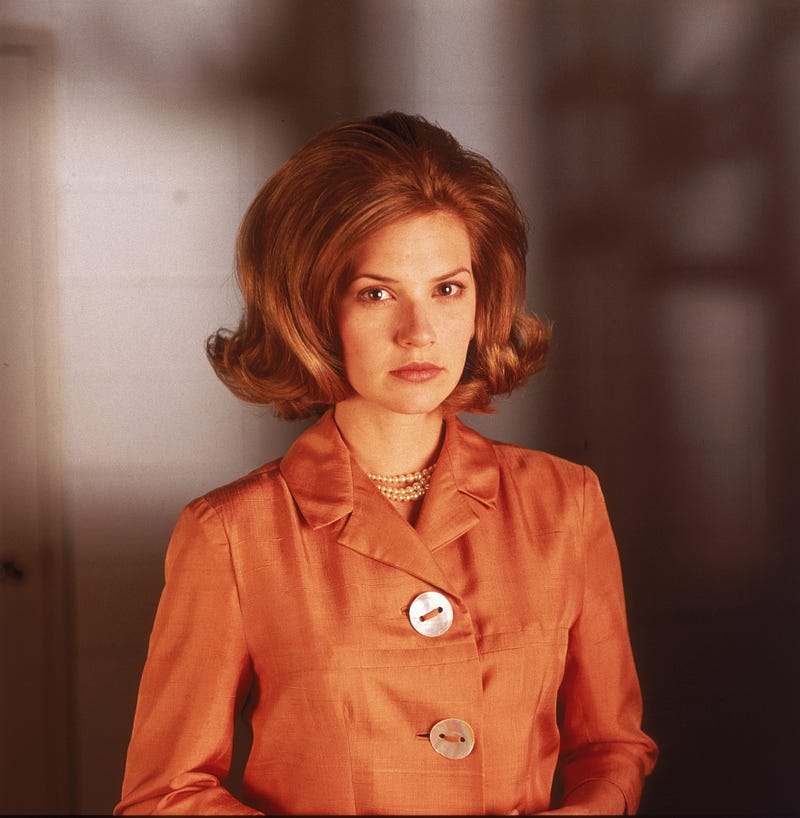
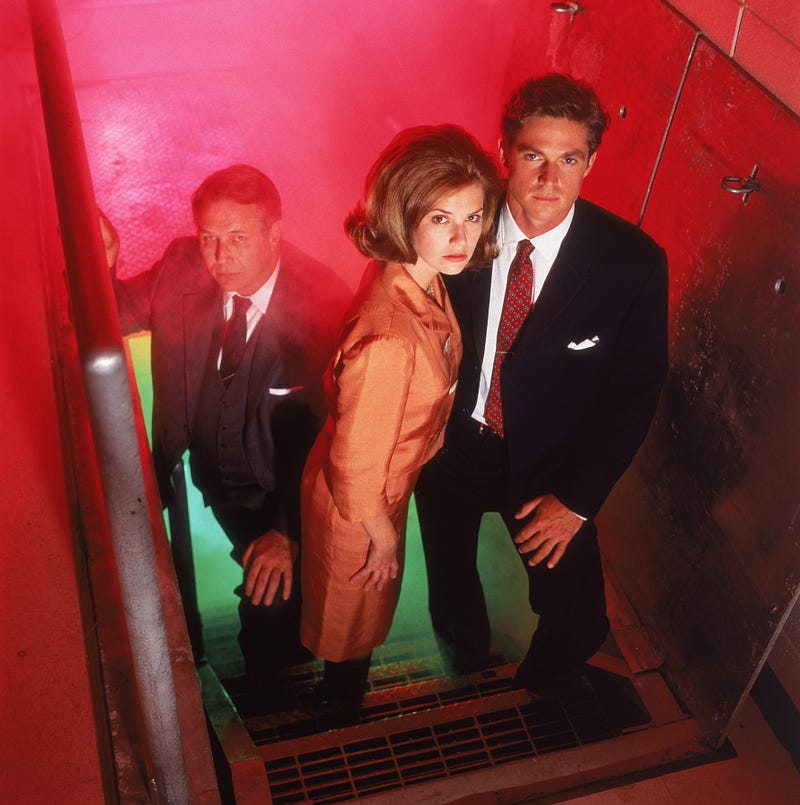
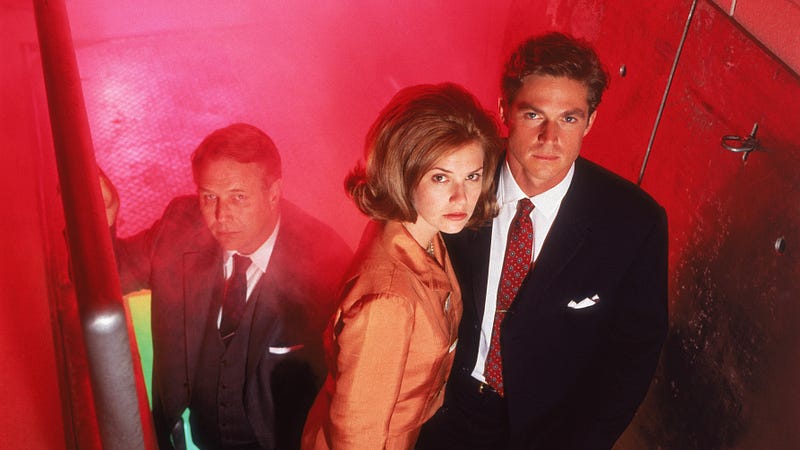
Set in the 1960s, Dark Skies tells the story of idealistic congressional aide John Loengard who comes to D.C. to be part of JFK’s “New Frontier” only to find himself recruited into Majestic-12 to fight against a growing alien threat. At the end of the pilot episode, after Loengard has given President Kennedy a piece of the Roswell wreckage as proof, JFK is assassinated because of his plans to disclose UFO reality in his second term.
The series was as subversive as it sounds.
Behind-the-Scenes
As part of a multi-part series about the Dark Skies experience, this article is meant to bear individual witness since, even as a cult-hit of the genre, the show is part of the history of this Phenomenon and how it has been reflected by our media.
Yet it is so much more than that. The show also appears to have attracted either the attention of the Phenomenon or the official cover-up that surrounds it, and maybe both. It became a meta experience with Brent and I squarely in the middle of it. It’s one hell of a story.
Behind-the-scenes of the three year development and production of Dark Skies, this story includes a studio threat to “shut down your production and burn the negative,” a mysterious stranger who crashed our premiere party and said he was from the Office of Naval Intelligence, and a personal experience with a cabinet-level official from the Reagan Administration that confirmed extraterrestrial reality. These are real things that happened. We even had a bomb threat. Everything felt very high stakes at every level always.
It’s a lot of behind-the-scenes drama for a series that didn’t have the expected network ratings for Saturday nights at 8pm. Yet the people who did see it seem to universally say that they were affected by the experience of watching it. They knew it was about something.
Dark Skies clearly suffered by being offered to the public in a pre-DVR and pre-streaming world. If our viewers could have binged it all at once, my guess is that it would be far more widely known today than it is.
Still, it’s clear that Dark Skies has had a place at the table on the issue of UFO/UAP reality. It earns this, I believe, through its central dramatic premise.
If we have been visited by extraterrestrials since at least 1947, and this knowledge has been hidden and suppressed, then the history you remember from growing up is only part of the story.
So, basically, we tried to write about the “other” part of the story. The one where humankind had contact with an extraterrestrial presence that was actively plotting our demise.
We made it personal by making our characters simultaneously confront this “we are not alone” reality while also hiding their actions and very existence from their friends, family and fellow citizens.
That’s why it still manages to shock and disturb. If just part of what it said was going on in the 1960s is true on the ET front, then imagine what’s going on today?
Having a U.S. television network pony up over $40MM to produce such a truly subversive concept and to air it on Saturday nights in prime time is shocking, even now.
By its very existence, the TV series raised uncomfortable questions about the world we live in. We wrote a voice-over for the show’s main titles that said the series premise as concisely as we could possibly put it, only had our main character record it as a breathless recording on the run with gunshots in the distance. We said this every week:
“They’re here, they’re hostile and powerful people don’t want you to know. History as we know it is a lie.”
The words were written in 1996 even though they sound like they could come from a Tom DeLonge interview today.
Those main titles, by the way, won the Emmy award for “Outstanding Main Title Design.” Check them out here:
At the end of the day, Dark Skies became a landmark 20-hour film treatise on Disclosure and how the history of the world was subverted by decades of denials that UFOs were real.
It was quite a ride, both on-screen and off-screen.
Co-Conspirators
For a three year period, my co-creator Brent Friedman and I immersed ourselves in UFO history, including all the big cases from the 1960s, the cover-up both real and imagined, and the personalities involved on all sides.
At the same time, we skimmed our share of physics, biology, astronomy, and metaphysics. We saw everything through the lens of the consequences of human contact with extraterrestrial beings. We lived inside a Mobius strip of reality, constantly turning in on itself.
We were deeply sharing news, stories, research, opinions, and experiences about the UFO phenomenon on a daily, fully-engaged process. At the same time, we were also testing ideas about how they might best be expressed in the one-hour television series drama format. We had two brains worth of synapses firing on the same subject at the same time non-stop.
We became obsessed with creating a TV series that would go down in history as a piece of culture that, no matter how long it was on-the-air, would make its mark through the sheer power of its central ideas. We wanted it to be so shocking, but so obviously well-thought out, that a U.S. television network would roll the dice on it with us.
The Loss of Innocence Gets Real in the 1960s
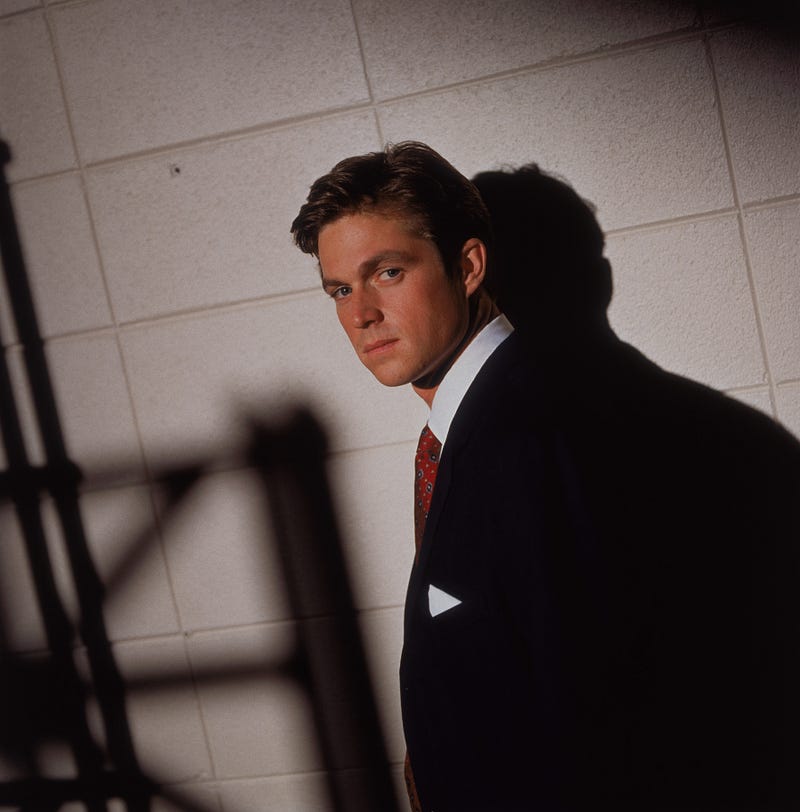
In order to make Dark Skies real, Brent and I had gambled on something counter-intuitive. We said to ourselves, let’s make this a period piece about a guy who goes to DC to make a difference and loses all his innocence. As the main character, Loengard, says in an early voice-over:
“When I came to Washington at the beginning of JFK’s New Frontier, I was 24 years old. I thought I knew everything. I found out that I knew nothing.”
History as We Know It is a Lie
Actually, “History is a lie,” was our first draft of our catch phrase as presented in that Emmy-winning Main Title sequence. The network suggested we modify it to “History as we know it is a lie.” This is how Hollywood often works. We made far fewer of these kinds of compromises than one might imagine, however, given the topics we covered.
Probably even more shocking than the series concept is the fact that the U.S. television network that endorsed our vision — NBC — literally spent millions of dollars (above the cost of production) promoting the show. The summer of 1996 had the network writing checks for wrapping buses, buying billboards, and scheduling magazine ads — all with the image that starts this article — an alien face staring through the American flag. We were the 8 pm start to NBC’s Saturday night Thrillogy concept and they needed viewing eyes on their prize.
The NBC on-air promotional team was considered to be the best in the TV industry at the time and they went wild for Dark Skies. Here’s a sample of their work to see how America was first hearing about the series.
Dark Skies debuted on NBC on September 21, 1996 with a two hour pilot, “The Awakening.” On May 31, 1997, we aired our final episode. It made for a total of 20 hours of film.
- We wrote about real events. Besides the JFK assassination, we took on Beatlemania, the New York power blackout, the Summer of Love, the Cuban Missile Crisis, the Watts riots, missing Civil Rights workers, and many others.
- We wrote about real people. People like Howard Hughes, Gerald Ford, Jim Morrison, Dorothy Kilgallen, Timothy Leary, Carl Sagan and dozens more.
- We wrote about real UFO events. Besides Roswell, we took on Socorro, Dreamland, Betty and Barney Hill, Project Blue Book, and cases large and small.
Then we put those real events, those UFO events, and those real people, and put them in a massive timeline. When things intersected in unusual ways, we wrote episodes about them.
This was not a series where the writers made it up as they went along. We knew where we were going and, while making concessions to incorporate good new ideas whenever possible, we also knew when to stick to the plan.
Yes, the plan…
Top Secret, Eyes Only
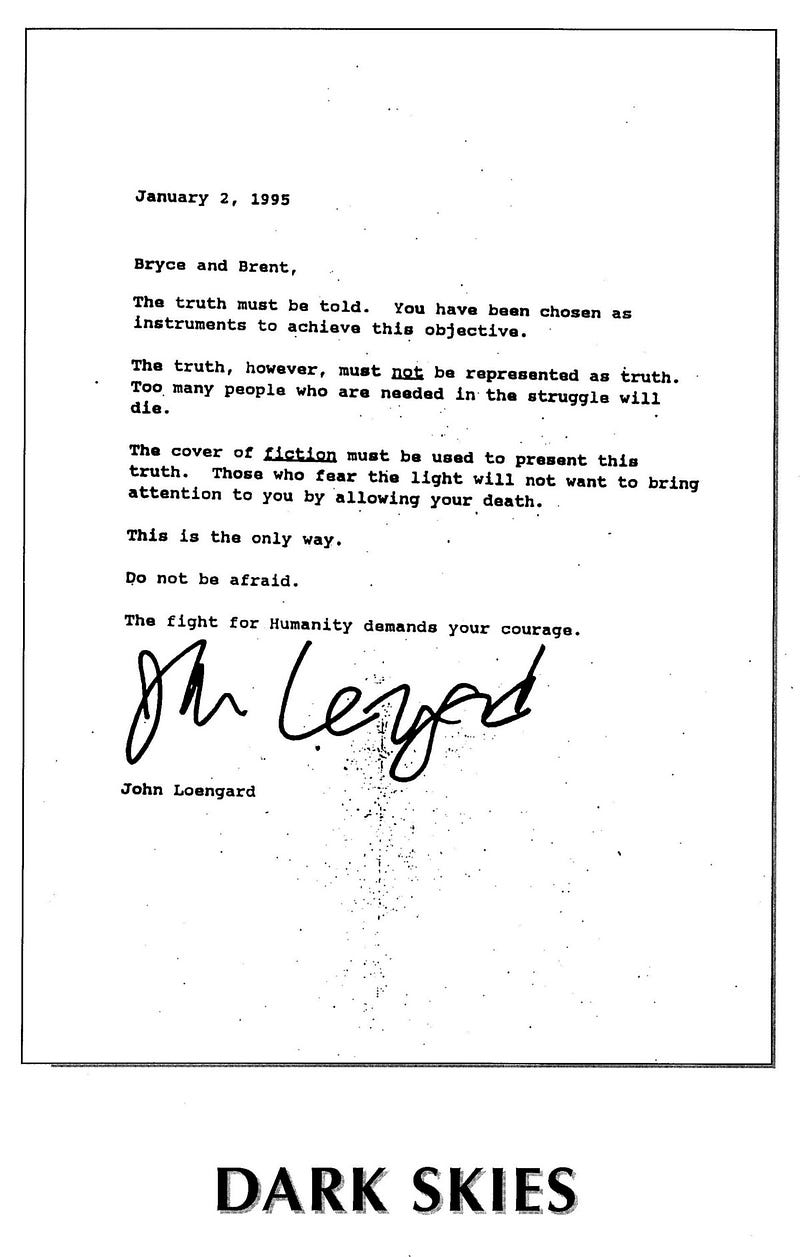
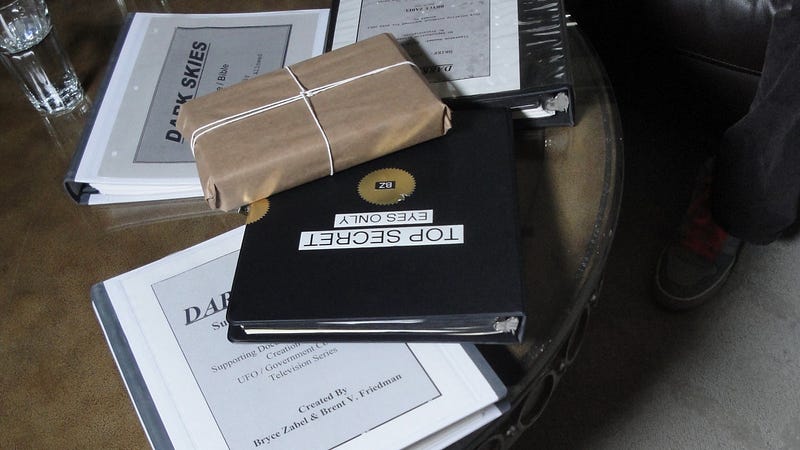
As the story we were developing grew and grew, we came up with the idea of the “Briefing Book” as a tool that would help us organize and tame our own thinking on what we were creating together. It ended up being the primary marketing presentation for our network pitches.
And we went meta to the max, saying in our pitch that we had been asked by a an agent of the Majestic-12 group to create a TV series “under the cover of fiction” in order to tell the truth about actual UFO reality.
In other words, we created a conspiracy to get the facts out before the public, then we invited studio and network executives to be a part of it. On one fine day in 1995, two networks — NBC and CBS — tried to buy the project on the same day.
That’s when things started to get extremely strange. Selling the TV series, it turned out, really was only the beginning.
In a collection of other articles and links to follow, you can learn more about the Dark Skies series.
Trail of the Saucers is edited by writer/producer Bryce Zabel and published by Stellar Productions. Zabel co-hosts the popular new podcast Need to Know with Coulthart and Zabel that can be found on all major platforms.


