
Physics
Dark Energy’s Role in Shaping the Arrow of Time
Dark Energy and the Second Law of Thermodynamics
“The increase of disorder or entropy with time is one example of what is called an arrow of time, something that distinguishes the past from the future, giving a direction to time.”
— Stephen Hawking
In recent studies, a group of physicists tackled the intriguing question of dark energy and its potential influence on time. Their findings suggest that under certain circumstances, dark energy might cause time to progress forward.
Let’s consider the analogy of throwing a ball into the air. Initially, the ball accelerates upward, but as Earth’s gravity takes hold, it decelerates and eventually falls back down. However, if the ball is launched with sufficient velocity (approximately 11 km per second), it will never slow down enough to reverse its direction and fall back toward the thrower. In the 1990s, physicists and astronomers anticipated a similar scenario following the Big Bang, when the matter was ejected in all directions. They expected the collective gravitational force of this matter to eventually slow down the cosmic expansion, just as Earth’s gravity affects the ball. However, observations revealed a different outcome.
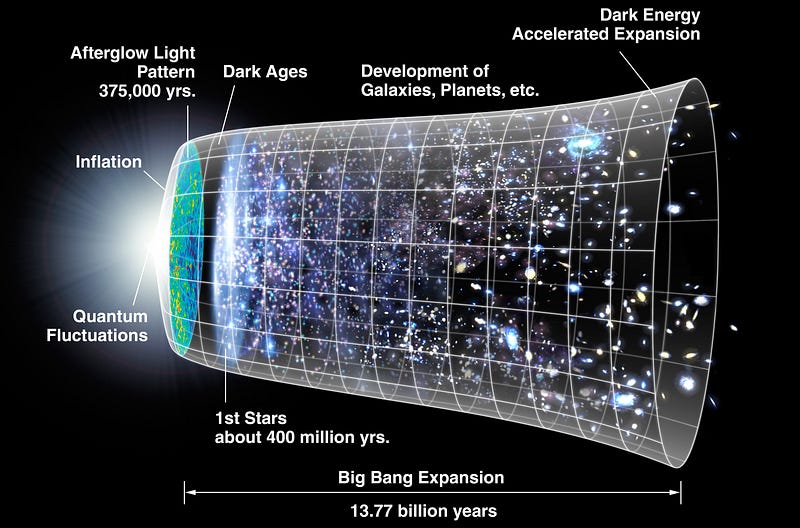

Contrary to expectations, the expansion of the universe appeared to be accelerating. Something exists within the fabric of the universe that drives the physical separation of space at a rate faster than the gravitational force can counteract. Although this effect is subtle and mainly noticeable when observing distant galaxies.
Scientists propose that dark energy is a form of energy that exists to explain why the universe is not just expanding but is speeding up in its expansion. Think of dark energy as the cosmic counterpart to gravity, acting as an “anti-gravity” force exerting negative pressure throughout the universe. This force extends and stretches the very fabric of spacetime, causing celestial objects to move apart at an ever-increasing speed, contrary to the gravitational force that pulls them together.
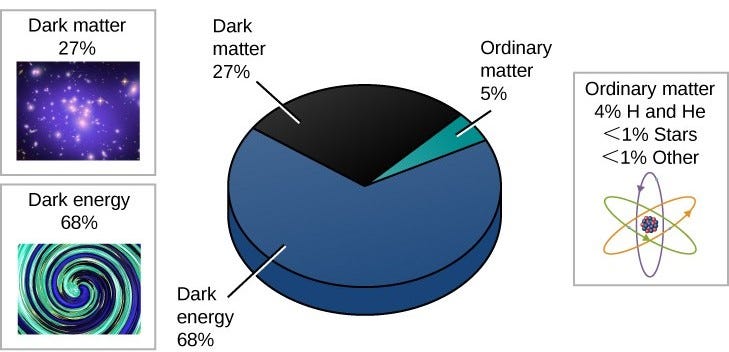
Around 68% to 72% of the universe’s total energy and matter is estimated to be dark energy. This means it’s the dominant force, overshadowing both dark matter and regular matter in the cosmic budget. Understanding dark energy is tough because we can’t measure it directly, and we don’t even know what it’s made of. Trying to set up experiments to find it and study what it’s like is hard. Plus, the measurements we have right now don’t match up when it comes to how fast the universe is expanding, creating uncertainty about whether dark energy is changing over time and, if it is, how it’s affecting the way the universe grows. We have some hints, but there’s still a long way to go before we fully figure out what dark energy is all about.
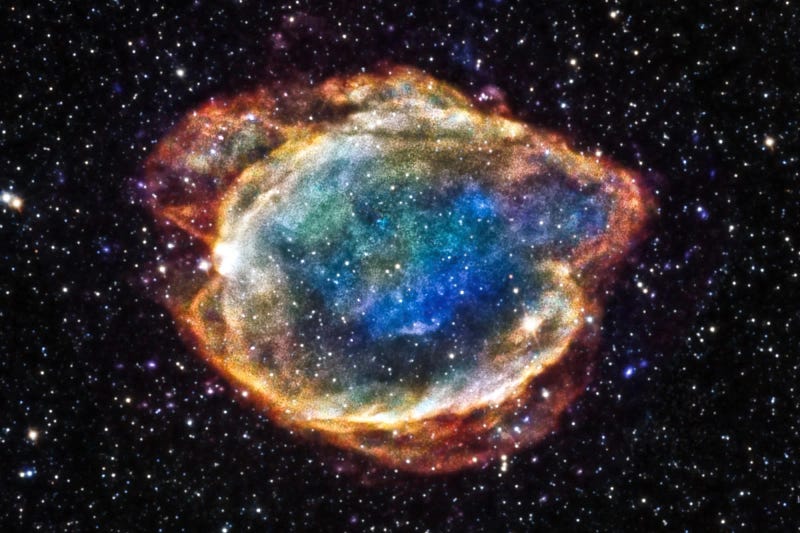
In the late 1990s, two separate groups of scientists independently discovered dark energy by realizing that the universe’s expansion was getting faster. They were studying Type Ia supernovas, which are exploding stars that give off light in a very consistent way, making them great for measuring distances in space.
As the universe expands, light from faraway sources takes a long time to reach us, and its wavelength gets “stretched out.” This stretching, known as “redshift,” turns the light toward the red end of the spectrum. The farther a light source is, the more its light gets redshifted. For really distant sources from the early universe, this shifting even goes into the infrared part of the spectrum.
Scientists were observing these specific supernovas, often referred to as “standard candles,” to figure out how fast the universe is expanding, a value known as the Hubble constant. What surprised them was that more distant supernovas, which exploded when the universe was much younger, appeared dimmer than expected. This suggested these supernovas were farther away than predicted, indicating that the universe’s expansion was not slowing down but speeding up.
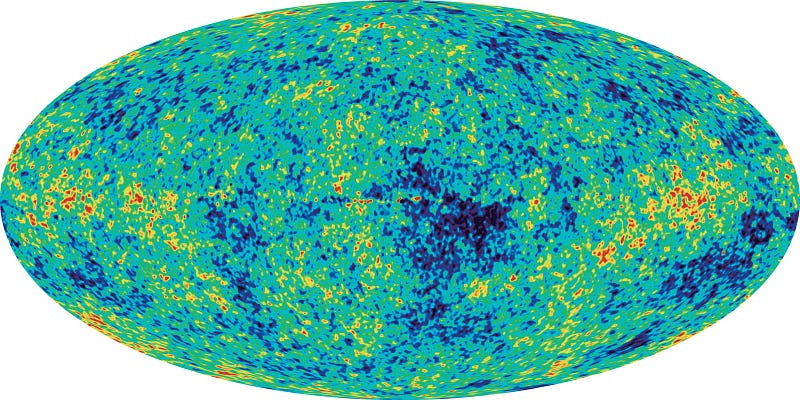
This groundbreaking discovery was later confirmed through additional observations and measurements of the “Cosmic Microwave Background,” a radiation field left over from the early moments of the universe, shortly after the Big Bang.
In the 1930s, Edwin Hubble’s discovery of the redshift of light, indicating the universe’s expansion, made Albert Einstein rethink his equations. Initially, Einstein introduced the cosmological constant (λ) as a sort of anti-gravity to maintain a steady-state universe, but he later called it his “greatest blunder” when Hubble’s findings suggested otherwise. The cosmological constant was initially discarded, but with the surprising revelation that the universe’s expansion is accelerating, cosmologists had to revive it. Today, λ represents dark energy, acting as a new kind of anti-gravity pushing the universe apart.
However, λ remains a puzzle. Its leading explanation involves vacuum energy exerting negative pressure on cosmic objects. Yet, there’s a major issue — the vast gap between the large vacuum energy predicted by quantum theory and the observed λ value. The theoretical estimate is astronomically larger than what astronomers measure through supernova redshift observations.
This disparity has been dubbed “the worst theoretical prediction in the history of physics.” Unfortunately, advancements in physics and astronomy are not resolving this gap but rather making it more pronounced. Yet, the challenging nature of dark energy extends beyond this discrepancy.

Time’s unidirectional progression, always moving forward and never backward, is often taken for granted. However, have you ever paused to contemplate the underlying reason for this asymmetry? Why does time exhibit a specific directionality instead of being reversible?
A curious fact that puzzled thinkers since the 19th century is that the basic laws of physics can’t explain why time always moves forward. Whether it’s Newton’s laws, Einstein’s theories, or quantum rules, they’d work the same if time went backward. But our everyday experiences tell a different story — we’re born, age, and eventually pass away; things break, mix, and disorder increases. Despite this, time seems to only go one way, even though science doesn’t explicitly forbid it from going the other way. This one-way aspect of time is best described by the second law of thermodynamics, stating that the disorder (or entropy) of isolated systems usually increases over time. This means that as time goes on, things tend to become more disordered. For instance, dropping an ice cube into hot coffee cools the coffee and warms the ice cube at the same time, but this process only goes in one direction — it’s like a one-way street. The second law, however, doesn’t explain why things unfold in this particular way.

If we could turn back time, it would mean reducing disorder. In a 19th-century idea called Maxwell’s demon, an entity separates fast and slow gas molecules in a box. However, it turns out the demon has to use energy and make things more disorderly, increasing the overall disorder in the universe. A recent experiment claims to copy Maxwell’s demon for around 60 atoms, making the system less disorderly by 2.44. This could be a big deal for quantum computing. If Maxwell’s demon could work on a larger scale, some argue time reversal might be possible, but it doesn’t mean we’d relive yesterday. It’s about a different way we perceive time — our sense of it.
The question of time’s unidirectional flow remains a puzzling challenge for physicists. Interestingly, there are specific physical phenomena that exhibit time-reversibility, meaning they appear identical regardless of the direction in which they unfold. In our understanding of the Universe, the laws of physics play a fundamental role. Remarkably, the majority of these laws are considered time-reversible, implying that the outcomes they generate remain unchanged regardless of whether time progresses forward or backward.
An excellent illustration of time-reversibility within the laws of physics is the motion of planets around stars, governed by the force of gravity. Regardless of the direction in which time unfolds, the paths traced by planetary orbits remain identical. The sole distinction lies in the direction of the orbit, while the underlying dynamics and orbital characteristics remain unchanged. However, the direction of Time’s Arrow has a significant impact on a fundamental principle known as the Second Law of Thermodynamics. According to this law, the disorder, or entropy, of a closed system, like our universe, is bound to progressively increase and never decrease.

Entropy is often associated with the idea that ordered or organized states are statistically less probable than disordered states. For example, shattered glass represents a higher entropy state compared to intact glass, as there are more ways for the glass pieces to be arranged randomly than to be precisely assembled. So, the second law of thermodynamics gives the time its forward direction.
In their pursuit to unravel the enigma of Time’s Arrow, two physicists from Armenia, A. E. Allahverdyan and V. G. Gurzadyan, embarked on a quest to explore the potential connection between “dark energy” and the Second Law of Thermodynamics. Dark energy represents a puzzling phenomenon introduced to account for the ongoing expansion of the universe, contrary to the predicted deceleration and eventual collapse anticipated by the laws of gravity as currently understood.
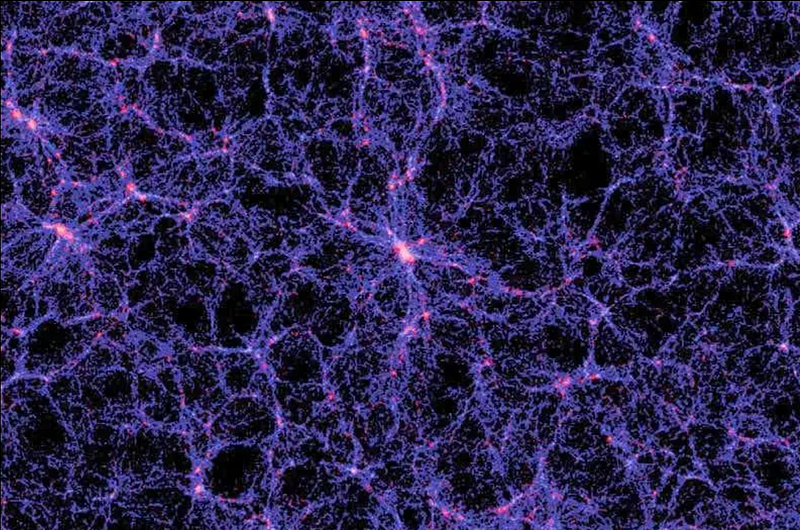
In their research paper titled “Dark Energy influences Time Arrow,” the authors, put forth the proposition that the acceleration of the universe’s expansion due to dark energy provides support for the inherent asymmetry of time. Dark energy, often referred to as the “cosmological constant” of Einstein’s initial theory of a force counteracting gravity to maintain a static universe, is now understood as a positive constant that propels the universe forward instead of restraining it.
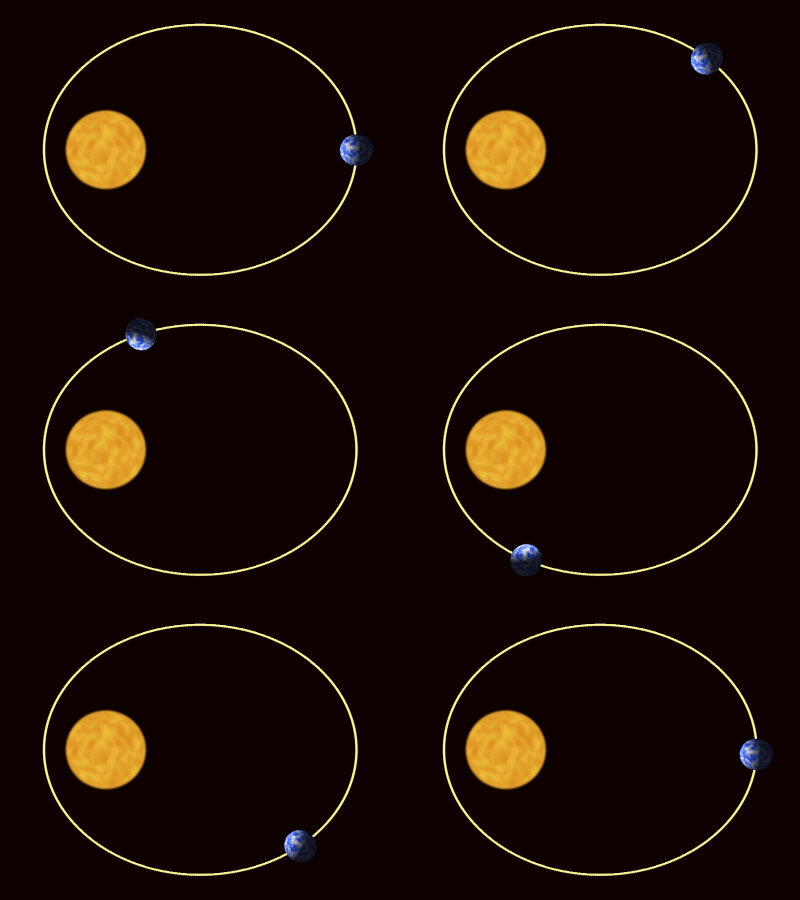
To examine their theory, Allahverdyan, and Gurzadyan conducted a comprehensive analysis involving the interplay of gravity and mass on a large scale. They devised a scenario where a planet gradually increased in mass while orbiting a star. Surprisingly, their findings revealed that if the dark energy value were zero (as previously believed by physicists before the 1990s) or if gravity alone governed the contraction of space, the planet would orbit the star without any discernible indication of the direction of time.
Assuming a positive value for dark energy, as supported by empirical evidence, a remarkable outcome emerges — the planet in the scenario would eventually be propelled away from the star. When the scenario is simulated in the forward direction of time, the increasing mass of the planet leads to its expulsion from the star’s vicinity. Conversely, when the simulation is reversed, the planet’s trajectory reverses as well, causing it to approach the star and become captured by its gravitational pull.
In this scenario, the presence of dark energy played a crucial role in determining the existence of an “arrow of time.” Without dark energy, the concept of time becomes indistinguishable, making it impossible to discern between the past, present, and future, or to determine the direction of temporal progression. In essence, dark energy provides the critical factor that establishes the framework for the asymmetry of time, enabling us to perceive the flow of time in a forward direction rather than reversibly or ambiguously.
The study’s authors emphasize the limited scope of their findings and explicitly state that they do not assert dark energy as the sole explanation for the unidirectional flow of time. However, their research highlights a potential connection between thermodynamics and dark energy, offering a pathway to enhance our understanding of either or both phenomena.
Thank you for reading this story and see you again. If you’d like to show your appreciation, please give the claps and leave a response.
If you like my work and wanna support me, you can buy me a coffee ☕️. If you do so, thank you a million times. 🙂