
Roleplaying Games | Fantasy | Revolution
‘Spire: The City Must Fall’ is a Giant Middle Finger to Tolkien and Gygax
Drow Are (Not) Terrorists
“You have joined the Ministry of Our Hidden Mistress, a paramilitary cult that worships a forbidden goddess, and sworn in blood to avenge the wrongs placed upon you and your people. You have made an oath to fight the high elves, to subvert and capture their resources, and to take Spire back into dark elf hands once more.”
- Spire: The City Must Fall, pg 1.
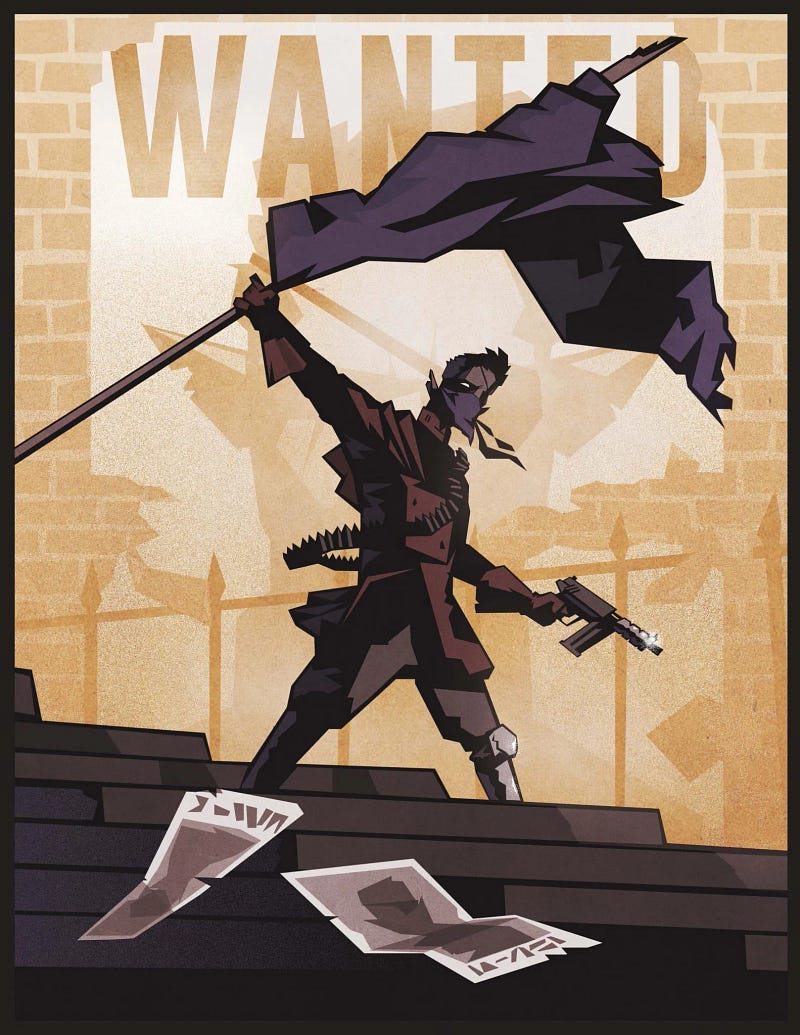
If you mashed up Lord of the Rings, Snowpiercer, Nazi-occupied France, and apartheid era South Africa, you’d get something like Spire: The City Must Fall. Spire is a dungeon punk roleplaying game about resisting an oppressive ethnostate. Players take the role of drow (dark elf) freedom fighters forced to do horrible things to free their people from the decadent and cruel aelfir (high elves).
Spire is nothing like D&D and its various knockoffs. There are no adventures in the borderlands. There are no moral or ethical alignments. There are no “monstrous races” you can kill for easy XP and loot. Gary Gygax would not approve of this game.
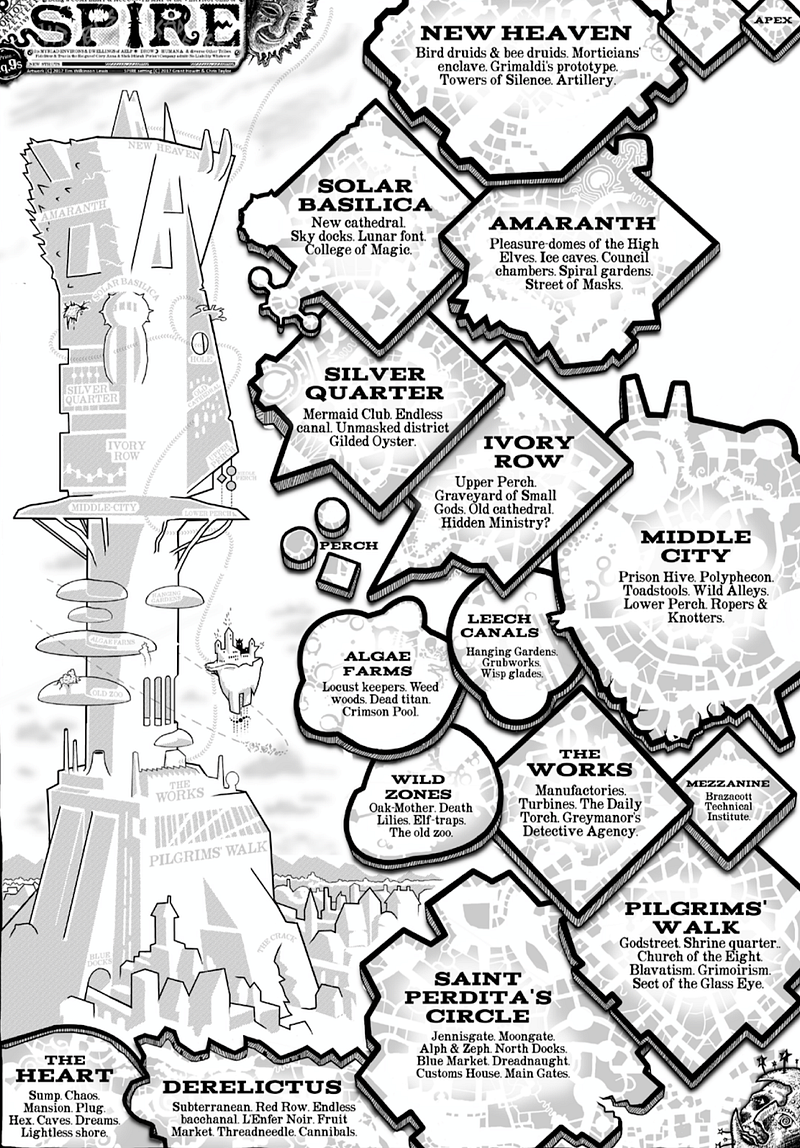
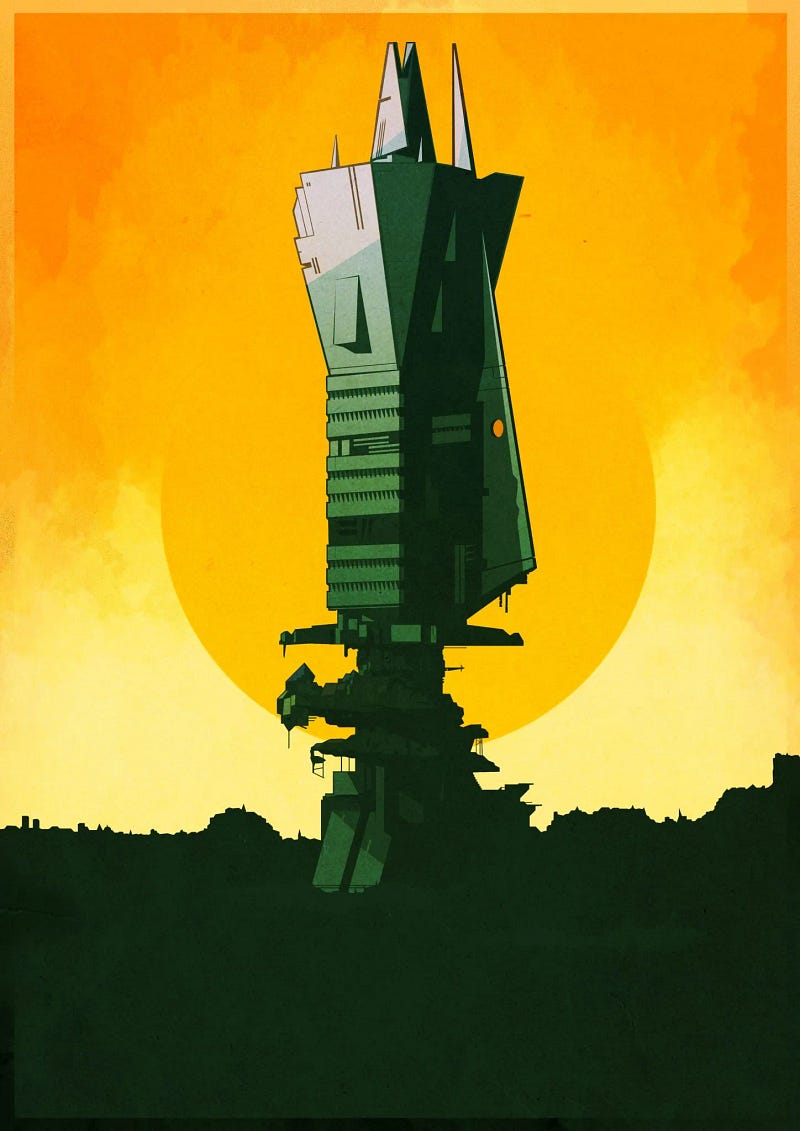
It all takes place in a gargantuan arcology hundreds of miles tall ruled by the aelfir, who mostly live near the top. Note that the city is called “Spire”, never “the Spire”. If you’re not getting it by now, Spire is an allegory for social stratification and institutional oppression. Some gamers think it’s a bit too on-the-nose. Those gamers are wrong.
The text states, “There Aren’t Any Monsters”, but that’s not quite true. All the monsters are people, and a lot of people are monsters. You will rarely fight anything that isn’t a sentient person in Spire. There are the occasional animals or supernatural threats, but you’ll mostly fight and kill guards, rivals, public officials, traitors, and anyone else that stands in the way of the revolution. People who have hopes and dreams of their own. People who have other people waiting for them back home.
You won’t be the only ones doing terrible things. Spire is not a nice place, and Spire is not a nice game. Your own family might sell you out to the aelfir, and the Ministry might sell you out to protect the rest of the organization. Either way, you’re a doomed hero who will die for the cause eventually.
In case it’s not clear, you cannot play a human. Humans exist in Spire, but only in small numbers. The human homelands are distant and unimportant to the story. The few that live in Spire are mostly uninterested in your little revolution. Life is literally too short. Humans don’t live nearly as long as elves.
Spire’s tech level is Edwardian-ish. It conveniently includes some guns alongside medieval-level gear, and some Victorian-level firearms are around and about. On top of that, the magitech elements of Spire allow for crazier shit, like Galvanic arquebuses and steampunk/clockpunk engines. Mystical surgery can freeze a patient’s age. The ash/tar/black stuff on the walls of The Works (the industrial sector) can be used to make crude bombs. It’s a fun place.
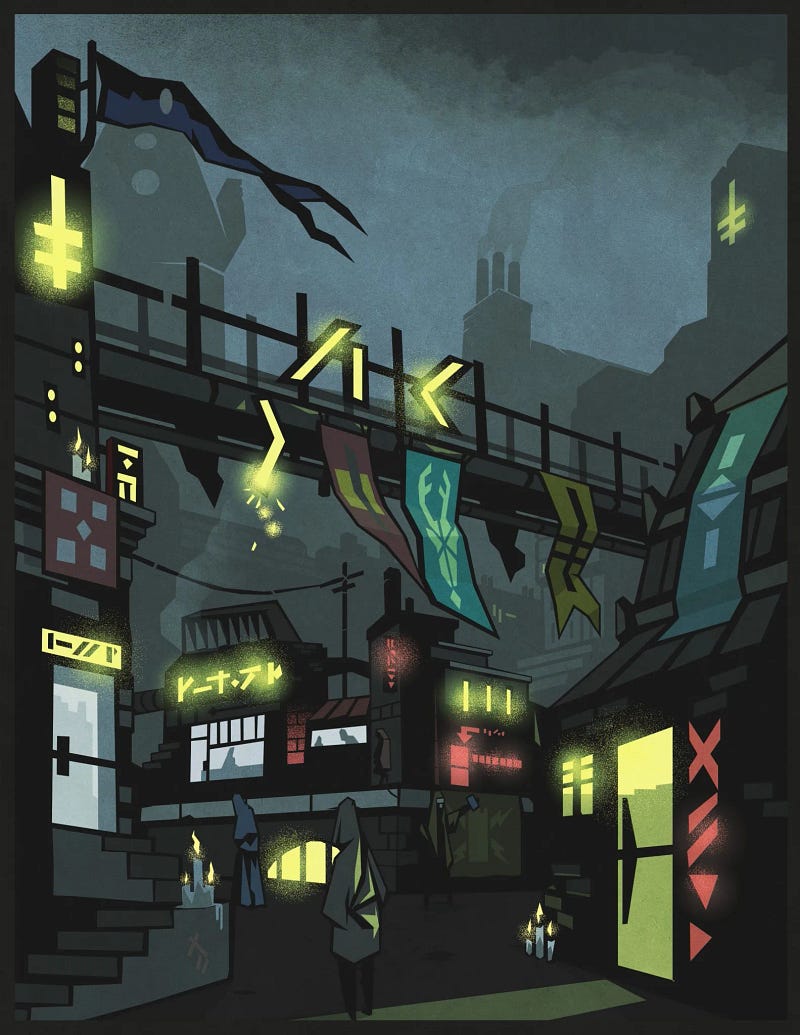
The stratification is mapped out in the book’s sumptuous amount of lore. The city houses an uncountable number of religions, cults, secret societies, businesses, and gangs. The rebellion, The Ministry of the Hidden Mother, is just one of a fuck-ton of interesting parties.
A school called The Benevolent Order of Wisdom and Discovery is a front for three separate groups of demonologists. The Instrumentalists think Spire is a giant wind instrument. The Guild of Morticians is the only organization legally allowed to dispose of bodies. Greymanor Services is a tiny but expanding firm of private investigators. Spire is full of colorful characters trying to get by or get ahead. Everyone has an angle. Everyone wants something. Everyone needs to eat.
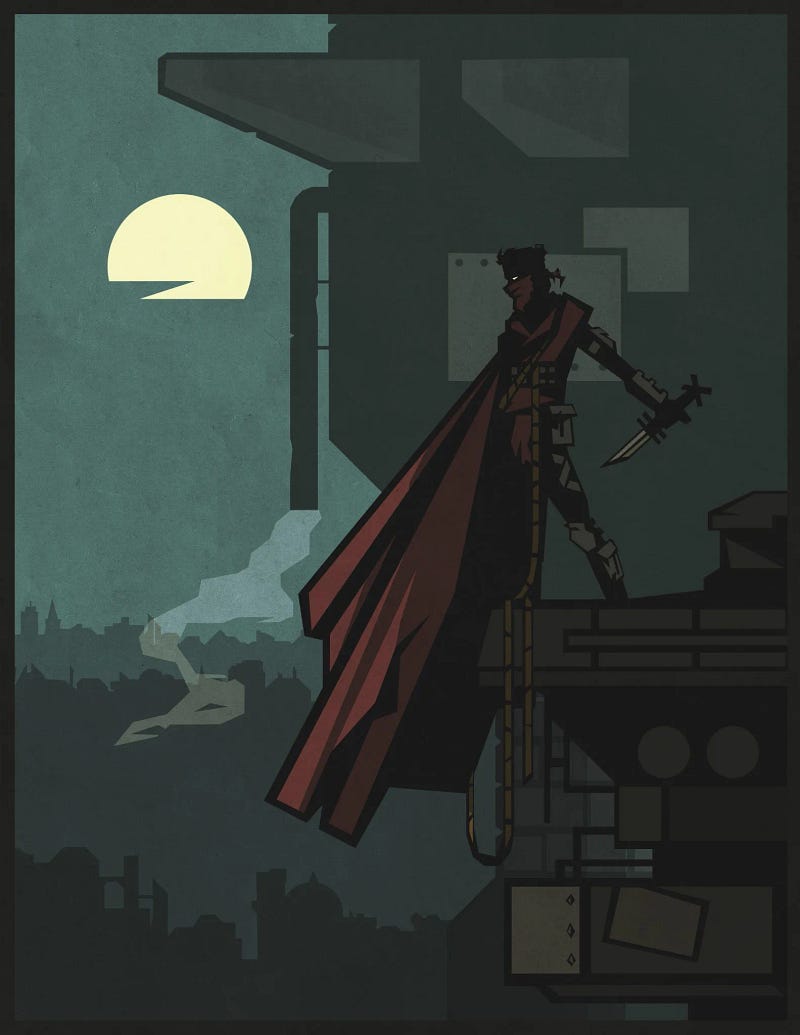
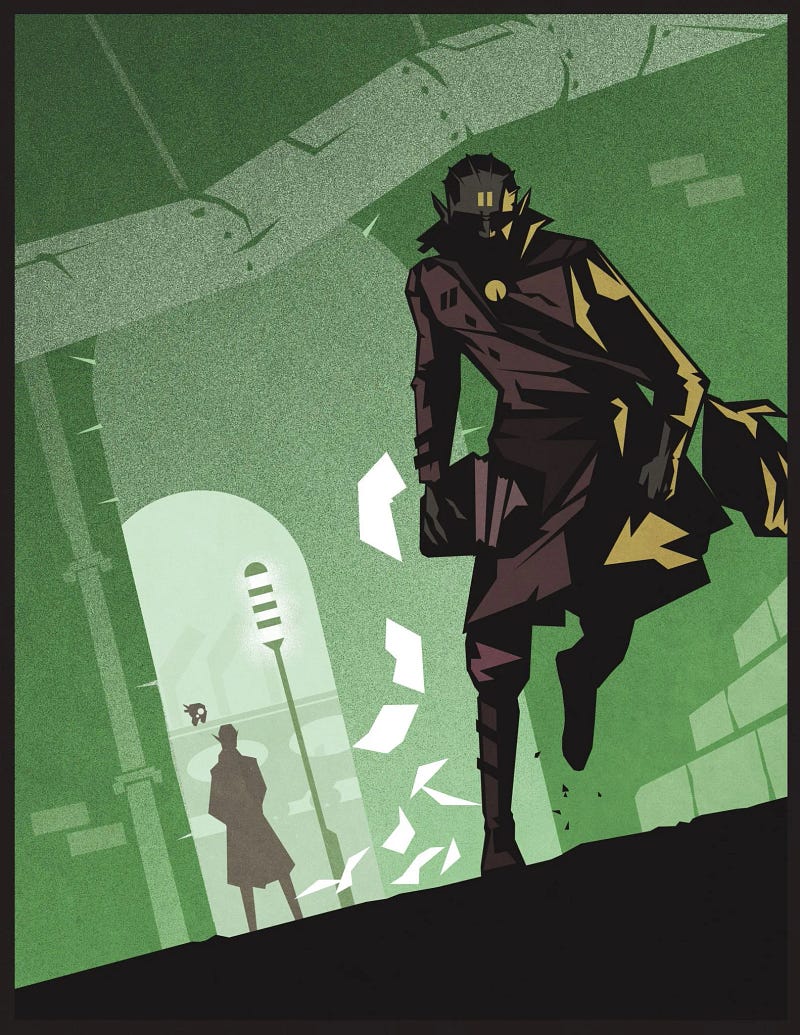
All of this madness is tied together by Spire’s delicious artwork, which almost never shares space with the text. The full-page illustrations are absolutely gorgeous. You don’t deserve to even look at it. Avert your eyes. You are unworthy.
Characters in Spire are built around Class and Durance. The character classes are more specific and far more fascinating than those of D&D. The Bound are Batman-with-knives. Firebrands are classic (and tragic) revolutionary vanguards. Vermissian Sages hide secrets in extra-dimensional tunnels throughout Spire.
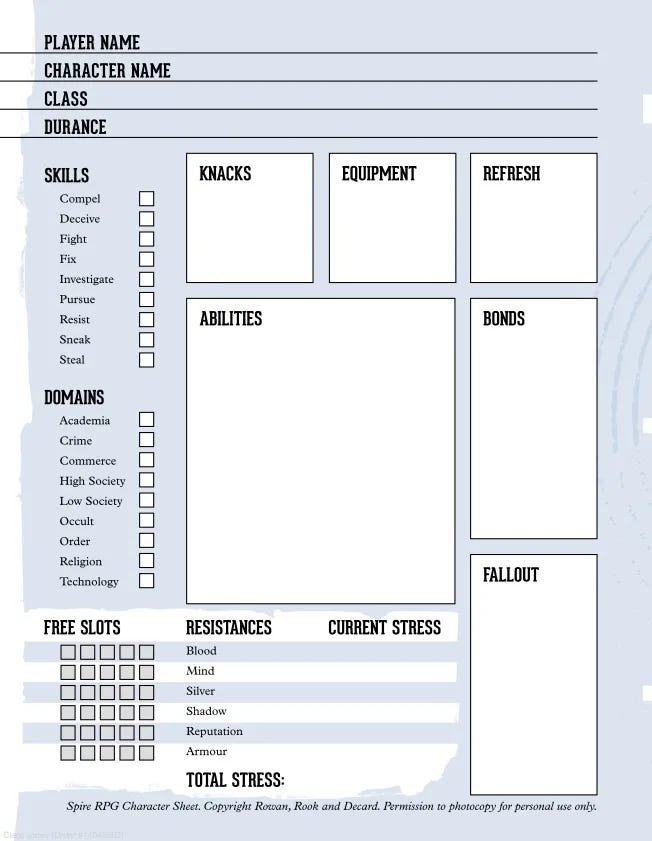
But your drow’s Durance drives home the game’s brutal themes. In order to live in Spire, drow must endure four years of indentured servitude. Your Durance is the job you had while serving the high elves. They all have blunt, clear names. Builders built stuff. Enlisted were drafted soldiers. Pets were purely for show. If it isn’t clear by now, this is slavery.
Mechanically, Durances do very little. They determine starting Skills, Domains, and Resistance bonuses. That’s about it. But a drow’s Durance is a bitter reminder of the price they had to pay to live in Spire, which rightfully belongs to the drow in the first place. You as a player get to choose your drow’s Durance, but your character didn’t. Their Durance was forced upon them. Even afterward, they’re still second-class citizens.
Anyone that says, “they could have just said no and chosen not to live in Spire” is an asshole. The drow homelands are awash with civil war, and most newly-arriving drow are refugees. I’m sure some aelfir believe that the drow CAN’T rule themselves, and that high elf rule is a blessing. Again, assholes.
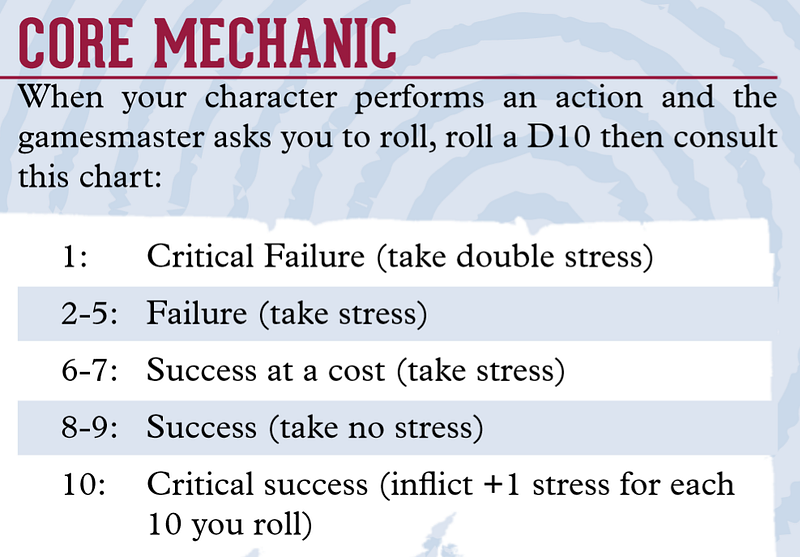
Spire’s rules are impossibly elegant. Action rolls use D10s, and you’ll never roll more than four of them. The result of the highest die is compared to one chart. Skills are similar to those of other RPGs, but in Spire they’re binary. You either have a Skill or you don’t. If you do, you roll an extra die.
But Domains are a different beast. If Skills determine WHAT you can do, Domains determine WHEN and WHERE. They represent the situations or settings in which you are in your element. Like Skills, if you have the right Domain you roll an extra die. The Skill/Domain combo puts players on the lookout for chances to use both in one roll.
Combat isn’t much more complicated. There are no initiative rolls. The GM doesn’t roll for the NPCs’ attacks. Everything is determined from the player’s point of view. The system’s simplicity makes way for describing how horrible stab wounds and gunshots can be. Even if you win, you might regret having to do what you had to do. Hurting people isn’t a good thing, even if they deserve it.
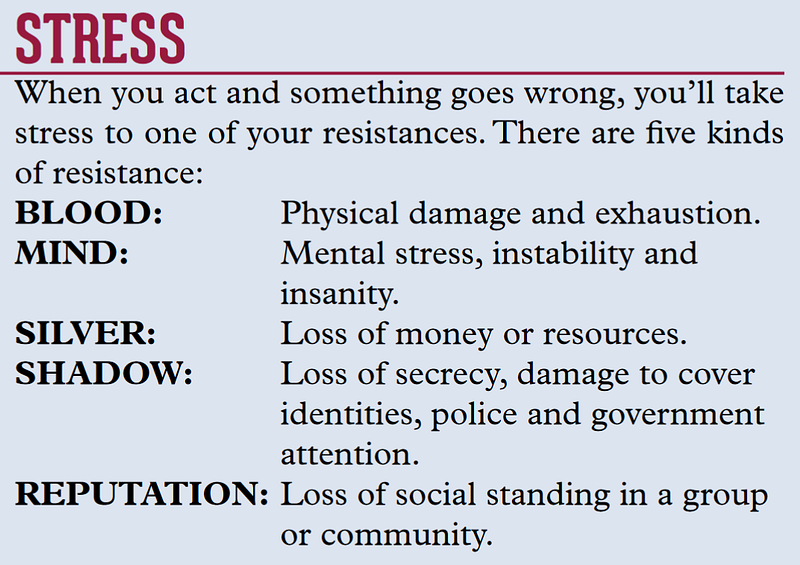
The Stress rules make life in Spire interesting and horrible. There are five flavors of Stress. If you get hit with too much stress in one go, you suffer Fallout.
Blood-related Fallout can range from Bleeding (you gain another Blood stress every time you act until you’re patched up) to Dying (you either do one last awesome thing or you trade something vital to hold on to life). Silver-related Fallout can be as minor as Pawned (you lose a piece of gear until next game) or as severe as Turned (you now secretly work for the bad guys).
Fallouts make fail-states other than death possible. Your character can leave the game because of a gunshot wound, or because their mind snapped and they were forced to “retire”.
Spire: The City Must Fall is a game about revolution. You’re either sowing the seeds of dissent, leveraging that dissent to strike at the your oppressors, or dealing with the aftermath of some action. You’re never just fighting bad guys. You’re subverting systems and reclaiming power from alien overlords. Unfortunately those overlords have everyday people working for them.
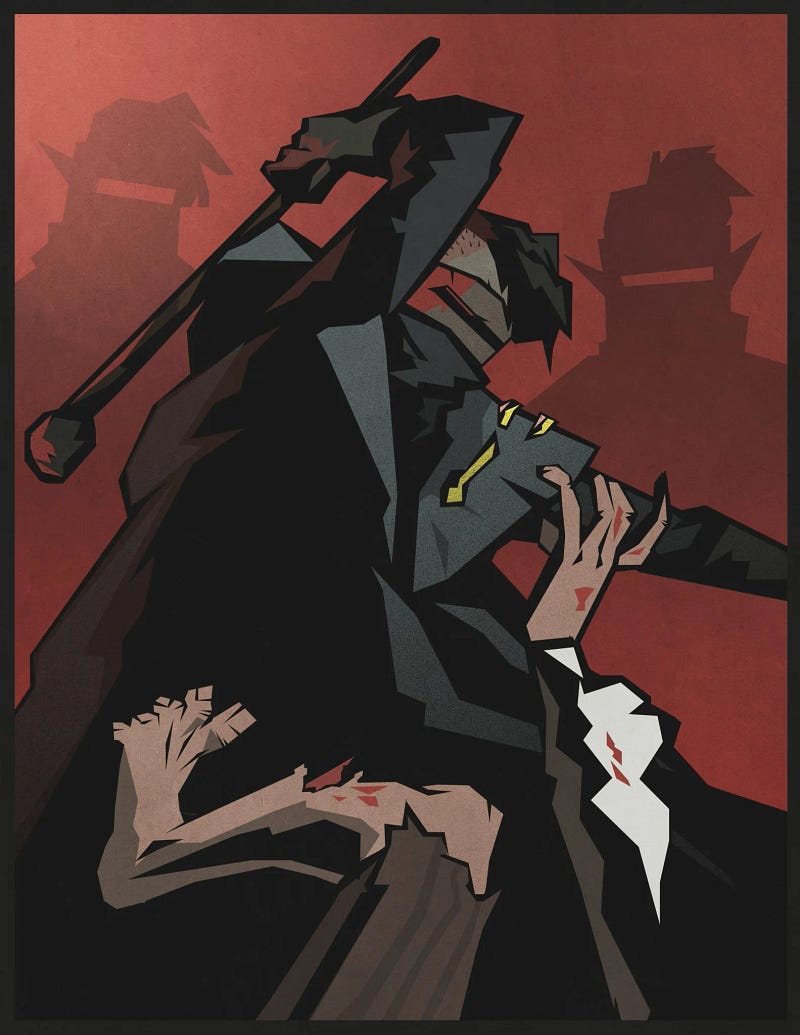
Throughout all of this, you’ll be forced to do bad things. You’ll abandon informants. You’ll execute collaborators. You’ll stab, shoot, and blow up people just doing their jobs.
Almost every drow in Spire was a slave. They weren’t called slaves. It was a limited and temporarily slavery. Still, it was slavery. The drow were forced to “earn” the right to live in their own city. And after enduring that indignity, most of them still toil and suffer to scratch out an existence. If you and your family were treated like this, you’d do bad things too.
Update Jan 2023 - For creators who are pissed at WotC for nuking the OGL, Rowan, Rook, and Decard have open licences for both Spire and its core system, Resistance Toolkit. 


