avatarKemal M. Lepschoq, LL.M.

Free AI web copilot to create summaries, insights and extended knowledge, download it at here

3128

Abstract

case of <a href="https://www.oyez.org/cases/1966/249"><i>Walker v. City of Birmingham (1967)</i></a> is a classic example where this rule was applied.</p><p id="d425">Despite the strong bias against prior restraints, the Supreme Court has acknowledged that there are extreme situations where they might be okay. For example, stopping someone from leaking information about sensitive military operations is considered a no-brainer. The famous case of <a href="https://www.oyez.org/cases/1970/1873"><i>New York Times Company v. United States (1971)</i></a>, involving the Pentagon Papers, showed that even when top-secret information is at stake, the Court tends to let the publication go forward, emphasizing the fundamental value of a free press.</p><p id="f161">On the other hand, the Court has also recognized situations in which the government has a bit more leeway. For example, in <a href="https://www.oyez.org/cases/1979/78-1871"><i>Snepp v. United States (1980)</i></a>, the Court supported the idea that the government could require former employees who had access to sensitive information to allow the government to review their writings before publication. This is seen as a sort of middle ground, recognizing the need for some control over particularly sensitive information without completely crushing the spirit of free speech.</p><p id="20ce">Simply put, prior restraint is a big no-no in American law because it conflicts with the core values of free speech and a free press. However, the legal landscape recognizes that in rare, specific cases, such restraints may be necessary to protect even greater interests, such as national security.</p><figure id="f6e8"><img src="https://cdn-images-1.readmedium.com/v2/resize:fit:800/1*ndAX50jw3BFJ8gneualq-A.png"><figcaption>The “<a href="https://en.wikipedia.org/wiki/Pentagon_Papers">Pentagon Papers</a>” case, New York Times Co. v. United States (1971), was a landmark defense of the press’s freedom from government-imposed prior restraint. In an iconic moment, team members (from left) Neil Sheehan, A.M. Rosenthal, and James L. Greenfield of the New York Times were photographed celebrating their Pulitzer Prize for public service. Source: <a href="https://firstamendment.mtsu.edu/article/new-york-times-co-v-united-states/">link</a></figcaption></figure><h1 id="09e6">Guiding Principles for Speech Licenses</h1><p id="24e0">Suppose you want to organize a rally in the local park to speak out about environmental issues. Before you can do so, the city requires you to obtain a permit. This process is in place to ensure public safety and order, but it’s also where the Supreme Court’s guidelines apply. The city must have clear, objective criteria for issuing permits, cannot arbitrarily decide based on the content of your speech (like if they just don’t like environmentalists), and must provide a way for you to appeal if your request is denied.</p><p id="aca9">In <a href="https://www.oyez.org/cases/1964/69"><i>Freedman v. Maryland (1965)</i></a><i> </i>the Court recognized that while it’s possible for licensing schemes to pass First Amendment muster, there

Options

are strict conditions that must be met to prevent these schemes from becoming tools of censorship:</p><ol><li><b>Clear eligibility criteria.</b> There must be specific, objective standards that determine who can and cannot obtain a license or permit.</li><li><b>Limited discretion for licensing authorities.</b> Authorities responsible for issuing licenses or permits must strictly adhere to these clear criteria and cannot have wide discretion.</li><li><b>Procedural safeguards.</b> Mechanisms must be in place to ensure that the licensing process is fair, transparent, and accountable. These safeguards could include timely decisions, the ability to appeal a denial, and requirements for the licensing authority to justify its decisions.</li></ol><figure id="7a8b"><img src="https://cdn-images-1.readmedium.com/v2/resize:fit:800/1*q8OXXA98idSXRezAJf5i7w.png"><figcaption>In July 1979, Mary Avara, head of Maryland’s movie censorship board, reviews a film strip in Baltimore, showing the state’s ongoing film censorship efforts. Despite the Supreme Court ruling in Freedman v. Maryland (1965), which invalidated Maryland’s original film censorship law on First Amendment grounds, the state revised its law and continued film censorship until 1981. Source: <a href="https://firstamendment.mtsu.edu/article/freedman-v-maryland/">link</a></figcaption></figure><p id="6320">In setting these standards, the Supreme Court sought to achieve a balance between allowing the government to regulate speech-related activities (such as holding a rally in a public park) and protecting individuals’ rights to free expression. The Court recognized that while permits and licenses may serve legitimate public interests (such as safety and order), they cannot be used as a backdoor way to suppress speech that the government doesn’t like.</p><h1 id="c0e4">Disclaimer</h1><p id="f91f"><i>The information provided in this article is for informational and educational purposes only and is not intended to serve as legal advice or as a substitute for legal counsel. While efforts have been made to ensure the accuracy and completeness of the content herein, it is important to note that legal principles and regulations can vary significantly based on jurisdiction and specific circumstances. Therefore, this article should not be used as a definitive legal resource or as a basis for making legal decisions. Readers are strongly advised to consult with a qualified attorney for advice on legal issues or matters, as each individual case may require detailed and personalized legal analysis.</i></p><p id="f418"><i>Reliance solely on the information provided in this article without seeking professional advice from an attorney may lead to unintended legal consequences or misinterpretation. The author or publisher of this article do not accept responsibility for any potential errors or omissions, nor will they be responsible for any losses, injuries, or damages arising from its display or use. The information provided here does not create an attorney-client relationship between the reader and the author or publisher.</i></p></article></body>

Dare to Speak: the Fine Line Between Free Speech and National Security

Understanding “prior restraint”.

Prior restraint” is a legal term that refers to government action to prevent something from being said or published before it is actually happened. It’s like someone trying to stop you from speaking or sharing your thoughts before you even open your mouth or hit the “publish” button.

Imagine you’ve written a blog post criticizing a new government policy. If the government requires you to submit your post for approval before you can publish it, and it has the power to prevent you from publishing based on its dislike of your views, that’s an example of prior restraint. The government is trying to control speech before it happens, which is generally considered a serious infringement on your freedom of speech.

The First Amendment to the U.S. Constitution strongly protects against prior restraint, which means that the government usually cannot stop you from speaking or publishing. There are some exceptions, such as if your speech could cause direct, immediate harm (for example, if you give detailed instructions on how to make a bomb), but these exceptions are very narrowly defined to ensure that freedom of speech and the press are preserved as much as possible.
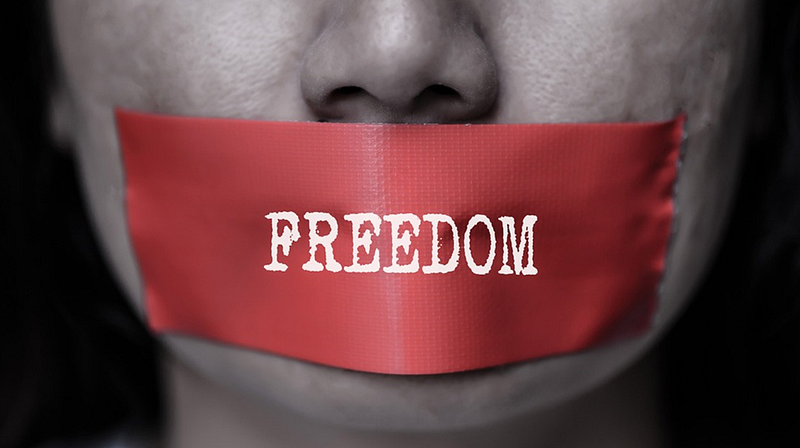
Does the pure freedom exist? Source: link

Striking a Balance Between Free of Speech and Security

So, at its core, “prior restraint” refers to any action by the government that tries to stop speech or the publication of information before it actually happens. The main idea behind it is to prevent the government to act like a giant red stoplight, saying “You can’t publish that!” before the words even hit the press.

The reason prior restraints are viewed so harshly is nicely summed up by the Supreme Court. They basically said that a “free society prefers to punish the few who abuse rights of speech after they break the law than to throttle them and all others beforehand…”. This idea is highlighted in S.E. Promotions, Ltd. v. Conrad (1975), where the Court pointed out the importance of preferring to punish those few who abuse speech rights after the act, rather than restricting everyone preemptively.

However, there’s a catch in the system called the “collateral bar” rule. This rule means if you go ahead and break a court order that stopped you from speaking or publishing (a form of prior restraint), you can’t later argue that the order was wrong or unjust when you’re being punished for disobeying it. The case of Walker v. City of Birmingham (1967) is a classic example where this rule was applied.

Despite the strong bias against prior restraints, the Supreme Court has acknowledged that there are extreme situations where they might be okay. For example, stopping someone from leaking information about sensitive military operations is considered a no-brainer. The famous case of New York Times Company v. United States (1971), involving the Pentagon Papers, showed that even when top-secret information is at stake, the Court tends to let the publication go forward, emphasizing the fundamental value of a free press.

On the other hand, the Court has also recognized situations in which the government has a bit more leeway. For example, in Snepp v. United States (1980), the Court supported the idea that the government could require former employees who had access to sensitive information to allow the government to review their writings before publication. This is seen as a sort of middle ground, recognizing the need for some control over particularly sensitive information without completely crushing the spirit of free speech.

Simply put, prior restraint is a big no-no in American law because it conflicts with the core values of free speech and a free press. However, the legal landscape recognizes that in rare, specific cases, such restraints may be necessary to protect even greater interests, such as national security.
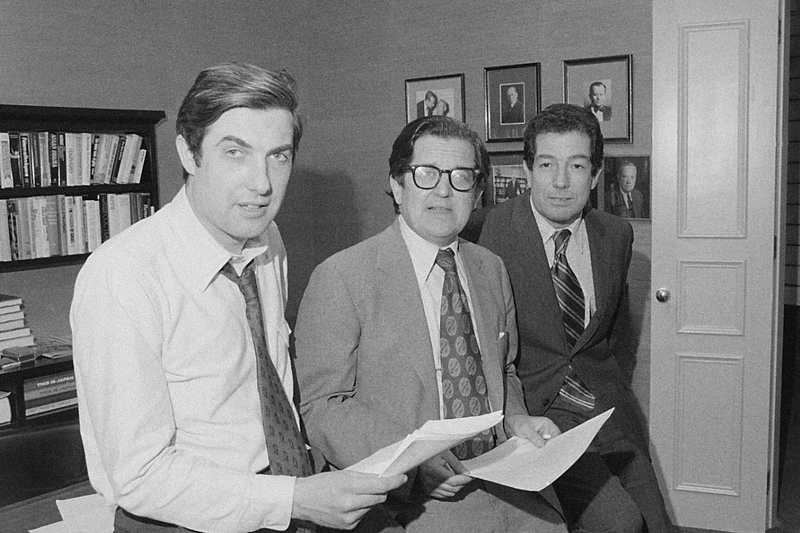
The “Pentagon Papers” case, New York Times Co. v. United States (1971), was a landmark defense of the press’s freedom from government-imposed prior restraint. In an iconic moment, team members (from left) Neil Sheehan, A.M. Rosenthal, and James L. Greenfield of the New York Times were photographed celebrating their Pulitzer Prize for public service. Source: link

Guiding Principles for Speech Licenses

Suppose you want to organize a rally in the local park to speak out about environmental issues. Before you can do so, the city requires you to obtain a permit. This process is in place to ensure public safety and order, but it’s also where the Supreme Court’s guidelines apply. The city must have clear, objective criteria for issuing permits, cannot arbitrarily decide based on the content of your speech (like if they just don’t like environmentalists), and must provide a way for you to appeal if your request is denied.

In Freedman v. Maryland (1965) the Court recognized that while it’s possible for licensing schemes to pass First Amendment muster, there are strict conditions that must be met to prevent these schemes from becoming tools of censorship:

  1. Clear eligibility criteria. There must be specific, objective standards that determine who can and cannot obtain a license or permit.
  2. Limited discretion for licensing authorities. Authorities responsible for issuing licenses or permits must strictly adhere to these clear criteria and cannot have wide discretion.
  3. Procedural safeguards. Mechanisms must be in place to ensure that the licensing process is fair, transparent, and accountable. These safeguards could include timely decisions, the ability to appeal a denial, and requirements for the licensing authority to justify its decisions.
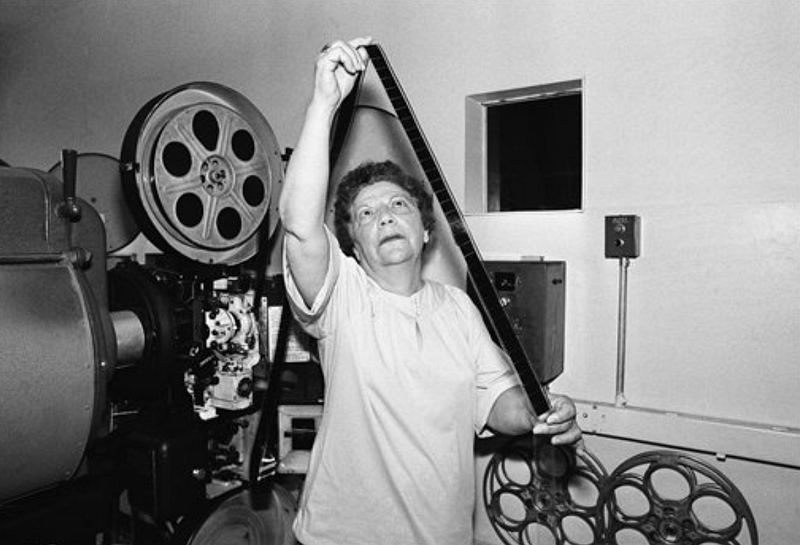
In July 1979, Mary Avara, head of Maryland’s movie censorship board, reviews a film strip in Baltimore, showing the state’s ongoing film censorship efforts. Despite the Supreme Court ruling in Freedman v. Maryland (1965), which invalidated Maryland’s original film censorship law on First Amendment grounds, the state revised its law and continued film censorship until 1981. Source: link

In setting these standards, the Supreme Court sought to achieve a balance between allowing the government to regulate speech-related activities (such as holding a rally in a public park) and protecting individuals’ rights to free expression. The Court recognized that while permits and licenses may serve legitimate public interests (such as safety and order), they cannot be used as a backdoor way to suppress speech that the government doesn’t like.

Disclaimer

The information provided in this article is for informational and educational purposes only and is not intended to serve as legal advice or as a substitute for legal counsel. While efforts have been made to ensure the accuracy and completeness of the content herein, it is important to note that legal principles and regulations can vary significantly based on jurisdiction and specific circumstances. Therefore, this article should not be used as a definitive legal resource or as a basis for making legal decisions. Readers are strongly advised to consult with a qualified attorney for advice on legal issues or matters, as each individual case may require detailed and personalized legal analysis.

Reliance solely on the information provided in this article without seeking professional advice from an attorney may lead to unintended legal consequences or misinterpretation. The author or publisher of this article do not accept responsibility for any potential errors or omissions, nor will they be responsible for any losses, injuries, or damages arising from its display or use. The information provided here does not create an attorney-client relationship between the reader and the author or publisher.

Politics
Law
Freedom
Society
Life
Recommended from ReadMedium