
#30DAYSOFSCIKUCHALLENGE
Dangerous Warming
Day 25 Prompt: Climate Science inspired Sciku
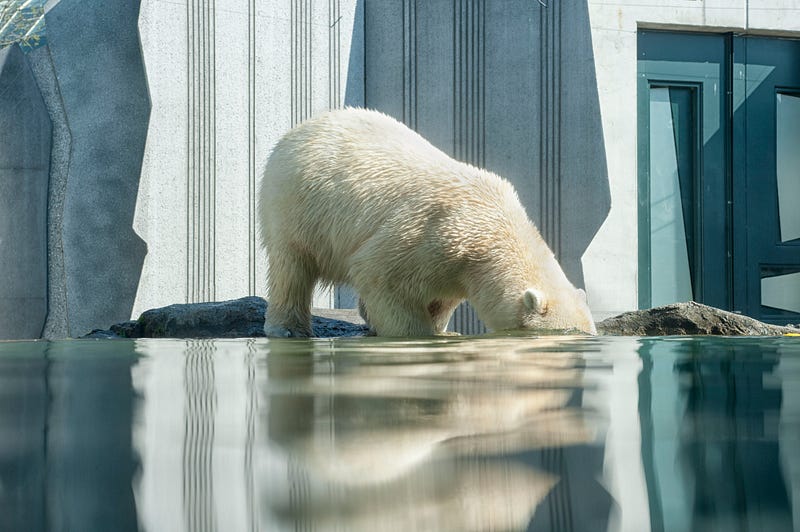
Anthropogenic & global warmed oceans and melted ice climate change is here
Change is definitely in the air this week — what used to be norms are no more — politically and otherwise. Let’s take a look at climate patterns. For instance, this is the middle of winter, but for many of us, it feels more like fall or simply confusing, hot one day, freezing cold the other.
Just this week — started off with a weather advisory for nearly all of California — strong winds, record high temps, and deadly earthquake left nearly 1,000 injured and buildings damaged in Indonesia.
This pattern is reflected all over the world. By some estimates, more than 1 in 10 Americans — approximately 34 million people — are living in rapidly heating regions, including New York City and Los Angeles.
In fact, scientists have been sounding alarms and making projections of future global warming using climate models for decades. These models are essentially mathematical simulations using our current and historical understanding of the atmosphere, ocean, land surface, sun, and potential interactions to forecast the future accurately.
As you can imagine, there is built-in uncertainty in predicting the future. With new advances and as science becomes clearer, we learn new and more advanced information; the models change to reflect that.
Researchers have recently introduced a new Scaling Climate Response Function (SCRF) model to project the Earth’s temperature to 2100. The SCRF is grounded on historical data and aims to reduce prediction uncertainties by about half compared to the current approaches.
“Our new approach to projecting the Earth’s temperature is based on historical climate data, rather than the theoretical relationships that are imperfectly captured by the General Circulation Models (GCMs). Our approach allows climate sensitivity and its uncertainty to be estimated from direct observations with few assumptions,” says co-author Raphael Hebert, a former graduate researcher at McGill University, now working at the Alfred-Wegener-Institut in Potsdam, Germany. Source : Science Daily.
Based on their models and analysis, the researchers suggest that the threshold for dangerous warming (+1.5C) will likely be crossed between 2027 and 2042 — A much narrower window than previously predicted and quite possibly a call to action for all of us — the earth is warming at an alarming rate and the time to act was yesterday!
This is one issue where science and politics need to work hand-in-hand to have any hope of a possible solution. Incoming President Biden has promised to sign the Paris climate accord on his first day in office — a good first step perhaps — but we need to stay engaged and involved — Mother Earth needs us now more than ever!
What can we do — learn more, ask more of our leaders and listen to your kids when they talk about climate concerns — we are resilient, we are in this together, and let us work towards a better future for all.
Thank you for reading!
**This is Day 25 of the #sciku challenge — science-inspired haiku-like poetry( so #sciku?) prompts to get you inspired — Our dear readers — why not spend some time each day creating and having a little fun — if you do — publish it anywhere on medium, just tag it with — #30DaysOfScikuChallenge.
*Tagging Lynn E. O’Connor, Ph.D., Laura Griffith Machado, PsyD Rita Hitching, and anyone else who feels inspired to follow and/or play along with this fun #30DaysOfScikuChallenge and today’s prompt: Climate Science
For more on #30DaysOfScikuChallenge:
Or check this one by UN CC: Learn :


