Danger! 25 shocking facts that AI is neither intelligent nor artificial

Innovation in artificial intelligence is all too often at the expense of underpaid workers abroad.
This article is an English summary of a nice article by Chloe Xiang that I found on Vice, written in French. I translated the title, but there are already other articles with the same title, such as the one by Kate Crawford of Microsoft about her own book. This was not intentional plagiarism.
AI is often seen as a symbol of intelligence and progress, but the reality is that much of what we consider AI is actually fueled by the tedious and poorly paid work of humans. Tech companies hire thousands of gig workers to maintain the illusion that their algorithms are fully autonomous, while the bulk of the labor supply is concentrated in developing countries in the south. These workers, who often lack labor protections and the ability to unionize, are involved in tasks such as beta testing, data annotation, and content moderation.
Not only are these workers exploited, but the work they do can also be disturbing and harmful. Some have even sued their employers over working conditions, and the issue of “participation-washing” — where workers in poorer countries are used to report their value rather than being treated as equal partners — has come to light.
There is a significant gap between the image of AI as a futuristic and intelligent technology, and the reality of its reliance on human labor. As consumers of tech products, we are also indirectly involved in the AI process through our actions and data. It is important to recognize and address the issues surrounding the human labor that goes into the development and maintenance of AI systems.
Here follow some of the main observations of Xiang’s article:
- Much of what we consider AI is actually fueled by tedious and poorly paid human work
- Currently, human labor compensates for many shortcomings in the operation of these systems
- The largest tech companies dream of a near future where AI will replace much of human labor thereby unlocking greater potential for efficiency and productivity
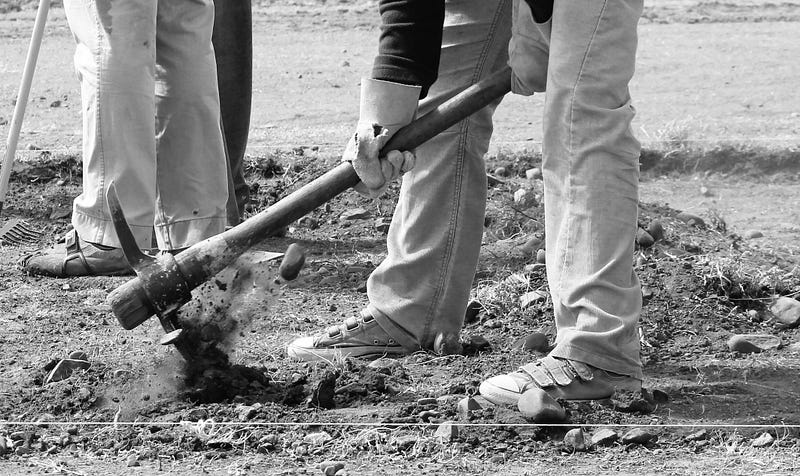
The AI process is highly unbalanced
- People working under such conditions, who help create the raw materials used to form these systems, rarely have an idea of what their hard work will be used to create.
- Tech companies hire tens of thousands of gig workers to maintain the illusion that their automatic learning algorithms are fully autonomous, and that each new AI tool is capable of solving a number of problems as soon as it leaves the box.
- Developing countries in the South are fueling the development of AI systems by performing beta tests, annotation and labeling of data and often poorly paid content moderation work, while the countries of the North are the centers of power which benefit from this work
- The majority of the labor supply on these platforms is concentrated in southern countries while the majority of demand is located in the North
- We know from experience with other supply chains, such as the food industry, that when there are relationships of outsourcing work to low-wage workers and low-income countries, this is often coupled with operating relationships, poorer protections and poorer working conditions

The moderation of content is definitely becoming more disturbing for the workers themselves
- Some workers in these countries have sued employers or groups like Meta, to denounce the working conditions imposed on them
- In May, a former content moderator named Daniel Motaung filed a lawsuit in Nairobi, Kenya, accusing Meta, the parent company of Facebook, and its largest subcontracting partner, Sama, of forced labor, human trafficking, and union dismantling
- Sama’s mission, which is to provide poor countries with ethical digital work and worthy work, quickly proved to be a facade of « participation-washing»
- They include workers in a post-colonial global power structure to report their value rather than consider them as significant and democratic partners
If there are labor protections and workers’ jurisdiction, it is incredibly difficult to enforce them when the customer is in another country, and that the platform is located in a third country
- Due to this structural imbalance of power, workers often do not have the opportunity to speak about their customers
- They are classified as independent entrepreneurs, so they have very little recourse to local labor protections, and the legislative frameworks that would allow them to unionize or engage in collective bargaining with these platforms
- Customers and workers connect directly almost in real time

Using tech products, they are also involved in the AI process
- A single unexpected click can modify the parameters of a model and its future accuracy
- This work is sometimes so deeply integrated into the way users navigate the web that it is done unconsciously, for example when using Google Maps and producing data movement models that predict traffic.
- More recently, AI image text generators like DALL-E 2, Midjourney and Stable Diffusion, and language prediction AI models like GPT-3 have all demonstrated amazing predictive capabilities
- These tools benefit from the same relationship between human work and AI training
There is a gap between the knowledge of computer scientists on the system and that of sociologists
- Even within communities working on AI, computer scientists working on these systems do not always know how the systems come to their conclusions
- The problem is deeper, and cannot be solved by simply adding more data to improve the system.
- AI experts argue that the focus should be on how to decolonize the AI development process and include humans in an ethical and sustainable manner.
- We need to think seriously about the human workforce in the loop that drives AI. This workforce deserves to be trained, supported, and paid for being made available and ready to do important work that many may find tedious or too demanding.
All participants in AI learning should be recognized and paid
- Marie-Therese Png, doctoral student at the Oxford Internet Institute and research intern at DeepMind Ethics and Society, proposed in its research that the governance process of the IA be restructured to include the South as « co-governor »
- We must recognize the power imbalances inherited from colonization that are reproduced in the IA process and give actors in developing countries an influence on the determination of priorities, decision-making and power over resources
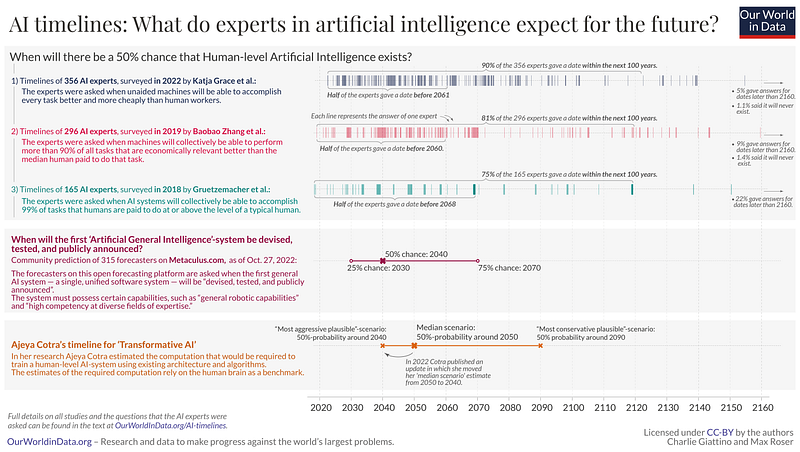
And for the end, an outlook what experts expect to happen in AI…