
Dance Me to the End: Alison Acheson and the Art of Loss
A writer reveals how art can transform suffering
Illness memoirs are a literary tradition
The Diving Bell and the Butterfly. Iris by John Bayley. Joan Didion’s The Year of Magical Thinking. The truth, common enough to become a truism, is that hardship and suffering have a way of bringing out the best in us. Especially in artists. And there are few things more beautiful than watching an artist transmute suffering into radiant beauty.
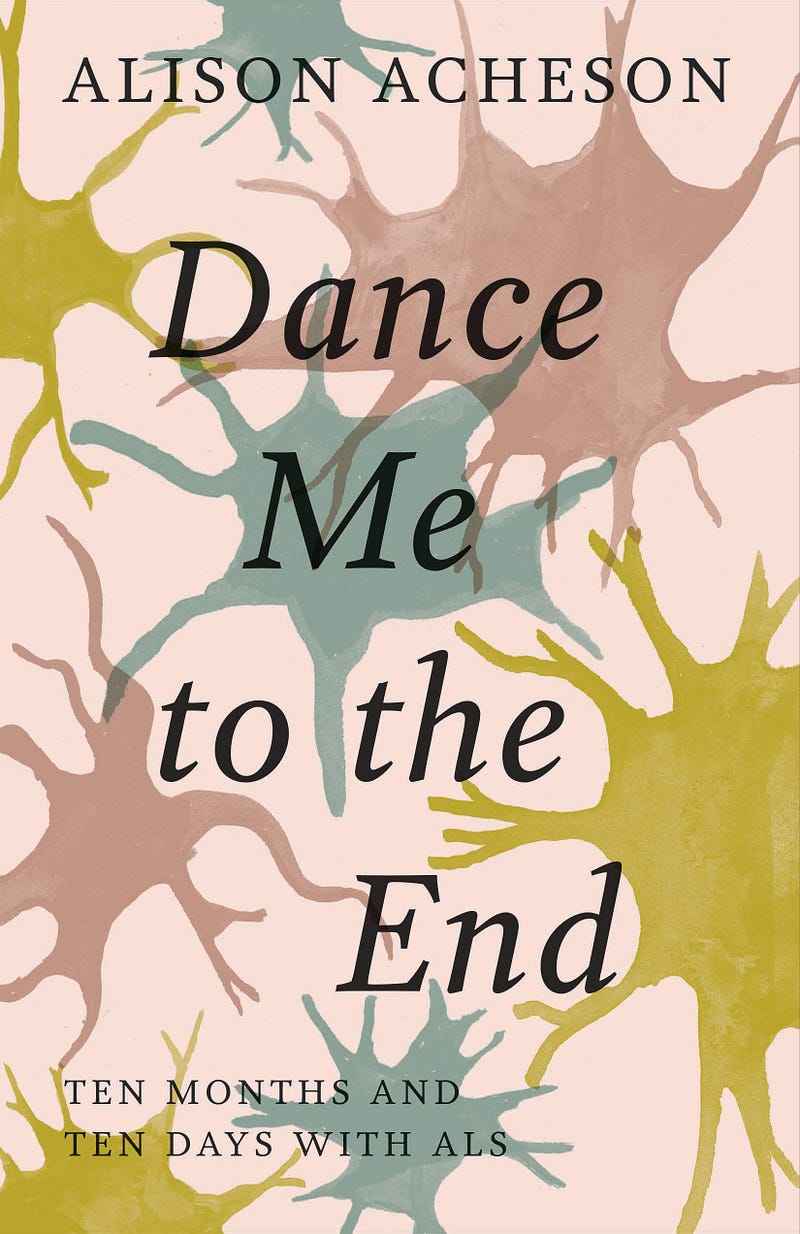
That’s the alchemy Alison Acheson delivers in Dance Me to the End: Ten Months and Ten Days with ALS. When her 57-year-old husband was diagnosed with a terminal neurological disease, Acheson decided that she was going to care for him for as long as she possibly could. As a writer and a teacher of writing, Acheson also kept a journal of the ten months from Marty’s diagnosis until his death. Dance Me to the End is a chronicle of the terrible progress of an incurable disease. But much more than that, it’s a chronicle of a marriage tested to its last extremity.
This is not, ultimately, a story about illness, even though the fasciculating shadow of motor neuron disease inevitably colors the story Acheson tells. Dance Me to the End is, at its heart, a story about love. About marriage. About family. About the undeserved sufferings life can inflict on us, and the strange and fugitive beauty those same sufferings can draw out of us.
“My spouse of almost 25 years and I fell in love.”
Early in the book, Acheson describes how the diagnosis changed her relationship with Marty. Few traits are more characteristic of our species than our ability to take things for granted. Dostoevsky described humanity as ungrateful bipeds. A harmonious marriage is the kind of thing you dream of when you don’t have it and become incapable of noticing when you do.
But as Acheson relates in prose that seems forever on the verge of taking flight into poetry, an unexpected diagnosis has a way of stripping away ingratitude. As Marty’s disease progresses, Acheson rediscovers the man she married and had children with, “the familiar stranger I called husband.” And as she cares for him, determined to dance with him to the end, she finds undiscovered facets of her own soul.
An illness memoir is a tricky thing to pull off
In less capable hands, the sad story of a man’s slow and excruciating death could become too much for even the strongest stomach. ALS is a horribly cruel disease that slowly robs the sufferer of their ability to control their body. This aspect of the condition is made even crueler by the fact that Marty was a musician, doomed to lose his ability to create as his health declined.
But such is Acheson’s skill as a writer that the memoir manages to avoid becoming a long slog through different gradations of misery. Yes, loss and suffering haunt the book, as they must. But Acheson’s prose brings beauty to anything it touches, whether it’s a doctor's appointment where she muses about the physician’s choice of footwear or a meditation on the natural world she can see from her British Columbia home.
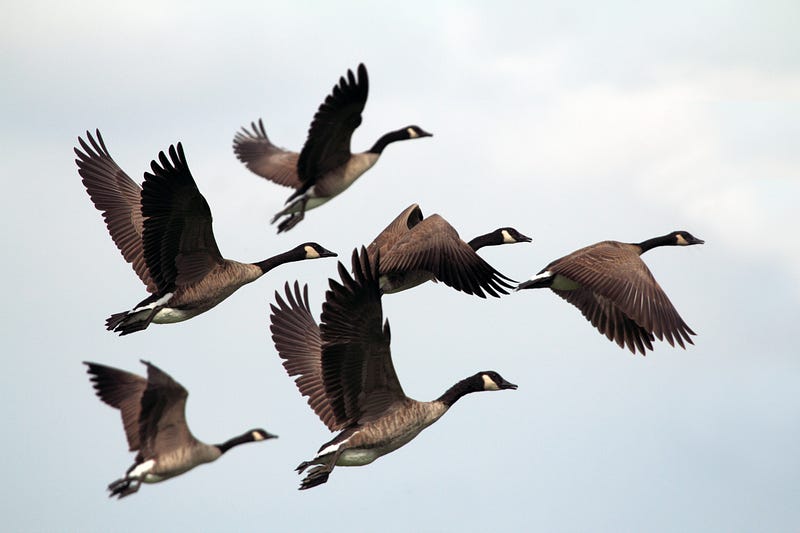
“Canada geese went by…and I wondered if I would still have a husband when they returned.”
The book is full of finely observed details like this, all of them rendered luminous by Acheson’s skill with words. Close to the start of Dance Me to the End, Acheson ponders,
“What does it take from a person’s soul to work with the dying? What kind of person can transform that? Can it feed one’s soul?”
Through the course of her memoir, she answers her own question. The grim progression of ALS means that she and her family get more than their portion of suffering. Marty’s disease progresses relatively quickly, and bit by bit, his world and that of his wife shrink.
“I remembered the wish to grow old together; and we did. We just grew old before our time.”
As Marty loses more and more of his independence and his wife is forced to devote more and more time to caring for him, the story takes on an ever sadder tone. We all know — or think we know — how the story will end, forewarned by the dire warnings of the doctors who become increasingly ineffectual as the disease runs its unstoppable course. But it’s Acheson’s gift to remain astonishingly alive to the beauty of a world that has given her such a burden.
“Becoming human is a wonder-filled burden we carry,” Acheson declares at one point, and it’s hard not to feel a lump in the throat at such a declaration coming from someone facing their spouse’s death. But that’s what gives her words their clarity and force. Vladimir Nabokov once wrote, “Beauty plus pity — that is the closest we can get to a definition of art.” If that’s the case, then Dance Me to the End is a definitive work of art.
We all take things for granted
Our health. Our relationships. The lives we live that may be imperfect but are nevertheless the result of our best efforts. It’s a testament to the power of the writing that several times while reading this book, I had to set it aside and go and kiss my wife as though for the last time.
But Dance Me to the End is not looking for the reader’s sympathy. It may be a chronicle of illness, but more than that, it’s a celebration of beauty. The beauty that shines brighter in darkness, that transforms even the most awful experience into something at once deeply personal and universal, and thereby increases the scope of our humanity.
As Acheson finds when the inevitable bereavement comes, “my spouse was gone. But my marriage was still with me.” People die, but love goes on. The world continues in all its horrifying gorgeousness, indifferently doling out cruelty and grace. And for all the dark moments it contains, the book ends with a note not of triumph over suffering, but of unshakable belief that life and love are treasures worth the price of mortality.
“Someday, all heaven’s going to break loose.”


