
Dance Lessons for Divorce
So you think you can dance?
There are countless ways to dance. The foxtrot. The Lindy Hop. The bop to the top. Each comes with its own skills, music, and style. There are also countless ways to end a marriage. The mutually respectful. The crash and burn. The parting.
The parallel between dance and divorce is a concept I’ve been thinking a lot about lately. It’s an abstraction when compared to the connection between dance and music or dance and art, but equally valid. Dance, like any art form, can be learned. We learn the steps but our performance is often flawed; it takes practice to get it right. So here I give you dance lessons for divorce: lessons on how to perform with rhythm, expression, and style, with a partner and then without. So you think you can dance?
Want to stay friends? Try the foxtrot
To achieve a mutually respectful divorce, try the sway of the foxtrot. It’s performed with long, continuous movements that progress smoothly across the stage. This one has to be performed with a partner, and like it or not, while holding them close. Although you may feel constrained by their presence, the foxtrot gives its dancers the freedom to choose their own rhythm and adjust their movements to best suit their music.
The vexations that arise from divorce can take time to settle, which is why we can employ the foxtrot’s sauntering to spark a friendship. Proper pacing is essential in actualizing the solid foundation of a relationship, and the flow of a foxtrot. It’ll take time to tailor the undulating motions to the music and execute a harmonious product. But with practice, the foxtrot makes for a beautiful performance.
Thrown through a loop? Looks like the Lindy Hop
This is where it gets messy. The Lindy Hop was born in New York City in 1928 and evolved into a member of the jazz and swing dance family. Its style appears to fuse those of the dances which preceded it: jazz, tap, breakaway, and Charleston. It’s chaotic. It’s fast, it’s furious, and it’s hard to follow. Throwing him here, throwing her there — how can you keep up? Each dancer is connected by hand throughout the entire performance. Round and round and round they go, together.
Watching the Lindy Hop is like watching two discordant people refuse to stray away from their ties. It’s hard to watch. Maybe if they stopped holding hands they’d be more stable, and less dizzy.
Be a Beautiful Ballerina
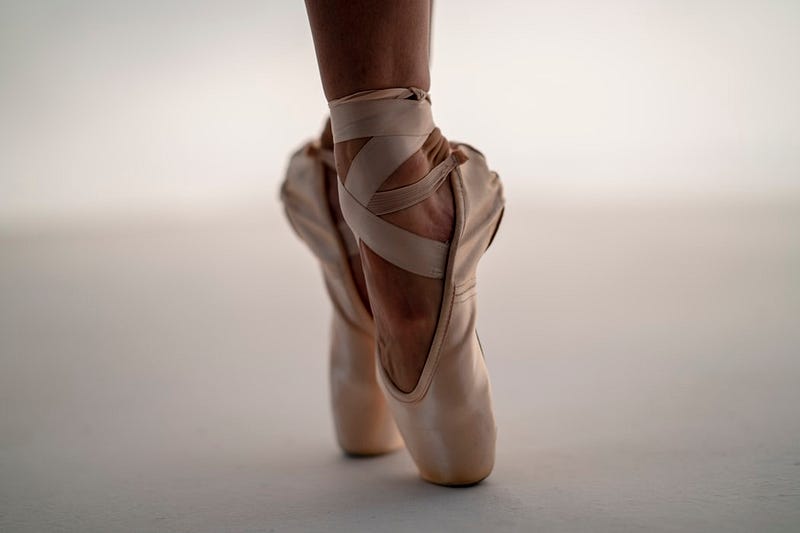
This one is technical, but ideal. The exquisite costumes and elegant flow make this dance truly divine. What I love is its beauty isn’t contingent on the accompaniment of a partner — they can shine together and they can shine alone.
We should strive for someone who compliments us, not completes us. Despite their eloquence, the foxtrot and the Lindy Hop are both dances that can only be executed with a partner; it completes them. Ballet doesn’t necessitate an other. Its expression isn’t hindered or enhanced by a partner; a partner acts only as an additive that gives nuance, aesthetic, and expression.
The dance of divorce is one that never wins first place. But when it is danced with the tenets of ballet — independently, but welcoming — it has potential for personal victory.


