
Daisy Chain
A Poem
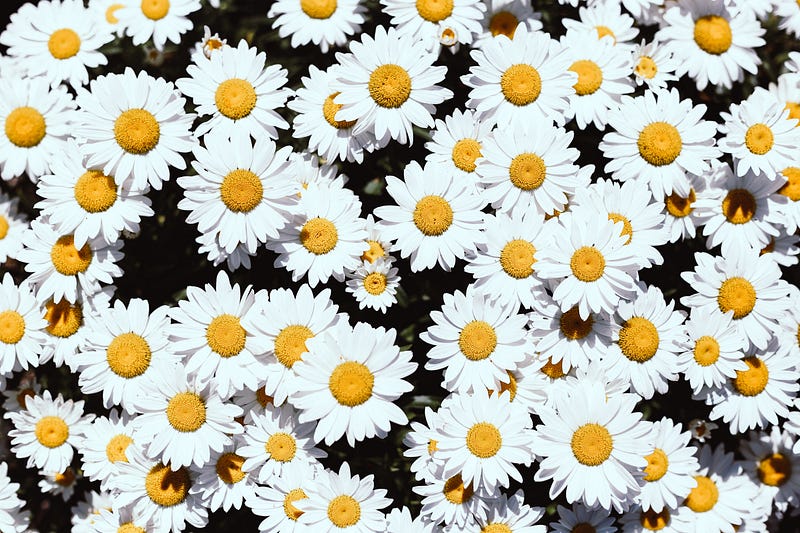
The floral garland Stretches
Links and links in a chain He loves me, he loves me not,
They love me, they love me not Yesterday instead of writing poetry
I devoted my entire day to researching on ancestry.com Why? Because it’s a pandemic, because it was free, because I saw my
Last name in this book circa some dude in 1600’s and wondered And now, a day later it’s traced, internet style, as in not confirmed, as in surface level
As in names and dates that may or not be anything close to accurate As in this is a chain and what’s missing are stories, what’s missing is me
In a library surrounded by papers and letters, me in an attic surrounded by Antiques and things passed down, what’s missing is what went missing
After my grandparents died before I was 12 and it was all sold in auction For pennies and pennies to pay debts and debts
Stories lost, things scattered, histories now just names, dates, names, dates And yet when I see it is is a tree, when I see it, it is a tree of me
Tiny flowering things, tiny connections — my mom filled me in on some of the details, yikes Affairs and affairs, secret families, folks who won’t pop up on the chain, who won’t be included
Who are products of shame My dad’s dad is called “unknown” — that line ends quick, and other lines go back and back
To Germany (1500s) and England (1300s), to Switzerland (1400s) To Salem in the 1600’s yes, yes, and yes and to someone in my line
Listing a ‘Negro Servant-Child’ named Flora, as being baptized In Topsfield, in 1741.
That daisy chain of lives and names Made it here, to me, odd thing
Standing up for Black Lives Mattering With my daughter, of my line and another, rooted in Mexico
With my fiance, with his line rooted in Hawaii With this entire world of lines
Intersecting and merging Tracing things back to places that should demand
Reconciliation Reparations
With all of our lines, how little they might matter in collecting, how what Matters is what we do with what we are right here, now — with all of our lines
Aching for the same things To be counted
To be heard To be granted the same rights to live and dream, to build and thrive
And to take whatever was back there — all the way back — to look at it, see it, reckon with it —
And face the day wiser and with renewed calls for fixing what we can, now, together.
Jenny Justice, Poet. Sociologist. Teacher. Mother. Woman. Author of Love in the Time of Climate Change and Reveal. You can read more of her poetry at Justice Poetic. Sign up for her newsletter here.
Thanks to Tapan Avasthi for this week of flowers, I have taken it in so many directions, I have missed a day, but it has meant a lot to me to have this to reflect on. Here’s more of my floral week garland of work — thank you, poets and poetry lovers:


