TASK MANAGEMENT
Daily Done: Part 5 — Maximize Your Productivity With 90 Minutes Work Intervals
Optimize your workday by following your brain’s natural rhythms
This is part 5 of a series of articles that started here: Daily Done: a sustainable paper-based productivity system.
Do you often work nonstop until you drop? This way of working might look productive, but in reality, it is exhausting for your brain and not optimal. What else then? Working 2 hours and taking a pause? Or should it be 90 minutes?
Let’s reflect on the optimal work interval…
The typical two hours work interval
In the previous part of the Daily Done series, I shared this example of a Daily Plan:
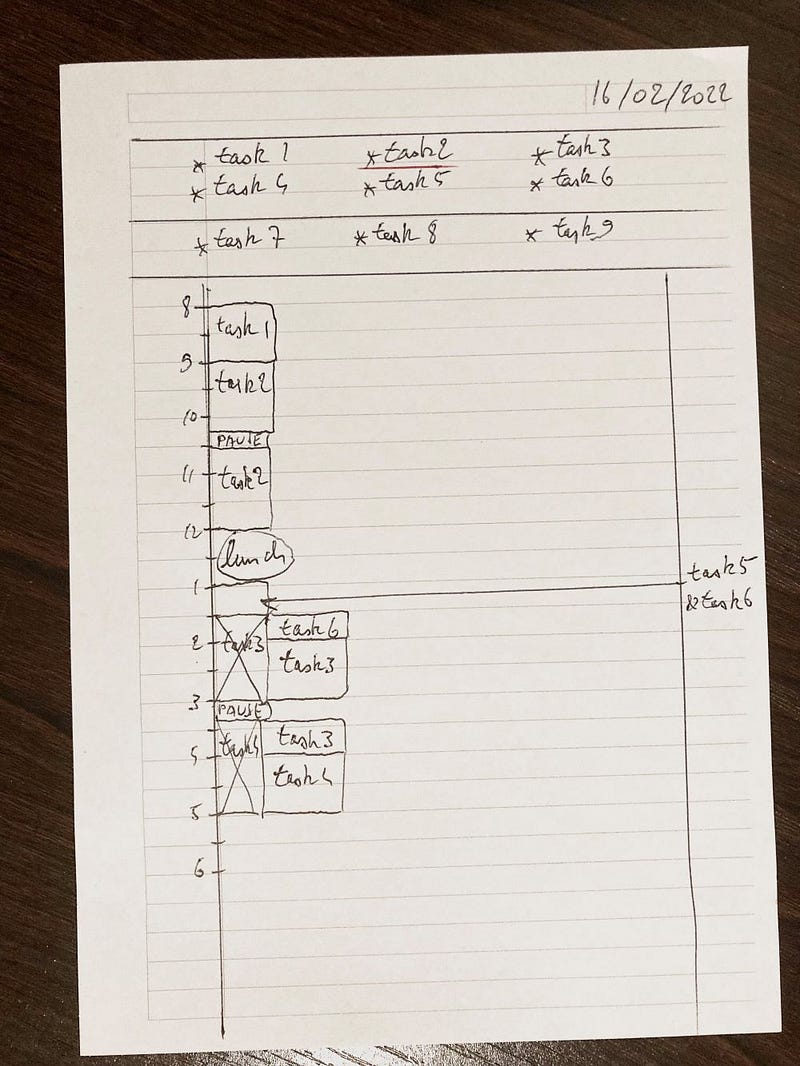
As you can see, the intervals of work were roughly 2 hours long. I took this example because it is often the norm in most companies.
You work for 2 hours, for example from 8 am to 10 am, then there’s a 15 minutes break. Then you work again until 12 pm. Similarly, in the afternoon, you work from 1 pm to 3 pm, then take a pause, then work from 3:15 pm to 5 pm.
The 2 hours work interval is also advocated by renowned productivity method “The Pomodoro Technique”, which advises to work for four Pomodoros before taking a longer break (although there are mini-pauses after each Pomodoro).
In reality, the ideal work interval before you need to take a longer pause is not 120 minutes but 90 minutes. And while It might not be practical to change this while working at the office, if you work remotely, you might consider adopting it (that’s how I work).
The Ultradian rhythm
Why 90 minutes you ask? This is because our brain works best this way.
You probably know the Circadian rhythm already. This is a 24-hour cycle that is part of the body’s internal clock and regulates the sleep-wake cycle.
Ultradian rhythms are shorter period cycles, discovered by world-renowned sleep expert Nathaniel Kleitman. Usually, we speak about them to describe the different phases of sleep, which involve alternating periods of high-frequency brain activity (about 90 minutes) followed by lower-frequency brain activity (about 20 minutes). But you might not know that these cycles continue all day long.
Interestingly, the high-frequency brain activity periods are associated with intense activity in the brain, while lower-frequency brain activity periods are much less effective to get work done.
Scientists believe this is because your nervous cells generate a lot of electrical signals during the high-frequency brain activity, which consumes sodium and potassium ions, that need to be replenished during the lower-frequency brain activity stage.
What if you ignore your natural cycles?
You might force your way through your work to get things done quicker, but this is not the best way to work, as your brain runs out of steam after 90 minutes. When your brain enters into the lower-frequency maintenance mode, you perceive this as a general fogginess, fatigue, or inability to concentrate.
Ignoring these signs will lead to lower quality work. If you continue working, your brain can even enter into fight-or-flight mode, which means you are stressed and less likely to think clearly.
The phenomenon often manifests itself as presenteeism. You are at your desk, but not functioning up to capability. And this costs billions of dollars each year to the corporate world.
If you want to reduce the bill, you better find a better way to work :)
Scheduling 90 minutes work intervals
That’s why I recommend adopting 90 minutes interval blocks when doing your Daily Plan. Even if you don’t know exactly what tasks you are going to do, it’s a nice habit to schedule these blocks in advance.
For me, I like to do cycles of 90 minutes work + 30 minutes break. As a 30-minute break is longer than the standard corporate pause, my workdays are also longer, as I need to compensate.
But I find I’m much more productive this way. And since I’m working from home, I save the commuting time anyway. Here’s what my schedule might look like on a typical day:
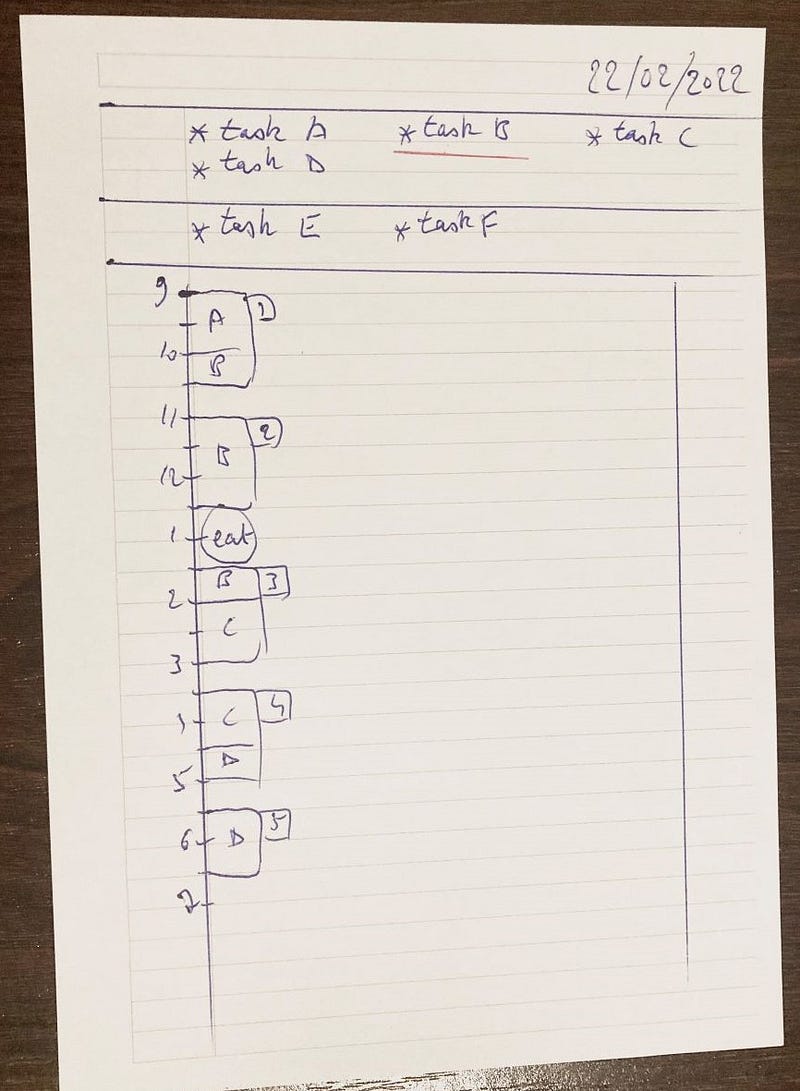
Also, notice how you can number the intervals from 1 to 5. It makes it easier to know your progress during the day.
—
I hope you enjoyed today’s part on the Daily Done productivity system. I had to show you this alternate way of working with 90 minutes intervals. Before working remotely, I used the classic 2-hour interval. But now I enjoy working using the 90 minutes work intervals. And I find it more productive, as it is better suited to my biological rhythms.
You might not find it practical to change your way of working right now, but just pay more attention to your brain cycles in the following days, and it might inspire you for a change.
On February 1st, 2022, I’ve embarked on a 100 days writing challenge. This is post number 22.
Originally published at https://alexphili.com on February 22, 2022.