
TASK MANAGEMENT
Daily Done: Part 1 — A Sustainable Productivity System
How to get things done with a simple paper-based productivity system
Since I started my first productivity French blog in 2007, I have searched relentlessly for a sustainable productivity system.
In the end, I opted for a minimal paper-based system that makes it easy to feel progress each day.
I’ve called it Daily Done and here’s how it works.
The simple hack that liberated my productivity
I have to credit a little hack for taking me on the path to this system. In my first years as a productivity blogger, I tried each productivity system I could get my hand on. I tried Getting Things Done by David Allen, SuperFocus by Mark Forster, and ZenToDone by Leo Babauta to name a few.
However, I was never satisfied with them. After a while, my system always became unmanageable, as it got overloaded with tasks.
Then I got a comment on one of my articles that set me in the right direction. Unfortunately, I have lost track of it, so I can’t credit the author. But someone told me he was simply drawing a line at the end of the day, and creating a new list of tasks the following day.
Why I love paper-based productivity tools
This trick led me to experiment further with paper-based systems. In my opinion, paper-based productivity tools have 3 major advantages:
- You can’t write a thousand tasks on it, so it tends to maintain a reasonable number of tasks, simply for lack of space.
- It is very flexible, you are not constrained by the limitations of a given software.
- It is a physical presence you can’t ignore
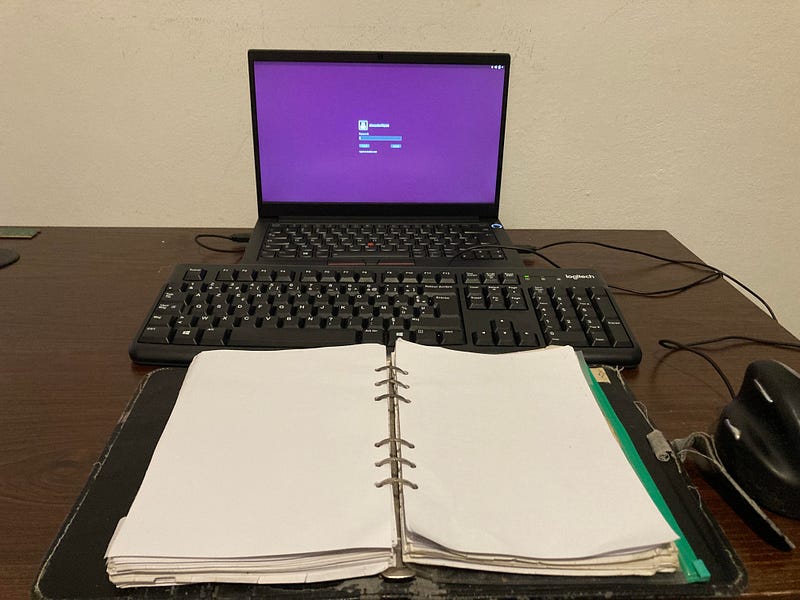
So I bought a paper organizer, and I started to experiment with using a new page each day to write my tasks.
Writing a new task list each day
This has worked remarkably well. When you write down your daily tasks each day, there’s a sense of being on top of your work. You copy only the tasks that you need for the day, and you leave out un-relevant tasks.
Day after day, old tasks migrate in the past, which sanitize your workload. It doesn’t mean these old tasks are always un-relevant. Sometimes, you will need to copy a task from a couple of days ago. But you are relieved because old tasks won’t need to get cleaned up manually.
Using one side of the paper only
One important point is to use a brand new paper each day and write on one side of it. I’ve been using an organizer with A5 format paper (about half Letter US format) for 7 years now.
Using this format, it’s not such a waste of paper to use a brand new sheet of paper each day. And it is better to focus, as you can’t see your previous day’s tasks unless you turn the previous page.
I hope you enjoyed this introduction to my Daily Done system. This ends the first part of this series. Next, I’ll go on with more details about my daily task review, and I’ll share some photos.
In 1st february 2022, I’ve embarked in a 100 days writing challenge. This is post number 14.
Originally published at https://alexphili.com on February 14, 2022.


