
Today, I Became An Irish Citizen, But You’ll Never Guess Why
And no, it’s not because I’m mad…
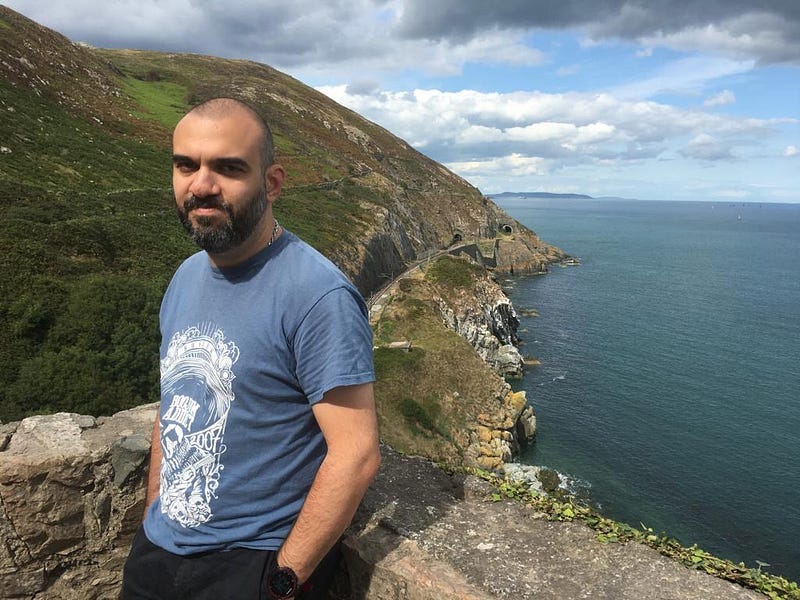
When I rocked up a year and a half ago to my solicitor’s (lawyer for those in other countries) office, asking him to sign a few mug shots and a document vouching for my good character and authenticity, his first, and I might add very typical Irish reaction was — “Are you mad?!?”. Just to avoid any confusion, “mad” in this context refers to being crazy. How the English language became the lingua-franca, I shall never understand. But moving on from that confusion, it has also been my primary language for over a decade, and one of the drivers to become eventually an Irish citizen.
Since I can remember, I always wanted to leave home and live in an English-speaking country.
First I entertained the idea of becoming a farmer in Kansas, though that was fuelled a lot more by a certain blonde American daughter of a missionary than any kind of interest in farming. Having said that, I consider myself being very good at making the most of any situation, so it might have worked after all. That wasn’t supposed to be in my future, though, as her parents were not just Mennonites but also racist and xenophobic enough to cut short any kind of budding attraction between the two of us.
Moving on from the American dream, I started looking at something closer to home…
As every Eastern European, I was also taught from an early age in school that Britain is this amazing, perfect country where everything is done at standards out of this world, where there is no crime, everything they touch turns to gold and really, the only downside of living in Britain is having to use an umbrella more than in continental Europe. British fashion and accent, however, makes up for that, so as long as you can round your lips to posh English pronunciation, you’ll fit right in. Bollocks! And it only took me seven months of living in the Midlands to realise how everything that’s in English textbooks in the rest of Europe — which apparently they don’t think they’re part of — is one of the biggest bullshit ever forced down my throat as a student.
Needless to say, I was out of there too…
Now, my solicitor, Gerard, is right to some extent, that I do make mad decisions sometimes, but deciding to become Irish wasn’t one of them. My decision to give Spain a chance though, well, that was. Let me put it this way, it’s a lovely country, as long as you’re on a holiday. I think that’s true for most places around the world. When I found myself having to live there, though, it was a very different “situación”. Don’t get me wrong, there are a million and one great things I could say about Spain, but I couldn’t speak English there and that became a problem faster than I thought. Now, of course I tried learning Spanish and I actually learnt quite a lot of it, in fact, enough to understand half the Portuguese words I saw in Lisbon, but guess what? Spanish wasn’t English. It didn’t feel right. Lovely people, they hug a lot, and I even got set up with a lovely Spanish girl by my aunt to hopefully seal the deal, but nah, I could not get over the fact that English couldn’t be my primary language.
So, I moved again…
This time I ended up in Northern Ireland. Now, let me tell you. If you want culture-shock within Europe, go to Belfast. With a Cambridge Certificate of Proficiency in English by then, I was convinced I knew everything there was to know about the language. You know what’s common among people who think they know everything about something? Stupidity and arrogance. They’re never right. I was so feckin’ wrong, I could not believe my ears. Nearly 20 years of English studies under my belt by that point, and I couldn’t understand a word at 7 in the morning, fresh off the boat (StenaLine) at the McDonalds till.
For the first time ever in my life, I had imposter syndrome about my language skills.
The good thing was, I am quite good at languages and I have a chameleonic tendency to assimilate, so within a month, I started feeling local. Those comfortable feelings, however, quickly got disturbed by the sound of bomb disposal robots marching down the street, and the recurring news of pipe-bombs across the city. I have a yet unpublished novel, where I actually touch on this quite a bit in a chapter called “The Fleg” (no, not a typo), so let me use an excerpt to better illustrate.
Sinead was right. It took me a few months, but week after week reading the local news, the true image of Belfast started to form. It was an odd one for sure. In some ways, I identified with the country’s history and its subsequent personality. Transylvania, where I lived 21 years of my life, wasn’t far off in terms of competing cultures and nationalities within the same borders. Living in Northern Ireland, you become a fantastic devil’s advocate, at least as long as you’re willing to listen. And there’s plenty to listen to. Belfast itself is an album of history and murals, each cobblestone or wall telling a troubled story, a success, a failure or pivotal point in time that nobody wants to remember yet no one can forget. It’s a fascinating, yet horrifying past. A story of conquest and defeat, of slow change in a fast-paced world. — “It’s Cold, Ma, It’s Really Cold”
Update!
My first novel “It’s Cold, Ma, It’s Really Cold” delving deeper into the topic is now live on Amazon in paperback and Kindle. 😁
Suffice to say, though, I didn’t feel at home. The language requirement was there, and in many other ways, I never felt unwelcome, but at that point in my life I wanted a bit more peace and quiet than what Northern Ireland could offer.
And that’s what got me to Ireland…
But it’s not what made me stay. This is perhaps the best moment to go back in time and explain why I actually wanted to leave Eastern Europe — specifically Romania (Transylvania, yes, it’s a real place!) since a very early age.
As an ethnic Hungarian in Romania, you’re likely born into a very unfortunate position. While you have two citizenships, Romanian through birth and Hungarian through heritage, you never really belong anywhere. I could, of course, go into a long rant about Trianon and how the West very casually decided on the future of Eastern Europeans of many generations going forward, but it’s not the time and place. The Treaty of Trianon is a national wound which is passed on involuntarily from generation to generation. We learned to live with it on both sides of the Hungarian border. I learned to live with the scars of it too, but I didn’t want to just live with it. I wanted more.
Finding myself to be a “bozgor” — which from Romanian translates to “person without a country” — a humiliating word that I had to get used to on the streets, school, and anywhere else you can imagine, including church, as it followed me throughout my life, I realised that the very country I was born in didn’t really want me there. I would have heeded the advice of “go back to your own country”, but as humiliating the “bozgor” was, it was also true because on the other side of the Hungarian border, I was called Romanian and was also told “go back to your own country”. While perhaps things have evolved and improved since, to some extent the perception of second class citizen of the Romanian Hungarians is still a reality in certain circles and pockets of both countries.
So, there I was with two citizenships, two passports, and no country.
To those who never felt unwanted by their own people it sounds unimaginable, but those who felt it, know exactly just how excruciatingly painful it is to instinctively care about one or even two nations, both of which want nothing to do with you. It’s a little like after parents split and are stuck with a shared custody of a kid they never wanted. If I had a therapist, they’d have a ton of writing to do in their little black notebook. Forget feelings of childhood abandonment, there’s a whole lot more trauma where that came from, and a wide range of teenage and adult feelings I had to process up to the point of walking the streets of Dublin.
It’s funny and sad, because as humans we have many more first loves before we even talk about our partners. First there’s the parents, the country you’re born in, the country your ethnicity binds you to, your first hobby, your first best friend and a million other things. It’s a very conflicting feeling to have to leave what’s supposed to be your home, knowing deep in your heart, you’ll never stop loving them. To this day, if you talk shit about Romanians or Hungarians, I’ll tell you off so hard, you wish I would have slapped you instead. As much as Romania or Hungary never really wanted me, I’ll still fucking defend them, because they were my first loves. It’s the most conflicting emotional state, having to look for roots while remembering the nurturing soil that brought you up, all the while knowing you were on borrowed land. It’s a toxic relationship, but a relationship nevertheless.
So, I had to grow my own roots…
And while totally unplanned, of all the countries, it turned out to be Ireland. To some extent, I can both blame and thank my best friend Andrew Gribben for where I am today and also for accompanying me to my citizenship ceremony in Killarney, alongside Teodor Birca, but it also goes a lot further than just pure chance and a succession of events.
While in his typical Irish self-deprecating humour my solicitor wanted to know what made me decide to stay, and not only stay, but identify as Irish, it was also worth asking myself that question, and believe you me, I did many times. As a recent date of mine, Charlotte said between two coffees, “when you know, you know”, and I certainly share that sentiment. As you travel through countries, or even live in some of them, you quickly pick up on things that instinctively make you see yourself at home there. For instance, as much as I love German music, I never felt that in Germany, regardless of my love for great cheese, I never felt that in The Netherlands and no amount of Swiss chocolate and fondu was able to give me a sense of home in Switzerland either. And the Danish… I mean, hygge is nice, but also overrated.
As an outsider, I’ll tell you why the biggest export of Ireland is the Irish pubs— it encourages togetherness, conversation like no other place in my experience does. And that’s easy to sell in a world getting increasingly colder. Coming from Belfast where I never knew who to talk or not talk to about topics apart from the weather, Ireland felt liberating. A lot less feels tabu, and even if it might, someone will just say feck it, and bring it up anyway without worrying about getting kneecapped. In all honesty, it didn’t take me more than three months to know, I wanted to stay.
It might genuinely sound madness to some. I mean, the weather is barely passable — though it doesn’t bother me one bit — and that one week of summer is the one we all talk about until next year, but man, the beer is good! And the whiskey. And the gin. Nothing beats a Dingle or Gunpowder. It hasn’t much of a cuisine, but that’s OK, because what it does have is easy and cheap to make, and it’s a welcoming enough country to borrow everyone else’s. Add some good Irish music in the background — and it doesn’t have to necessarily be traditional — and you got yourself a nice evening with or without friends. It’s a small country, but it offers a lot, and once you visit the Emigration Museum in Dublin, you’ll understand why. It’s as scar-ridden of a country as a Hungarian Romanian like myself is, trying to put down roots. It’s conflicted about its past, but it charges ahead into the future as if it were trying to make up for lost time, and does that with all the humour in the world.
When you understand the local humour, you understand a country’s essence.
Humour. Irish humour is what made me stay…
The more I understood it, the more familiar it felt, the more it felt like I was building a home around me. A home of Irish stories, music, cuisine, struggles, and successes. I started hearing myself defending the Irish just as much as I used to (and still do) defend Romanians or Hungarians. I am in a country where people finally welcome my jokes about the Brits and also know a thing or two about the pains of emigration.
While I can’t in good conscience ever consider myself a home-grown Irish, it is the first country I feel at home in, since forever, and that’s a feeling that I have yet to find words to describe. It doesn’t make me any less Hungarian or Romanian, but it’s the first home that I didn’t just get because of legalese, or inherit through my ethnic heritage. It’s a home I worked for, and it’s a home I was welcomed to build for myself. All my life I wanted one thing, and one thing only: to be accepted, to be needed. To feel that my efforts to contribute to the society I live in, are appreciated and rewarded. I wanted to make the world a better place, even if just at the immediate microcosmos scale of myself and the people around me. Ireland allowed me to do that, and for that, the Emerald Isle gets my vote of confidence for life.
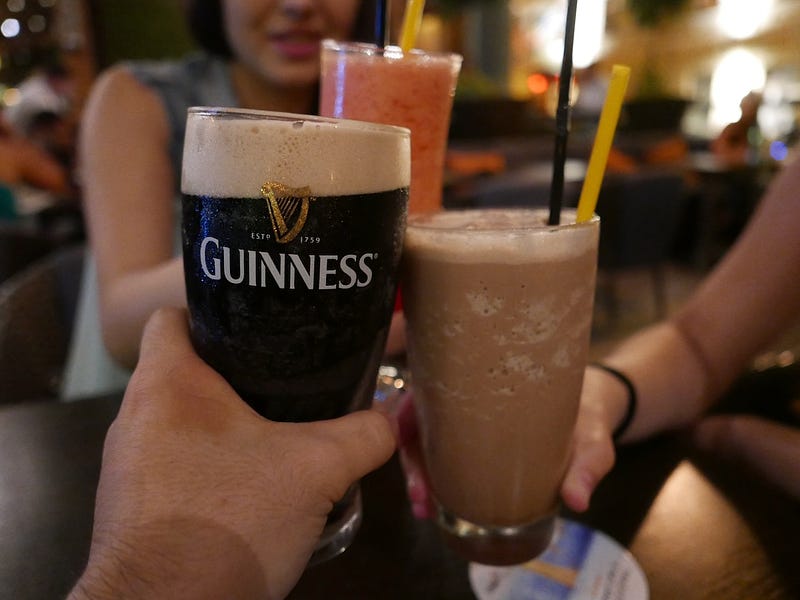
Sláinte! 🍻🍀
P.S. Honest question, should I change my last name to O’Vago? 😁
Attila Vago — Software Engineer improving the world one line of code at a time. Cool nerd since forever, writer of codes and blogs. Web accessibility advocate, LEGO fan, vinyl record collector. Loves craft beer! Read my Hello story here! Subscribe and/or become a member for more stories about LEGO, tech, coding and accessibility! For my less regular readers, I also write about random bits and writing.


