avatarOliver Ding

Summary

The provided content discusses the concept of "Attachance," which involves eight distinct structural diagrams that illustrate how entities attach to or detach from various contexts such as other entities, networks, wholes, circuits, containers, chains, levels, and dimensions.

Abstract

The "undefined" website content introduces the idea of "Attachance," a term coined by the author to describe the dynamics of attachment and detachment in different contexts. The author presents eight diagrams that visually represent these structures, each depicting how an entity 'a' interacts with different forms of contexts, such as another entity 'b', networks 'A' and 'B', a whole 'A', a circuit 'A', a container 'B', a chain of events 'A-E', levels 'A-C', and dimensions 'A-C'. These diagrams are intended to facilitate a discussion on the structure of context for "Attachance." The author draws inspiration from John F. Padgett's concept of Network Folding, which includes eight mechanisms for creating novelty within networks. The content suggests that understanding these structures is crucial for developing the "Attachance" concept further.

Opinions

  • The author believes that the combination of Attachment and Chance, termed "Attachance," is a valuable concept for understanding the dynamics of relationships and networks.
  • The author values the work of John F. Padgett, particularly his identification of network folding mechanisms, as a foundation for the "Attachance" idea.
  • The use of visual diagrams is considered essential by the author for discussing and understanding the complex structures of context in "Attachance."
  • The author's perspective implies that the process of entities attaching to and detaching from various contexts is a key aspect of novelty-making and the evolution of networks.

The Structure of Context

Eight types of structures of context for Attachance

Last year I combined Attach and Chance and coined a new term Attachance. I am working on developing the Attachance idea.

The below is eight diagrams for discussing structure of context for Attachance.

Other as Context
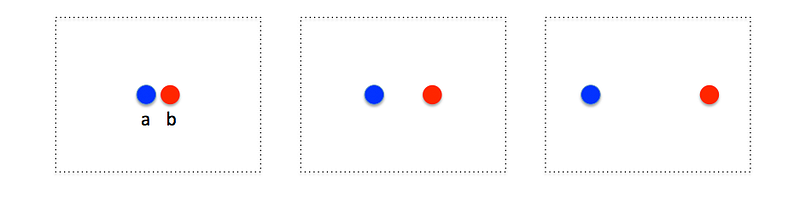
a is an entity, b is another one entity. This structure means Other as Context. a a attaches to b, b detaches from a.

Network as Context
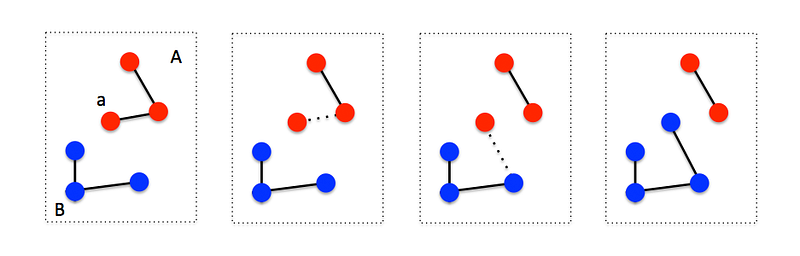
a is an entity. A is a network, B is another network. This structure means a detaches from network A and attaches to network B.

Reference:

Padgett used Network Folding to describe the novelty-making processes and identified eight network folding mechanisms.
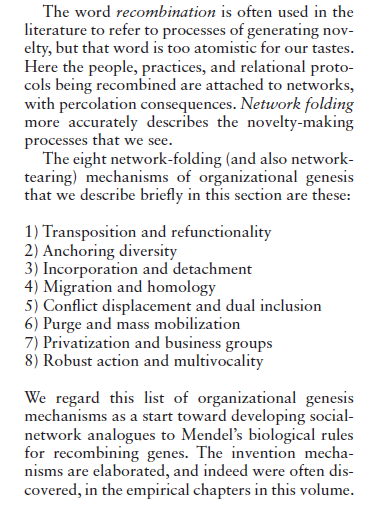
The Emergence of Organizations and Markets (John F. Padgett, 2012. p.12)

Whole as Context

A is a whole, a is a part of the A. This structure means a detaches from A.

Circuit as Context
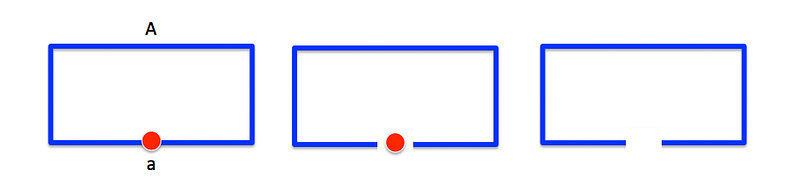
A is a Circuit, a is an entity and part of the A. This structure means a detaches from A.

Container as Context
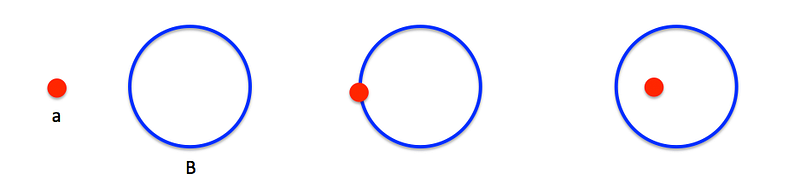
a is an entity and B is a container. This structure means a attaches to B and detaches from B.

Chain as Context

a is an entity and A, B, C, D, E are events and form a chain. a is at the end of an event and the beginning of the next event.

Levels as Context
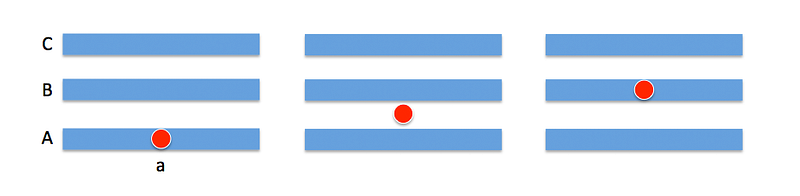
a is an entity and A, B, C are levels. This structure shows a detaches from A and attaches to B.

Dimensions as Context
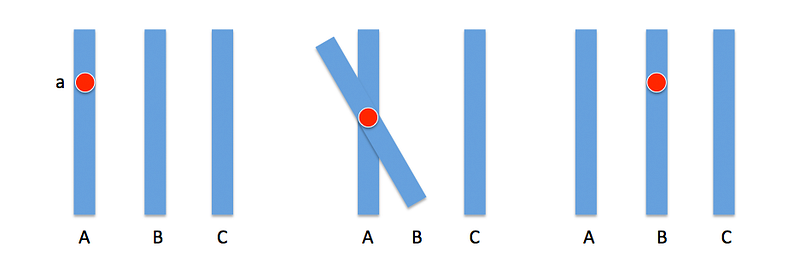
a is an entity and A, B, C are dimensions. This structure shows a detaches from A and attaches to B.

Attachance
Diagramming
Thinking
Systems Thinking
Innovation
Recommended from ReadMedium