avatarDarren Weir

Free AI web copilot to create summaries, insights and extended knowledge, download it at here

5424

Abstract

DnQdQMbLwsyg.jpeg"><figcaption></figcaption></figure><figure id="710c"><img src="https://cdn-images-1.readmedium.com/v2/resize:fit:800/1*zzq0eR81sjJEHtgAjjA77A.jpeg"><figcaption>Restored home and resident’s story plaque— author’s photos</figcaption></figure><p id="67d6">Outside each address was a plaque explaining who lived there… and who died there… with their names and ages. And as I moved through the site I came across a grim reminder, the mud footpath through the village, recreated in concrete with the bare footprints and bicycle tire tracks of the fleeing residents alongside the treads of the soldiers’ boots.</p><figure id="b630"><img src="https://cdn-images-1.readmedium.com/v2/resize:fit:800/1*8GKGA58d2r4E-wtHdrdg_g.jpeg"><figcaption>Mai Lai tracks in concrete — author’s photo</figcaption></figure><figure id="dec0"><img src="https://cdn-images-1.readmedium.com/v2/resize:fit:800/1*e5tc4lHowgfe06b6ab9Qtg.jpeg"><figcaption>My Lai massacre memorial mural — author’s photo</figcaption></figure><p id="0b3e">There is a large and colorful mural at the site, with drips of blood underneath it. There are also a few statues set up around the grounds, including a large statue of an elderly woman holding a dead baby in her arms with people dead and dying all around her, her fist raised defiantly in the air.</p><p id="2be3">It is unbelievable that this could happen in my lifetime, and even more difficult to understand is how these atrocities can still be happening today.</p><figure id="976f"><img src="https://cdn-images-1.readmedium.com/v2/resize:fit:800/1*_ii38dRa-hhPbZbCsACe1A.jpeg"><figcaption>Mai Lai massacre statue -author’s photo</figcaption></figure><p id="f124">We continued our bike ride in silence, moved by what each of us had seen and heard. Reminded of the warm welcome of the Vietnamese people in the villages, particularly around this area, is a lesson of forgiveness, peace, and reconciliation.</p><figure id="65ac"><img src="https://cdn-images-1.readmedium.com/v2/resize:fit:800/1*n8zIPjVc23SgrnLNQ_EnZg.jpeg"><figcaption>Kids on country road outside My Lai— author’s photo</figcaption></figure><p id="43f6">After our emotional morning, we arrived in Hoi An, late in the afternoon. It has been on my bucket list for some time and I was really looking forward to this visit.</p><figure id="ce27"><img src="https://cdn-images-1.readmedium.com/v2/resize:fit:800/1*kTNpxntgVt7Q_rarhBmgoQ.jpeg"><figcaption>Hoi An street lanterns — author’s photo</figcaption></figure><p id="cb61">The old town is still intact, with all of its old buildings constructed close together, so close that it is impossible for a vehicle to pass through. Hoi An has become a tourist mecca for Vietnam, the place where you come to get tailored clothing made quickly and cheaply.</p><figure id="4b7f"><img src="https://cdn-images-1.readmedium.com/v2/resize:fit:800/1*4usfZwqUbTmeSkqgSYqF4Q.jpeg"><figcaption></figcaption></figure><figure id="d12b"><img src="https://cdn-images-1.readmedium.com/v2/resize:fit:800/1*Puu4cFjzvYLZrweeXk_A5Q.jpeg"><figcaption>making fabrics; traditional Ao Dai — author’s photos</figcaption></figure><p id="19e1">We strolled through the center of the city wandering among the many shops selling tailored clothes and shoes as well as beautiful silk lanterns and kitschy tourist souvenirs.</p><figure id="402c"><img src="https://cdn-images-1.readmedium.com/v2/resize:fit:800/1*qTuM0GGpXSMHXeMLoojYiA.jpeg"><figcaption></figcaption></figure><figure id="09f9"><img src="https://cdn-images-1.readmedium.com/v2/resize:fit:800/1*x4BydKnwsNGK0sse5GzISg.jpeg"><figcaption></figcaption></figure><figure id="4315"><img src="https://cdn-images-1.readmedium.com/v2/resize:fit:800/1*EyNBPdelUC-gUQgSbOfJsg.jpeg"><figcaption>Boyfriend Blazers; in any color or fabric; paper lanterns — author’s photos</figcaption></figure><p id="d586">We had a delicious dinner but unfortunately, I had a cocktail, mixed with ice (I should know better by now, after a few bouts of Saigon Stomach already in Vietnam), and again got hit with another bout of gastrointestinal issues. The bug took everything out of me, and I stayed in bed for the entire next day, missing my planned tour of Hoi An.</p><p id="1f4a">I rested up to prepare for the next day of cycling, expected to be the toughest one yet as we would tackle the Hai Van Pass… a 100km bike ride that involves a steady climb up the mountain and then downhill, which would be similar to the downhill ride we experienced a few days earlier on our way to Nha Trang.</p><figure id="49fd"><img src="https://cdn-images-1.readmedium.com/v2/resize:fit:800/1*fB0RrFMndYmwjG_mXi6g_w.jpeg"><figcaption></figcaption></figure><figure id="672b"><img src="https://cdn-images-1.readmedium.com/v2/resize:fit:800/1*uChSXoTKvh3TfZ5mRdqA9A.jpeg"><figcaption>author’s photos</figcaption></figure><figure id="25d4"><img src="https://cdn-images-1.readmedium.com/v2/resize:fit:800/1*mqteeZ1wFE94z4aNjWEC6A.jpeg"><figcaption>Riding Hai Van Pass in pouring rain — author’s photo (from the bus)</figcaption></figure><p id="ce56">I didn’t cycle the full 100km marathon because I was still quite sick. Nothing was staying with me, so I spent part of this leg on the bus, which turned out to be a pretty good decision. As soon as the group started to cycle from Danang and China Beach, uphill, it started to rain and became very cold.</p><figure id="bf77"><img src="https://cdn-images-1.readmed

Options

ium.com/v2/resize:fit:800/1*XfPnLPKdUd7HuXiXVy12iA.jpeg"><figcaption></figcaption></figure><figure id="26b4"><img src="https://cdn-images-1.readmedium.com/v2/resize:fit:800/1*uChSXoTKvh3TfZ5mRdqA9A.jpeg"><figcaption>Lang Co Beach resort — author’s photos</figcaption></figure><figure id="ead3"><img src="https://cdn-images-1.readmedium.com/v2/resize:fit:800/1*fB0RrFMndYmwjG_mXi6g_w.jpeg"><figcaption>Lang Co Beach fisherman — author’s photo</figcaption></figure><p id="e09a">We stopped off at Long Co Beach resort for lunch, which I’m sure would be a beautiful spot for a vacation… in better weather. Then the group continued to ride through villages on our way to Hue (while I stayed on the bus). But the group decided to pack it in early, and we drove the rest of the route into the city in the pouring rain.</p><figure id="2c82"><img src="https://cdn-images-1.readmedium.com/v2/resize:fit:800/1*iWH75fRPLhbu8yV3grTg9g.jpeg"><figcaption>water buffalo in the pouring rain on the road to Hue — author’s photo</figcaption></figure><p id="dc2c">The scenery while driving into Hue was captivating. There are thousands of graves and family pagodas on the roads, each one more elaborate than the next. Hue was heavily hit during the Vietnam war, so there is a lot of dead buried there.</p><figure id="d12d"><img src="https://cdn-images-1.readmedium.com/v2/resize:fit:800/1*TRmlRoZ9mBWeT91-ZtvtyQ.jpeg"><figcaption></figcaption></figure><figure id="78a5"><img src="https://cdn-images-1.readmedium.com/v2/resize:fit:800/1*Ns_0oqxrtdvlR8KtzLi44Q.jpeg"><figcaption>Family tombs and memorials — Hue, Vietnam — author’s photos</figcaption></figure><p id="2f64">Hue is also supposed to be a city of fine dining, but I never got to experience that, I dined on white rice while the others feasted on beautifully decorated food like shrimp coated in green-colored Panko bread crumbs.</p><figure id="70ef"><img src="https://cdn-images-1.readmedium.com/v2/resize:fit:800/1*g_LUBq17vQyb3wXfmWU_Gg.jpeg"><figcaption></figcaption></figure><figure id="787b"><img src="https://cdn-images-1.readmedium.com/v2/resize:fit:800/1*_8W1wI5pyfHvJgBXQaRcOw.jpeg"><figcaption>Hue panko shrimp; crispy spring rolls — author’s photos</figcaption></figure><p id="85e0">We also spent the following day at the Imperial City, a walled enclosure within the Da Noi Citadel of Hue, which used to be the capital of Vietnam. The city was almost wiped out during the Battle of Hue during the Vietnam War.</p><figure id="3e1c"><img src="https://cdn-images-1.readmedium.com/v2/resize:fit:800/1*J24ukIVtUNOF5U3aCwaesQ.jpeg"><figcaption></figcaption></figure><figure id="590d"><img src="https://cdn-images-1.readmedium.com/v2/resize:fit:800/1*T9-LcrEdu0FkeG5e0wtyvQ.jpeg"><figcaption>Da Noi Citadel, Hue Vietnam — author’s photos</figcaption></figure><p id="7f29">It was one of the bloodiest battles, lasting more than 4-weeks. When it was over, more than 14 thousand people were dead, including more than 5,000 civilians, 2,000 executed by the VC and the PAVN (Peoples Army of Vietnam.</p><figure id="879c"><img src="https://cdn-images-1.readmedium.com/v2/resize:fit:800/1*8YqA0MyvzO3ekBS_xmEZwg.jpeg"><figcaption></figcaption></figure><figure id="4b78"><img src="https://cdn-images-1.readmedium.com/v2/resize:fit:800/1*_fNViuKq-3O3xixtHhsPIA.jpeg"><figcaption>Imperial City, Hue, Vietnam — author’s photos</figcaption></figure><p id="983b">The 20-year Vietnam war had a profound impact on the country and its people. While the Vietnamese have every right to hold a grudge against the west, they don’t. Part of the reason for that is that more than half the population was born AFTER 1975 and has no memory of the war, just the images that have become, not only part of the public archive but also part of the national consciousness. Everywhere you go, there are reminders and memorials, including The Vietnam Military History Museum in the capital of Hanoi, where we will be wrapping up our tour.</p><figure id="2408"><img src="https://cdn-images-1.readmedium.com/v2/resize:fit:800/1*9QLtJWZJfpahWU-xV_wlsw.jpeg"><figcaption></figcaption></figure><figure id="2ca7"><img src="https://cdn-images-1.readmedium.com/v2/resize:fit:800/1*YN_kwnnigxnG6yaUA0pd2Q.jpeg"><figcaption>Weapons of war — Vietnam Military History Museum, Hanoi, Vietnam — author’s photos</figcaption></figure><p id="91db"><i>Coming up in Part Six, and the final installment, I wrap up my cycling journey with a Junk cruise in Halong Bay.</i></p><p id="6394">__________________________________________</p><p id="cc7a"><i>You could read so much amazing content on Medium and it could be your next step in becoming a writer, for just a few bucks a month. And if you sign up with this link you will also be supporting my writing.</i></p><div id="5455" class="link-block"> <a href="https://darrenweir.medium.com/membership"> <div> <div> <h2>Join Medium with my referral link — Darren Weir</h2> <div><h3>As a Medium member, a portion of your membership fee goes to writers you read, and you get full access to every story…</h3></div> <div><p>darrenweir.medium.com</p></div> </div> <div> <div style="background-image: url(https://miro.readmedium.com/v2/resize:fit:320/0*McKjp06-A_l4GrV2)"></div> </div> </div> </a> </div></article></body>

Cycling Through Vietnam’s Violent Past

Part Five of Six — Honoring the Victims of the My Lai Massacre

*Warning: Graphic/Triggering Image Ahead
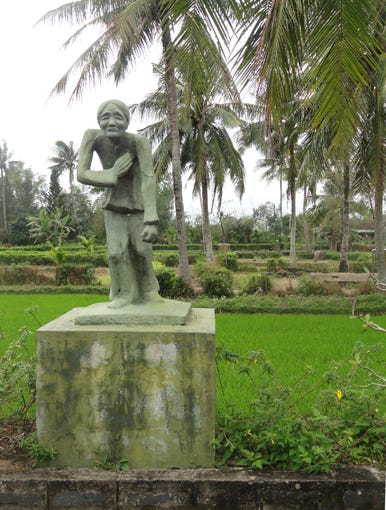
Statue at the site of My Lai massacre — author’s photo

I was prepared for the next stop on the tour, a visit to the museum and memorial site of the My Lai massacre. And it moved me to tears.

As far back as I can remember, the My Lai massacre had been a trigger for the anti-war movement, especially during the Vietnam War. March 16, 1968, should be one of the darkest days in U.S. military history, but sadly few young people have even heard about this horrific event.

The U.S. Army’s “Charlie” company moved in on the village of My Lai, killing everything in sight, “anything that moved.” The term has become synonymous with the war and is the title of a book by author Nick Turse who was the subject of a documentary audio interview on NPR about what he uncovered about the massacre.

Most of the young men from the village were away fighting, some for the Viet Cong and some for the South Vietnamese and the Americans. So when the troops arrived by helicopter, they were met by a tranquil village scene, unarmed villagers going about their daily routines, mainly women, children, and the elderly.
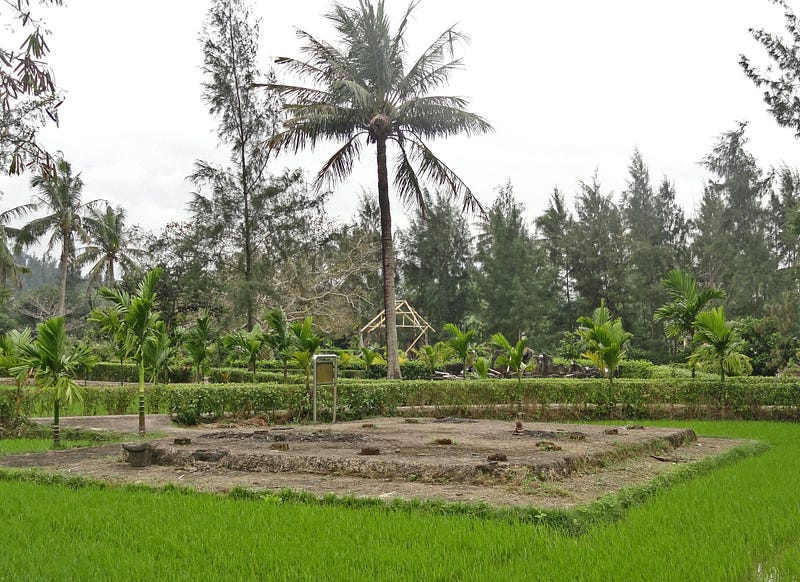
site of a home in a rice paddy — author’s photo

It didn’t matter who their targets were, they were under orders to shoot to kill and followed through, shooting, raping, and killing everyone in sight… more than 500 people. The few who survived had to “play dead” for hours, trapped under the bodies of their loved ones as the soldiers burned the village to the ground, destroying the evidence of their war crimes.
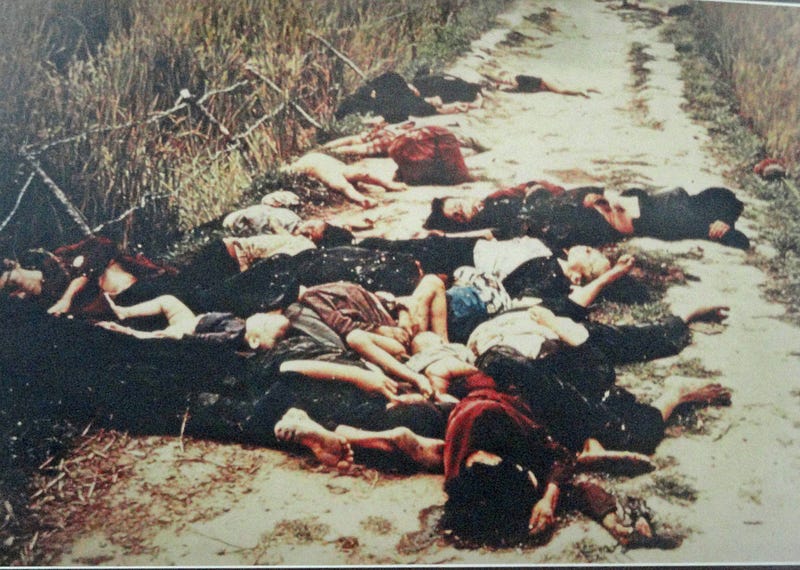
My Lai Museum photo by U.S. Army photographer Ron Haeberle — more of his official photos used as evidence can be found here

The facts are irrefutable, horrific photos captured by official American Army photographer Ron Haeberle which were used in the Peers investigation. The details were also reported by a few soldiers who broke rank and tried to stop the carnage and who eventually blew the whistle on their comrades.
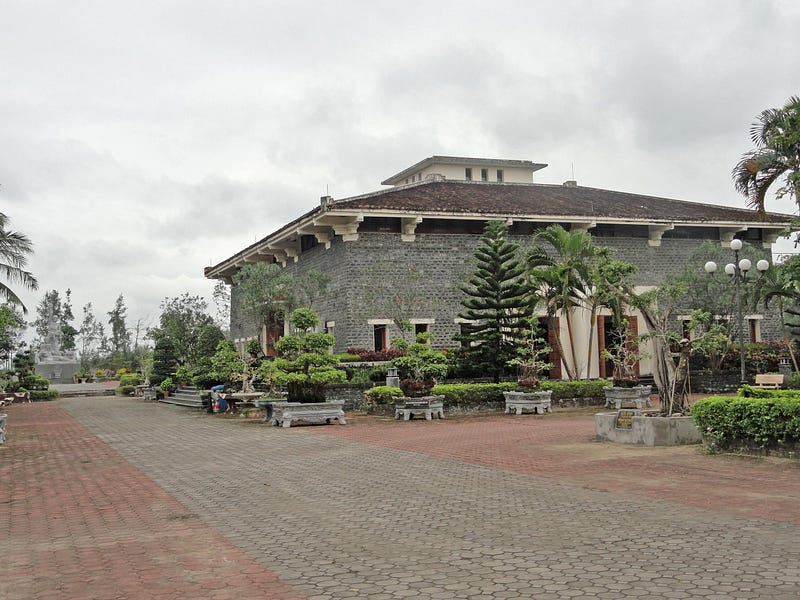
My Lai museum — author’s photo

So as we rode our bikes into the museum site, I was ready to confront the images of this barbaric moment in history. Visitors are given a 15-minute video presentation ‘War Stories: Heart of Darkness’ an American documentary produced for Al Jazeera Television.

It took us through the stories of the survivors and one of the soldiers who returned to the scene of the crime, to give himself some closure. What is disturbing is how he wouldn’t own up to being a part of the atrocities.

We emerged from the presentation overwhelmed, as we tried to process what we had just seen. We continued to wander through the museum, looking at the horrific photos and reading the captions, referring to the soldiers as murderers and criminals, difficult to dispute based on what we knew about the massacre.

During the visit, I learned that the My Lai survivors were not set free, but kept imprisoned in a POW camp. While 26 U.S. soldiers were charged with war crimes only one was convicted and he was able to serve his 3-year sentence under house arrest. In August 2009, William Calley finally delivered a public apology for his part in the massacre.
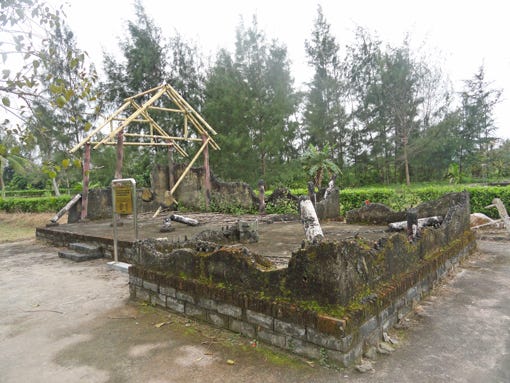
“There is not a day that goes by that I do not feel remorse for what happened that day in Mỹ Lai. I feel remorse for the Vietnamese who were killed, for their families, for the American soldiers involved and their families. I am very sorry”

Burned home in My Lai, Vietnam — author’s photo

As I wandered the grounds, I was confronted by the burned-out evidence, the remnants of the torched homes and bomb shelters, and even one home that had been painstakingly restored.
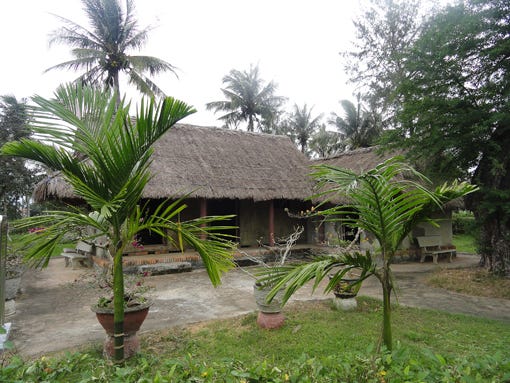
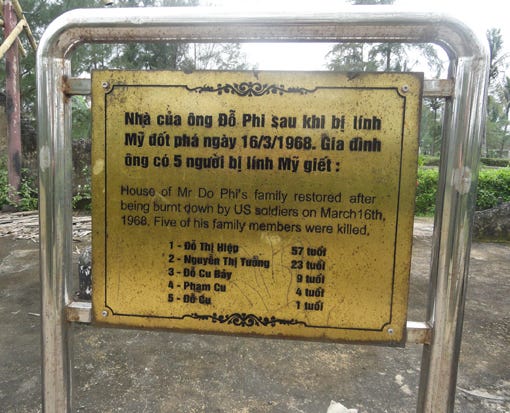
Restored home and resident’s story plaque— author’s photos

Outside each address was a plaque explaining who lived there… and who died there… with their names and ages. And as I moved through the site I came across a grim reminder, the mud footpath through the village, recreated in concrete with the bare footprints and bicycle tire tracks of the fleeing residents alongside the treads of the soldiers’ boots.
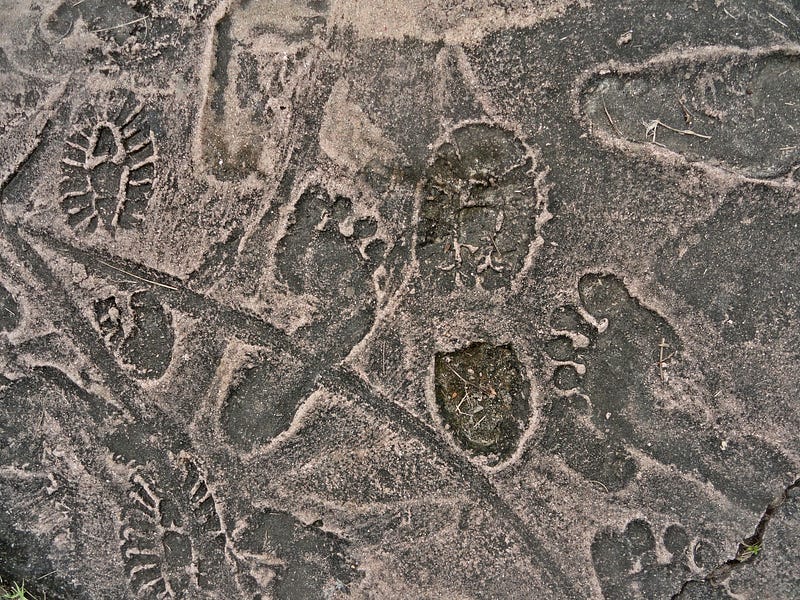
Mai Lai tracks in concrete — author’s photo
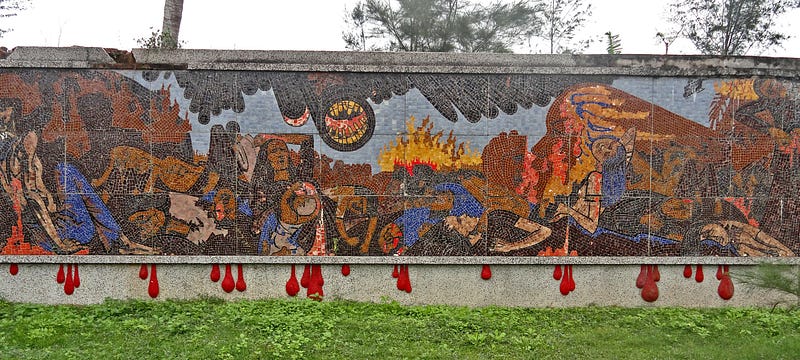
My Lai massacre memorial mural — author’s photo

There is a large and colorful mural at the site, with drips of blood underneath it. There are also a few statues set up around the grounds, including a large statue of an elderly woman holding a dead baby in her arms with people dead and dying all around her, her fist raised defiantly in the air.

It is unbelievable that this could happen in my lifetime, and even more difficult to understand is how these atrocities can still be happening today.
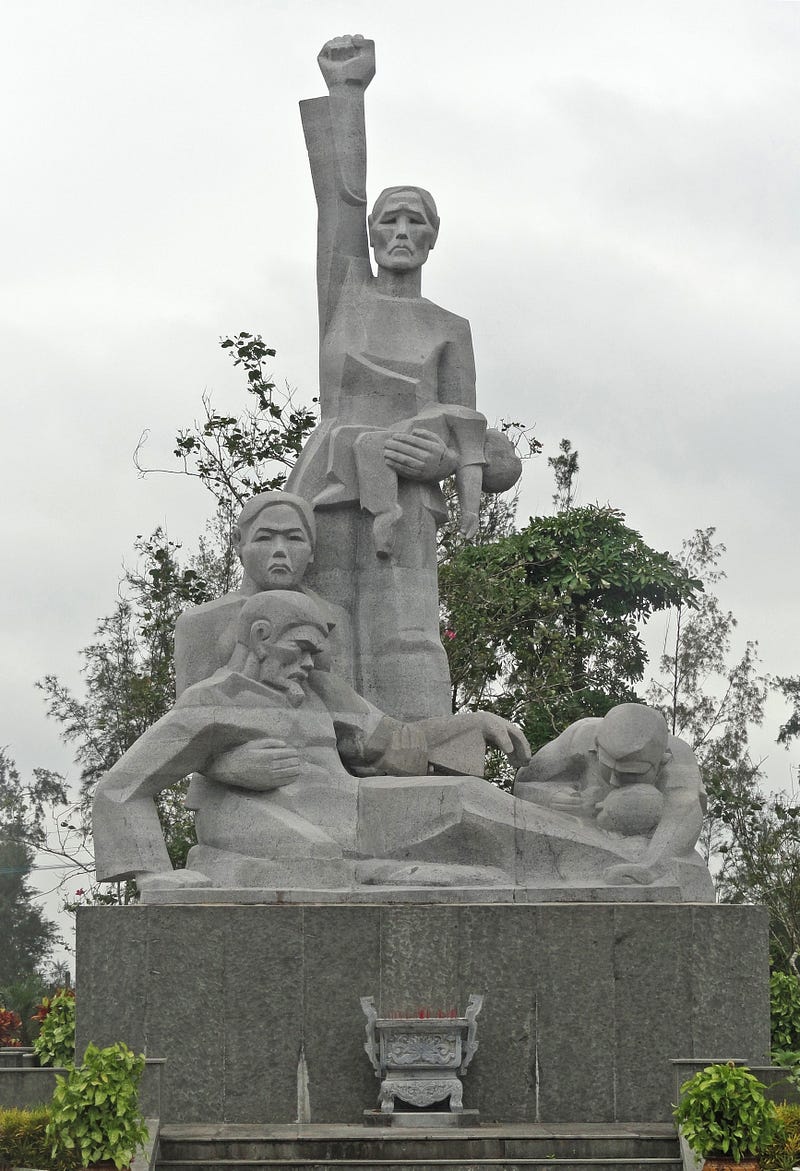
Mai Lai massacre statue -author’s photo

We continued our bike ride in silence, moved by what each of us had seen and heard. Reminded of the warm welcome of the Vietnamese people in the villages, particularly around this area, is a lesson of forgiveness, peace, and reconciliation.
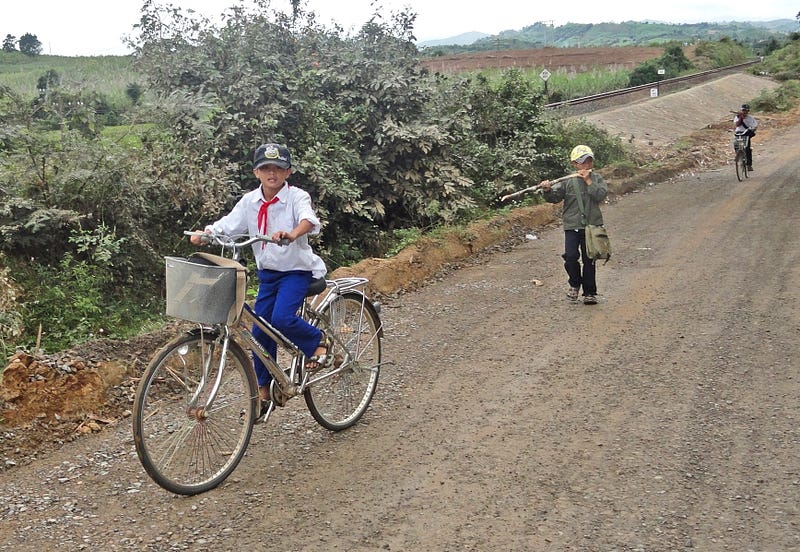
Kids on country road outside My Lai— author’s photo

After our emotional morning, we arrived in Hoi An, late in the afternoon. It has been on my bucket list for some time and I was really looking forward to this visit.
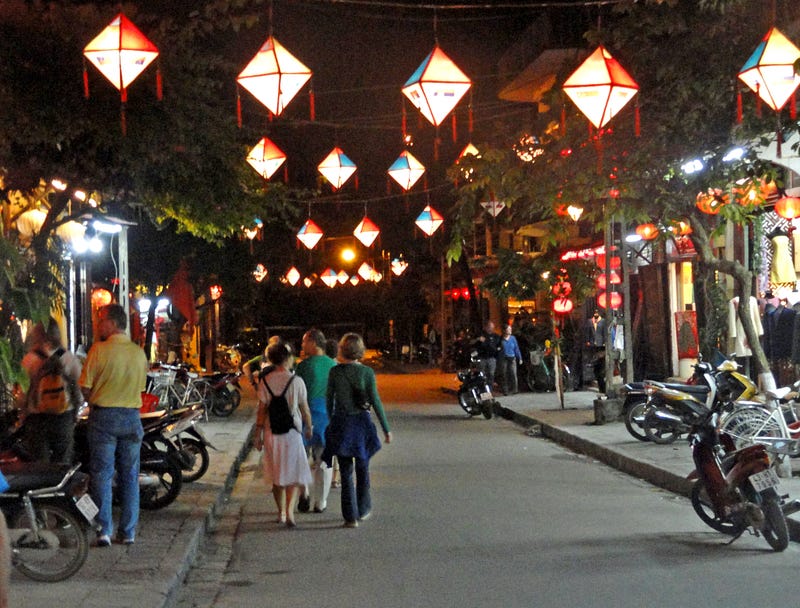
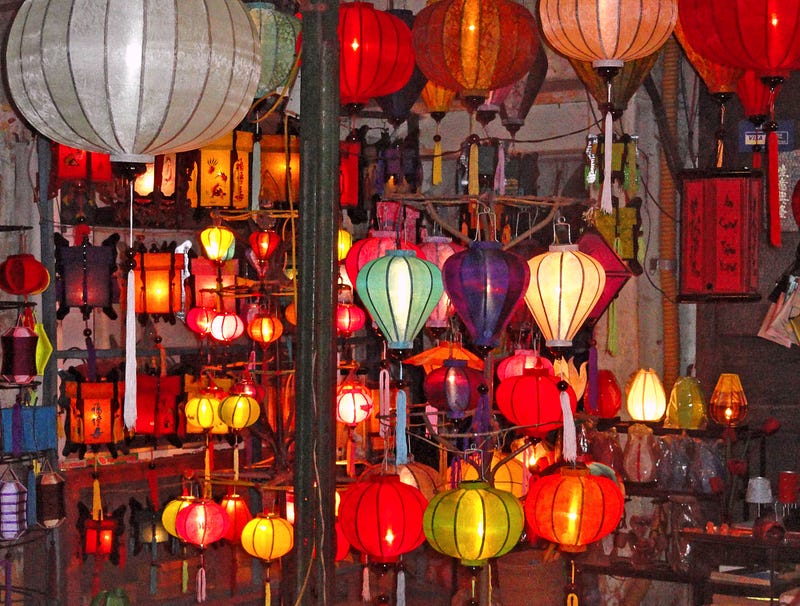
Hoi An street lanterns — author’s photo

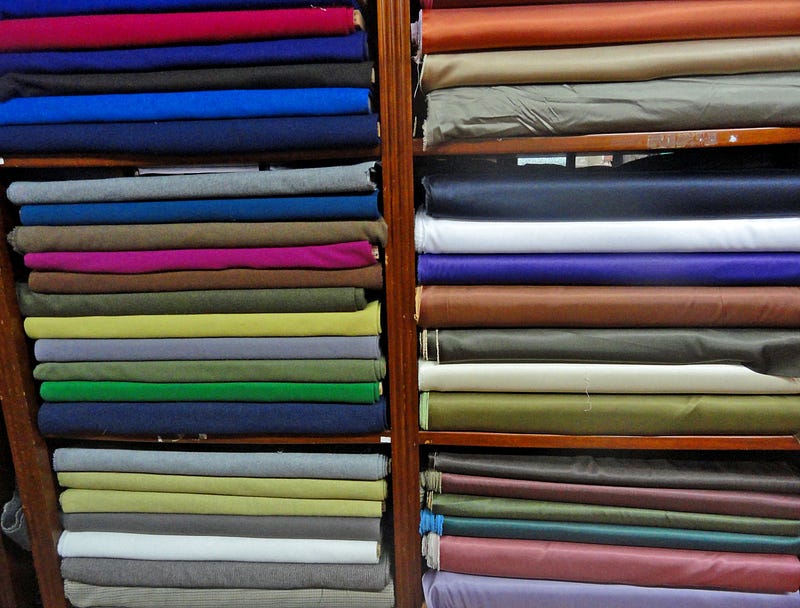
The old town is still intact, with all of its old buildings constructed close together, so close that it is impossible for a vehicle to pass through. Hoi An has become a tourist mecca for Vietnam, the place where you come to get tailored clothing made quickly and cheaply.
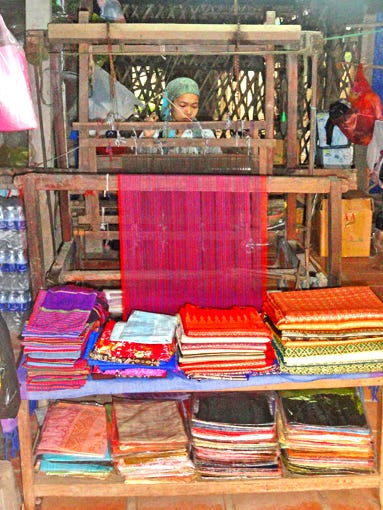
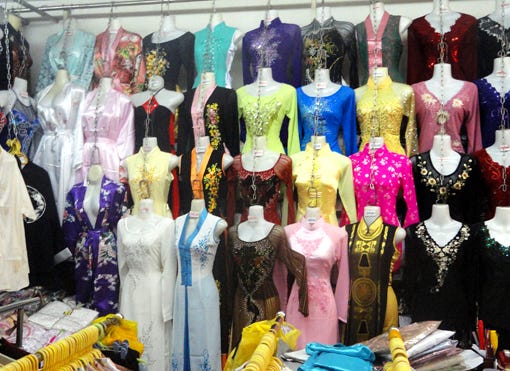
making fabrics; traditional Ao Dai — author’s photos

We strolled through the center of the city wandering among the many shops selling tailored clothes and shoes as well as beautiful silk lanterns and kitschy tourist souvenirs.
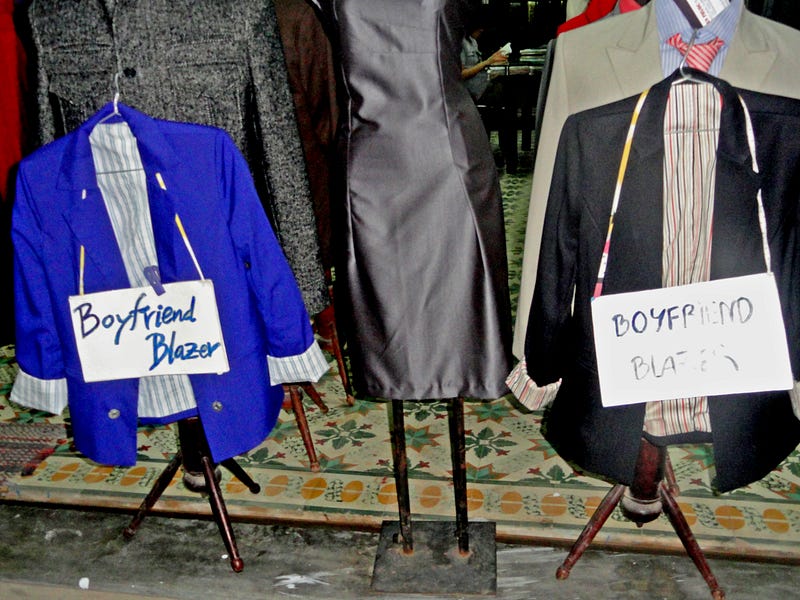
Boyfriend Blazers; in any color or fabric; paper lanterns — author’s photos

We had a delicious dinner but unfortunately, I had a cocktail, mixed with ice (I should know better by now, after a few bouts of Saigon Stomach already in Vietnam), and again got hit with another bout of gastrointestinal issues. The bug took everything out of me, and I stayed in bed for the entire next day, missing my planned tour of Hoi An.

I rested up to prepare for the next day of cycling, expected to be the toughest one yet as we would tackle the Hai Van Pass… a 100km bike ride that involves a steady climb up the mountain and then downhill, which would be similar to the downhill ride we experienced a few days earlier on our way to Nha Trang.
author’s photos
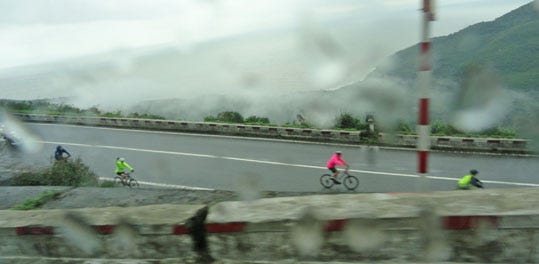
Riding Hai Van Pass in pouring rain — author’s photo (from the bus)

I didn’t cycle the full 100km marathon because I was still quite sick. Nothing was staying with me, so I spent part of this leg on the bus, which turned out to be a pretty good decision. As soon as the group started to cycle from Danang and China Beach, uphill, it started to rain and became very cold.
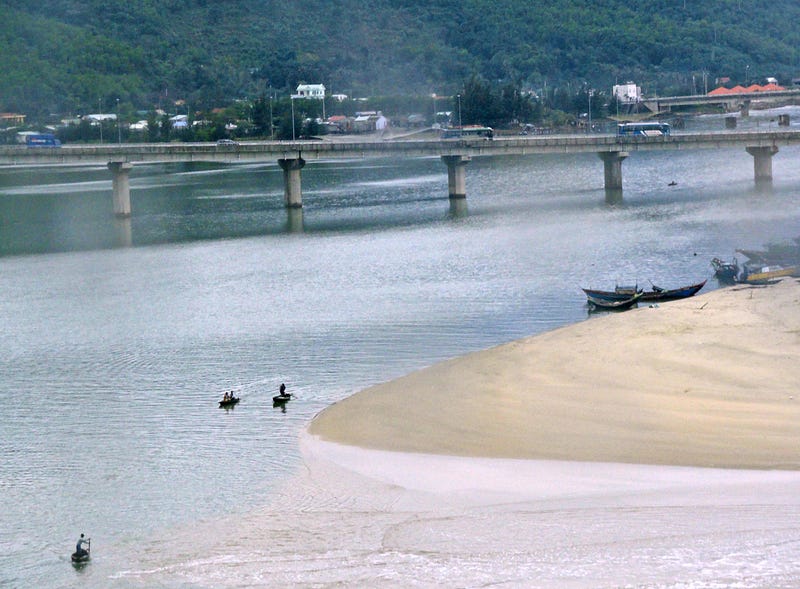
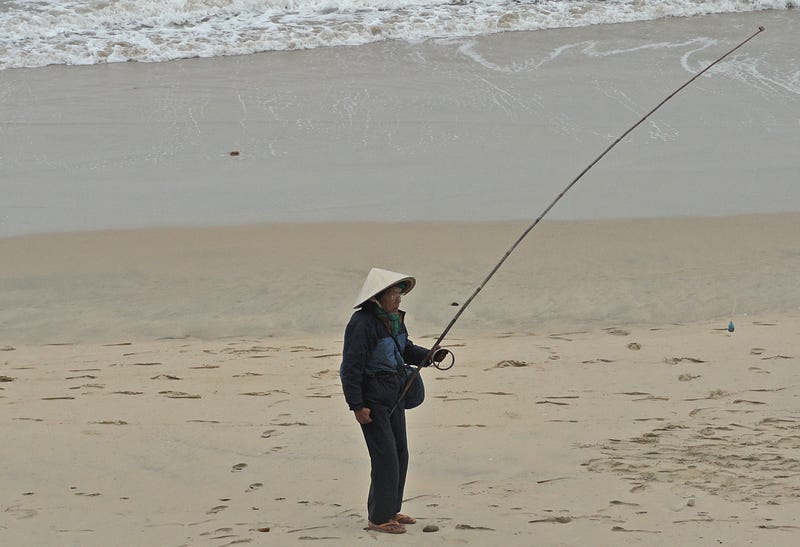
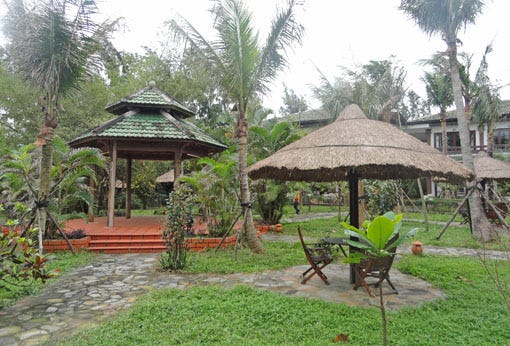
Lang Co Beach resort — author’s photos
Lang Co Beach fisherman — author’s photo

We stopped off at Long Co Beach resort for lunch, which I’m sure would be a beautiful spot for a vacation… in better weather. Then the group continued to ride through villages on our way to Hue (while I stayed on the bus). But the group decided to pack it in early, and we drove the rest of the route into the city in the pouring rain.
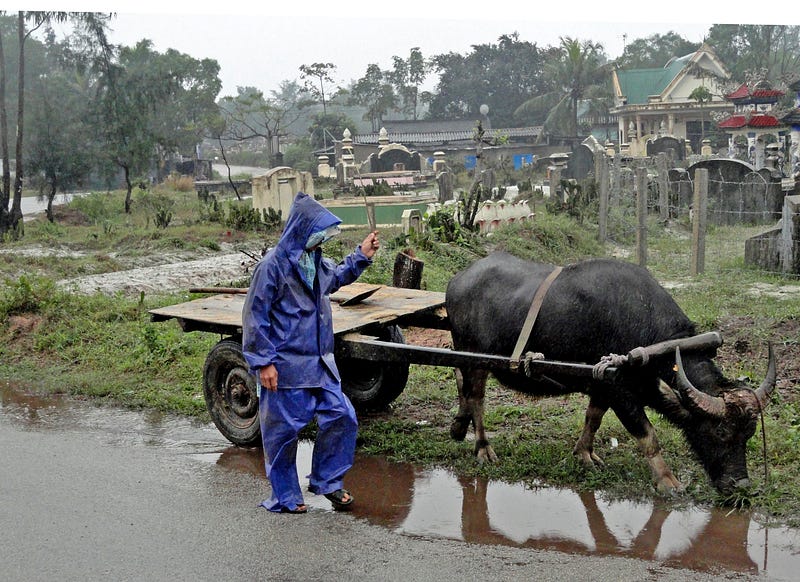
water buffalo in the pouring rain on the road to Hue — author’s photo

The scenery while driving into Hue was captivating. There are thousands of graves and family pagodas on the roads, each one more elaborate than the next. Hue was heavily hit during the Vietnam war, so there is a lot of dead buried there.
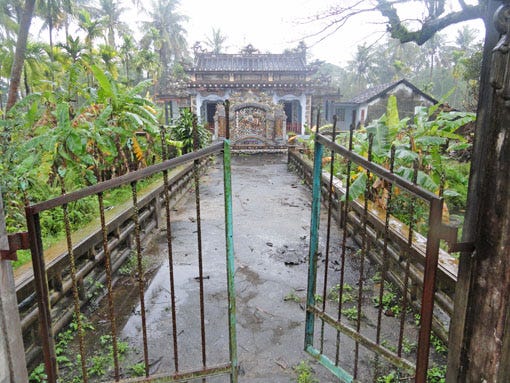
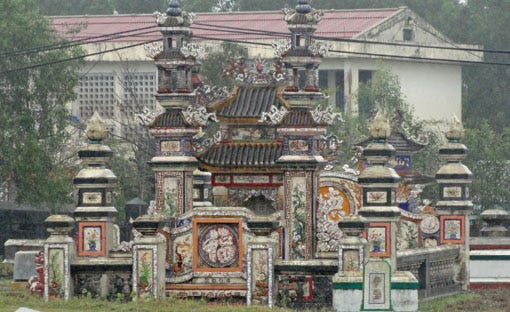
Family tombs and memorials — Hue, Vietnam — author’s photos

Hue is also supposed to be a city of fine dining, but I never got to experience that, I dined on white rice while the others feasted on beautifully decorated food like shrimp coated in green-colored Panko bread crumbs.
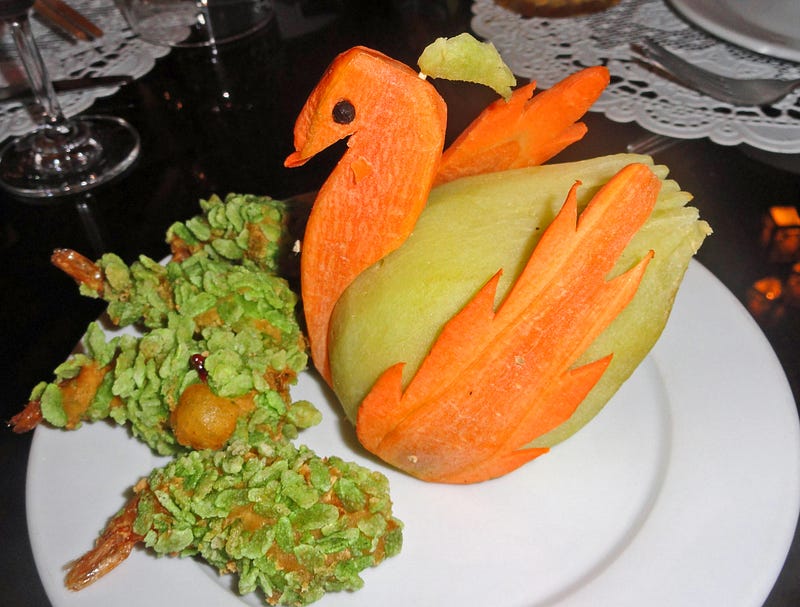
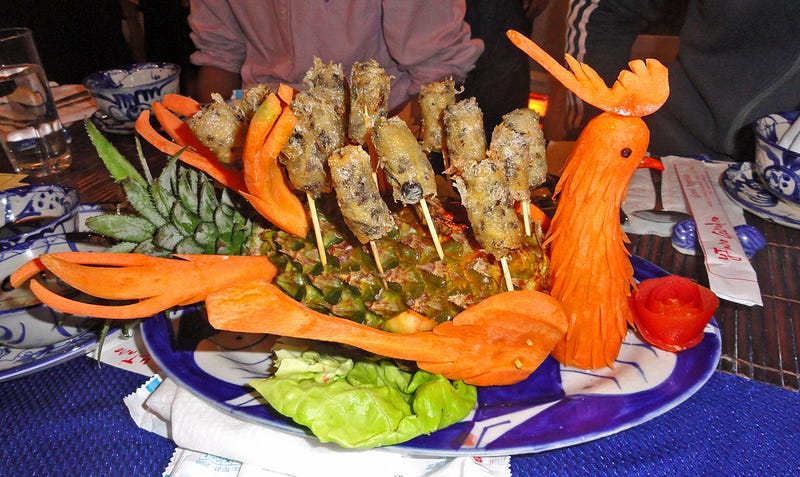
Hue panko shrimp; crispy spring rolls — author’s photos

We also spent the following day at the Imperial City, a walled enclosure within the Da Noi Citadel of Hue, which used to be the capital of Vietnam. The city was almost wiped out during the Battle of Hue during the Vietnam War.
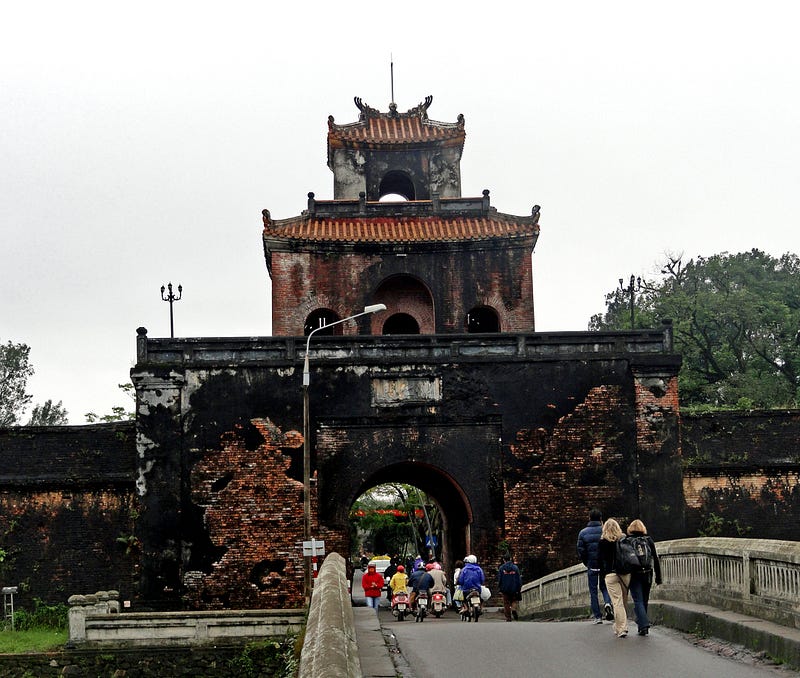
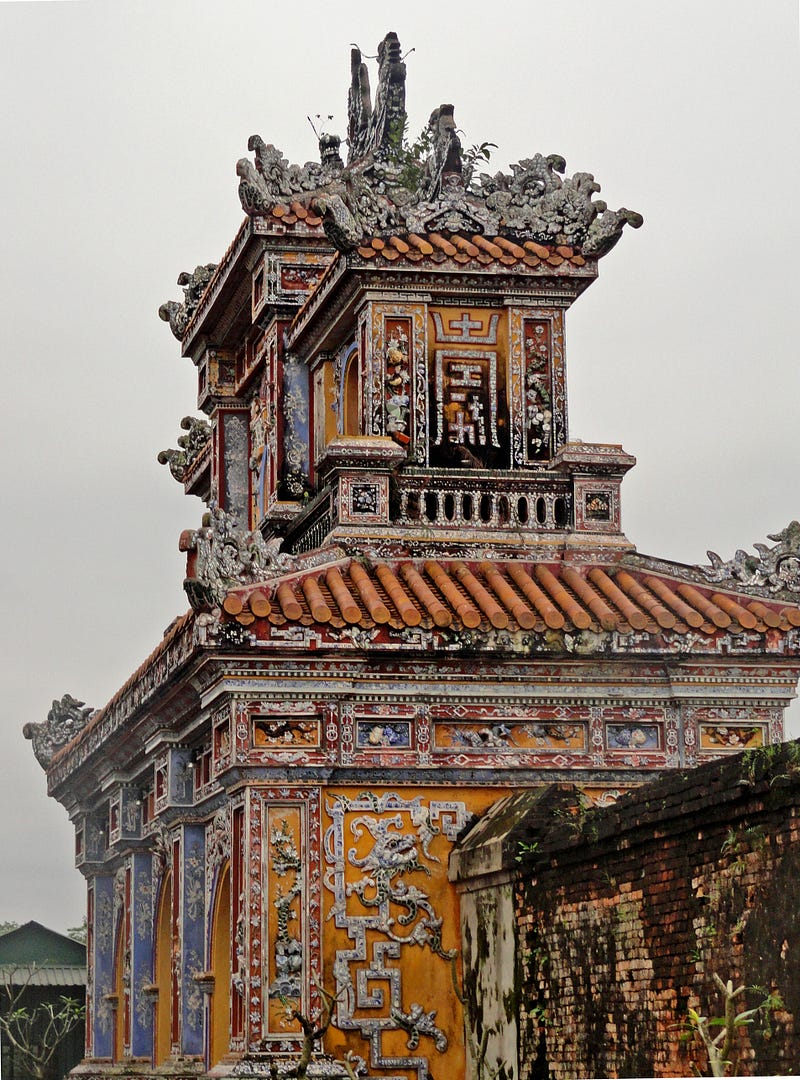
Da Noi Citadel, Hue Vietnam — author’s photos

It was one of the bloodiest battles, lasting more than 4-weeks. When it was over, more than 14 thousand people were dead, including more than 5,000 civilians, 2,000 executed by the VC and the PAVN (Peoples Army of Vietnam.
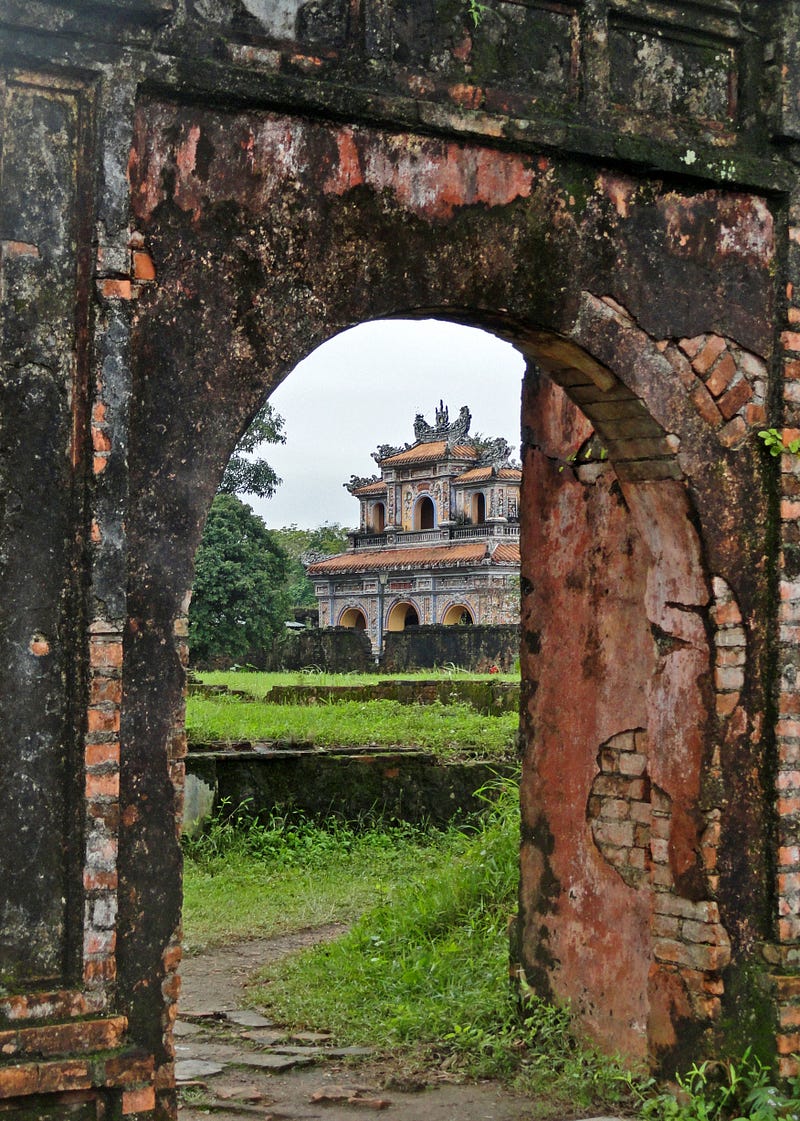
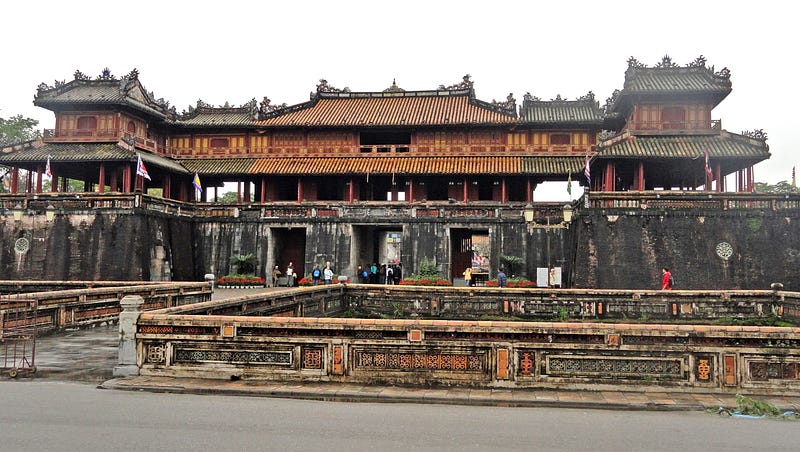
Imperial City, Hue, Vietnam — author’s photos

The 20-year Vietnam war had a profound impact on the country and its people. While the Vietnamese have every right to hold a grudge against the west, they don’t. Part of the reason for that is that more than half the population was born AFTER 1975 and has no memory of the war, just the images that have become, not only part of the public archive but also part of the national consciousness. Everywhere you go, there are reminders and memorials, including The Vietnam Military History Museum in the capital of Hanoi, where we will be wrapping up our tour.
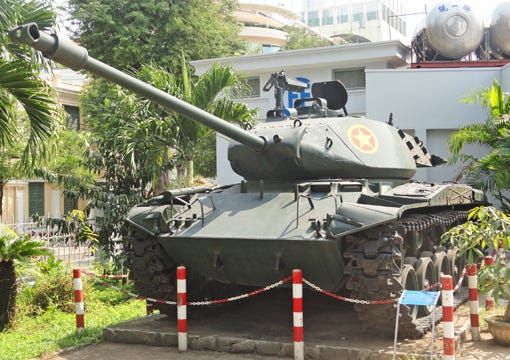
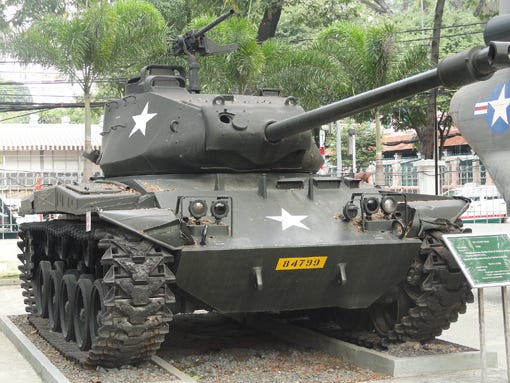
Weapons of war — Vietnam Military History Museum, Hanoi, Vietnam — author’s photos

Coming up in Part Six, and the final installment, I wrap up my cycling journey with a Junk cruise in Halong Bay.

__________________________________________

You could read so much amazing content on Medium and it could be your next step in becoming a writer, for just a few bucks a month. And if you sign up with this link you will also be supporting my writing.

Travel
Vietnam
Cycling
Bike Tour
Vietnam War
Recommended from ReadMedium