Cycles
Tim Pugh
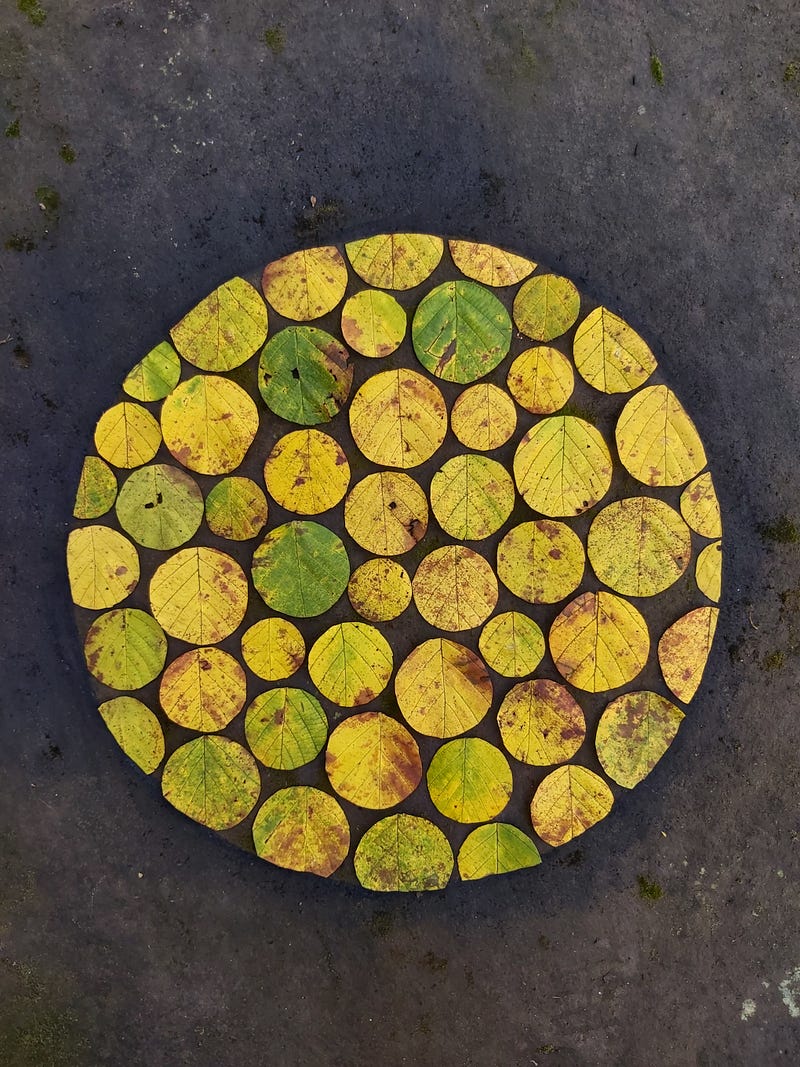
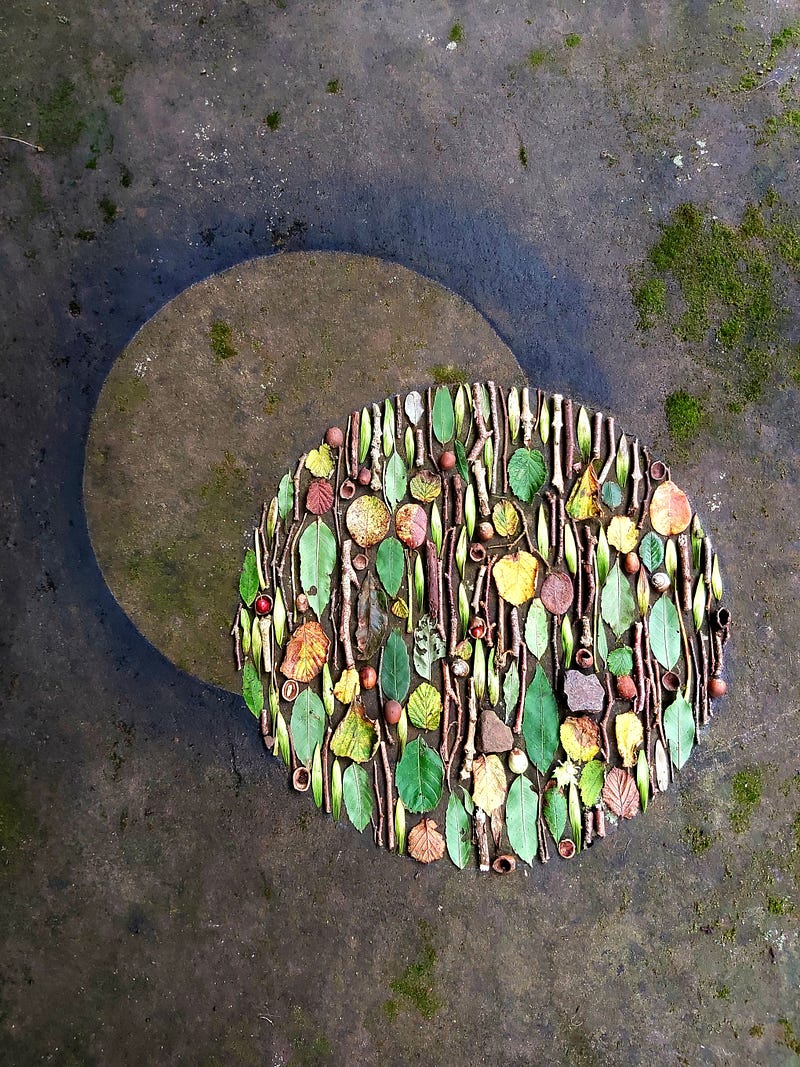
Tim Pugh on ‘ Cycles’
As an Environmental Artist based in Flintshire, North Wales and West Cumbria, my creative practice is split equally between these locations. I view these environments as open studios in which to experiment and develop new ideas. They include woodlands, beaches, old factories and a particular stretch of cyclepath next to the Western Fells in Ennerdale, West Cumbria.
Recently, I have focused on creating temporary installations on the cyclepath, working with natural and man-made materials in response to the flora and fauna along with the historical legacy related to the area.
The cyclepath was developed by the cycling charity, Sustrans, converted from an old freight line which used to convey iron ore, coal and limestone from quarries and collieries high up in the hills. The ten-mile path starts at sea level in Whitehaven and winds its way through former mining villages up to an elevation of 700 feet with increasing glimpses of Lakeland views.
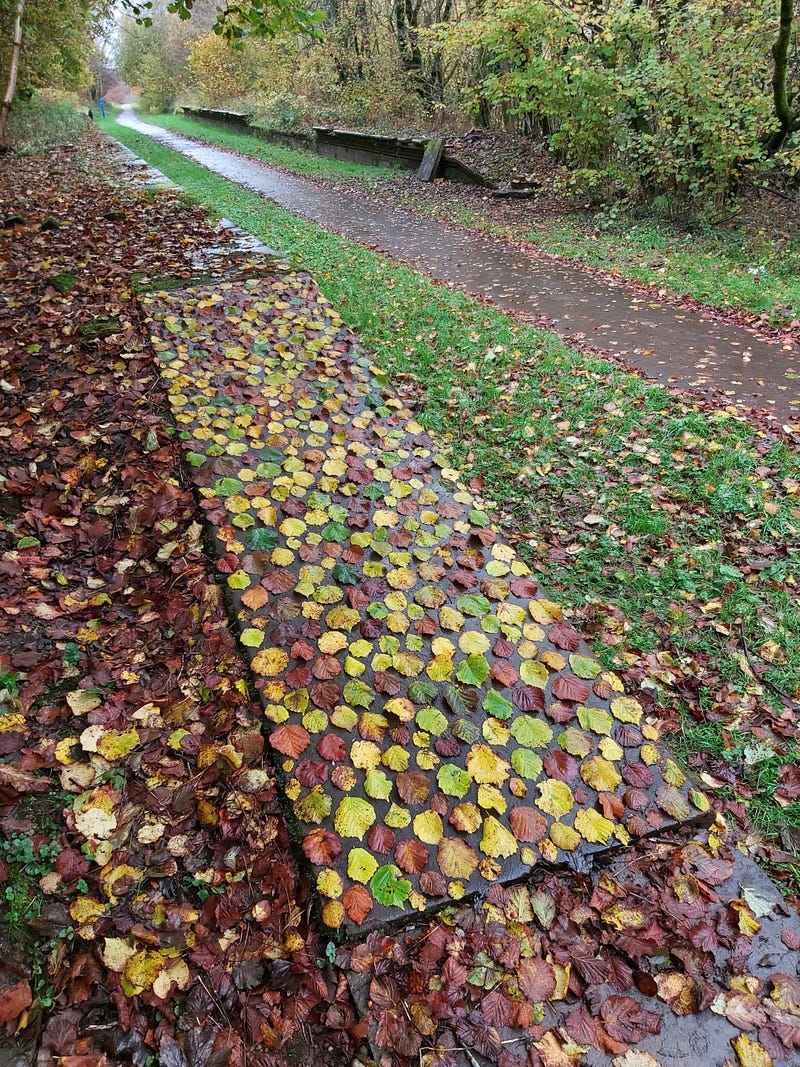
The line passes intact, ghostly railway infrastructure. The bare granite slabs of abandoned railway platforms are ideal canvases to show off temporary two and three-dimensional installations made of natural materials foraged from woodland resources fringing the path.
The seasons dictate what natural materials are available and what sites to work on. In Autumn and Winter, the bare woodland canopy reveals the melancholy remains of station platforms, overbridges and signal posts, presenting optimum opportunities to create colourful leaf and snow responses. The dry spells during Spring and Summer favour more delicate arrangements and drawings using iron ore sediment and charcoal, sketched directly onto trees and stone surfaces.
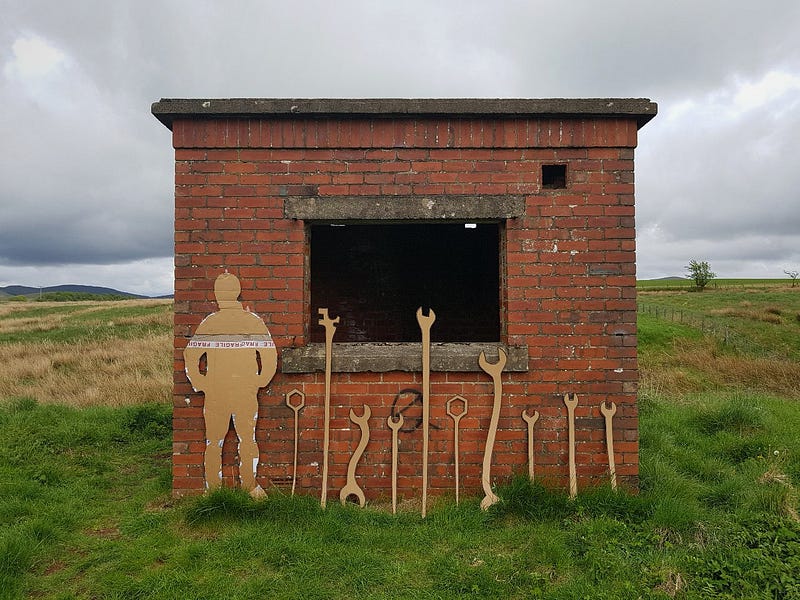
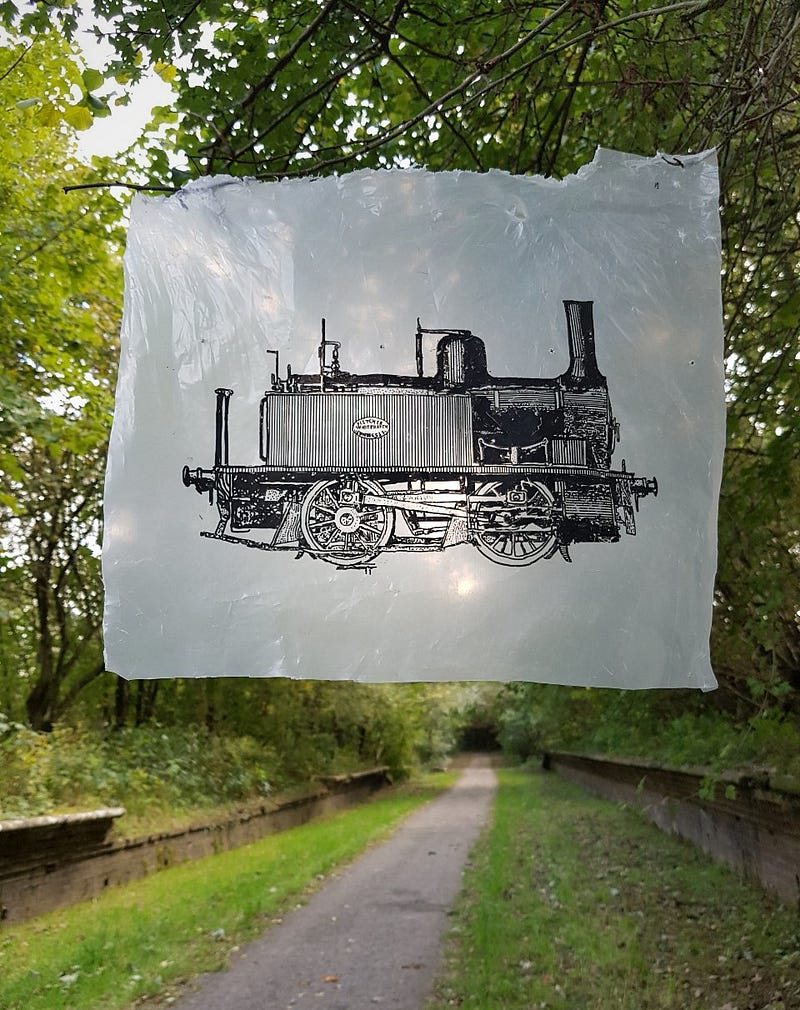
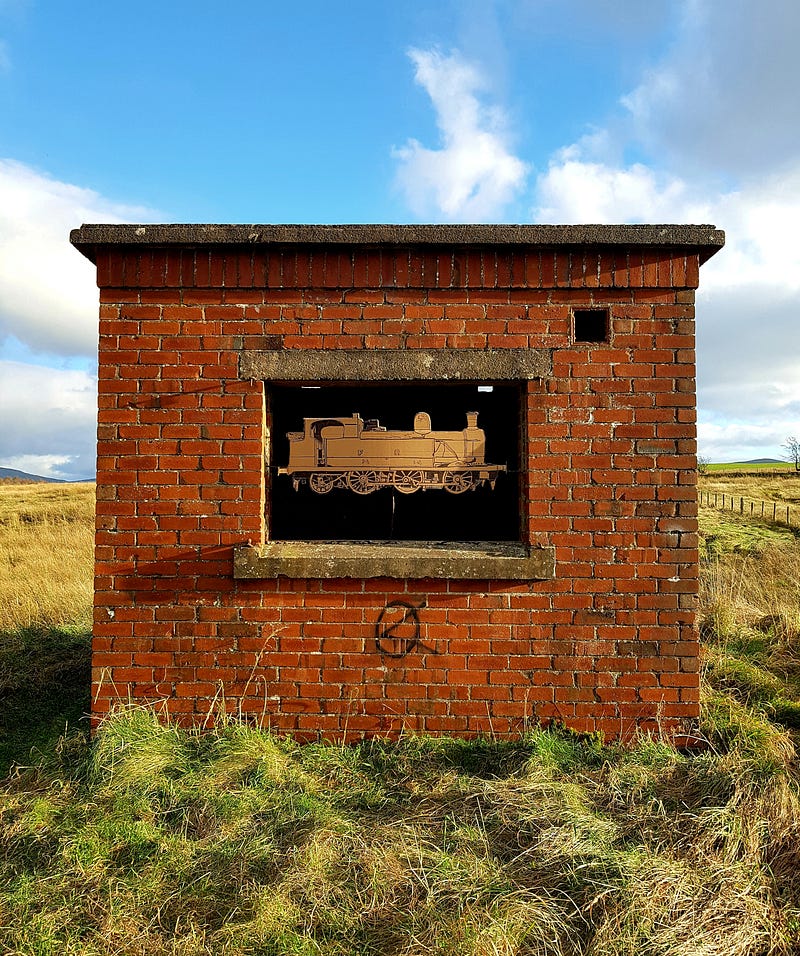
At other times, I’ve created mixed media artwork more directly related to the railway such as giant cardboard tools left leaning on an engineering shed. I have also used old railway tickets to create maps that plot the course of the railway routes, and hung drawings of trains from overhead branches. As I am based near the line I often prefabricate and prepare cardboard cutout drawings and take them on my bike up the line to appropriate locations to set up and photograph.
As a roving artist, I use a bike equipped with panniers to move from different sites on the line, carrying my materials and photographic equipment. Some of the work created is instinctive such as reacting to sudden snowfall whilst other responses may take days to prepare.
The cyclepath is an integral part of the Coast-to-Coast route and my artwork often attracts the attention of passing cyclists, tourists and walkers. I have developed friendships with local people who have got to know me and my work and who look out for my latest interventions. They tell me fascinating stories and anecdotes about local history, about the nearby old Roman roads and the trains they used to observe.
Old pathways radiating out from the line were used by generation’s of iron ore miners walking to work. It is said that miners would walk for miles, often at night and I have started to explore these routes searching for new places and inspiration.
Whilst setting up an installation a couple of years ago, a group of cyclist stopped to view my work and chat. By a fortuitous stroke of luck, they were senior management from Sustrans and were most interested in my efforts. Since then, we have shared a fruitful relationship. I have undertaken two creative residencies for the charity and regularly contribute posts to their Facebook page dedicated to the cyclepath.
The area is teeming with wildlife and the line acts as a natural corridor as well as being an important haven for Red Squirrels. Bats nest under the railway overbridges and deer come down from the Fells onto neighbouring fields.
As well as being informed by the natural and industrial aspects of the area, one cannot escape the presence and influence of the towering peaks and mysterious grandeur of the Ennerdale Valley that looms over the cyclepath. I have climbed most of the neighbouring mountains and often look down on the cyclepath as it threads its way across the moors below.
Looking down from the summits gives me time to reflect on my own transient existence and small contribution to the evolution and history of the area. Here I also dwell on the positive and meaningful impact the cyclepath has had on my creative practice and the hope for potential outcomes the future may bring.
Tim Pugh