
CYBERCRIME: Security in IoT Devices
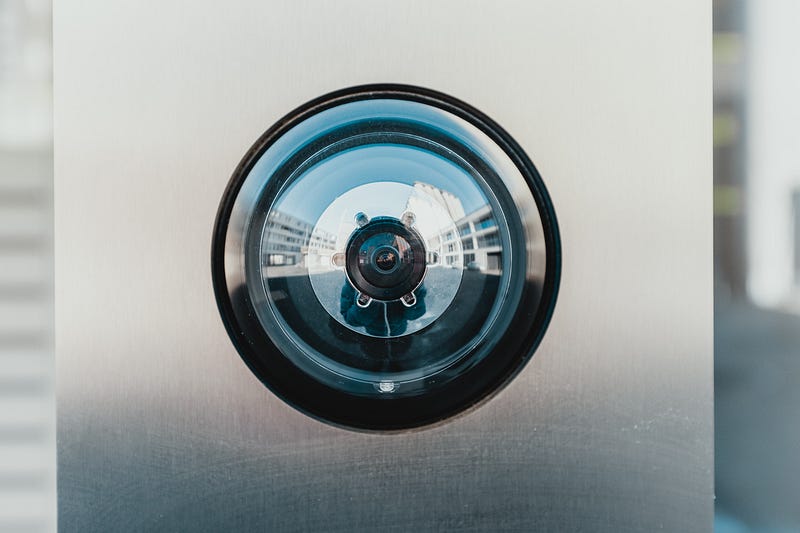
The fast development of Internet of Things (IoT) and cyber-physical systems (CPS) has triggered a large demand of smart devices which are loaded with sensors collecting information from their surroundings, processing it and relaying it to remote locations for further analysis. The wide deployment of IoT devices and the pressure of time to market of device development have raised security and privacy concerns.
Cyber crime and cyber security has been considered as important fields attracting users to start investing in security solutions. Rising cyber security threats could sour the growth performance and business case of these companies. So far the benefits of investing in meaningful cyber security have been alleviated by the perceived negligible impact on sales. The long tail scenario analysis, however, cannot ignore the growing insecurity of cyber space and cyber physical systems that can no longer be trusted. On the other hand, a skewed perception of risk poses a challenge in what is currently being advertised as the “Cyber SecurityTrends of 2020” and structures/product/services which better incentivise risk reduction and safeguarding. deeper dives into the sales opportunities of cyber security are now warranted. Potential application of cyber security trends including those in the infographic provided below are: Avoid scams, support for smart device security Information hygiene — Nerdy stuff helps ensure security robot deletion Be smart with security (protective accessories for smart devices) Protect your assets by securing your web presence Data security — Business continuity and re-visibility Off-plan cyber security awareness Marketing for cyber security (app / web application security) Product opportunities for cyber security which are more accessible than usual to a business beginner include the following: Smart devices and wearables security Enforced data encryption Hardware enabled security Product security solutions and advanced e-commerce security Relay solutions for remote access Off-plan cyber security awareness Software defined security platforms (including cloud computing and software defined network solutions) IoT market leaders dominate the market allowing easy penetration of cyber security products into the general product portfolio while the increased complexity and costs have put pressure on contribution in cyber security services to cater to the increasing demand. Industry leaders ClassPass, VeriSign and Rapid7 are especially prominent in the higher end segments. However, the overall market share in the cyber security services industry is considered low at only 5.8% according to an August 2019 report by TomTom. “Data security” includes far more than the obvious appliances including home computers and smart phones. Of the traffic traffic to web pages for various cyber security-related queries, most is made up by voice search (62%). Voice recognition / computer-generated natural language processing software such as Google Assistant, Amazon Alexa and Cortana are growing in popularity. The growth rate appears to be exponential also. . Life is a series of painful transactions The initial suspicion towards online purchases and transactions faced by bankers during the Net bubble in 2000 was still very much in place. Banking and financial services companies had access to huge amounts of users’ personal data. This data could be manipulated or hijacked.
But how can you keep yourself safe and ensure your privacy? SOEPS — System on a Chip for Exploitation The primary tool created to boost personal security and track cybercriminals interest in the improvement of security configurations for smart devices and tiny computing systems is called SOEPS (System on a Chip for Experimental Research). The requirement of SOEPS is to increase the security capabilities of a computing system by adding security considerations to the microchip. Another requirement of SOEPS is that it collects physical, environmental and thermal information to optically measure and improve the system’s design and function while wireless connectivity is also provided for better analysis and data processing. The main objective of SOEPS is to minimize the influence of malware attacks by measuring the complete operating environment. Many security devices are currently installed on micro- and small-chip architectures, such as micro-h1, micro-h2, micro-h3, etc. and are across 5–6 different sizes. So the future is bright for enhancing the security of these micro-controllers as safe platforms for developing and testing new operating systems. SEO as a Service Provider Soeren Aréns, Senior Vice President, Endeavor Search, explains that “SEO as a Service (SaaS) solutions are emerging and quickly becoming popular. Not surprisingly, as the applications of these solutions become widely known, demand grows for proactive security monitoring, intelligence reporting, and the deployment of sophisticated personal security plugins for Google’s ever-increasing suite of products.” As vendors customize SaaS offerings, users must pay periodic fees in order to use them and receive analytic services from a security software provider. Depending on the nature and popularity of a product, providers offer three distinct types of security packages, which fall in different price categories: Laptop/Desktop security: $19 / month Mobile security: $10 / month Individual/Business security: $5 / month These options range from the basic to the highly sophisticated. When you compare the expenses and fees in each of these packages, the differences become apparent. Laptop/Desktop security: $2,35 / year Mobile security: $0.50 / month Individual/Business security: $9 / month A typical security vendor sells solutions at cost. The business market is open for cost-per-device sales, so it’s common to see large price vacuums or grouped packages for the purchase of multiple security systems. The large budgets of companies that can afford it necessitate the creation of a massive inventory and purchasing spree, which pollutes the environment with excess inventory and the stranded of salespeople. Price gouging? Check. Environmental impact of large-scale production? Check. In conclusion, helping IT customers purchase top-notch security options is the first step in helping to reduce the cybercrime problems.
In various European and US countries, laws have been put in place to address these issues. In Europe, certain load balancing systems have been declared “essential” by consumer protection authorities such as BPAG (Bundesrat DE), but still have to be registered and comply with specific privacy protection regulations. In the US, the Health Insurance Portability and Accountability Act of 1996 (HIPAA) has been enacted in order to protect consumers from having their health information collected, processed, or used unethically. It is important to consider that all recent updates to standards, laws and guidelines focus on improving the security, usability, transparency and governance ( aspects vital to companies marketing smart devices) of all such systems in order to prevent possible losses of user data (including data stored in online databases). The following sections provide a high-level overview of the security aspects of smart devices, monitoring whether they comply with regulations, and those to be aware of, during their development and marketing. Why is cyber-physical security so important? The objective of cyber-physical security is to provide users with an uninterrupted and hassle-free experience. Consequently, it is also defined as a form of cyber-privacy. From the perspective of cyber-physical security, secured devices not only respect consumer privacy and data security, but they also reduce cyber-theft. What is the difference between cyber-physical security and cyber-security? The former aims at preventing unauthorized access to and processing of sensitive information; the latter aim at preventing unauthorized access to or processing of data. In essence, cyber-security and cyber-physical security aim at providing the same protection, but focusing on different aspects that can help ensure increased security. Most security concerns are connected with data leakage. Data of every kind that does not strictly belong to the “qualified person” (for cyber-security) cannot be safeguarded. In Transparent Data (which should be the minimum requirement for transparent application security), the “qualified person” can be defined as anyone (consumers, employees, affiliates, etc.) who is involved in the automatic processing of personal data to produce information. The security of various forms of trans-regulated information is a long-known topic that was highlighted by previous editions of this top-notch blog. How should security issues in smart devices be handled? Two main principles should be noted here: Access Controls: Consumers should be provided with easy and instantaneous access controls to their personal data and to sensitive accounts for which they have provided a password. In forced authentication scenarios, authorized users should be notified that their password has been sent to a third party and a recovery key should be provided.