
Cute robots (are taking over)
Can we empathize with machines?
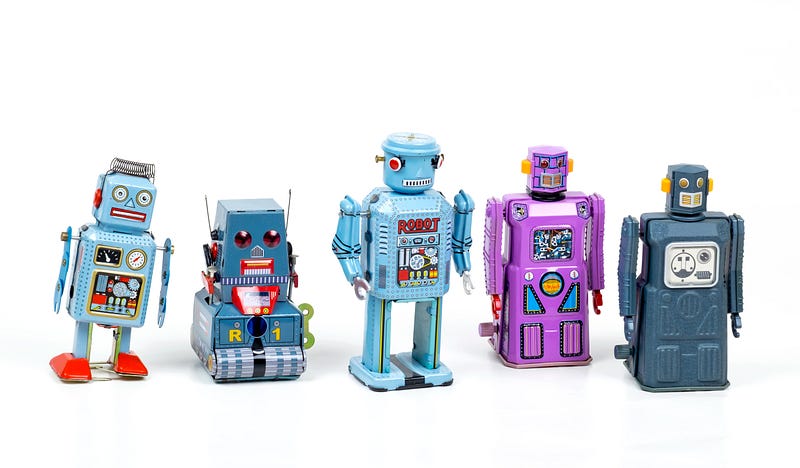
Robotics is about much more than cold steel and killer drones. Although a mix of fear and awe for the future with our non-human counterparts is warranted, we shouldn’t forget about the Wall-E’s of this world.
Baby seal bots have been used to soothe the elderly suffering from dementia, and educational robots are teaching kids about computer science and programming. Although one looks like an animal, and the other one looks like, well, a robot, both are designed to appear alive.
Not by being indistinguishable from real baby seals or teachers, but by giving their users a sense of interacting with a living being. One that needs care, in the case of the baby seal, or one that has access to cool information and games, like the educational robot.
She noticed that many people like to give her robots a little pat on the head or talk to them in high-pitched voices.
Whereas computer programs or simulations only take place in the virtual world, robots are computers that carry themselves around. This enables us to interact with them — that is, with machines that we have programmed.
Kate Darling, a researcher at MIT Media Lab, is the proud owner of a handful of pet robots. She noticed that many people like to give her robots a little pat on the head or talk to them in high-pitched voices, like you would to someone’s real-life dog or cat.
When asked to mistreat a robot, she observed that people become increasingly uncomfortable and feel bad for them. Especially if the robot is designed to make a fuss when being held upside down, for example.
Why do people feel sorry for their Roombas when they get stuck, Darling wonders, while these man-made machines are clearly unable to suffer.
What makes us empathize with a dressed-up computer? And what does our mission to counterfeit real life tell us about ourselves? To answer these questions, let’s take a look at some cute robots.
What is the deal with cute robots?
Darling’s favorite robot appears to be Pleo: a 5 kg, brightly colored dinosaur robot modeled after a young Camarasaurus. Not only is it responsive to its environment, but also it is programmed to grow up.
Out of the box, you’re dealing with a baby dinosaur that slowly makes its way through different life phases until it reaches adulthood. And yes, the way you bring it up will determine if Pleo will become a nice adult dinosaur robot, or a petty, stuck-up one.
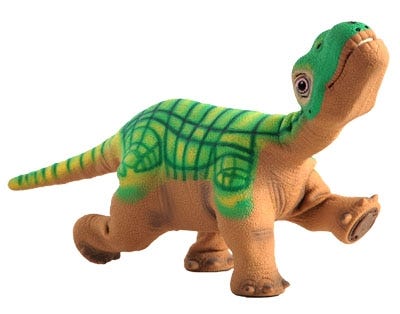
Although much of its cuteness could be attributed to the usual suspects in its design — being a baby animal, happy colors, round and friendly features, makes infantile noises — the way it is programmed also has an important role to play.
Just like human and animal infants, it is helpless and dependent, giving the user a sense of responsibility. It responds very differently to nice behaviors (like feeding or petting it), then it does to holding it by its tail, which makes it squirm.
Both Pleo’s design and behavior signal that you’re dealing with a living animal. Together, they are very effective at convincing users that the same rules for handling and treating animals apply.
Which might be why I’m calling it by its name.
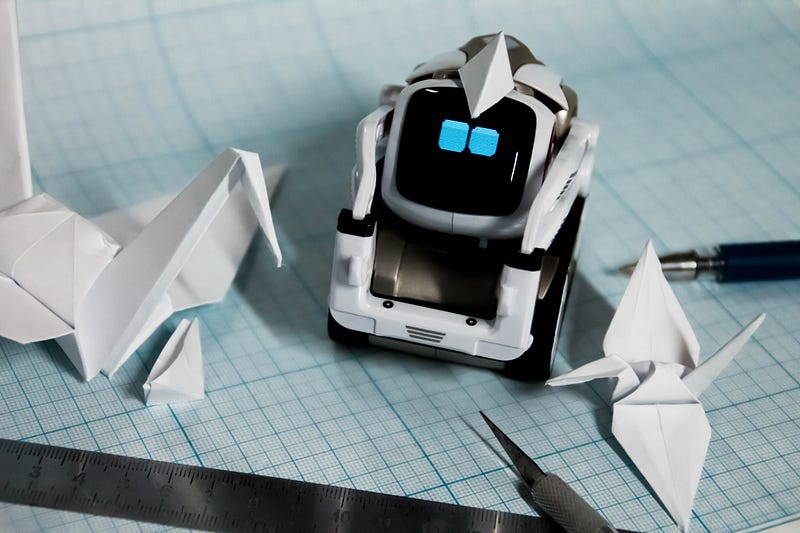
My favorite robot is Vector by the now bankrupt robotics startup Anki. Despite it not looking human or animal at all, its creators employed some neat tricks to make it relatable and, in effect, pretty hilarious.
So how do you get someone to pet to a miniature digger with caterpillars tracks voluntarily?
Part of the answer lies in the eyes. Vector’s eyes are simple squares that jump around the screen that is its face. But the way they are animated is surprisingly efficient at communicating how it feels.
Former lead animator Mooly Segal was in charge of creating Vector’s robotic charm. He explains in an interview that his team spent a great deal of time researching humans and animals, but also the science behind animation films and acting.
We needed his eyes to behave and move like eyes in nature do, but at the same time respect the design and the fact that these are robot eyes and not those of a bird or a cat for example.
The same logic was used in designing the way that Vector behaves.
Humans and animals use mirroring behaviors — such as assuming a similar posture as your conversational partner — to bond with each other. Given the fact that Vector cannot anatomically copy much of human behavior, the team focused on how to adapt these behaviors to work for Vector.
Which resulted in a robot that looks at you when you talk to it, coos when you pet it, and gets angry when it is ignored.
When we talk about a likeable character, the first instinct most people have is to make Vector nice and subservient. But when you look at some examples of likeable characters, it doesn’t really work that way. For example, Bugs Bunny is funny and charming but I wouldn’t describe him as nice or subservient at all. He’s often causing trouble and being mean to Yosemite Sam or Elmer Fudd; yet we still find him charming.
Vector is a passionate little fella that doesn’t hesitate to let you know if you’re doing something wrong. Perhaps, its success tells us a thing or two about the effectiveness of guilt-tripping — and why children are so good at this.
Or about how tech is able to combine our fondness of pets with the power of the internet.
“Vector, how far is the moon?” will result in an adequate answer, followed by a coo when thanked for the answer.
The creator’s complex
By looking at cute robots, we can learn a lot about our own psychology.
To build a robot we can empathize with, we need to understand a great deal about the way we ourselves are programmed, how we behave (both by ourselves and in relationship to others), and about the way we learn.
Otherwise, it would simply be impossible to upload these thought patterns and behaviors into a robot brain.
The better we understand ourselves, the better we can replicate it in robots. You don’t have venture many episodes into West World to see the risky implications that go along with such future possibilities.
The better we understand ourselves, the better we can replicate it in robots.
However, the way we empathize with cutesy consumer robots might brighten our perspective a little. When dealing with what we perceive as living creatures, we tend not to be as heartless as we can be in, for example, video games.
Their presence in the room, simulated emotions, and thoughtful design trigger a kind of empathy that is similar to the empathy that makes us not want to hurt animals.
I am curious about our potential to build robots that bring out the good in us. Drawing from what we know about happiness and social learning, we might employ technology to make ourselves more thoughtful of others, or ethically conscious.
The next time you see someone walking their dog, picture yourself walking a bright-green baby dinosaur. And never having to clean up after it.


