
Cute Japanese Girl Slashed Her Friend’s Throat
Nicknamed “Nevada Girl” she is Japan’s youngest killer
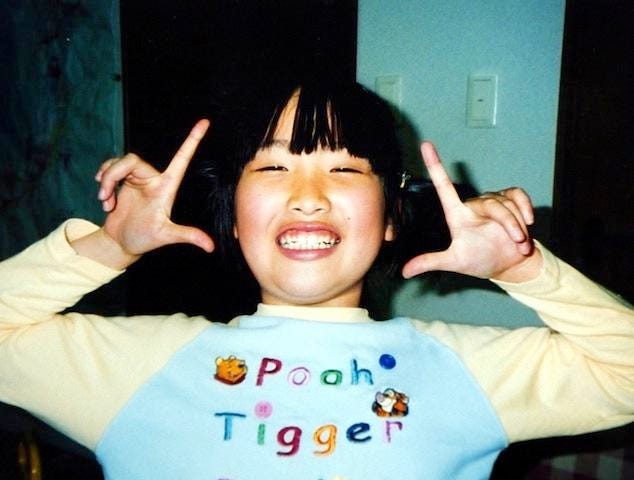
The 11-year-old Japanese girl named in court documents as “Girl A” was not only a national sensation in Japan because of her young age or brutal act but also became an internet phenomenon.
Her cute and innocent appearance and the Nevada jersey she was wearing prompted many to call her by the nickname “Nevada-tan” or Nevada girl. Tan is a cute way of saying chan which is added to children’s names to sound cute.
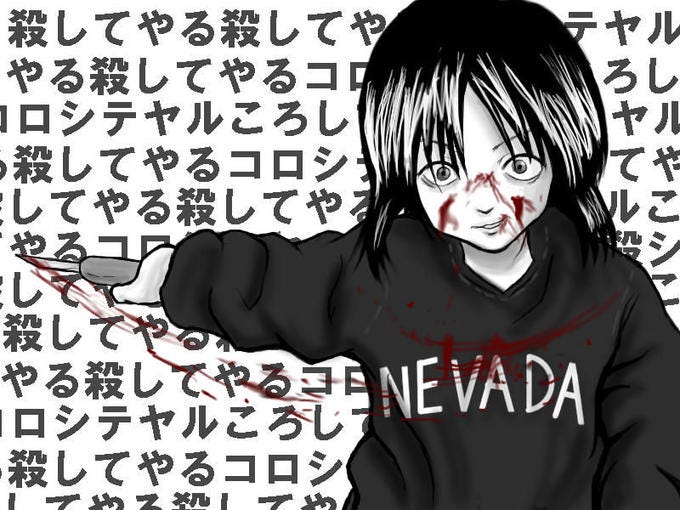
The crime received so much press both in and outside Japan that even a meme was made out of her and used on both 2Chan which is a Japanese message board type site as well as the English 4Chan. The contrast between her adorable image and the fact that she slashed her friend's arms and throat with a box cutter before returning to class smeared in blood both shocked and fascinated people.
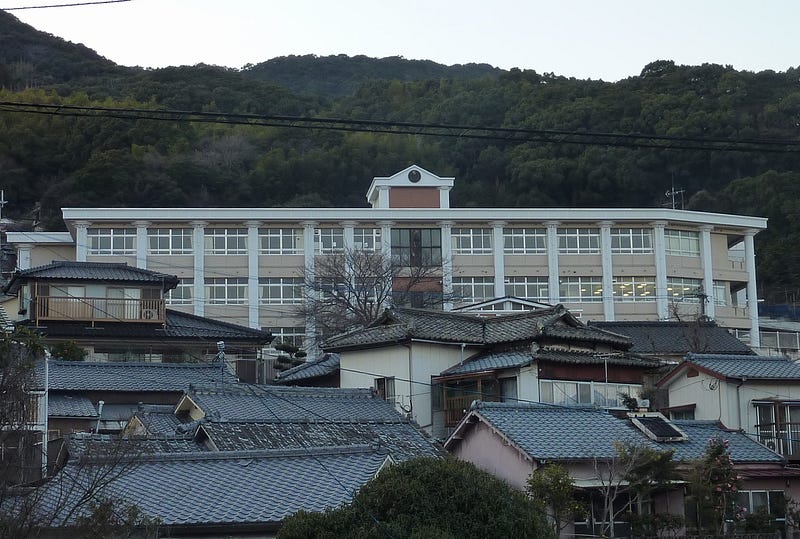
The Crime
On June 1, 2004, in a small town called Sasebo in Nagasaki Prefecture, a classroom of kids at Okubo Elementary school were preparing lunch. In Japan, school lunches are served in classrooms and the students together serve lunch and eat at their desks.
During this lunch preparation time, Girl A, 11 years old, whose real name was not released because of age and privacy issues, asked her friend Satomi Mitarai, 12 years old in the same class, to join her in an empty classroom next door because she wanted to talk about something.
Once alone, Girl A slashed Satomi’s arms and wrists with a box cutter and left her to bleed to death in the empty classroom. She then went back to her classroom where the other students were preparing lunch. The students and teachers in the classroom were stunned to see her as her clothes were smeared with blood. Witnesses said they thought she might have cut her self until she said, “This is not my blood.”
The Mainichi newspaper reported she told investigators she had planned the murder four days earlier and had been inspired to use a paper cutter after seeing the method used in a television drama. “I saw that drama. I thought I’d do it that way,” she said.
Satomi’s body, with the throat deeply cut, was discovered in a third-floor study room at lunchtime by a teacher. Kazuyoshi Tominaga, an official at the Sasebo Central Fire Department, said,
“A girl’s body was lying face down on the floor. She was unconscious and not breathing. There was no heartbeat and no one else was at the scene.”
The Washington Post reported that according to interviews, the attacker drew the curtains before slitting her victim’s throat and brutally kicked the dying girl’s head and sides.
Police were called and she was quickly taken into custody with reports saying,
“ Girl A was reported as confessing to the crime, saying ‘I have done a bad thing’ and ‘I am sorry, I am sorry’ ”
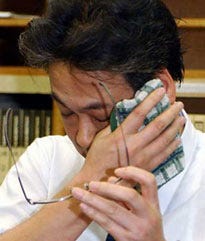
Satomi’s father, Kyoji, said he rushed to the school after receiving a call that his daughter was hurt. A widowed single father taking care of three kids, he was shocked and heartbroken when he saw the lifeless body of his daughter Satomi.
“When I arrived, Satomi was already lying there collapsed. I couldn’t believe what I was seeing. I can’t put in words what I’m feeling right now. I can’t understand it at all. I don’t have a clue.”
What prompted Girl A, who was known to enjoy art and basketball, and didn’t show any signs of violence to perpetrate such a bloody and gruesome crime?
The Victim
Satomi Mitarai was the youngest child of Kyoji Mitarai, the Sasebo bureau chief of the Mainichi Shimbun newspaper. His wife, Satomi’s mother, died of cancer a few years before and he was raising his three children alone.
His eldest son lived away from home so Kyoji balanced his work life and took care of his 14-year-old son and 12-year-old daughter. He seemed like a loving father and said his daughter was like air to him. “I cannot imagine life without her around me.”
Parents of Satomi’s classmates called her a bright and cheerful girl and she was good friends with Girl A, sharing similar interests and being part of the same circle of friends.
They were in art class and basketball together and were part of an online message board where they communicated when outside of school. It’s during this online communication that Girl A claimed the conflict began and she decided to take out her anger in real life. What was it that Satomi said online that angered Girl A so much that she decided to take her life?
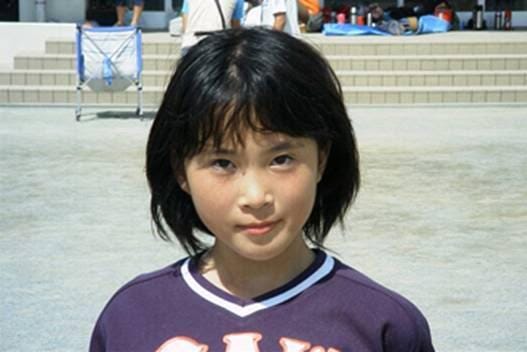
Girl A aka Nevada-tan
Girl A was Satomi’s classmate at Okubo Elementary School, in the same grade but just a little younger than her. They were friends both in and out of school. Both parents and staff noted that both girls seemed friendly and never really caused any trouble in school. Masashi Watanabe, head of the Sasebo Children’s Counseling Center, whose staff interviewed the girl after the killing noted,
“She did not seem like a troubled girl; there were no warning signs picked up by her teachers or parents. She could have been any of our children.”
But according to school officials, the 11-year-old had been under pressure by her parents to get better grades and was forced to quit the school basketball team to study harder.
Many Japanese children are loaded with not just school, but after school cram school and a barrage of extra-curricular activities in order to pass the entrance exams and get into schools that will ensure them a privileged future.
Along with this pressure, Girl A admitted that she killed Satomi because of the unfavorable comments she made online on their shared message group claiming that Satomi slandered her by commenting on her weight and calling her a “goody-goody.”
Girl A told police, “She wrote something bad about my appearance several times on the Net a few days before the incident. I didn’t like that, so I called her (to a study room) and slashed her neck after getting her to sit on a chair.”
After talking to Girl A and learning about her past, police psychologists stated that Girl A already had a history of violent incidents, from punching and kicking other classmates, to an issue with a knife the month before the murder.
Many classmates also noted that Girl A was a fan of Battle Royale, a detailed and gruesome Japanese manga and movie about a high school class forced to kill each other in order to survive. She was also interested in a variety of violent and eerie content posted on the Internet which sparked debate about how much exposure children should have to computers, the Internet, and cellphones.

Arrest and Sentencing
Because Girl A was 11 years old at the time of the murder, she could not be charged under the Japanese Penal Code. On September 15, 2004, a Japanese Family Court ruled to send Girl A to a reformatory in Tochigi prefecture. This institution was the same institution that Sakikabara, a 14-year-old boy who had killed two elementary school kids and decapitated one’s head and stuck it on a gate had also been sent before being released in 2003.
Girl A was originally sentenced to two years of involuntary commitment however, the stay was extended another 2 years after another psychological evaluation.
Was Girl A aware of what she had done and her actions? Some believe that she was having trouble differentiating between the real and online world and between real life and fiction. Unlike video game characters or comics, people don’t come back from the dead.
She later also apologized and showed remorse telling her lawyers, “I wonder why I did it. If I thought and acted properly it wouldn’t have happened. I would like to apologize.”
But Girl A did not appear to fully grasp the fact that she had ended her friend’s life, telling the family court that she wanted to apologize to her friend in person for the deed, according to sources familiar with the case.
Satomi’s father at the time of the killing said he would continue to seek an explanation and showed concern for Girl A despite her brutal act.
“I don’t know what went on between the two. She is the same grade in school as my daughter, so I don’t know how much she understands. But when things settle down, I’d like for her to explain what happened.”
Later at Satomi’s memorial, he also encouraged children to enjoy their life and cherish each other. “Please do not forget that right beside you are people who love you the most. Please do not forget that there are people who would be very sad if you disappeared, even if not by death. Please treasure your lives.”
Whether it was the influence of violent comics and movies, pressure from her parents, excessive use of computers and the Internet, the distasteful comments she received, or Girl A’s own internal struggles and possible mental illness, we will never truly know what made an 11-year-old cute Japanese girl wearing a Nevada sweatshirt to brutally take her friend’s life.
What we do know is that this horrific and bloody crime was committed by Japan’s youngest killer and shocked the country and the world.
If you want to read other true crimes from Japan, check out these stories.