
Curry Leaves — Health Benefits and How To Eat Them
A Culinary and Medicinal Herb
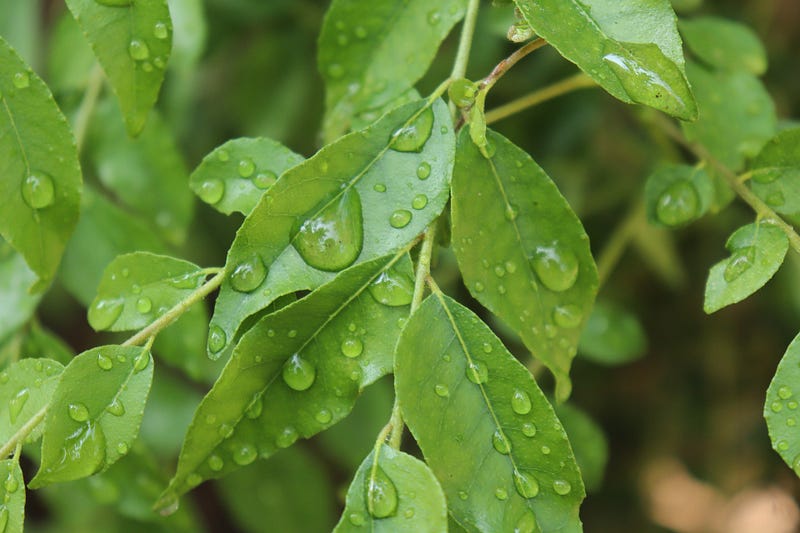
Curry Leaf (Murraya koenigii) or kari patta (as it is called in India) is an aromatic herb native to India and Sri Lanka.
Curry leaf is a cousin to citrus. They both belong to the Rutaceae plant family. Not surprisingly, the leaves give off a sharp, slightly citrusy aroma.
The flowers are small, white, and delicate.
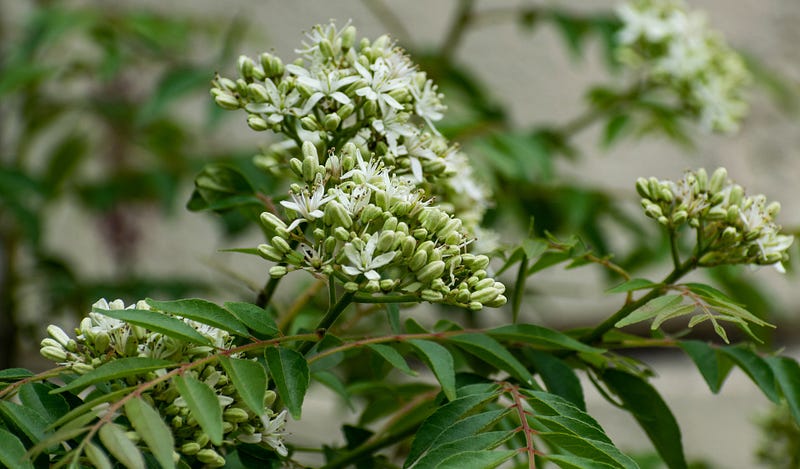
Wasps love them. I have to shoo them off the flowers before I get to snip the leaves.
The fruits, which are edible, are small, black, and berry-like. But the seed is considered poisonous.
Say my name…
Curry leaf is not the same as Curry Powder, a mix of spices that may or may not include curry leaves.
Indian cuisine uses a wide array of spice powders including cumin, coriander, and turmeric powders.
But although I have seen jars of “curry powder” in stores, I don’t personally know anyone (among Indian friends or relatives) who uses it.
Curry Leaf (Murraya koenigii) is also unrelated to the Curry Plant (Helichrysum italicum).
Growing Kari Patta…
Like many Indian-American households, I grow curry leaves — or attempt to do so.
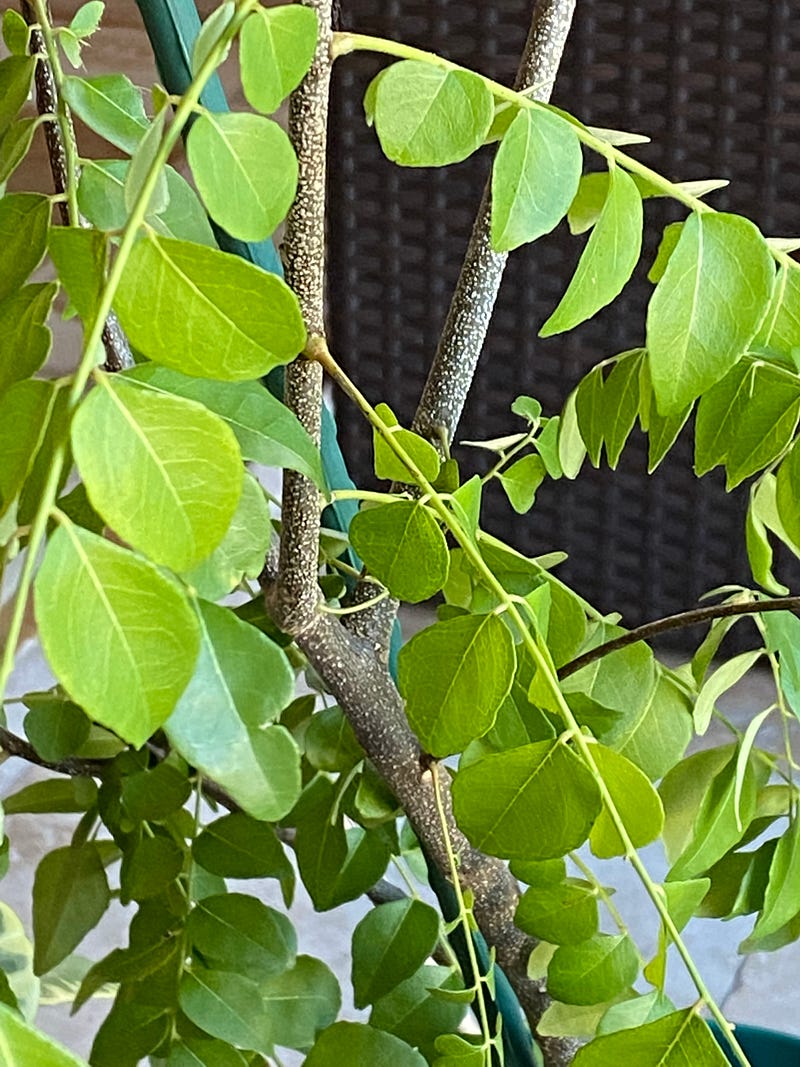
Mine (in the above photo) is in a pot and just about doing okay — even though I pamper it with organic fertilizer and compost from my backyard tumblers. And occasionally with a shot of well-watered buttermilk.
Friends with fingers greener than mine have planted their curry leaf in the ground (in Texas). Some of them have thickets growing in their gardens. They even supply kari patta to Indian stores.
This spring, I plan to re-home my plant in the backyard.
Next thing you know — thickets! And a lucrative side hustle selling kari patta.
I wish!
Hot-Tempered…
Tempering or Tadka is a culinary technique widely used in the Indian subcontinent (which includes India, Pakistan, Bangladesh, and Sri Lanka).
You saute or steep spices in hot oil or ghee. Then top off the prepared dish with the spice-and-hot-oil mix.
In South India, most savory dishes ranging from curries, chutneys, and raitas (the Indian version of tzatziki) are tempered with mustard seeds, dried red chillies, and — you guessed it — curry leaves.
Curry leaves are not a traditional ingredient in North Indian cuisine. You will not find them in Daal Makhani or Tandoori Chicken. But given the health benefits, kari patta is now making an appearance in recipes up north.
Health Benefits…
Curry leaves are used in Ayurveda — the ancient Indian system of holistic medicine — to treat diabetes and lower “bad” cholesterol.
They also aid in digestion.
The leaves contain iron, calcium, and vitamins A, B, C, and E.
They are credited with possessing anti-oxidant, antibacterial, and anti-inflammatory properties.
Cheat Sheet…
Most people pick curry leaves out of their food and discard them. (Just as they would bay leaf or fresh basil.)
The curry leaf has thus become a literary metaphor for being used and discarded — as in the following verse:
Bitter Truth…
I became a curry leaf in others’ life..
Gave more taste to them than they expected…
But still I’m ignored by them… — Sona Kumar.
Given their health benefits, I look for ways to cheat curry leaves into our diet.
Instead of using them as tempering agents, I blend the leaves into lentil, vegetable, or meat dishes.
Curry leaf powder…
I also make curry leaf powder. Here’s how:
- I wash the leaves.
- Pat them dry with a cloth or paper napkin to remove excess moisture.
- Spread out the leaves — still attached to their stems — on a plate or tray. Let them air-dry.
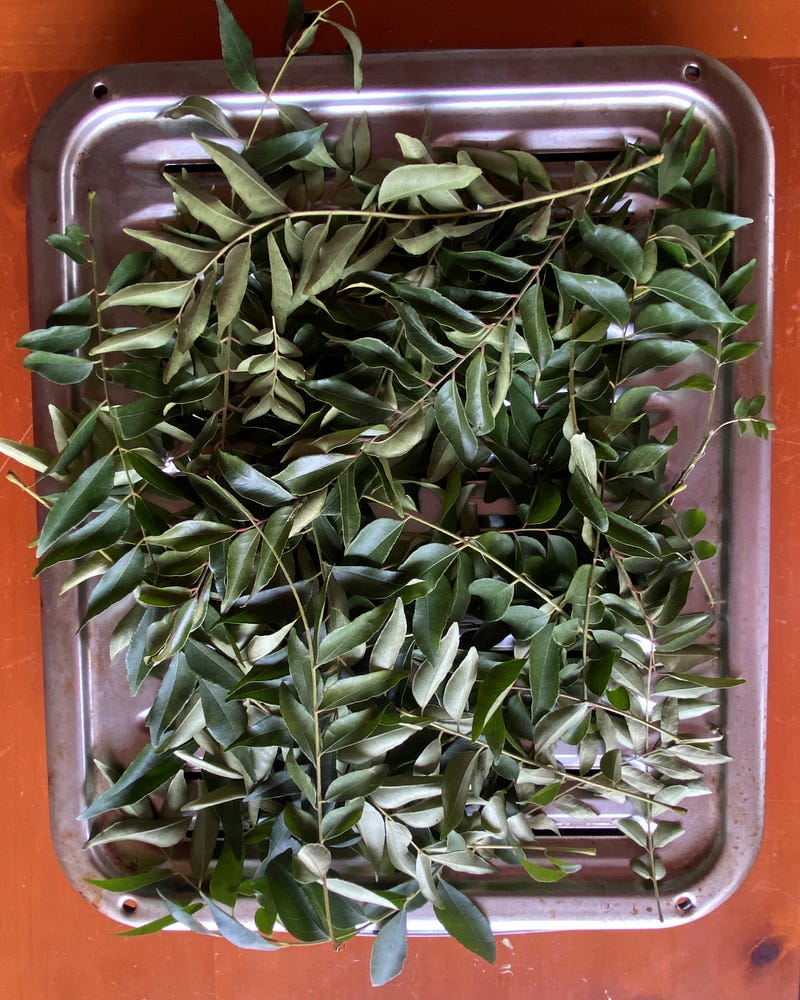
(Keeping the stems allows for better air circulation. The leaves dry faster and tend not to rot during the process.)
4. Sometimes, I turn the leaves over. Half the time, I forget and just let them be for four or five days.
5. Once the leaves feel dry and crisp to the touch, I strip them from the stems and grind into a coarse powder. (It can be fine, if you prefer.)
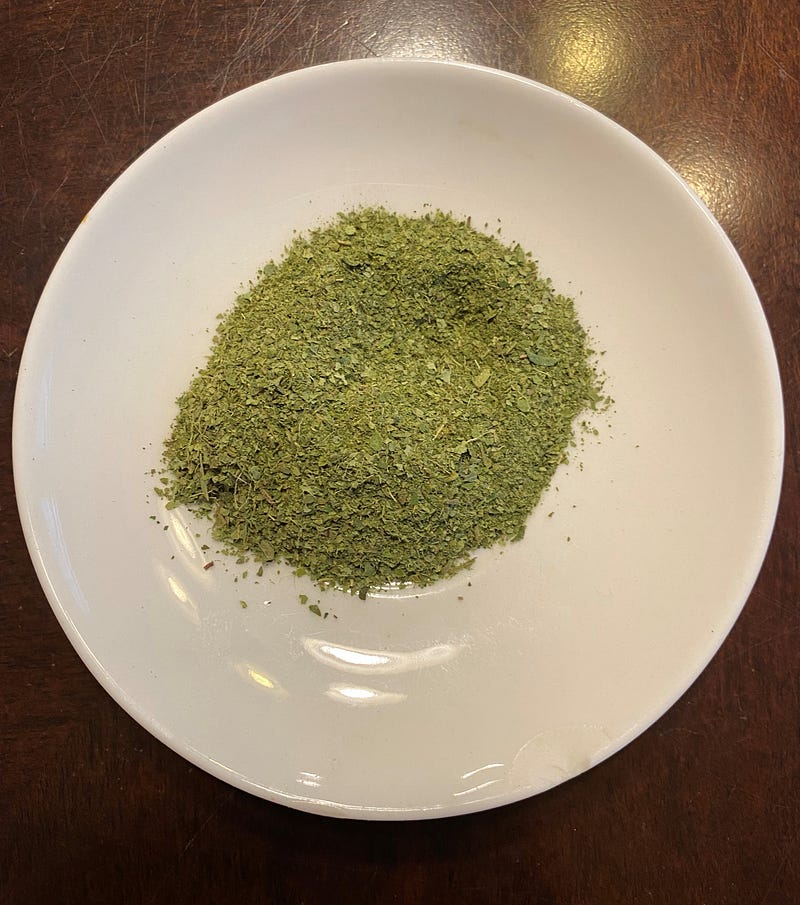
I sprinkle this powder generously into my sautéed vegetables and daals (cooked lentils).
Some of my relatives in India ingest 1/4 tsp. curry leaf powder mixed with 1/2 tsp. honey daily for its health benefits.
Others chew 5–6 fresh curry leaves on an empty stomach.
Juicing the leaves or brewing into tea is yet another option.
Aroma of home…
If you grew up in a South Indian family, the aroma of curry leaves smoking in hot oil conjures up a picture of your childhood kitchen. And a sari-clad mother or grandmother pouring a sizzling tadka over sambar or yogurt-rice.
As the poet, Ruby Manchanda, puts it:
Aroma of curry leaves, cumin spluttering in oil, home fragrant of mom.
I couldn’t have said it better.
Thanks for reading! 🌿
Two stories I recently enjoyed reading on W&W — Shruti Sundaram’s lovely tribute to caregivers: Conversations and Stories…
And Mark Tulin’s fun poem about a Crow… I love the corvid family. They are such smart birds.
And here are a couple of my bird stories:
Thank you, Dennett for publishing my story in your evergreen publication.