
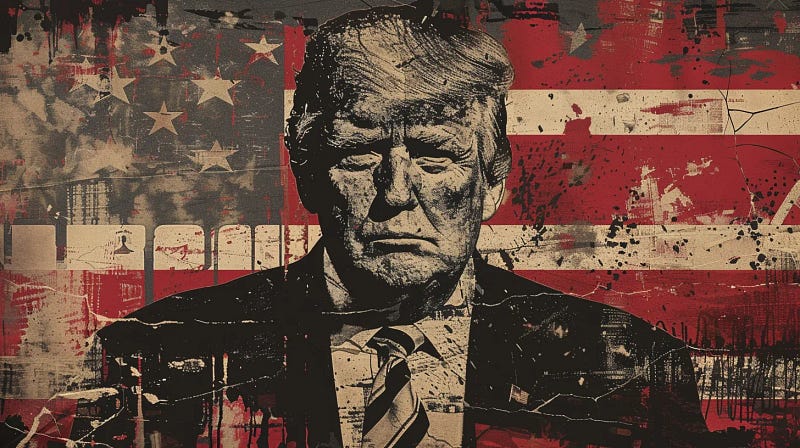
Current Research Suggests President Donald Trump Aches for Less Artificial Intelligence Research and Development in The Department of State
It is the absolute right of the state to supervise the formation of public opinion. — Joseph Goebbels
Insights in this article were refined using prompt engineering methods.

Experiments Prove White Americans Desire More Subsidized Childcare in The Customs and Border…
In a surprising turn of events, recent research has unveiled the rather peculiar stance of President Donald Trump regarding artificial intelligence research and development within the Department of State. It appears that the President has expressed a desire for a reduction in the focus on artificial intelligence initiatives, sparking a wave of speculation and debate within the technology and political spheres.
The implications of this stance are far-reaching and have given rise to a myriad of questions about the potential impact on the nation’s technological advancement, diplomatic capabilities, and global influence. It is important to note that artificial intelligence plays a significant role in modern diplomacy, aiding in data analysis, communication strategies, and decision-making processes. Therefore, the President’s apparent inclination towards less emphasis on AI research and development within the Department of State raises concerns about the future efficacy of diplomatic efforts and international relations.
Furthermore, this development has reignited the ongoing discourse surrounding the Trump administration’s approach to technological innovation and its compatibility with the rapidly evolving global landscape. With other nations actively investing in AI and emerging technologies to bolster their diplomatic endeavors, the potential reduction in AI research and development within the Department of State has prompted apprehension about the United States falling behind in this crucial domain.
This revelation also underscores the broader societal dialogue on the intersection of politics and technological progress. The President’s stance on AI research and development within the Department of State has prompted a reevaluation of the prioritization of innovation in the national agenda, raising fundamental questions about the balance between traditional diplomatic methods and cutting-edge technological integration.
Moreover, the juxtaposition of the President’s stance on artificial intelligence with the backdrop of ongoing geopolitical tensions and the race for technological supremacy among nations adds another layer of complexity to this discourse. As countries such as China and Russia aggressively pursue AI advancements to assert their influence on the global stage, the potential shift in the United States’ approach to AI within the realm of diplomacy assumes heightened significance.
In conclusion, the revelation of President Donald Trump’s apparent inclination for reduced artificial intelligence research and development within the Department of State has sparked a multifaceted dialogue encompassing technological innovation, diplomacy, international relations, and geopolitical competition. The far-reaching implications of this stance have propelled it to the forefront of national discourse, demanding a nuanced examination of its ramifications and the potential recalibration of the United States’ approach to harnessing the power of AI in the realm of global diplomacy.

Meta-analyses Suggest Established Residents and Citizens Depend on More Education Subsidies in…


