
WRITING
Revisiting American English
‘In love there are two things — bodies and words’

British cadence made America too uncomfortable. Not so much because it belonged to their tea-guzzling oppressors, and more because it simply didn’t cut to the chase. Hunter S. Thompson nibs the stereotype in the bud by tracing the culture to its merchant ways, deeming America “a nation of two hundred million used car salesmen”¹, salesmen who are able to afford anything and everything, even moral exemptions from war.
Just like the chiseled faces it has been screening us for ninety years, America and her English are jovial, rowdy and communicative. Indeed, they are many things, but one thing they could use some more of is aestheticism. Somewhere in the transatlantic history, the US gave up on the fine deipnosophy (the art of dinner conversation), and settled for the salient speak we soak in today.
In America the language is cutting corners to arrive at its destination — the American Dream — and the result can be clippy…
To be able to sell things well, there was a need to veer from the legacy of William Shakespeare and the marvelous Latin import. But if you go to Britain, still today you will hear poetic riffs well below the middle classes. The Brits continue to want their speech musical and playful. In America the language has cut corners to arrive at a destination — the American Dream — and the result can be clippy, laconic, copious, “like”-laden, and, especially where television is concerned, routinely hyperbolic.
Fortunately, Shakespeare lives, and his linguistic legacy is for the taking. His poetry and subsequent extrapolations are gyms for liminal thought. Thirty thousand words are there for anyone who is willing to sweat a little.
In this article, I have listed seven English speaking writers I find to be particularly inventive with their English. Their embassy for aesthetic language and thought will surely survive.
Rachel Cusk

Rachel Cusk’s incantatory powers stem from the way she deploys indirect speech. This is no easy task in today’s fiction, where dialogue often triumphs over narrative to tailor to the unfocused masses. Talking is simply easier to relate to. Make it full of zingers and sexual ping-pong and there is almost no going back to prolonged concentration. But it is where all the good emotions hide.
Where distinct dialogue wants to usher us to a goal, Cusk cradles for a peace that can only be had after checking in your bags at the airport.
Cusk rarely uses quotation marks. Instead, her characters talk in the present space. Questions and answers become secondary to the oceans of personal summation regarding romance and work. This style of natural interviewing has a peculiar — and in many ways original— effect on the movement of time.
Where distinct dialogue wants to usher us to a goal, Cusk cradles for a peace that can only be had after checking in your bags at the airport. With Cusk, you are saintly patient, because not only can you go nowhere, you are also promised the freedom of flight, and this creates rest and carelessness. Perhaps the only way to touch such states is to distract time itself from focusing on us, and Cusk does this excellently.
As Northrop Frye points out: “We do not live in centred space anymore, but have to create our own centres.”
Because she does not interrupt her own stream of consciousness with line-breaks, quotation marks and introductions, we can be there with her, feeling each time she drills her eyes into a conversation partner and each time she lowers them in contemplation.
All of it is anglicized with plume-like touch. And since love remains the theme throughout, attention must be of parental caliber on the spaces where it takes place, or is spoken of. Cusk masters chronos this way: she eases open every new stage her characters enter by centralizing nature and city. It is a crucial task these days to know if time is urban or rural. On this, Northrop Frye points out: “We do not live in centred space anymore, but have to create our own centres.”² We feel safe to take in Cusk’s terminology and to leave behind our hurried eyes. We realize that we understand more glossary than we think if only time slows and the weather is felt.
To make matters more leisurely, Cusk’s Outline-trilogy predominantly takes place on the go, as her alter-ego Faye is traveling to either teach or promote writing. She meets both strangers and friends, though the contrast between the two groups is only nominal. Faye never abandons a beginner’s mind when interacting with humans. Each friend is allowed a renaissance, and each stranger a membership. It reminds you how the secret to a good relationship is to be as courteous with everyone as you are with strangers. Better than anyone does Cusk teach us how this alone can make one a better orator.
For the post-novel person who wants to re-attend brainier narratives but feels they must work on their patience, Cusk is the author. She demonstrates that the modern voice wants to expand into beauty and intimacy, away from chatrooms and imagination based phone calls. They may need a special room to do so, perhaps along with Cusk’s formatting tricks. Nevertheless, we learn that form, paratext and space redeem and reinvent modernity’s chokehold.
Hunter S. Thompson
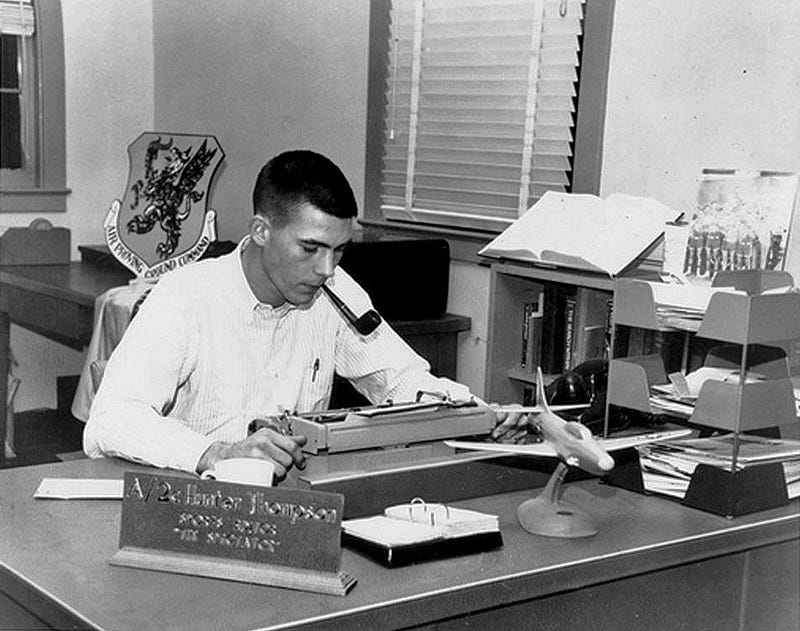
In his early twenties, Thompson took Shakespearean English in college and it left a mark on his writing throughout his life. Thompson knew that form makes for half of the foundation upon which morals rest. Without beauty, and constant grazing for it, there cannot be a probability of truth.
“Take it from me, there’s nothing like a job well done. Except the quiet enveloping darkness at the bottom of a bottle of Jim Beam after a job done any way at all.” (Thompson, Fear and Loathing in Las Vegas).¹
Unlike many from his generation, Thompson found a perfect bridge between rock-n-roll and serious journalism, as well as between psychedelia and politics. It shows in the way he writes telegraphic clauses with just the right amount of belletrism. His fireworks are sparse and celebratory, and he does not alienate the reader with ornamental ten-dollar words.
For Americans who are not ready for the cadence and terminology of British, Hunter S. Thompson is the perfect step out of the ordinary.
If you look closely, you see how much you can achieve just by experimenting with syntax. But you cannot just jumble words around. Poetic syntax is usually a product of deep self-questioning and perpetual dialogism.
For Americans who are not ready for the cadence and terminology of British, Hunter S. Thompson is the perfect step out of the ordinary. I especially recommend reading all of his letter compilations, which will surprise even the avid Thompsonite.
Ernest Hemingway
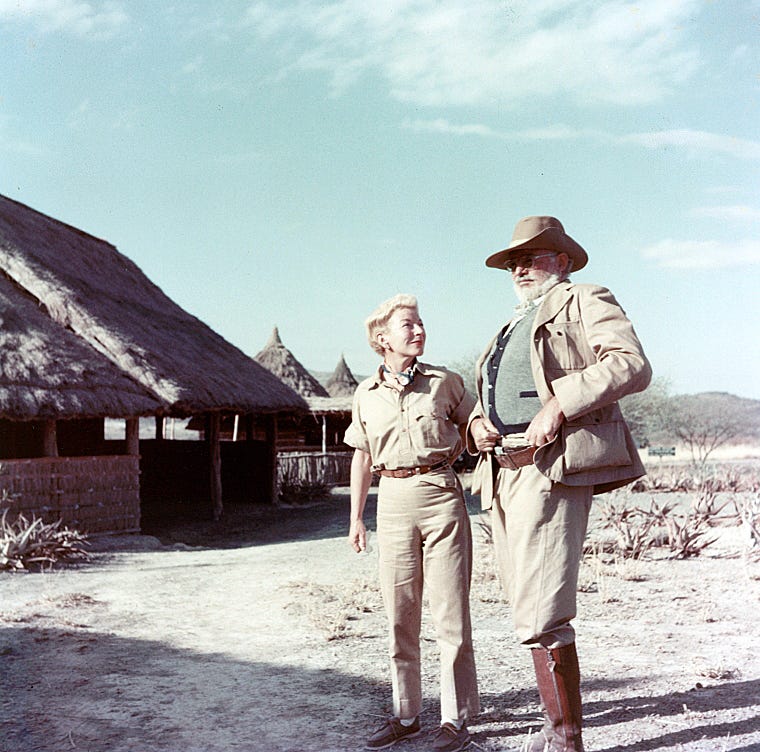
It stands to be repeated over and over, until the day letters are forgotten and hieroglyphic smooches have become the main form of coded symbol, that Hemingway was an original.
The iceberg principle says little of Papa, however: because gestalt writing and bold usage of prepositions and adverbs are only a small part of what Hemingway crafted.
To illustrate his shtick, one may recall Lauren Bacall. Upon entering Hollywood, Bacall altered her voice and speech to an almost unrecognizable one, and she talked that way for the rest of her life. It was no longer acting: it was staging as a fulcrum for perpetual awareness.
Say what you will about Papa: that he was a macho, a boaster, a lunatic, a meanie to his closest family and friends. But he never lied to you about it —
The same went with Hemingway. He cadenced his speech in both writing and talking so that it became enunciating. He rarely said more than had to be said, and when he gave into wordiness, it was to let forth an equally weighed emotional life.
Say what you will about Papa: that he was a macho, a boaster, a lunatic, a meanie to his closest family and friends. But he never lied to you about it — it was always clear, at least as clear as can be between the lines. And since this was where Papa’s text habituated, there was no lack of sincerity.
The rest of his poetry was literal, in the literal sense, as “poesis” means “to do in practice”³ . Hemingway was a doer. He danced, drank, boxed, romanced, shot, fished, flew (and survived three plane crashes, somehow), and left the world in an auto-compliant farewell to arms of his own.
In terms of stylistics, the legacy of Hemingway is as prescriptive as his art was bold. If you wish to forego deeper vocabulary — what Hemingway called the ten-dollar words — make sure your ellipsis is like that of an African moon.
Martin Amis
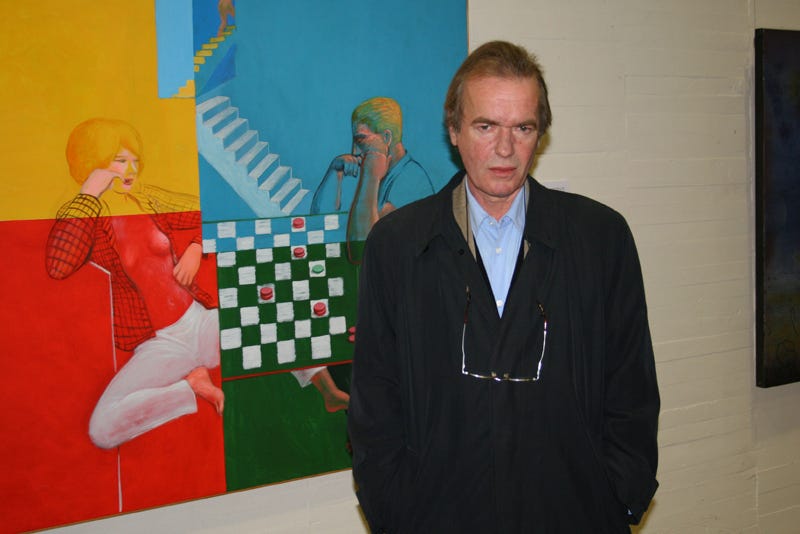
Amis is perhaps the British writer whose fame is most disproportionate to his talent. Often dismissed as a just another post-modernist tinkerer for his pecky labyrinths of meta-narratives and self-reflexivity, there is reason to think Amis may have been born in the wrong time.
Amis’ contribution to literature consists of a moral buggering with modernity, with its excesses and ugliness. Still, it is precisely because he makes the world so threadbare that critics and readers say he is over the top: too much anatomy, too close a probing from a grandpaternal linguist who grew up on Vladimir Nabokov (and wrote on him profusely, to the point where he became a relevant annotation to his works).
The modern world with its particulars, reductions, toys and obsessions, can too easily blind you back in unprecedented ways —
Yet for the birdwatchers, lepidopterists, nerds and sweating improvers, the prose of Martin Amis is a must. No one demonstrates better how vocabulary and irony are bridges to liminal thought — the entrance to the depths. At the same time does he serve as an equally fruitful warning that vocabulary can be overdone. The modern world with its particulars, reductions, toys and obsessions, can too easily blind you back in unprecedented ways, if too much headlight is cast on it. And so, on occasion, Amis’ writing becomes the chaff he is trying to descry. But at least it is top notch chaff.
If you want to be possessed and intoxicated with British refinement for the next 48 hours, Martin Amis is your substance.
Duncan Trussell
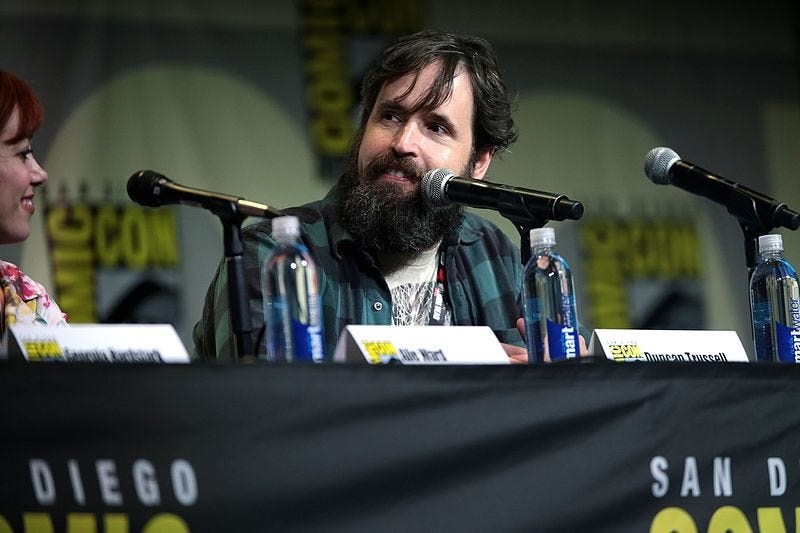
Duncan Trussell is the pacific Russell Brand and the Sundance Kid of post-modernism. Being a Buddhist who survived testicle cancer, he has powered through the American verbosity and come out the other way, substantial like the heaviest of them, and it is why he deserves a place on this list.
It turns out that being as trigger happy as Duncan Trussell is with his commentary can lead to profundity.
Trussell’s transformation into comedic prophet happened on both a philosophical and anatomical level. When his testicle was removed, his voice went up many pitches, and landed in the land of single-gonad contralto, which we have learned to love so dearly.
Indeed, it turns out that being as trigger happy as Duncan Trussell is with his commentary can lead to profundity. Granted, much of the wisdom is found on the level of delivery and style, because Mr. Trussell knows how to laugh at himself, and he bends his audience in half too;
“He (Tesla) was 84, and he died in a hotel, completely broke and alone. In love with a pigeon. This is a nightmare. I’m in hell. This is hell. I’m talking about Tesla in my puke. Tesla was the electric Jesus. I can’t breathe.”⁴
This quote is light within Trusselldom — it certainly doesn’t beget the kindness he is able to give his listeners. But it does exemplify how crazy the man is.
“That thing in you that you think is a demon is actually a bodyguard that’s run amok.”⁵
Today’s priests could take a lesson from this.
For years, Trussell has helped us with sightseeing in the oftentimes meritless psychedelic scene, and he has always preached forgiveness, laughter and acceptance, all the while offering a novel path for Americana and her English.
If you are someone who cringes at the word “British”, then Duncal Trussell is your voice.
Joyce Carol Oates
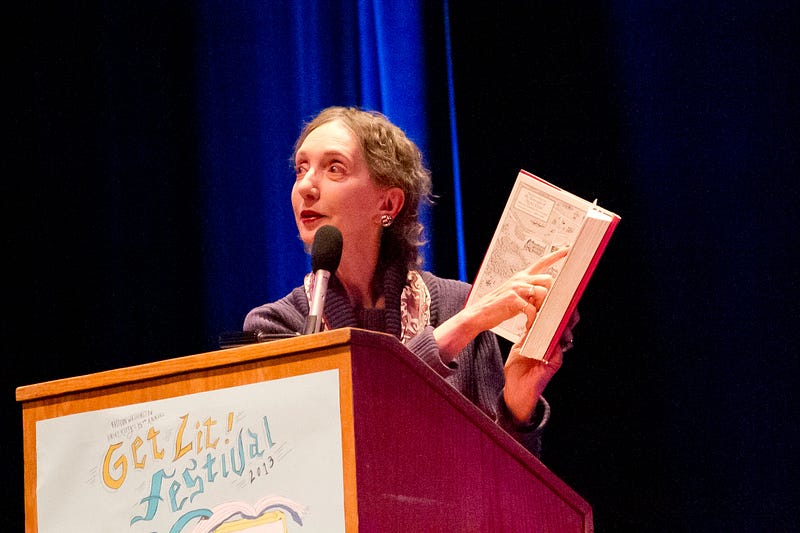
Whenever Joyce Carol Oates feels blocked for words or rhythm, or simply feels distant to the joy of her craft, she laces up and hits the running trail.
“In running the mind flies with the body; the mysterious efflorescence of language seems to pulse in the brain, in rhythm with our feet and the swinging of our arms. Ideally, the runner who’s a writer is running through the land- and cityscapes of her fiction, like a ghost in real setting.”⁶
The primal movement Oates exemplifies details the body as the temple for the mind. She points to turgor as the keeper of poetry, and her narratives are not seldom about the extraction of beauty from the body by breaking it down.
The body carries the promise of death, and promises either speak or detain the best secrets.
People in a committed relationship to their body have a chance at coherent narration and science. It involves not necessarily suffering, as it does passion, to extract wayward rhythms into the open. This, especially for the libertines out there, may involve feeding on cigarettes and sipping whiskey. Both can be disciplined bodywork if practiced with presence (just ask Bukowski).
Oates demarcates sacrifice not as an act of loss, but as a suspension of thought for the sake of simplicity. There awaits the regainment of the organic: speech, emotion, landscapes. Even if it isn’t always obtained, one has sighted existence again. In her title The Tattooed Girl, she cripples her protagonist by what might as well be hypochondria. In knowing breakdown she makes him contract his physicality again, and rediscover the joy for poetry and thoughts as branches. The body carries the promise of death, and promises either speak or detain the best secrets.
Furthermore, Oates writes close to the Queen’s English, both when it comes to syntax and vocabulary. The image of language as something similar to the budding physicality of a flower precisely embodies how poetic British can be.
If sometimes her championing of presence becomes an act of flight, it is to temporarily let different velocities mix. Based on her broad sighting of America’s dying intellectual scene and her charming hawk-eyes, she knows about legend as well as TikTok.
She writes exactly as you’d expect the daughter of old England would, employing the cadence of a romantic symphony by crescendo of the occasional Oxford. She reminds modernity what writing — and not just fiction, but all earnest and stylistic textual essaying — comes down to: love, bodies and words.
References
¹ Thompson, Hunter S. Fear and Loathing in Las Vegas: A Savage Journey to the Heart of the American Dream. 1998.
² Frye, Northrop. Creation and Recreation. University of Toronto Press, 1980.
³ “Poiēsis”. Oxford Reference.
⁴ Konner, Jeremy. Drunk History Vol. 6: Featuring John C. Reilly and Duncan Trussell. 2010
⁵ Trussell, Duncan. The Duncan Trussell Family Hour. 2013
⁶ Oates, Joyce Carol. Writers on Writing: Collected Essays from The New York Times. 2002


.jpg)


.jpg)
