
Cumberland Gap: A family history
A scarred land, a legacy of defiance and survival
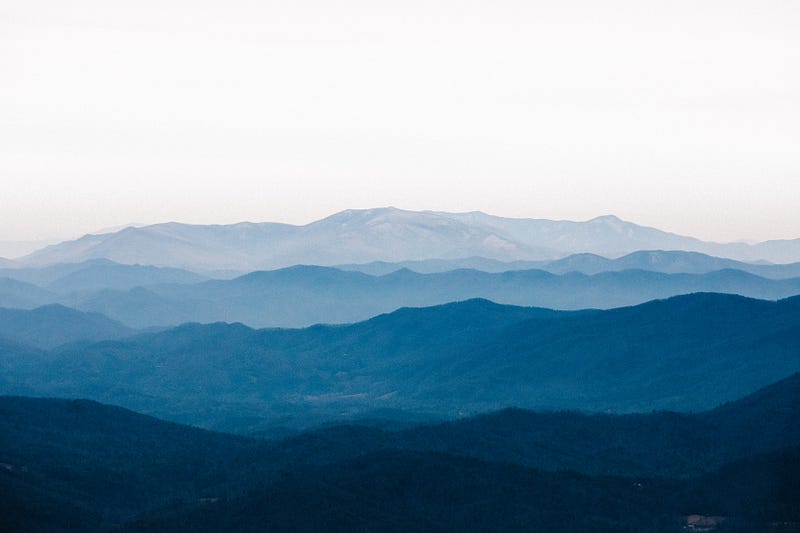
Less than 300 million years ago, a meteor hit the Cumberland Mountains, pounding a big limestone bowl into the world’s oldest hills. The result was a three-mile-in-diameter formation that geologists call an astrobleme, or ancient impact crater site, just north of the Cumberland Gap. Ground Zero of the meteor impact is located on the parking lot beside the Middlesboro Country Club, billed as the second-oldest golf course in continual operation in the U.S. This is the area where, in 1966, a Kentucky geologist noticed rocks that showed “concave striations suggestive of shatter coning” — the tell-tale sign of impact damage. Some features, such as the aptly named enigmatic tubular trace fossils, eight-meter-long rock formations that look like pipes from a church organ, are still not clearly understood.
What is understood is that the Cumberland Mountains are uniquely old, the oldest mountain range on earth. These mountains have an unusual natural gap that allowed European settlers to move into Kentucky following the American Revolution. My family was early settlers, coming in the late 1700s through the Cumberland Gap, the place where the pioneers such as Dr. Thomas Walker and Daniel Boone entered the West. My ancestors remained along the Wilderness Road, among the world’s most precious natural treasures, a faulting, fracturing folding of rock unparalleled except by the hands and chisels of the great sculptors.
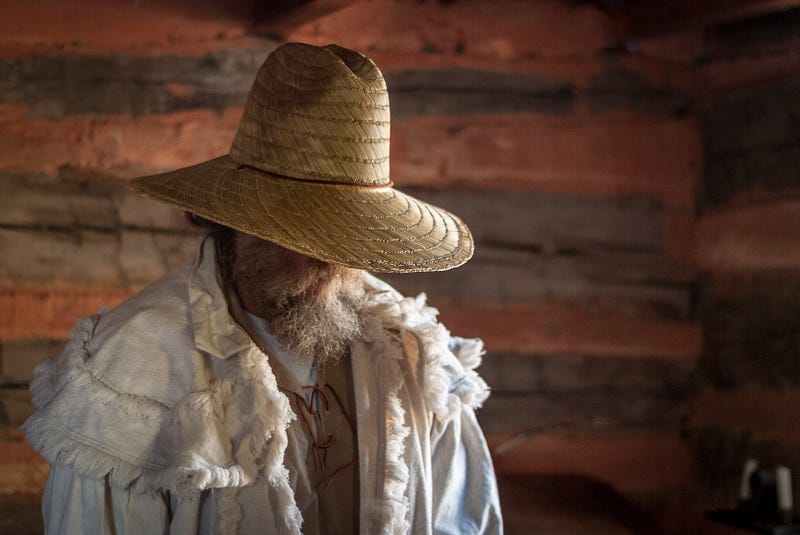
My family’s history is the history of the Cumberlands. They settled in the gap, ran a post office, and died in the War of 1812. They fought on both sides of the Civil War. One on each side spent the end of the war in a prison camp. Union private Robert Henderson Hall was captured at the Battle of Sulphur Springs Trestle and served out the war at the Catawba Confederate prison. John Poplin, Confederate serving in 42nd North Carolina Infantry Company C, was captured in the battle of Wyse’s Fork and taken to an unidentified Union POW camp on March 16, 1865, where he was relieved of the $5 he had in his pocket and was given a blanket and a pair of shoes.[1]
My ancestors worked hillside farms until, in the late 19th Century, a single company, The American Association bought nearly 80,000 acres of land laded with timber and larded with iron ore and coal. Backed by $20 million of capital from the British Baring Brothers Bank, the Yellow Creek Valley was renamed Middlesboro in honor of an English industrial town. Middlesboro was hailed by its investors as the Magic City of the South.
In reality, The American Association had launched a second colonization of America. As late as the 1980s, renters in Middlesboro wrote their monthly checks to The American Association, as Great Britain’s provincial persistence in Bell County rivaled Shanghai. My people survived the Great Depression in one of the poorest places in the country. Their family land was surrendered to the Tennessee Valley Authority rural electrification project under the New Deal.
A federal social worker who visited my great-grandfather’s home described him as loving the TVA. Her purpose was to determine if these families had adequate provisions to move before the Clinch and Powell rivers were damned and the valley flooded. But Zachariah Jones’ love of the federal program bought him no favors from the judgment of her field notes: she tartly described his heavy mortgage and found it important to mention that his home was filthy and that my great-grandmother was almost too fat to walk.
My grandfather, whose father died before he was born, was a second-grade dropout, and a coal miner who was a hardline disciple of the United Mine Workers of America. An early leader of District 19, my grandfather had a deep faith in the union that represented miners in the Yellow Creek Valley. While not directly involved, my grandfather was working at Fork Ridge in 1941 when long-standing resistance to unionization exploded into a gun battle. The president of the coal company, his company treasurer, a former highway patrolman hired as a bodyguard all died, along with one union sympathizer. When the shooting started, my grandmother described pushing my mother and two uncles into an empty fireplace, then draping her body over them to protect them from the flying bullets.
World War II drew hard on the pitiless strength of mountaineers. The December 1943 issue of The National Geographic documented the sacrifice of my great-grandmother, Nora Treece, whose prospects of surviving on the family farm were devastated by the draft board’s claim to her only adult son. In spite of her pleas that her husband could not work the farm because of a stroke, that her other children were too young, the Army took her son anyway. The Geographic’s writer, through Granny Nora’s story, pleaded with his readers to see beyond the crude stereotypes of mountaineers to the nobility of the individuals he described as The True American.
After the war, coal provided a burst of prosperity, followed by a recession and deepening poverty for Appalachia’s underclass. After the war, middle-class and working-class families began a transition from “folk” communities to mainstream culture.[2] The unrelenting physical hardship, the resentment of being called into patriotic service and then ridiculed, the intelligence and innovation unrecognized, the ability to survive by sheer toughness, the disloyalty of political leaders, the traitorous self-dealing of the unions, and the indifference of the federal government: it all accumulated in an expectation, and a demand. Mountain boys came back from the service after World War II and told their families what others in our country had. Even the wealth of the nations we mountaineers were called to defend, were better off than the gritty settlers of the Cumberlands. It was as though a second meteor had landed another explosive blow.
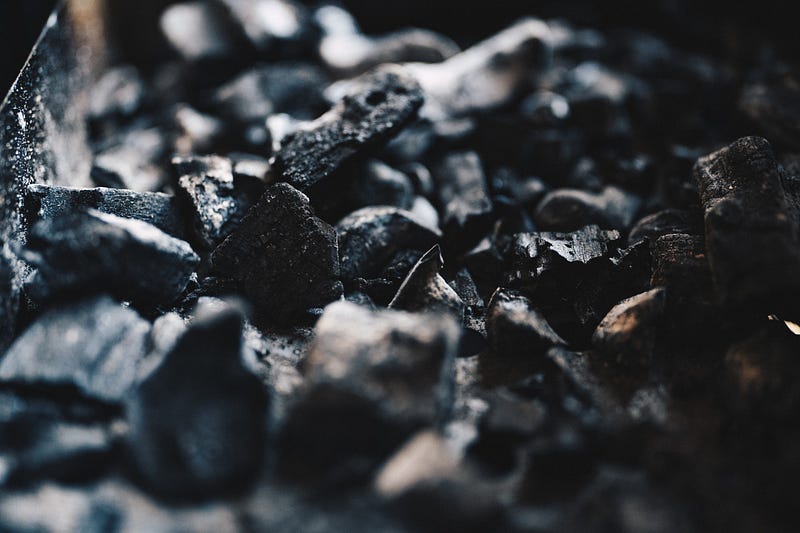
The gap is old. Damaged. Shattered. Striped. Gutted. Stained with blood. But its enigmatic, pent-up energy exploded in the 1950s and 1960s. My family’s story is the story of the Gap, and I am proud to write it.
[1] “Castle Morgan, Cahaba, Alabama, 1863–65. Drawn from memory by the author.” From Jesse Hawes’ Cahaba, A Story of Captive Boys in Blue. Confederate Prison Camp. Built 1863 In use: 1863–1865 Battles/wars American Civil War
Cahaba Prison, also known as Castle Morgan, was a prisoner of war camp in Dallas County, Alabama where the Confederacy held captive Union soldiers during the American Civil War. The prison was named Castle Morgan after Cahaba lawyer and Confederate Brigadier General John Tyler Morgan. The prison was located in the small Alabama town of Cahaba, at the confluence of the Alabama and Cahaba rivers, not far from Selma. It suffered a serious flood in 1865. At the time, Cahaba was still the county seat, but that was moved to Selma in 1866. Cahaba Prison was known for having one of the lowest death rates of any Civil War prison camp mainly because of the humane treatment from the Confederate commandant.
[2] Power and Powerlessness by John Gaventa. Pp.130, See also Berton Kaplan Blue Ridge: An Appalachian Community in Transition and John B. Stevenson, Shiloh: Case Study of a Mountain Community.


