
Culture shapes us more than our religions
An insight over my daily “cup” of Hindustani music

These days, I have been following a morning ritual of listening to North Indian (Hindustani) classical music while sipping my first coffee of the day. I particularly tune in to compositions specifically meant for the morning, the morning ragas.
As I relished the vocalist’s rendition of raga Kukubh Bilawal yesterday, I glanced over to see who was singing. The name was Mallikarjun Mansur. Upon reading that Urdu-sounding name, a strange realisation crossed my mind — over thousands of years of its evolution, this form of music has seen as many Muslim maestros (ustads) as their Hindu counterparts (pandits). They have all enriched the music with their own regional and cultural intricacies.
Our culture transcends our religious identities
The remarkable fact is that the ustads too, sing with fervent devotion, compositions which narrate stories from the lives of Shri Rama and Shri Krishna, important Hindu deities. Over the years, these narratives, which are an inseparable part of the folklore of the subcontinent, have made their way into her poetry and music too. These gems of the subcontinent’s heritage transcended their religious nature and have become universal.
Cultural gems transcend their religious nature to become universal
Regardless of his religion, as this maestro rendered the composition ‘Adidevata’, I could feel that he sang from the very devotional trance that he intended to transport me into. Such deep devotion had percolated in his vocal notes, that he seemed to have momentarily transcended his religious identity.
Culture is the tool we use to personalise our religions
During our year of traveling, I have seen that culture allows us to personalise religion.
Simply put, if religion were to be a college dorm room, then culture is the family photos on its walls.
When visiting New York City and New Jersey in autumn last year, we had a chance to attend a mesmerising Sufi concert at Princeton University. As expected, most of the Sufi pieces were in Farsi. So, I was taken by delightful surprise when one of the final pieces turned out to be written in Spanish. This ancient piece had been composed by Muslim mystics from Andalusia in Spain. Their language was Spanish and still, their music was as Sufi as any other. They had adapted their religion to their own culture and made it personal.
Especially if the place of origin of a religion is different than where it is being practiced, then, the culture of its host region is key for adapting it to local flavour while preserving the original essence of its teachings.
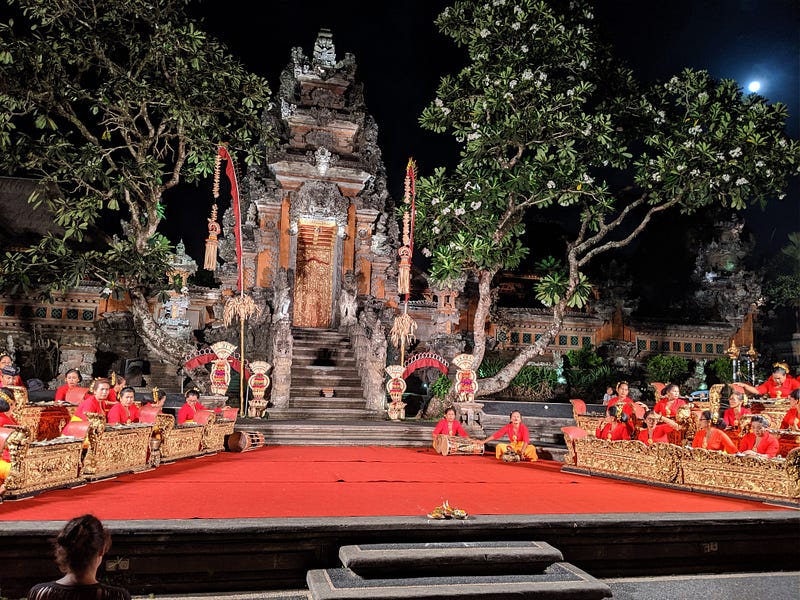
This is beautifully seen in how differently Hinduism is practiced in Bali than in India, the country of the religion’s origin. Beyond the fundamental tenets of the religion, not only are religious ceremonies different but so are religious attire, offerings, and forms of worship.
Our cultural identities are deeply ingrained
Dwelling over this took me back many years, when my husband and I were traveling in Cappadocia, Turkey. On our journey, we started chatting with a young American couple we met. The woman belonged to a conservative, white family from Louisiana and her husband was an American of South Asian descent. In high school, several years before she met her husband, she had converted to Islam. As we discussed her unconventional decision, I asked how she reconciled pure form Islam with some of the cultural values she may have been raised with as a child. Her answer was profound — she shared that while she is now a Muslim, she is an American Muslim. She does not practice Islam according to Arabic or Indonesian or Pakistani cultural practices. She had changed her religion but she retained the freedom to practice her new religion according to her own culture. She is both very American and very Muslim.
Therein lies an important point — religion and culture are two separate aspects of who we are. Our culture shapes us more than our religions. A Buddhist American would find more in common with a Jewish American than with a Buddhist Nepalese.
Our religion is only a subset of our culture.
Our religion is a subset of our culture, which includes other parts such as our language, our food, our shared folklore, the way we conduct our relationships, our arts, and so on. Our cultural identities are so deeply ingrained, that in pursuing our shared culture, we go beyond our religious identities. Just like the ustads who sing odes to Krishna, and the Sufis whose hearts ooze poetry in Spanish.


