
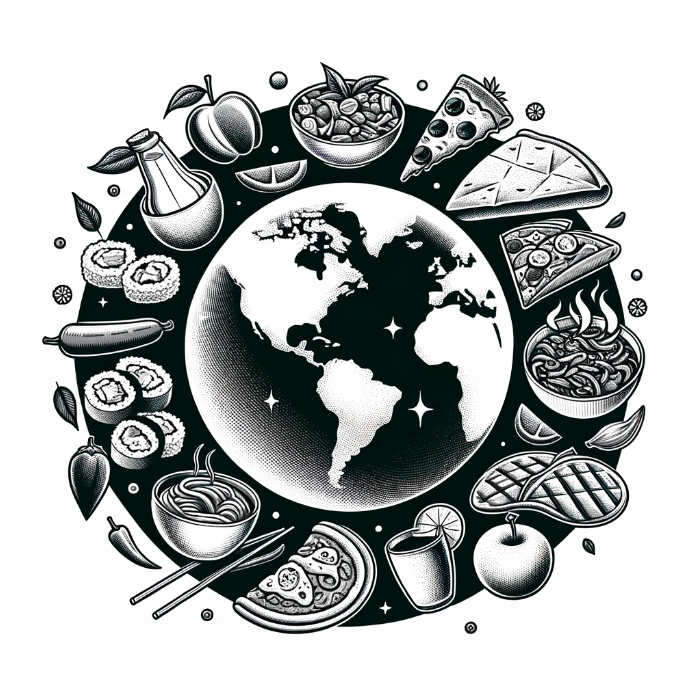
Culinary crossroads: uniting cultures at the dining table
Savouring diversity — the role of food in bridging divides
“Food is our common ground, a universal experience.” — James Beard
BBorn into a Caribbean family that reverently observed the Sabbath under the Seventh-Day Adventist banner, my early years were steeped in religious tradition. This gradually shifted towards a more Judaic observance as my grandmother aged, becoming more orthodox and adopting a non-meat diet. My grandma, whom I called Mam, was significantly ahead of her time; she crafted her own tofu and goat cheese as she perfected her vegetarian regimen to what I would describe as delicious. And this was amidst a region famed for its hearty meat stews — the very epitome of culinary rebellion in our meat-centric home.
Much later, in my twenties, and oceans away, I, too, adopted vegetarianism attempting to recreate a spectre of memories and a path to good nutrition. However, my lack of nutritional knowledge led to a near health crisis, compelling me to return to a carnivorous diet.
Long story — I am okay now.
Despite my Mam’s staunch vegetarianism, she was tasked with preparing meat-based dishes for her family, albeit with assistance. I know she did not enjoy this, as she often encouraged us to eat less meat, asserting it was a cause of human cancers. While I am not a medical doctor, her words resonated with me. In my eyes, Mam was never wrong.
Pork, for example, was deemed the pariah of our pantry, was unanimously labeled “unclean.” It wasn’t until my adolescent move to Canada that I encountered bacon. Its crispy texture ensnared my taste buds when I tried my first slice of pizza topped with it. The experience triggered an overwhelming urge to detoxify, a testament to my ingrained aversion. However, I confess there was a lingering sense of betrayal towards Mam.
She don’t eat meet — we’ll have lamb
Remember that scene in “My Big Fat Greek Wedding” when Toula relays to her family that Ian, her fiancé, doesn’t eat meat? The reaction is one of comical disbelief, as her aunt exclaims in shock,
“What do you mean he don’t eat no meat?”
The room goes silent, reflecting the cultural clash and the family’s deep-seated traditions. Then, in a moment that perfectly captures the blend of humor and acceptance, her aunt cheerfully declares, “That’s okay, that’s okay. I make lamb.” The scene brilliantly showcases the challenges and eventual bridging of different cultural customs and dietary habits.
In my own life, this scene resonated because I would later marry a Dutchman. This union introduced me to the relentless quest to find “the” pork dish that might sway my convictions. Despite my polite nibbles, only a generous flow of alcohol could ease my dissenting spirit. However, our paths diverged after twelve years and two children, reinstating the pork prohibition in my household. Perhaps it was the pork.
I jest!
The arrival of my next partner, with his blend of Eastern European and English heritage, heralded the return of bacon and cevapi to my fridge. Twelve years on, these have become reluctant staples of our weekend brunches, where I partake with a mix of courtesy and a silent vow to one day banish the beast for good.
High on what? — don’t think its for me
Ironically, it was after one such sumptuous and pork-filled brunches, prepared by my partner ( he should have been a chef), that I found myself engrossed in a random PBS show titled, “High on the Hog,” a moment that underscored the unpredictable journey of my culinary tolerances and the whimsical irony of life’s full circle.
I was hooked.
High on the Hog with Stephen Satterfield, a Netflix documentary based on Jessica B. Harris’ award-winning book of the same name. The book is a moving story of Black people’s survival and triumph via the food that has knit generations together and helped define the American kitchen.
It is an enlightening journey through African American culinary history, tracing the vibrant pathways from Africa to the United States. It dives deep into the heart and soul of Black food traditions, showcasing how they’ve shaped American cuisine and culture.
Through a series of intimate stories, expert interviews, and mouthwatering dishes, the series not only educates but also celebrates the resilience and creativity of African American people. It’s a powerful tribute to the rich, complex flavours and heritage that African American cooking has brought to the national table.
It also leaves you with a vivid understanding of the impact and significance of African influences on food in the Americas.
And then, this past holiday season, I found myself enthralled with yet another PBS Food show, this time featuring Chef and Host Marcus Samuelsson, who explores varying food cultures. This experience deepened my understanding and appreciation of the rich tapestry of food culture in America, showcasing its diversity and the unique stories behind each dish and tradition. Once again, I was left with a broader perspective and a renewed appreciation for the culinary mosaic that defines American cuisine.
My current binge is Rick Stein’s India, an intriguing culinary journey that showcases the diversity and depth of Indian cuisine. Through his travels across the subcontinent, Rick Stein explores the varied flavours, spices, and cooking techniques that define regional Indian food. From bustling street markets to tranquil coastal villages, he samples and cooks a wide array of dishes, revealing the stories and traditions behind them.
This captivating series not only highlights the richness of Indian culinary heritage but also Stein’s passion for seeking authentic tastes and sharing them with the world. It’s a feast for the senses and an inspiration for food lovers everywhere.
These culinary shows have beautifully illustrated the unique way food connects us and intertwines with our stories. If you haven’t had the chance to watch these programs yet, I highly recommend doing so. However, be sure to do so on a full stomach, as they are sure to make you salivate with their mouthwatering dishes and culinary artistry.
Admittedly, I wouldn’t classify myself as a foodie. However, during the weekends, I often take pleasure in showcasing my French Creole culinary skills, preparing a variety of dishes that cater to my family’s diverse tastes. I have a particular fondness for vegetables in all their forms and am known for my ability to prepare a mean fish dish. On the other hand, my active household — comprising of just males— prefer meals that include meat to feel truly satisfied.
Over time, I’ve adapted to our differing preferences by adding extra vegetable dishes for myself, especially on days when the cooking duties fall to my sons. My boys, aged 13 and 16, have been learning to cook for some time now, contributing to our family meals. Interestingly, my 13-year-old has recently expressed an interest in pursuing a career as a chef — a path that seems to align perfectly with his personality, and one that I wholeheartedly support.
The global banquet & the tasty conversation of humanity
Food is a conversation that unites people across diverse cultures and traditions. It’s more than just nourishment; it’s a form of expression, a way of sharing stories, histories, and identities from all corners of the world. This shared culinary experience becomes a potent means of connection and understanding.
In every cuisine lies a story — a blend of ingredients rich with cultural significance, cooking methods rooted in age-old traditions, and flavours that represent collective experiences. Engaging with the world’s diverse food cultures is like participating in an age-old ritual that goes beyond language, bringing to life the journeys, struggles, and victories of different communities.
The act of preparing and sharing food is also a universal gesture of hospitality and goodwill. In many societies, offering food is synonymous with extending friendship and welcoming others into one’s world. Be it through food festivals, community kitchens, or family meals, these are moments where understanding is fostered and differences are not just acknowledged but celebrated.
Ultimately, food is a celebration of our shared human experience. It reminds us that, despite our different backgrounds, we all gather to satisfy a fundamental human need. These gatherings create common ground, fostering understanding and a sense of belonging. Food, in its universal appeal, has the extraordinary ability to transform the concept of ‘otherness,’ promoting a world that sees diversity not as a division but as a rich array of experiences that enriches our collective existence.
Related post

About me: Hello, my name is Kem-Laurin, and I am one half of the co-founding team of Human Tech Futures. At Human Tech Futures, we’re passionate about helping our clients navigate the future with confidence! Innovation and transformation are at the core of what we do, and we believe in taking a human-focused approach every step of the way.
We understand that the future can be uncertain and challenging, which is why we offer a range of engagement packages tailored to meet the unique needs of both individuals and organizations. Whether you’re an individual looking to embrace change, a business seeking to stay ahead of the curve, or an organization eager to shape a better future, we’ve got you covered.
Connect with us at https://www.humantechfutures.ca/contact


