
CUDA’s Future: Charting the Path for GPU-Accelerated AI in 2025 and Beyond
Key Trends Shaping Nvidia’s Breakthrough Technology
Imagine it’s 2009 and there is a researcher who is training a neural network on CPU. They watching the progress bar move at slowly, although to them it’s the latest breakthrough. Now come back to today in which same model is able to train on a consumer grade GPU within few minutes. This leap is not any kind of magic but it’s CUDA.

NVIDIA’s Compute Unified Device Architecture
CUDA has been revolutionary for artificial intelligence and high performance computing. CUDA allows developers to utilize GPUs’ enormous parallel processing capabilities. It has made advancements like deep learning and scientific simulations possible. However we are about enter into new age for AI so what comes after for CUDA?
In this article, we’ll dust off our crystal ball and peer into the future of GPU-accelerated AI. We’ll explore the trends shaping CUDA’s evolution, the challenges it faces, and the exciting new frontiers it’s poised to conquer. So strap in, fellow tech enthusiasts — we’re about to embark on a journey to the cutting edge of parallel computing!
Hardware Advancements: The GPU Arms Race Heats Up
Do you recall a time when GPUs were exclusively utilized by gamers? That time has passed. The advancement of Artificial Intelligence has caused an explosion in GPU development, with companies such as AMD and Intel competing with NVIDIA to redefine the limits of graphics processing unit capability. Lets discuss some of the main trends in hardware that will shape the future of CUDA::
a) Specialized AI Chips: While general-purpose GPUs have been widely used for AI, there is now a trend towards more specialized hardware. For example, NVIDIA’s Volta architecture introduced Tensor Cores. These custom circuits greatly speed up matrix multiplication and convolution operations — the basic math of deep learning
# Example: Using Tensor Cores in PyTorch
import torch

# Enable Tensor Cores (assuming compatible hardware)
torch.backends.cuda.matmul.allow_tf32 = True
torch.backends.cudnn.allow_tf32 = True

# Your deep learning code here
It is expected that upcoming releases of CUDA would provide even finer control over these specialized units thereby enabling developers to maximize the usage of their hardware.
b) Multi-Chip Modules (MCMs): As we near the limits of classic chip scaling, NVIDIA along with others is looking at multi-chip module designs. These designs allow for bigger and more powerful GPUs by putting together several smaller chips on one package. With this trend in view, it is likely that CUDA will have to adjust its memory management and workload distribution so that they can work effectively in an environment which is basically a small cluster contained in one card.
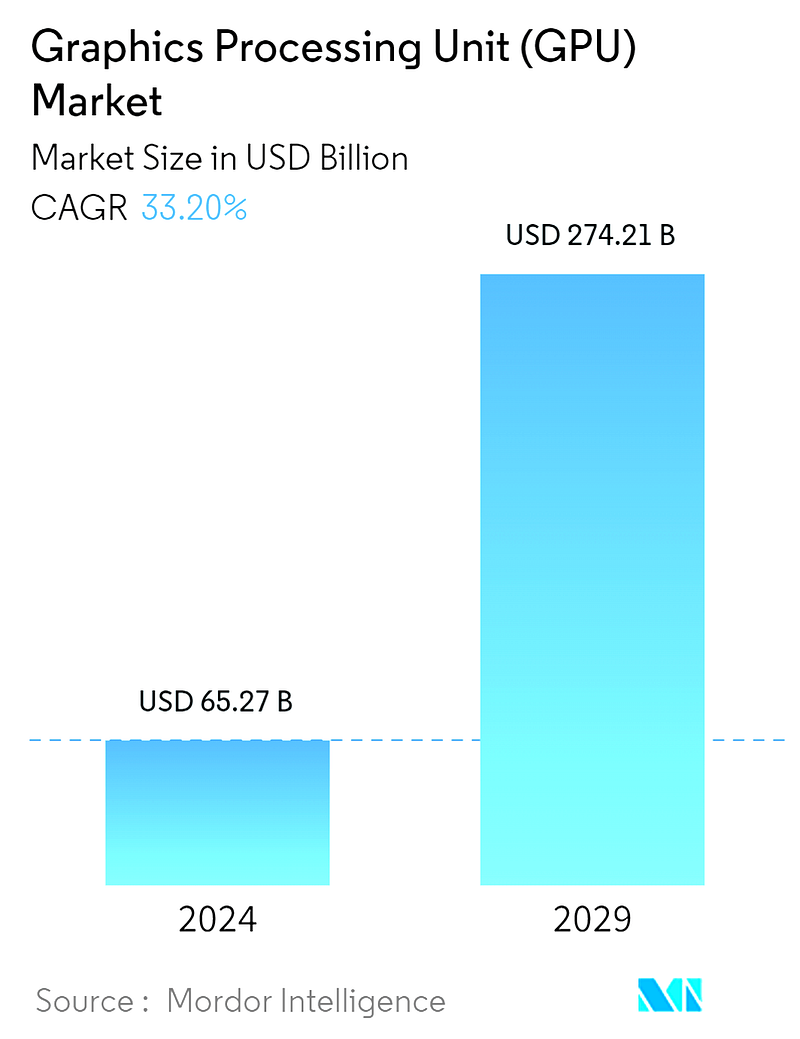
c) Next-Generation Memory Technologies: The performance of GPUs has already been significantly impacted by high bandwidth memory, HBM. Technologies will provide even more bandwidth and capacity like HBM3 should be expected. These advanced memory subsystems will require CUDA to adapt to enable developers to take full advantage of them .
// Hypothetical future CUDA code for optimized memory access
__global__ void optimizedKernel(float* data, int size) {
    // Automatically use optimal memory type (HBM, GDDR, etc.)
    __memory_hint(CUDA_MEMORY_TYPE_OPTIMAL);

    // Kernel code here
}
Software Ecosystem: A Blossoming Garden of Tools
It’s not just hardware — it’s also an entire suite of libraries, frameworks, and development tools. This is what I think may happen next with it:
a) Higher-Level Abstractions: While CUDA C++ gives developers fine-grained control, not everyone needs (or wants) to work at that level. Expect to see more high-level APIs and domain-specific languages built on top of CUDA, making GPU programming accessible to a wider audience.
# Example: Hypothetical future high-level CUDA API
import cuda_ml

model = cuda_ml.NeuralNetwork()
model.add(cuda_ml.DenseLayer(64, activation='relu'))

b) Improved Debugging and Profiling Tools:
As CUDA applications become more complicated, developers will require improved tools for optimization and error detection. In future releases of Nsight from NVIDIA one can expect detailed insights into kernel execution, memory access patterns and potential bottlenecks.

```bash
# Hypothetical future CUDA profiling command
$ cuda-profiler --ai-optimization-suggestions myapp
Analyzing kernel launches...
Suggestion: Kernel 'matmul' could benefit from tensor core usage
Suggestion: Memory access pattern in 'convolution' indicates potential for shared memory optimization
c) Integration with AI Frameworks: Despite popular AI frameworks receiving CUDA acceleration from libraries such as cuDNN, the connection will be smoother. In upcoming releases, it’s possible that CUDA may provide native support for features specific to artificial intelligence like dynamic graph optimization along with mixed precision being done automatically too.
Algorithm Innovation: Pushing the Parallel Envelope
The ability of CUDA to create paralleled calculations is at the core of its strength. In the future, these following trends in algorithms may shape development associated with CUDA:
a) Sparse Computing: Many AI models, especially in natural language processing, deal with sparse data. Future CUDA versions may include specialized support for sparse operations, potentially offering massive speedups for certain workloads.
// Hypothetical future CUDA sparse matrix multiplication
cusparse::SpMM(handle, opA, opB, alpha, matA, matB, beta, matC, computeType, CUSPARSE_SPMM_ALG_OPTIMIZED);
b) Quantum-Inspired Algorithms: While true quantum computers are still on the horizon, quantum-inspired algorithms are already showing promise for certain optimization problems. CUDA may evolve to support these hybrid classical-quantum approaches, potentially offering massive speedups for problems in areas like finance and logistics.
c) Advanced Graph Algorithms: Graph-based computations are becoming increasingly important in AI, from graph neural networks to knowledge graphs. Expect future CUDA releases to offer enhanced support for efficient graph processing at scale.
Industry Adoption: From Labs to Mainstream
As CUDA continues to mature, we’re likely to see its adoption expand beyond traditional strongholds in research and high-performance computing:
a) Edge AI: The demand for AI capabilities on resource-constrained devices is increasing due to the growth of IoT and edge computing. At present Jetson is taking CUDA to the edge but we can expect further optimizations targeted at low-power real-time AI applications.
b) Cloud-Native GPU Computing: As much as more companies start shifting their artificial intelligence workloads to the cloud, CUDA will have to be able to adjust to containerized, serverless and other cloud-native paradigms. Better GPU sharing support, quick context switching and integration with cloud orchestration tools may be provided in the future releases of this software..
# Hypothetical future Kubernetes config for CUDA workloads
apiVersion: v1
kind: Pod
metadata:
  name: cuda-ai-job
spec:
  containers:
  - name: cuda-container
    image: nvidia/cuda-ai:latest
    resources:
      limits:
        nvidia.com/gpu: 1
    env:
    - name: CUDA_VISIBLE_DEVICES
      value: all
    - name: CUDA_CLOUD_OPTIMIZE
      value: "true"
c) Democratization of AI: With AI becoming more widespread, there is an increasing demand for making GPU acceleration available to developers at all levels of skills. There might be “auto-magical” optimizations in the future CUDA versions which will enable novice programmers also take advantage of speedups without necessarily having vast knowledge in CUDA.
When we talk about the year 2025 and further on, it is evident that the journey of CUDA is still long. The trends explored in this document — ranging from hardware improvements right through algorithmic breakthroughs — show a technology which grows continually beyond its current state.
A Message from AI Mind

Thanks for being a part of our community! Before you go:
- 👏 Clap for the story and follow the author 👉
- 📰 View more content in the AI Mind Publication
- 🧠 Improve your AI prompts effortlessly and FREE
- 🧰 Discover Intuitive AI Tools


