
CS/R — ESG #6 What is the buzz about Patagonia and its owner’s activities?
The “unlikely” success and consistently thoughtful, learning, & values-based approach of Yvon Chouinard

(This article was sourced from about 40 news & business articles and video/interviews, as well as the Patagonia Inc website).
In 1947, a French-Canadian handyman and mechanic, moved his family from Maine to Southern California. His son loved the outdoors and became an avid surfer, falconer, and rock climber. At 19, this son, Yvon Chouinard, decided to save himself some money by making his own climbing equipment, with the adaptations he wanted. So, he taught himself blacksmithing, bought a second-hand coal-fired forge, and began making his own. His hardened-steel pitons were a success and so helpful to him and to his climbing colleagues, that they are partially credited for the birth of big-wall climbing in Yosemite in the late 1950s, and his business was born.
Now that you see the founding character, I’ll highlight the two main reasons that Patagonia has been in the news, before I continue with the colorful details.
1. Patagonia not only has high quality products, but has been at the forefront of admired business practices, and a learning culture, for decades. It was California’s first benefit corporation, has B corp certification, is known for its environmental sustainability and activism, and has consistently investigated the impact of its practices and products and how to do better. Further, Yvon Chouinard is a founding member of the Bteam, trying to teach and inspire other business leaders to do business in a more socially and environmentally responsible way.
2. In August 2022, rather than sell the company or go public, Chouinard and his family gave it away[1] to two organizations, creating a novel structure in line with his long-standing rejection of standard business processes, and ensuring that the company would continue to prize worker wellbeing and climate action. The family irrevocably transferred their voting shares (2% of the company, valued at USD 3billion) of the Patagonia company to the Patagonia Purpose Trust to i) allow the company to continue operating as a private, independent for-profit corporation, and ii) ensure it is managed responsibly, and iii) that its roughly $100million/year of profits are used to fund environmental causes and protect undeveloped land around the world. The remaining 98% ownership of the company, its common shares, go to a new non-profit-organization, the Holdfast Collective, which will receive all company profits, and will build on the company’s work preserving wild lands, funding grass roots activists, and could also lobby and make political contributions.
Because the family’s shares were donated to a trust and to a 501c4, the family will pay about $17.5 million in taxes on this gift (minimizing taxes was not the goal), but “it resolves the question of what will happen to Patagonia after its founder is gone, ensuring that the company’s profits will be put to work protecting the planet” (NYT, Sept 14, 2022). Every dollar that is not reinvested into Patagonia company, will be distributed as dividends to protect the planet. “Instead of extracting value from nature and transforming it into wealth, we are using the wealth Patagonia creates to protect the source,” said Chouinard. “I am dead serious about saving this planet.”
So, how did that environmental sustainability focus and activism develop [2]
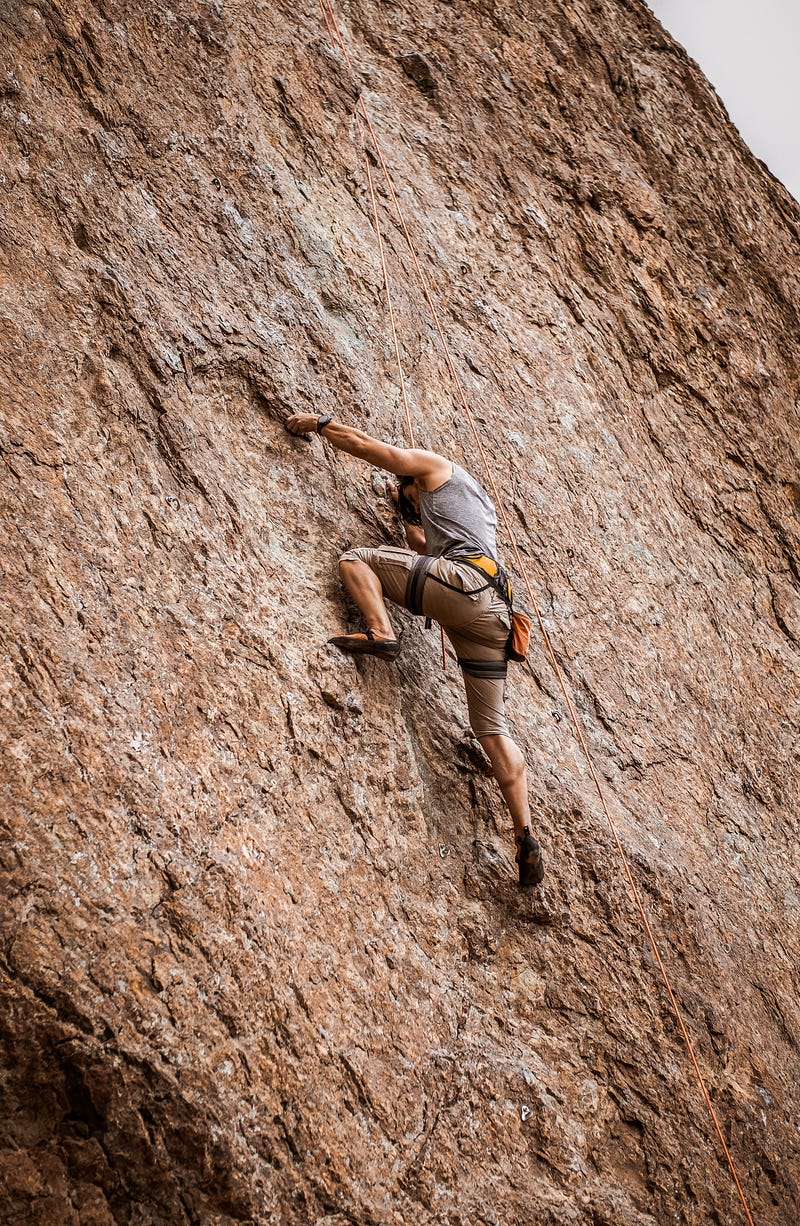
In the late 1960s, Chouinard and his then climbing & business partner, Tom Frost, studied and reinvented some of the basic tools in ice climbing, reinventing that sport, as well. The product design aimed to “make them stronger, lighter, simpler and more functional.” This ethos of performance wear and outdoors life (eventually environmental activism and sustainability) would be the drivers for Chouinard Equipment and later Patagonia’s culture and products. Yvon and Tom continued climbing mountains, ice, and rock faces around the world and selling their equipment to finance their lives. By 1970, the company was one of the largest outdoors equipment suppliers in North America, and Chouinard had learned that the repeated hammering of pitons, during placement and removal, was causing damage to Yosemite’s rocks. Despite the pitons representing 70% of their income, he and Frost shifted their research and production to new aluminum tools, and committed the company to “clean climbing”– tools and techniques much less likely to damage rock, and fortuitously also much faster and easier to install. Their new tool, Hexentrics[3] cannibalized their sales (Schumpeter’s creative destruction?), earned the respect of their mountaineering customer base, and became a commercial success.
Selling rugged clothes began in 1970, as a way to support the equipment company. The clean climbing, and constant learning ethos continued as the business grew, and the “reluctant-businessman” Chouinard leveraged his financial success, to achieve his personal vision and goals. As a result, Patagonia has been at the forefront of corporate social responsibility or ESG for decades. A few example actions include:
in 1984, Patagonia opened an on-site cafeteria offering “healthy, mostly vegetarian food,” and started providing on-site child care (early initiatives in employee wellness, and supporting working families)
In 1986, Chouinard committed the company to one percent of sales or ten percent of profits, whichever is the greater, to support environmental activism. The commitment included paying employees working on local environmental projects (early corporate volunteerism)
In the early 1990s, Patagonia launched a “footprint assessment[4]” of the 4 most used fabrics, and as Rick Ridgeway, vice president of environmental initiatives at Patagonia, said in 2013 “we had assumed that the synthetic fibers in our products were going to be the bad guys and the natural fibers were going to be the good guys, and it was just the opposite.” Avoiding unnecessary harm to the planet is more complex than you might think. Although polyester has the fossil fuels and recycling issues, the biggest impact of all was traditionally grown cotton and its water use, insecticides and pesticides. (Patagonia focused on assessing the actual impact of their activities and the best way to reach their sustainability goals)

In 1996, the company made a commitment to 100% organically grown cotton, to avoid the damage caused by insecticides and pesticides. It took many steps of learning and almost bankrupted the company. It still “sucks” because of the water consumption issue, but the company then decided to focus on suppliers growing the cotton from rainfall (not drawing down an aquifer). With successive production modifications, by 2021, 87% of their clothing fibers were sustainable, with a commitment to getting to 100% recycled/upcycled fibers by 2025.
In 2002, Yvon Chouinard founded 1% for the Planet and Patagonia became the first business to commit 1% of annual sales (1% of revenue, ie a piece of the pie before it’s reduced in size by taxes and other business expenses; and a larger sum than 1% of profits) to the environment, and creating a structure or initiative easy for other companies to imitate, as well as a commitment to making this vision a core cost of each product and doing business. See the 2020 “letter from our founder” here.
In 2012, Patagonia became California’s first benefit corporation (a legal structure for mission driven companies) and obtained the now coveted and highly regarded B corp certification — reserved for companies that have robust policies on 5 key areas — the good of their customers, workers, community, environment, and governance.
In 2013, Chouinard formed Tin Shed Ventures®, a venture capital fund to help start-up companies that place environmental and social returns on equal footing with financial returns.
In 2014, Patagonia focused on its supply chain and worked with Fair Trade USA to ensure that workers in their suppliers’ factories were being paid living wages and that some profits would flow into the communities.
In 2018, Patagonia committed itself not only to reduced impact on the land, but regenerative farming practices, to healing the damage. And Patagonia’s purpose statement was changed to reflect this shift: “We’re in business to save our home planet.” This is also the year Yvon Chouinard was recognized with the Sierra Club’s top award, the John Muir Award, due to the sustainability and responsible practices core to Patagonia.
In 2022, as mentioned in the beginning, Chouinard transferred the majority of his wealth, and ownership of the company to a trust and a non-profit, a novel structure likely to be imitated, in order to continue the company’s ongoing activity and unique culture, and to grow the environmental protection and healing initiatives.
Check out the company’s home page for an example of a brand making its messaging and practices all about its ethos and values, less about product sales. The company’s commitment to environmental sustainability pervades everything they do and make. 1% of every sale (not of profits) goes to support environmental causes. The website and stores offer information, videos and stories about how to care for or mend your gear, the products are repaired for free for their full life, or you can trade in your gear through Worn Wear, all of which thereby reduce consumption and landfill. The products are currently made 87% of sustainable materials, and by 2025 it will be 100% non-virgin material. The company has a website that gives ideas of how to be involved in fighting/limiting climate change and connects patrons to environmental initiatives in their area, Patagonia action works. And, of course, given the founder’s late 2022 action, giving away the company to ensure and build upon it’s positive legacy, the innovative structure has created a model for others to imitate.
#sustainability #leadership #CSR #ESG #longtermstrategy #Patagonia
— — -
[1] This idea was apparently sparked by the COVID19 pandemic and an article where Chouinard was mentioned “…in Forbes magazine listed as a billionaire, which really, really pissed me off. I don’t have $1 billion in the bank. I don’t drive Lexuses.” His advisors looked at many options for helping Chouinard exit the company while ensuring it retained its learning culture and vision of supporting environmental causes… and getting him off that list. They considered several options including becoming an employee-owned cooperative, or a nonprofit, or even a SPAC (special purpose acquisition company). They even considered going public, but Mr Chouinard doubted the stock market would allow Patagonia to remain a company prioritizing worker well-being and climate action.
[2] Much of the information in this section, on Patagonia’s history, was gleaned from the company’ website, in addition to several interviews on youtube and a few news articles.
[3] a tool that is wedged into cracks to protect climbers from falling, and which does not need a hammer, thus avoiding damaging the rock, as pilons did,
[4] Natural fibers versus synthetic fibers: Patagonia and Levi Strauss say organic cotton ‘sucks’ and getting sustainable clothing and better cotton is more complex that you might think https://youtu.be/jo9jHRT0qy4
*****
Rachel E Patterson helps innovative SMB and their leaders grow ethically, so that they navigate constant change, keep their best employees and customers, and build their long-term profits and positive legacy. A Chicago-Booth MBA with heart, and experience living/working in 12 countries and across multiple sectors. Leadership/Executive coach, change management & corporate citizenship consultant.
My foundational thesis? Businesses easily create 2/3 to ¾ of the world’s economy, and can make a huge and positive impact by improving their processes and practices. Businesses are also run by people who want to be not only effective at their work, but to create a positive legacy. Being better corporate citizens is of great long-term strategic benefit to companies, because aside from the “feel-good” qualities, these policies, practices, and the culture they create, have been shown to increase employee engagement and retention, foster innovation, contain risk, and improve the bottom line over the long-term (also, regulators, employees and customers are increasingly demanding it — check out the other articles in this 24-part-series, for some related stories and statistics) .