
CS/R-ESG A Very Quick History of Corporate Sustainability- Making Sense of the Alphabet Soup
In my last post, I talked about the mindset of corporate citizenship; the related alphabet soup (CS, CSR, DEI, ESG, SDG, PPP, etc) which distills to caring about stakeholders over the long term; and my own path to working to support and expand it.
In this article, I’ll share a very brief overview of the history and pieces of that field of work. As it has developed, the field has come to resemble alphabet soup and multiple, very different types of initiatives, which risks confusion. But again, it all comes back to long-term-strategy and a caring mindset — caring for the company, the employees, the community, the environment, and all stakeholders now and future.
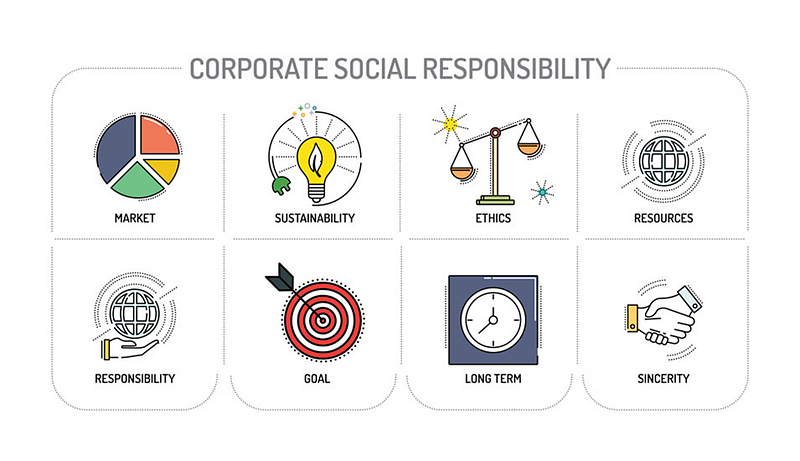
The concept of sustainability has been widely discussed since the 1950s, albeit primarily in the international development and agricultural arenas. As it moved into business spheres, the number of terms and related concepts were further developed to address the diverse business realities and needs. A few of the main ones you likely have heard are corporate social responsibility (CSR), corporate sustainability (CS), socially responsible investing (SRI) and impact investing, and more recently, the metrics to measure these concepts are being embodied in ESG (environmental, social, governance) profiles, policies and plans. These are used by financial institutions to rate investability and impact of a company, and while not standardized (1) , they are aligned with the UN’s socially responsible investing (SRI) guidelines of 2005, and the Sustainable Development Goals (SDGs for 2015–2030). You start to see why I call it an alphabet soup…. But also why I and so many of us care.
You might currently be focused on the “Great Resignation” employee power, or the massive layoffs in big-tech employee fear. Either way, these days, businesses which want to retain their best employees and customers, and have sustainable profit long-term, must create brand trust and loyalty, which comes from i) informed decisions — read DEI and consulting diverse stakeholders, ii) an authentic culture of purpose — CS, CSR, ESG, and iii) transparent communication. In other words, meeting the customer’s product and identity needs.
Also, to tip the scales a bit on employee-fear you might still have, as the organizational psychologist, author and Wharton professor Adam Grant pointed out in February 2023, so many studies have shown that firms which downsize “end up being less profitable than peers that find other ways to lower costs (eg exec pay cuts, unpaid leaves). Layoffs bleed talent & breed guilt+anxiety. They should be the last resort.” So, sustainability is key for retention, and psychological safety is a key component for healthy culture and ongoing innovation (have you heard of Google’s Aristotle project and it’s findings on the 5 keys to team success?) .
I believe that most companies lack robust sustainability and ESG policies for 3 main reasons 1. Will — what’s the actual benefit (to me)? Why should I juggle this, too? 2. Confusion — how do we do this and communicate our efforts? 3. Overwhelm — we’re spread thin, how can we add something in an easy way?
I also believe that the vast majority of people care, and want to make a positive impact. While there may be corporate and cultural guidelines, all companies are run by people, most of whom care about building a positive legacy. So, when we can create the space to think and dialogue about it, then we can focus those vague desires and move them to action. Even if someone is in the subset of category #1 that is without the noble instincts, doing better and doing good is good for business, and I will share stories, statistics, and concept overviews over the next several weeks and months, that illustrate that.

“In this social media, info-travels-fast era, if a company wants to stay aligned with its market, and keep its best employees, suppliers, & customers, they increasingly have to focus on a variety of topics that have until recently, been viewed as semi-distinct, but ultimately equate to purpose and corporate citizenship. There’s a whole alphabet soup of corporate citizenship (CSR, ESG, DEI, SRI, CS aka sustainability, PPP & SDG, etc.), which can become a confusing policy checklist, or can become an authentic driver of corporate culture and long-term success.”
A quote from my 2022 white paper, “The Alphabet Soup of Corporate Values and Citizenship — concepts, players, and how to make it work for your company.”
~~~~~~~~~~~~~~~~~~~~~
- NB lack of standardization is a big discussion topic in ESG — how to recognize the diverse modes and impacts of different industries, yet have something comparable across companies
Rachel E Patterson helps innovative SMB and their leaders grow ethically, so that they navigate constant change, keep their best employees and customers, and build their long-term profits and positive legacy. A Chicago-Booth MBA with heart, and experience living/working in 12 countries, she bridges change and multi-cultural management. Labels? She/her, Leadership coach, change management & corporate citizenship consultant.
Foundational thesis? Businesses easily create 2/3 to ¾ of the world’s economy, and can make a huge and positive impact by improving their processes and practices. This also will be of great long-term strategic benefit to them, because these policies, practices, and the mindset they create, have been shown to increase employee engagement and retention, foster innovation, contain risk, and improve the bottom line over the long-term (also, regulators, employees and customers are increasingly demanding it — check out the other articles in this 24-part-series, for some related CS/R-ESG stories and statistics). If you have any comments or questions, drop me a line at [email protected], or schedule a brief (complimentary) call here.


