Cryptocurrency Explained: Blockchain, Mining, and Wallets
What does it all mean?

Cryptocurrency is very mysterious to most people. We’ve all heard the stories of early investors in cryptocurrency becoming millionaires.
I’ve already explained what cryptocurrency is and how to invest in it here, but there is much more to know if you want to become a crypto expert. How do you “mine” cryptocurrency? What’s a blockchain? What’s a cryptocurrency wallet? I’m going to be explaining these topics and more.
If you want to learn more about the various ways that blockchain technology is changing the future of money, transactions, and business, check out this amazing book by Don and Alex Tapscott.
This isn’t meant to be an in-depth analysis of cryptocurrency technologies, rather a summary of what they are and how they work. First, let’s look at the mysterious word “blockchain.”
Blockchain
Blockchain technology has massive potential to revolutionize a myriad of industries such as banking cybersecurity, and even insurance. Blockchains are essentially a list of records called blocks. These records are linked together using cryptography to ensure that the information is secure and accurate.
Now, I’m going to explain a few concepts that might be difficult to understand if you don’t have a background in computers, but bear with me.
Each block contains a cryptographic hash of the previous block, a timestamp, and transaction data. Basically, the hash ensures that the data of a block can’t be changed or else it’ll change all of the other previous blocks. This is how transactions are tested to see if they’re legitimate.
The blockchain is distributed and managed by a peer-to-peer network collectively adhering to a protocol for validating new blocks. Once the transaction is complete and recorded the data in any given block can’t be altered without altering any other previous blocks. Think of hashes as keys. If a key is incorrect, it’s clear that a transaction is not legitimate.
Why are hashes so secure?
The reason is that it takes an astronomical amount of computing power to calculate the key. There aren’t enough computers in the world to process the number of possible combinations.
A hash produced using SHA (Secure Hash Algorithm), for example, has a 1 in 1,000,000,000,000,000,000,000,000,000,000,000,000,000,000 chance of being the same as any other hash already used on the blockchain (WOW that’s a lot of zeros). This enormous probability means that no two hashes in the blockchain are likely to be the same.
A hash is produced by an algorithm that uses the data and other components of a block to morph it into an extremely random number. There are two principal ways we can discover this number: either by knowing all the data used in the algorithm or by knowing the key.
Needless to say, these functions are designed to be one-way. Any possibility of using a computer to reverse engineer a key would jeopardize the entire system. But you have little to worry about. At the current time, there’s no computer powerful enough to break this function, so for now, it’s here to stay.
If you still have trouble visualizing how a blockchain works, look at this diagram from Financial Times:
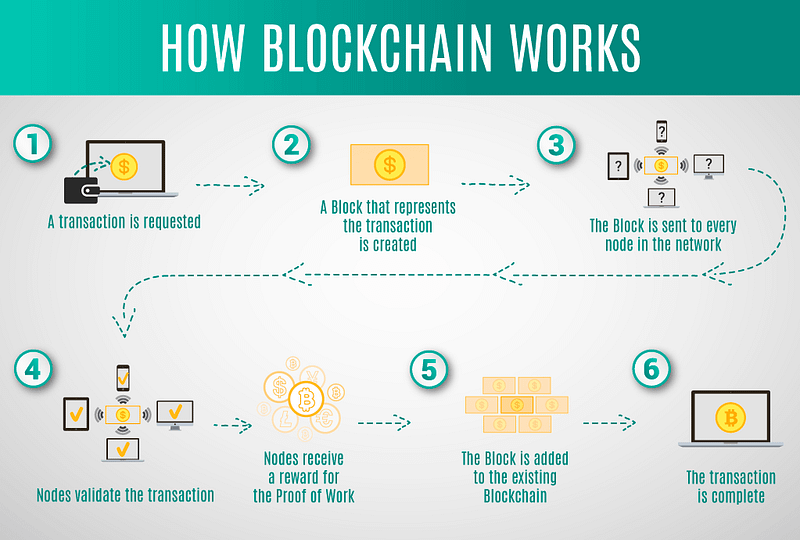
The reason blockchains have so much potential is that they’re super secure and they use a peer-to-peer network rather than a centralized authority. This means that blockchains can’t be controlled by any single company, government, person, etc.
Blockchain technology is the foundation for cryptocurrencies and is important to know about if you want a better understanding of how this economy works.
Now that you know the basics of blockchain technology, here’s a little overview of what cryptocurrency mining is.
Mining
The definition of cryptocurrency mining may surprise you. The first function of mining is simply validating transactions. Miners who successfully validate a transaction obtain new cryptocurrency as a reward, which is the second function of mining.
The rate of generating a hash (we discussed what hashes are earlier in the article) determines how many attempts your computer can process to try and find transaction validations that work. What constitutes a successful validation of a transaction is out of the scope of this article, but all you need to know is it takes a lot of computing power.
Miners need a computer with a lot of processing power if they want to compete with their peers. Their computers have to solve very complicated math problems that put a lot of strain on the computer. Luckily, there are special computers made for the specific purpose of cryptocurrency mining.
If you want to start mining profitably, you’ll need to pick up one of these bad boys. These computers are usually very pricey so make sure you’re serious mining before you purchase one. Look at the statistics of the machine you buy. Many mining computers actually cost more in electricity expenses than you can make from the actual cryptocurrency mined.
What is a mining pool?
A mining pool is pretty much the pooling of resources by miners, who share their processing power over a network. These miners split the reward equally, according to the amount of work they contributed to the probability of finding a block. These pools can be joined by any miner that’s willing to provide processing power.
Here’s a chart, supplied by BlockChain, that shows the market share of the most popular Bitcoin mining pools (as of February 17, 2021):
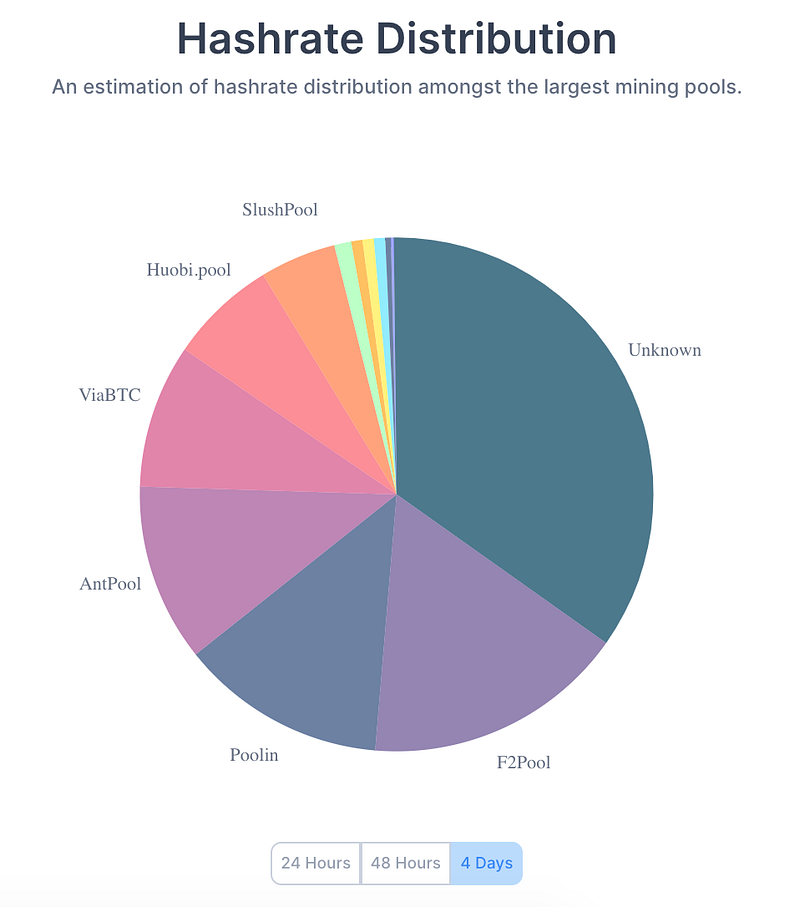
Joining a mining pool can be very helpful for a miner since they offer more predictable rewards. Miners get paid even if their pool hasn’t successfully mined a block. The mining pool operator mitigates these losses by charging a fee, but it can be worth the money for a steady stream of income. Although it isn’t the largest pool, Slush Pool was the first Bitcoin mining pool and is considered to be one of the most reliable ones to join.
Now that you know a little about cryptocurrency mining, let’s look at cryptocurrency wallets.
Wallets
Cryptocurrency wallets are used to store cryptocurrencies. But how is this achieved? These wallets are software programs that store public and private keys that are used to receive cryptocurrency. These keys are basically a long string of letters and numbers that would be EXTREMELY difficult to guess.
It’s important to note that the cryptocurrency itself is not in the wallet. In most cases, it’s actually stored in a decentralized, publicly available ledger (we discussed this earlier). A private key is used to write in the public list of records. This action effectively spends the cryptocurrency associated with the private key. People can verify that you own the private key by using your corresponding public key.
Software vs. Hardware wallets
You man know that there are physical wallets you can use to store cryptocurrency as well as software wallets. A software wallet is typically an application stored locally on a computer, a web wallet managed by a trusted third party, or a cryptocurrency exchange. To initiate or verify a transaction, the wallet connects to a client or node on the network to process the request.
Hardware wallets, on the other hand, are a little more secure. I recommend you invest in one of these if you’re going to be spending a lot of money on cryptocurrency.
When a user requests a payment, the wallet uses its API (set of subroutine definitions, protocols, and tools for building application software) to create the transaction. The wallet’s hardware signs the transaction and provides a public key, which is sent to the network by the API. This ensures that the signing keys never leave the hardware wallet and, therefore, make them more secure.
These are the main types of wallets used. I recommend starting with a software wallet if you’re a beginner. Using an application like Coinbase makes it easy to send and receive the four most popular cryptocurrencies (Bitcoin, Ethereum, Bitcoin Cash, and Litecoin). This is a great wallet to start with.
Now that you know a little bit more about blockchains, mining, and wallets, you can better understand the process that allows cryptocurrencies to exist.
If there are any other cryptocurrency topics you’d like me to cover in future articles, please let me know in the comment section below!