
Crusades — who organized them and what were their causes, course and effects?
The Crusades, the historic struggle between Christians and Muslims for dominion in Jerusalem, lasted nearly 200 years. What were their causes? Who organized the Crusades? What consequences did they spawn for Western civilization? These questions are answered below.
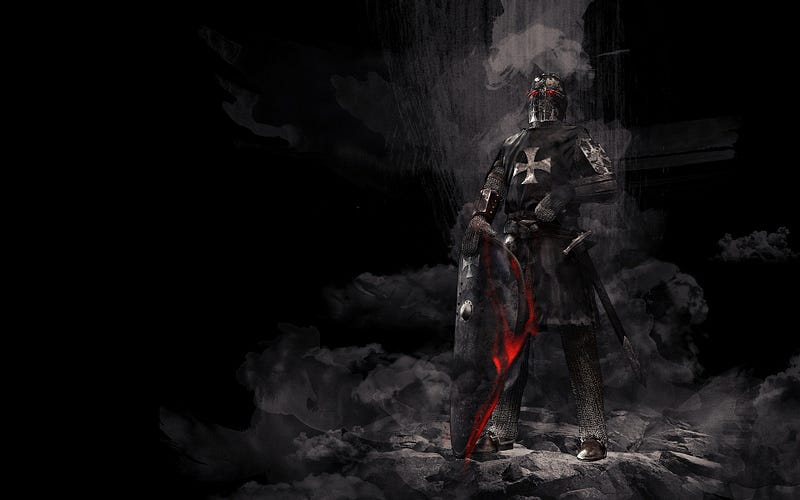
The Middle East has remained a troubled place since time immemorial. This is hardly surprising, because in an area where two religions and, incidentally, two civilizations clash, tensions and confrontations are hard to avoid.
Speaking of the Crusades, what you have in mind is the 200-year period of struggle between Christians and Muslims for dominion in the Holy Land. Despite initial successes, the former did not manage to permanently retain power in Jerusalem. However, it cannot be said that the Crusades were a failure for Christianity. True, the overriding goal was not achieved, but the benefits to the Church (and not only) from the armed expeditions are evident.
Causes of the Crusades
Most historical conflicts are politically or religiously motivated. The organization of the Crusades was determined by both of these factors. The direct initiators of this movement were the successors of St. Peter. The first crusade was announced by the 159th Pope.
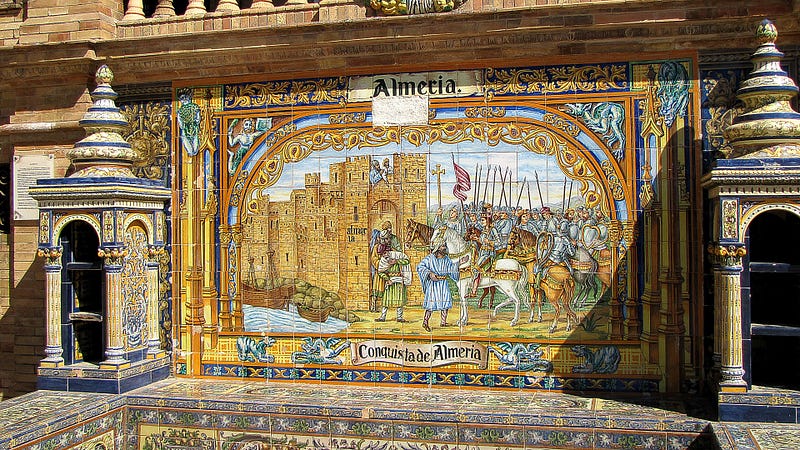
There is no doubt that the “inflammatory factor” that encouraged Urban II to organize the expedition was the successes of the Spanish Reconquista. The eighth century saw the beginning of the struggle to drive the Muslims completely out of the Iberian Peninsula. In the run-up to the Crusades, Spanish forces began to score significant victories. The Bishop of Rome recognized that Spanish success could be repeated in the east.
Among the political reasons, first and foremost is the personal request of Byzantine Emperor Aleksei I Komnen for help in the fight against the Muslims. Another issue is profit. It is no secret that war drives the economy. The fighting against the Muslims benefited primarily Italian cities, which charged fees for transporting Christian forces to Palestine.
However, religious reasons were paramount. Urban II and subsequent popes were anxious to regain power in Jerusalem. To encourage knights to participate in the expeditions, they promised numerous spiritual privileges, including a plenary indulgence. Religious issues were the overriding motive for crusade participants.
Most knights did not count on profit. They were driven to the Holy Land by their faith in God and the prospect of blotting out all their sins. Most, because from the point of view of the sons of mighty lords, who had no chance of becoming heirs, the armed expedition was a chance to develop a strong position for themselves in the East.
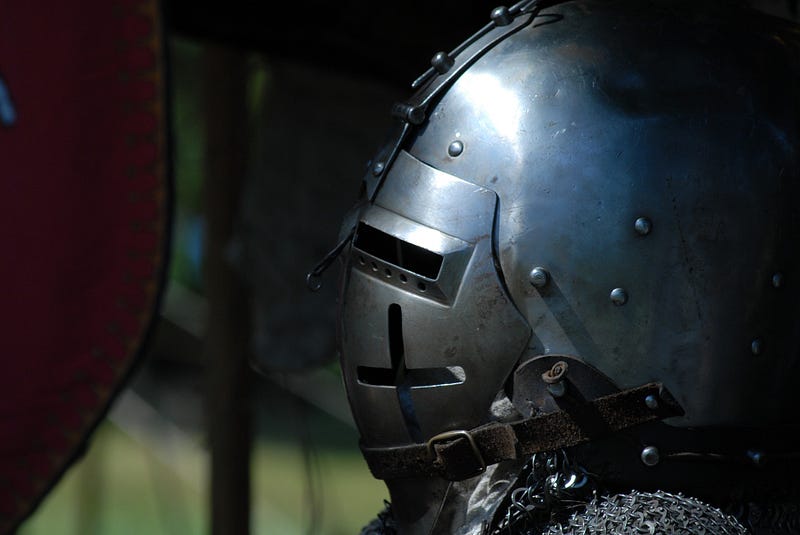
The First Crusade (1096–1099)
In response to an envoy from Emperor Alexis I, a synod was organized in Clermont in 1095. During the gathering of the clergy, Pope Urban II announced the First Crusade. At the same time, he banned wars between Christians on certain days.
The call of the head of the Church was answered to the greatest extent by France. Two expeditions were organized — the People’s and the Knights’. The first ended in total defeat. Muslim forces smashed the troops into pearl without any combat preparation.
The knightly expedition set out in 1096. During the First Crusade, the ranks of the crusaders were not supplied by European kings. The troops were led by magnates, including Gotfrid of Bouillon, Stefan of Blois, Baldwin of Boulogne and Rajmund of Toulouse. In total, the Christian forces numbered about 40,000 armed men.
The Crusaders encountered their first significant problem at the walls of Byzantium. Since the expedition was a direct response to a request that Alexis I had made to the Christian world, the knights expected hospitality and support. Meanwhile, they were not even allowed into the city.
Not only that, but the emperor demanded that the conquered lands be annexed to Byzantium. The inhospitable, even hostile attitude was most likely due to the fear of the power of a large army, which could easily lead to a change of power in the empire. As a result, the Crusaders regarded Byzantium as a power hostile to their intentions.
In the spring of 1097, the knights set out for the Holy Land. They took the road through the Sultanate of Rum, where they were confronted by Sultan Kilidz Arslan. Previously, his troops had easily handled the people’s expedition. This time they came to face trained and seasoned knights. The sultan’s forces quickly succumbed to the crusaders besieging the fortress of Nicaea. The final clash occurred at Deryleum, where the Muslim forces suffered a devastating defeat.
The next stage of the expedition saw the separation of the Crusader forces. Troops under the command of Baldwin of Boulogne moved to Edessa, while the rest took the course to Antioch. In the Armenian city, King Toros recognized Baldwin as his successor.
The rest of the army arrived at the walls of Antioch on October 21, 1097.The long siege was successful, but soon a force gathered by the governor of Mosul moved to the city’s aid. The Crusaders bought the battle with heavy losses, but managed to repel the attack. Thus, they gained a position enabling them to launch an assault on Jerusalem.
With only a few thousand troops under the command of Gotfried of Bouillon, the Crusaders reached the walls of the Holy City in June 1099. On July 15, the crusaders succeeded in launching a successful attack.
After completing their mission, most of the knights returned to Europe. About 500 crusaders remained in Jerusalem and formed the Kingdom of Jerusalem (on the territory of Palestine). The first ruler with the title of Defender of the Holy Sepulcher was Gotfrid.
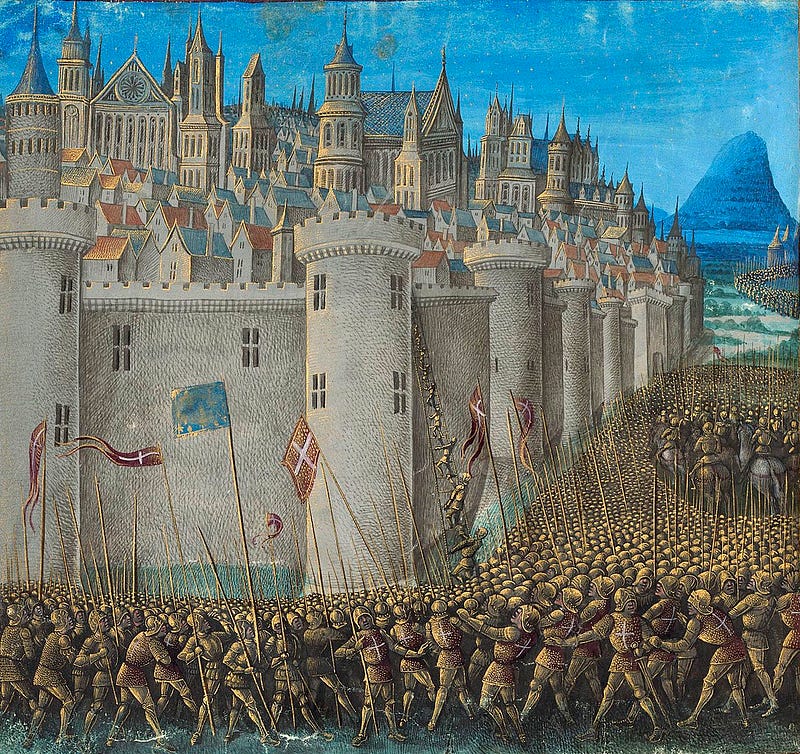
Second Crusade (1147–1149)
In 1147, the County of Edessa succumbed to Muslim forces. This event was the immediate cause of the announcement of the Second Crusade.
This time the crusaders were led by European kings Conrad III and Louis VII the Young. The grueling fighting in Asia Minor significantly depleted the forces commanded by the German king. The decimated troops were unable to retake Edessa.
The Knights, who chose not to return to Europe, joined the French forces, which marched separately. The combined troops launched an attack on Damascus, but without success. The defeated knights returned to the Kingdom of Jerusalem.
Third Crusade (1189–1192)
Christian rule in Jerusalem came to an end in 1187, when the Holy City fell prey to Saladin’s forces. The Pope almost immediately decided to organize another crusade.
This time the opponent proved even stronger than before. The Muslim troops were led by an experienced warrior. In addition, they had a strong foothold in the form of united Muslim territories surrounding Palestine. At the Battle of Hattin, Saladin dealt the Crusaders a decisive blow. The Christians retained only Tyre, the Principality of Antioch and Tripoli.
Pope Gregory VIII decided to continue the crusade. The Roman Emperor Frederick Barbarossa, King Philip II Augustus of France and King Richard the Lionheart of England answered his call. The former led the German knights and was the first to set out for the Holy Land (in May 1189). Unfortunately, on June 10, 1190, the emperor drowned while crossing the Salef River. The death of the leader caused panic among the knights and some of them returned to Europe. The remainder, under the command of Frederick V, moved on to Palestine.
On April 20, 1191, French forces arrived at Akka. At that time, troops commanded by the English king captured Cyprus. On June 8, English forces joined with French forces and soon the city was captured. The Crusaders found themselves in a favorable position. However, shortly after the victory there was a conflict between Philip II and Richard and Prince Leopold of Austria. The latter left the crusade. Soon the King of France decided to make the same move.
On September 7, 1191, Richard’s knights clashed with Saladin’s warriors at the Battle of Asuf. The Crusaders defeated the Muslims, which allowed them to occupy Jaffa. The weakened Richard the Lionheart did not decide to storm Jerusalem. He tried to negotiate with Saladin, but to no avail.
In 1192, hostilities resumed. English troops withdrew from under Jerusalem, which encouraged Saladin to retake Jaffa. On hearing this, the Crusaders turned back from the road to England and dealt with the Muslims. The leaders concluded a truce, under which the Christians retained territories from Tyre to Jaffa. Saladin pledged to grant them free access to the holy sites in Jerusalem.
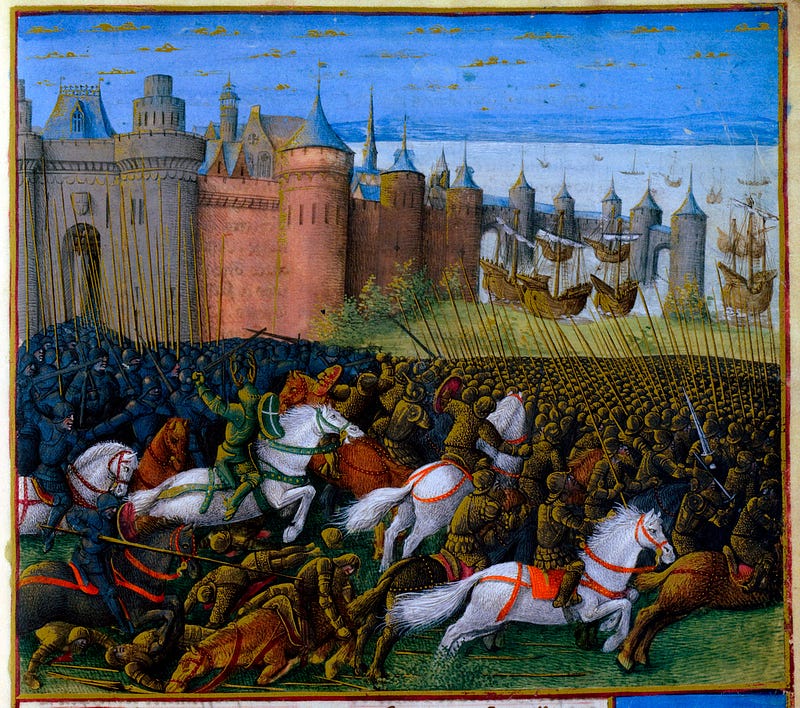
Fourth Crusade (1202–1204)
The next pope — Innocent III — did not give up his intention to retake Jerusalem. However, the Fourth Crusade never reached Palestine. From the beginning, there was no consensus on strategy. Some advocated a direct attack. Others expressed the belief that it was a better idea to conquer Egypt or Byzantium beforehand. This did not please Venice, which was making money from trade contacts with the Egyptians.
The Doge Enrico Dandolo took advantage of the fact that the knights did not have the funds to pay for transportation. He offered to defer payment to them. But for this he demanded the capture of the city of Zadar, located within the borders of the Kingdom of Hungary. The crusaders completed the task, but did not set out for Palestine. They first responded to the request of Alexis IV Angelos, who wanted to regain the Byzantine throne lost by his father, Isaac II.
However, it turned out that the latter was unable to fulfill his financial obligations to the Crusaders. A coup ensued, resulting in Alexis Dukas taking power. The new emperor also did not intend to pay the knights. A clash ensued. The Crusaders killed most of the city’s inhabitants and plundered its wealth. Baldwin I came to the throne.
V Crusade (1217–1221)
The next expedition, already organized after the death of Innocent III, revived the idea of conquering Egypt. In November 1219, the crusaders succeeded in capturing Damietta. However, it was recaptured rather quickly by Sultan Al-Kamil. The 5th expedition was another that did not lead to the realization of the goals of the Christians. The mission to regain Jerusalem was undertaken by Frederick II, who crowned himself its king by diplomatic means.
VI Crusade (1248–1254)
In 1244, the Muslims once again seized power in the Holy City. Another crusade was initiated by Louis IX. The French king launched an attack on Egypt and seized Damietta in 1249. The expedition to Cairo failed, however, and the ruler himself was taken prisoner.
VII Crusade (1270)
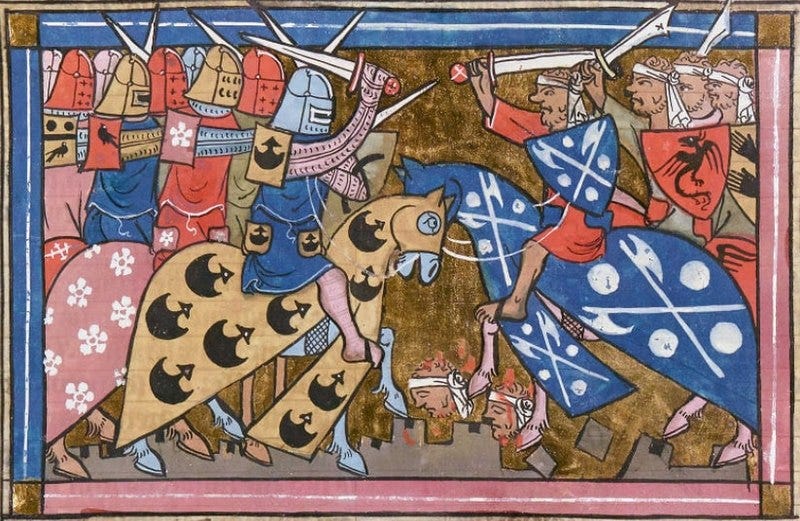
When the Mamelukes seized power in Egypt, a decision was made to completely drive the Christians out of the Middle East. In 1268 they succeeded in capturing Antioch. As a result, Louis IX again headed a crusade.
The Crusaders succeeded in capturing Carthage. During the siege of Tunis, the French knights were decimated by a plague. King Louis IX himself fell victim to the epidemic. His death finally ended the Christian crusades to the Holy Land.
Effects of the Crusades
While the Crusades failed to achieve Christian Europe’s overarching goal of capturing Jerusalem and the entire Holy Land, it cannot be said that the Crusade movement ended in absolute defeat.
The Church won an indirect victory, consolidating its authority and amassing considerable wealth. Three powerful knightly orders were also established:
- Templars, or the Order of the Poor Knights of Christ and of the Temple of Solomon,
- The Joannites, or the Knights Hospitaller Order of St. John,
- Teutonic Knights, or the Order of the Hospital of the Blessed Virgin Mary of the German House in Jerusalem.
Italian cities, which profited from the crusaders’ transportation and trade with the Middle East, were also enriched. In addition, the Crusaders returned to Europe richer in information about a completely foreign culture.
Speaking of the effects of the Crusades, one can’t help but mention their dark sides. During the battles that lasted almost 200 years, hundreds of thousands of people were killed. Many priceless works of art were completely destroyed.
Cool that you made it to the end of this article. I will be very pleased if you appreciate the effort of creating it and leave some claps here, or maybe even start following me. It would be nice if you also left a tip! Thank you!


