
“How the Mighty” Chapter 4 — Roland
The Cruise From Hell
What made this jolly sail with a group of mates different?
The sea was full of lumps. The swell of the waves, rippled by the wakes of a thousand lumpish grey ships. The chunks of breakfast thrown into the grey water. Random flotsam: caps, boxes, paper, bottles. Roland spotted a map, its “TOP SECRET” markings plainly visible. He almost grabbed the nearby boathook to retrieve this blatant security breach, but the moment passed, and what was the point? The people on the beach ahead knew exactly where they were.
Bodies as well. He gasped when he saw the first, bobbing there in the water, a seagull pecking at a string of intestines threading out. Olive-drab clothing, the single stripe of a PFC. Just like him.
The last mile was the worst of all. There were more bodies, more wreckage, more choppy waves, and more fear. There would have been more vomit too, but everybody was near emptied out. That didn’t stop the retching, though, as the soldiers reached down for the last dregs.
Ahead the noises of battle grew louder. The metallic sound of gunfire had been audible over the engine noise, but now the rattle of machine-guns became apparent. An unceasing clatter.
Not to mention a destroyer off to one side pouring shell after shell into invisible targets on the bluffs rising behind the beach. And shells coming back the other way. One exploded close enough to send a spray of water into the boat, further drenching the already sodden men. The coxswain on the wheel immediately steered in that direction.
“Fucking stupid Limey cunt pointing us right into the next one,” shouted Sergeant Osmond at Roland.
“Nah,” said the British engineer behind them. “That Jerry’ll fix his aim and we won’t be there. Ted knows what he’s about.”
He indicated the coxswain standing tall on his platform, staring ahead over the armoured bow ramp. Almost everyone else was crouching small in the boat, as if the plywood sides might shelter them from things more deadly than sea-spray and seagulls.
The crew had a view from their elevated positions on the stern, although the engineer and the two gunners were doing their best to hunker down low. Of the soldiers, just Sergeant Osmond and Roland had their feet up on the stowage rails, looking out ahead. The company commander was at the front of the boat, ready to lead the assault. He couldn’t see a thing there, but hey, he’d be first out.
The sergeant had his map out and was comparing it to the terrain ahead. He yelled up at the coxswain, pointing ahead and gesturing to the right. A trio of bullets hit the ramp — clang-clang-clang — and something shot overhead, whirring as it went. The coxswain was shaking his head, his outstretched arm indicating a direct line.
Roland couldn’t see anything much. Just the bluffs behind the beach, shockingly close now, wreathed in dust and smoke. There were waves breaking ahead, but smooth water beyond.
“Shit!” Sergeant Osmond said. “Fucking sandbank. Remember Fabius?”
Roland nodded. Fabius had been the dress rehearsal on the English coast a month earlier. Their boat had gotten hung up on a sandbank, and five soldiers had drowned wading ashore. Others had tossed their weapons and equipment. All in all, it had been a bad experience, and as company clerk he had had the extra paperwork on top of the grief and worry.
Regiment HQ might be willing to accept a few deaths in training, but lose a machine-gun and they didn’t relent.
The boat shuddered as they touched ground for a moment and leapt forward again. Then they hit hard and every soldier jolted against the man ahead. If they hadn’t been packed in so tightly, they’d all be in the scummy wash of water and vomit on the floor of the boat.
Sergeant Osmond thrashed out of the mass, clambering up on the engine cover. A boot connected with Roland’s helmet and everything went dark.
When he lifted the rim up off his nose — now that was going to leave a bruise on his body — the sergeant was standing tall, sub-machine gun out, shouting at the coxswain. The other sailors were reacting, but stopped when they saw Roland turn and raise his rifle.
The engine roared as the coxswain twisted the control. A wave lifted the boat and they bumped forward, stopped, bounced again and then they were clear.
Sergeant Osmond clapped the British sailor on the shoulder and clambered down. “The next time is for real,” he yelled. “Get ready!”
He grabbed Roland. “Ted Hawkins,” he shouted into his ear.
“What?”
“That’s the Limey’s name. Remember it for me.”
The boat grated against something in the water, the bow slid up, the ramp lowered, and Hell came rushing in.
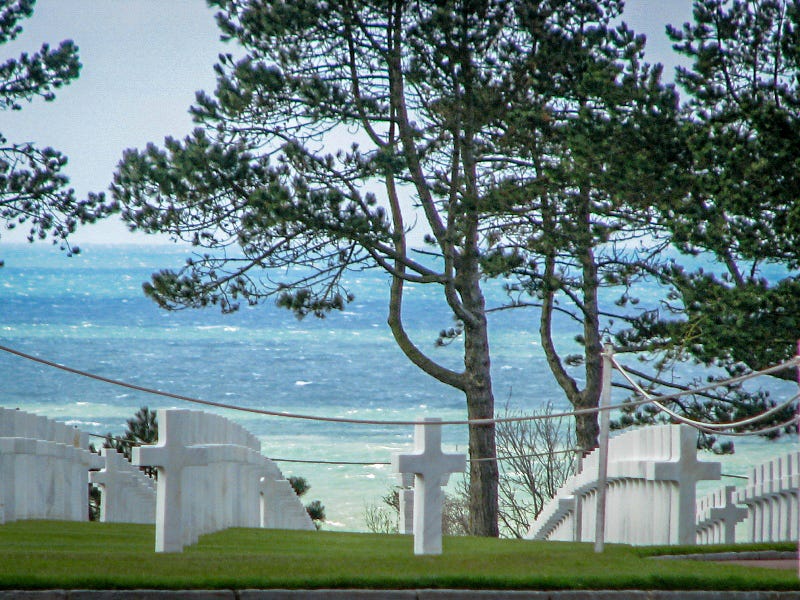
I’ve been to Omaha Beach three times now. Picking my way along it alone, the first time, lost in France, not understanding what I was seeing. Not until I found the cemetery on the bluff overlooking the peaceful sands, and then it hit me hard.
The second time with a lover, and we looked through the small but poignant museum there, not saying much, taking comfort in each other’s touch.
The third time with a group of friends, on the way between Bayeux Tapestry and Mont-St-Michel. “You have to take a look,” I told them.
And time after time in memory, seeing it again. I began writing a story after the D-Day commemorations last year. It began as erotica and turned into something else, until I became weighed down by research and details and the fear that I’d get something wildly wrong and look like an idiot in a serious story.
And then I saw Saving Private Ryan. I’d seen it before but forgotten most of the details, and then I wondered if I really needed to be telling the same story again, because the fight over the beach and up the bluffs laid down the key element in my tale, the bit that made it work.
Readers might think that I’d just copied what I’d seen on the screen, but the truth is that on that beach on that day there were dozens of similar stories as junior leaders realised the careful plan had gone to shit and they had to try something different by themselves. Or die.
Most of them died, but a few — by luck, mainly— worked through the most difficult problem they had ever faced and they got off the beach. Drained and literally shit-scared, but they made it and because they did their comrades made it too.
Most of them.
I’ve left it for a year now, afraid of the history and the researchers who know this stuff.
And myself. Whatever I write seems trite and confected against the majesty of what those boys did that day.
In my own mind, I’m in an assault boat, tired, afraid, heart hammering like a machinegun, fearful of what’s ahead, wondering if I’ll see the day out. And I’m only writing some words, not wading through a hellstorm of lead and blood and high explosive, my thin red dot of duty the only thing keeping the legs working one step after the last horror.
Britni
The whole story:


