
Cruel and Ineffective Treatments for Mental Illness Prior to the 1900s
Treatments for mental illness have come a long way. The following treatments of the past, were absolutely insane.
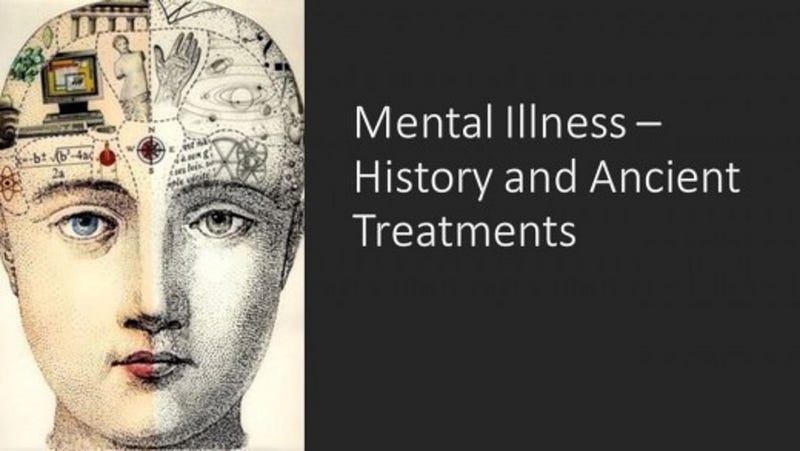
Mental Illness Prior to the 20th Century
While mental illnesses have been present in humans since the beginning of recorded history, it was not until the end of the 19th and start of the 20th century, that we saw the development of psychoanalysis. During this period, mental hygiene movements sprang up in many of the developed countries. These were aimed at preventing insanity through public health initiatives which included clinics, the development of clinical psychology, psychiatry and social work.
Prior to this time, however, the understanding and treatment of mental illness were not linear or progressive endeavors. This was mainly due to the disparity in the belief systems each major society espoused, as abnormal behavior to one society might have been normal to another.
Behaviors that deviated from cultural norms were often labeled as due to mental disorders. Frequently, these characterizations were used as a way to silence and control individuals or groups deemed dangerous to the status quo, especially when religious institutions were threatened.
While today mental illness is frequently identified by whether sufferers pose a risk of harm to themselves or to others; their illnesses interfere with their normal work, or harm their relationships with family and friends; these were not considerations prior to the 19th century.

How Ancient Civilizations Viewed Mental Illness
In ancient times, mental disorders were often considered the product of supernatural occurrences and an indication of a battle between good and evil.
Often depicted as the work of the devil, those suffering from mental illness were at times perceived as evil or to have lost their souls. Accordingly, many early civilizations employed not only religious priests but also shamans, sorcerers and magicians to treat behaviors considered deviant.
In some societies, mental disturbances were thought to be caused by the imbalance of fluids or due to diseased organs of the human body. Some societies, as in the case of ancient Greece, proposed the idea that chemical imbalance based on the four humors (black bile, yellow bile, phlegm, and blood) were the cause of mental illness.
Muslim physician Avicenna probed the connection between the mind and the body in his “Canon of Medicine”. The “Ebers Papyrus” from ancient Egypt made connections between mental illnesses and physical ailments such as heart conditions.
The pseudoscience known as Phrenology developed by German physician Franz Joseph Gall in 1796, involved the measurement of bumps on the skull to predict mental traits. This notion was based on the concept that different parts of the brain possessed unique functions. The shape of the skull reflected how these areas performed. Therefore by implication, mental disorders could be diagnosed using this methodology.
A psychogenic (psychological in origin) approach to mental illness did not begin to take place until late in the 18th and throughout the 19th century. In fact, the word ‘psychogenic’ was introduced into psychiatry in 1894 by German doctor Robert Sommer. This period, perhaps, was the beginning of what we understand today to be ‘modern psychiatry’.
How Different Societies Treated Mental Illness
Due to the different belief systems of past societies and cultures, individuals branded as being mentally ill received a wide array of different treatments and care.
Hence, societies where mental illness was considered to originate from physical or biological factors would treat sufferers with bloodletting, trephination, herbal medicines and purgatives mostly as a way of balancing the humors. In societies where demonic possessions were blamed for abnormal behavior, exorcism or other forms of mystical rituals would be performed.
In all societies, however, isolation in asylums, temples, or even chained in dungeons were methods used with those mentally ill people deemed violent.
Following this article, how different societies viewed and treated mental illness will be discussed. Additionally, the reader will learn about some of the treatments used in pre-modern times that were cruel and ineffective.
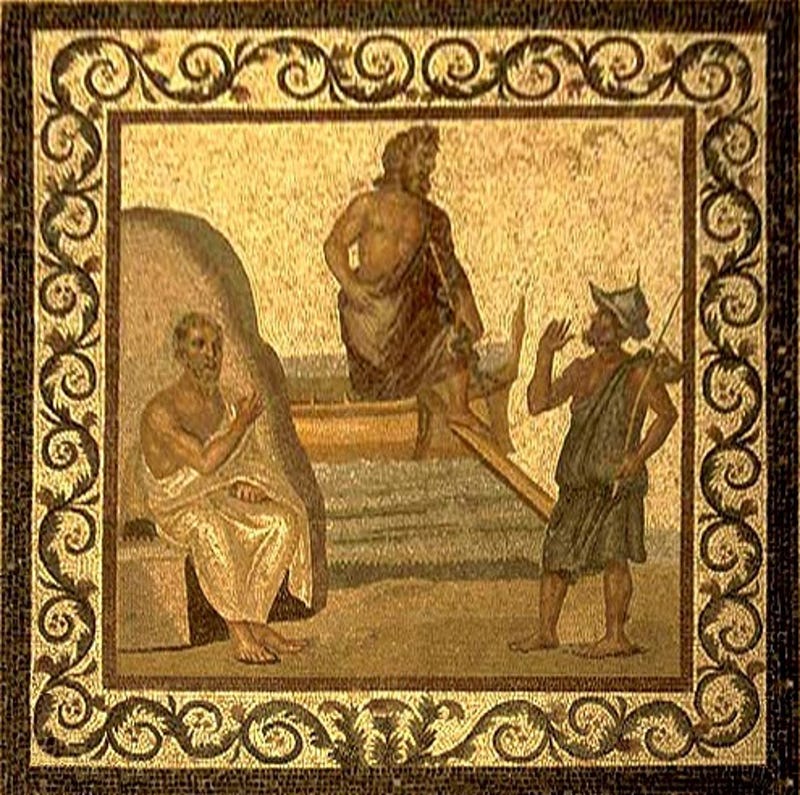
Mental Illness in Ancient Greece
In ancient Greece around 400 BCE, Hippocrates was an early proponent of the idea that psychological disorders were caused by biological factors, therefore rejecting supernatural reasons for madness. He classified four categories of mental illness: epilepsy, mania, melancholia and brain fever.
All of these have a somatogenic origin (cellular or organic) rather than psychogenic. Under this biological model, he identified syphilis as a disease that caused mental disorders. He also postulated the theory in which hysteria is caused by the uterus wandering freely within the female body and hence an illness affecting women only.
As in ancient Rome, Greek medical practitioners considered madness to be associated with aimless wandering and violence. Socrates, however, felt that demented people possessed certain positive attributes, namely the capacity for making prophesies; poetic inspiration; the madness of lovers; and other mystical powers.
This broad-minded approach to mental illness allowed him as well as his followers, Plato and Aristotle, to explore and discuss human feelings such as pleasure; pain; motivation; and rationality. They theorized as to whether personal traits are innate or the product of experience; a subject that continues to be debated by psychologists even today. This wide range of topics investigated by the Greek philosophers can be considered a precursor to today’s psychology.
Europe’s Middle Ages
Some eight hundred years after the Classical Greece period ended, Europe was on the cusp of the Middle Ages. A time when logic and the pursuit of knowledge gave way to religious fervor, superstition and the Christianization of pagan Europe.
This was a time when the theories regarding mental illness shifted back to the spiritual from the physical. As the knowledge accumulated by the Greeks was lost and Christianity spread, demonic possessions became the basic assumption for any aberrant behavior.
Responsibility for treating the mentally ill shifted to the Catholic priests, subsequently, mystical rituals as exorcisms, prayers and other religious ceremonies were used to treat the afflicted. While in general, the mentally ill were allowed their freedom — granting they were not dangerous — many of the people deemed insane or demented were often labeled as witches or to be inhabited by demons.
Institutions, Asylums and Treatments
At the beginning of the 1400s, the first European institution specifically for the insane was established in Valencia, Spain. From this point forward Europeans increasingly isolated the mentally ill with the handicapped, vagrants and delinquents. Those considered demented were treated inhumanely, often chained to walls in dungeons.
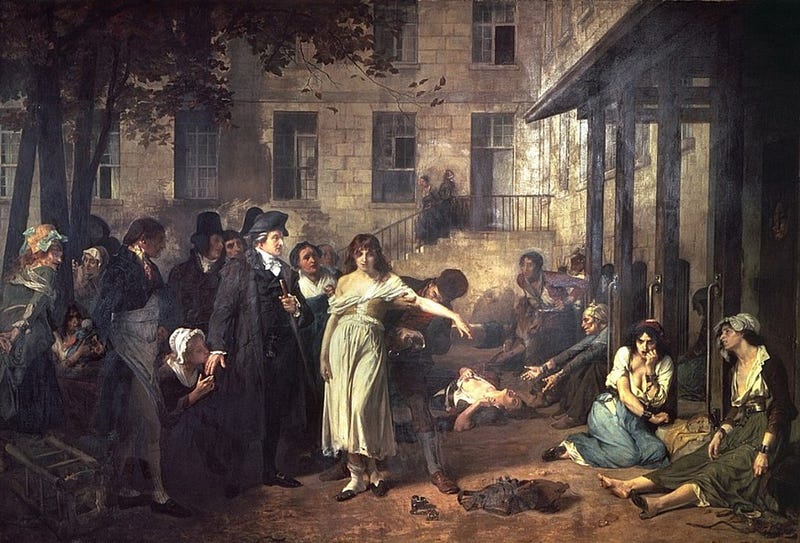
It wasn’t until the late 1700s, long after the Middle Ages that some reforms were instituted in how the mentally ill were treated. In France, physician Phillipe Pinel of the Bicêtre insane asylum forbade the use of chains and shackles. He removed patients from dungeons, provided them with sunny rooms and allowed them to exercise on the asylum grounds.
During this period of time mental treatments were diverse. Bloodletting; baths; diet change in order to rid the sufferer from noxious humors; exorcism; Holy Communion; sexual diversion for the lovesick; and as extreme as head surgery or trephination, were among the most common treatments for the mentally afflicted.
Ancient India
In 400 BCE, the ancient Indian Yoga Sutra describes external causes of mental illness to be due to the sins committed during current and previous lives of the patients. These sins included disregarding related deceased persons, superhuman agents, deities, ghosts and celestial beings. Each of these entities could bring on different symptoms depending on the severity of the sin.
The ancient Hindu scriptures Ramayana and Mahabharata which date back to 700 and 400 BCE respectively, describe depression and anxiety as reflections of abstract metaphysical entities, supernatural agents, sorcery and witchcraft. The Charaka Samhita from 600 BCE, a part of the Hindu Ayurveda traditional medicine system, saw all ill-health including mental maladies to be due to the imbalance of wind, bile and phlegm, considered the three body forces called Tri-Dosha.
This corresponded to the three elements of the universe: air, fire, and water. Ayurveda suggests the causes of this imbalance to be inappropriate diet, disrespect to the gods, mental shock due to excessive fear or joy and faulty bodily activity. It recommended treatments to include certain herbs, ointments, charms, prayers and moral or emotional persuasion.
Treatments
The earliest form of psychotherapy in India included the use of talismans, charms, prayers and sleeping in temples during the performance of rituals. It was believed that shocking a patient was a way bring back mental stability. Subsequently, patients would be terrorized by being exposed to snakes, elephants, lions, tigers, or men dressed as bandits.
Aged ghee, a form of clarified butter could be administered. Additional substances used were: Tinospora cordifolia (Heart-Leaved Moonseed), horse radish mixed with the asafetida plant, centella asiatica and roots of serpentine. When sin and witchcraft were suspected it was customary to chain the afflicted in jails and asylums.

A Corundum Evil Eye Amulet from Mesapotamia ʘDanieliness | Source
Middle East During the Middle Ages
Islamic Persian and Arabic scholars integrated ancient Greek concepts into religious thought developing ideas regarding melancholia, mania, hallucinations, delusions, hysteria and other mental disorders. These ailments were generally connected to loss of reason through brain disorders but also with spiritual and mystical implications.
Many medical practitioners thought dementedness was caused by the possession of a possibly good or bad “djinn” or genie. During the early stages of the Middle Ages, patients suspected of harboring a djinn inside of them risked being beaten in order to exorcise the entity.
Diagnosis and treatment for mental disorders in the early periods of the Muslim world evolved into identifying three types of conditions: (1) The organic (somatogenic) approach based on pathology and biological factors. (2) The psychological (psychogenic) approach with an emphasis on intrapsychic processes and conflict. (3) The magical or sacred approach which views insanity through a supernatural and divine perspective.
The first psychiatric hospitals or asylums were founded in Arabic countries. going back to 705 A.D. in Baghdad. After which other institutions were established in Cairo and Damascus. The main purpose of these institutions was to isolate and treat the mentally ill. Treatments included healers (Sufi masters) that would exorcise spirits called jinns, through the reading of the Quran, prayers, playing music, dancing and more drastically beating the patient, sometimes with sticks. A practice that continues until today.
Ancient China
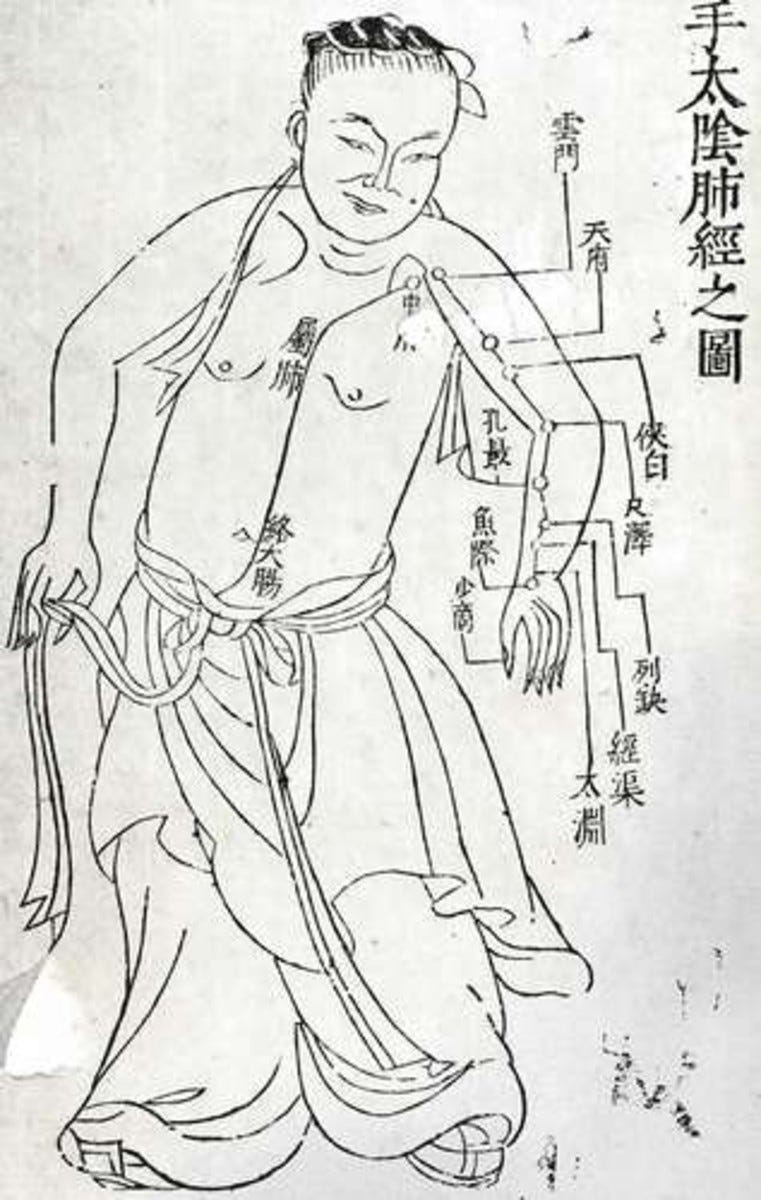
Records from ancient China going back to 1100 BCE point to a combination of a somatogenic and supernatural approach to understanding as well as treating dementedness. The use of Traditional Chinese Medicine (TCM) which emphasized herbal medications, acupuncture and “emotional therapy” was common throughout the Middle Kingdom.
Symptoms, mechanisms and treatments for mental illness as described in the Huangdi Neijing or Esoteric Scripture of the Yellow Emperor emphasized connections between bodily organs and emotions. Accordingly, each of the “Five Viscera” — liver, heart, spleen, lungs and kidney — are regarded as organs that store each of the “Five Intents” — hun-soul, spirit, po-soul, will and intent. The Five Viscera were also said to correspond with different emotions — anger, joy, worry, sorrow and fear.
Therefore, when a visceral organ experienced change, the mental state corresponding to it would change as well. Conversely, any imbalance in emotions would also cause change in the corresponding organ.
However, the Huangdi Neijing also accepted that demonic possession played a part in mental illness. TCM practitioners of this era felt that certain spaces of emotional outbursts such as funeral homes or instances of trauma could open up the Wei Chi allowing for an individual to be possessed by a spirit or demon. According to the Chinese philosophy of Wuxing or “five stages”, which was used to describe interactions and relationships between phenomena, mental illness represented the imbalance between the yin and yang.
Europe and the Americas 16th to 18th Centuries
Europe
Prior to the period between the 16th and 18th century supernatural theories of mental illness dominated Europe. Common treatments for dementedness were based on superstition, astrology and alchemy. They included prayer, touching of religious relics, confession and atonement.
Commencing in the 13th century those deemed to suffer mentally, especially women were persecuted as witches or as possessed by the devil. At the height of these witch hunts in 1563 Johan Weyer a Dutch physician, occultist and demonologist wrote De Praestigiis Daemonum et Incantationibus ac Venificiis (On the Illusions of the Demons and on Spells and Poisons) a treatise against the persecution of witches. He argued that these were nothing more than women suffering from mental illness. He further argued that insanity was not due to demonic possession but rather faulty metabolism and disease.
Similarly, in 1584, Reginald Scot an English parliamentarian authored The Discoverie of Witchcraft, which also railed against the belief that witchcraft existed. In his writing, he exposed how the so-called miraculous feats of magic were done. Unfortunately, the Catholic Inquisition banned both of their writings and witch-hunting did not experience a decline until more than 100,000 witches were burned at the stake sometime between the 17th and 18th centuries.
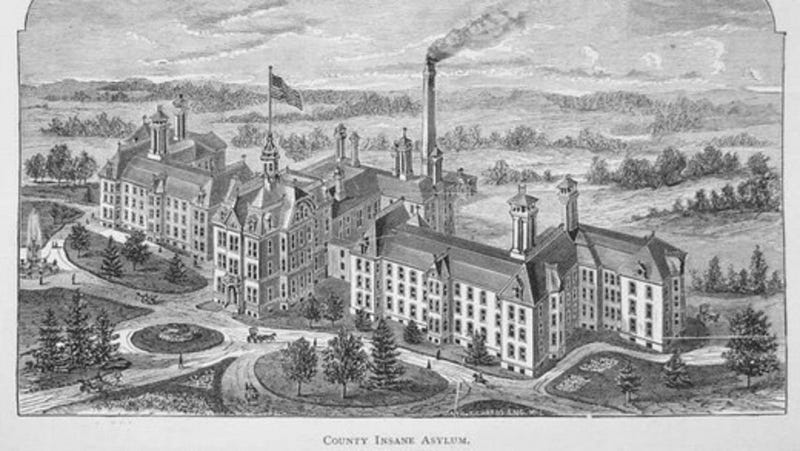
Toward the end of the 16th century, the establishment of hospitals and asylums to treat the mentally ill as well as to house the poor, homeless, unemployed and criminals began to flourish. Wars and economic depression produced vast numbers of undesirables that people demanded their separation from society, consequently sent to these institutions.
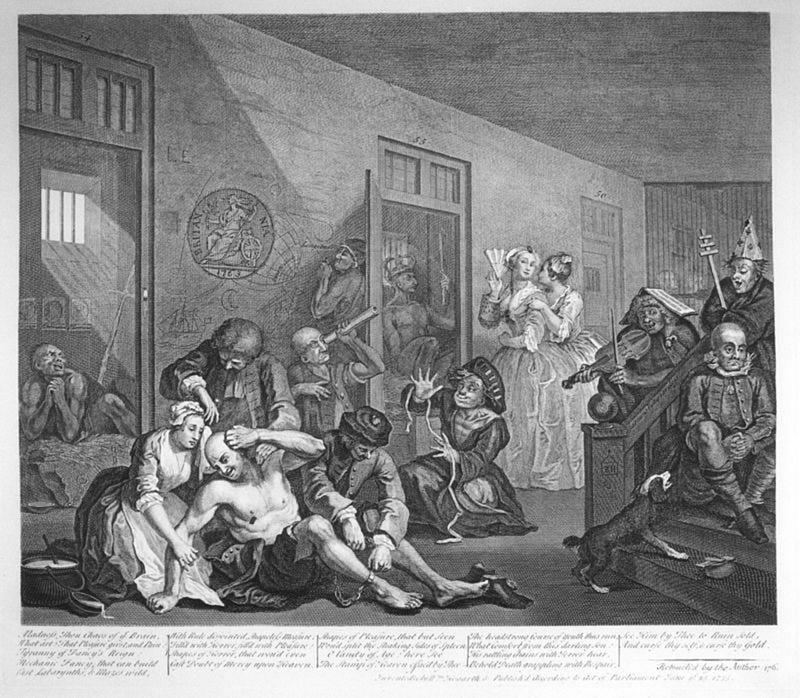
Two of the most famous institutions were St. Mary of Bethlehem in London, eventually known as Bedlam, and the Hôpital Général of Paris. Most of those confined in these institutions were held against their will, lived in filth and often chained to walls. These institutions were open to public viewing for a fee.
During this time dementedness was viewed somatogenically with similar treatments to other physical illnesses which included bloodletting, purgatives and the inducement of vomiting. However, the mentally ill were viewed and treated as wild animals. They suffered through harsh treatment including restraints in chains or strapped to chairs and beds.
As asylums became privatized their owners boasted of their ability to use the ‘whip’ in order to maintain order and keep those institutionalized subdued and under control. However, treatment in the few public asylums left in Europe was equally barbaric.
Sometime in the 18th century, protests over the conditions under which the mentally ill lived grew. A more humanitarian approach became popular. In many hospitals throughout Europe, chains were removed and good hygiene was encouraged. Patients received recreation and occupational training as well as the ability to move around the grounds of the institution.
America
America’s approach to the mentally ill mirrored Europe. Asylums such as the Pennsylvania Hospital in Philadelphia and the Williamsburg Hospital in Williamsburg, Virginia established in 1756 and 1773 respectively, followed the established somatogenic theory of mental illness.
Benjamin Rush considered the father of American psychiatry embraced and taught treatments such as bloodletting, gyrators and tranquilizer chair. However, when the Tuke’s York Retreat in London, England became the model for best practices in the treatment of the insane in 1772, most private asylums in the United States followed suit shortly after.
However, it wasn’t until 1817 when psychogenic treatments such as compassionate care and physical labor became a standard among the new American asylums. Institutions such as the Friends Asylum in Frankfort, Pennsylvania and the Bloomingdale Asylum in New York City adopted a moral approach to treating patients.
Past Cruel and Ineffective Treatments for Mental Illness
The following are cruel and ineffective treatments for mental illness used in the past.
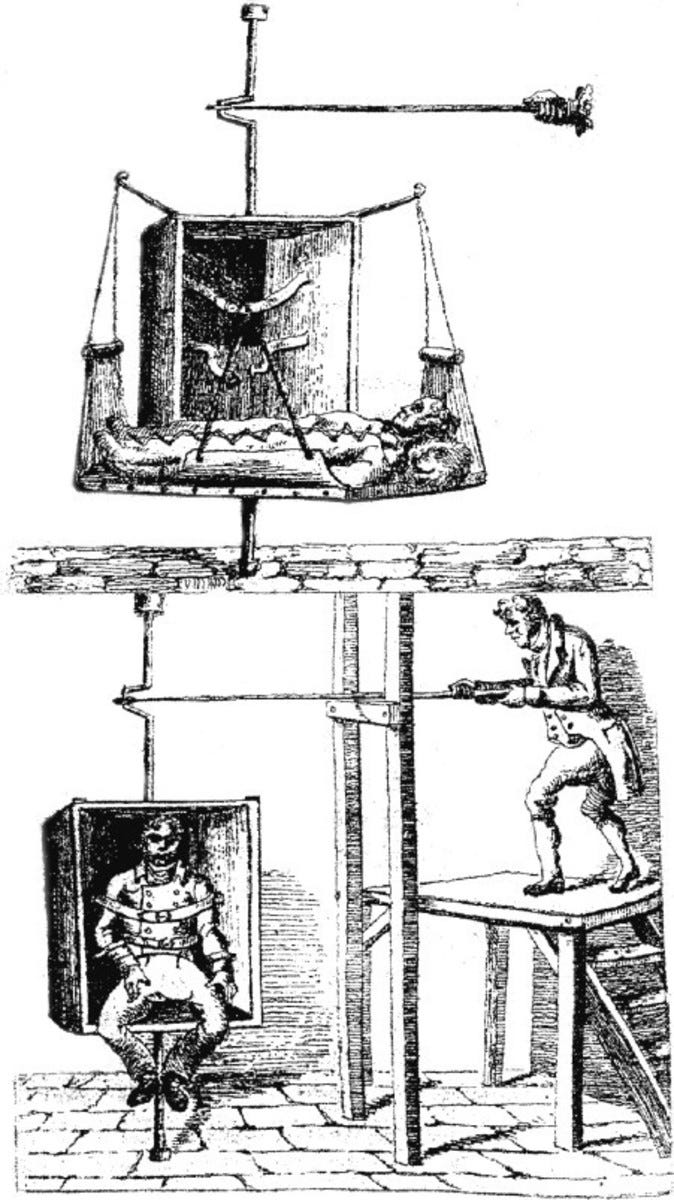
Spinning or Gyrating Chair
As part of a 19th-century movement that veered away from the practice of chaining and locking the mentally ill in dungeons or cells, the idea of spinning patients until they vomited, defecated or passed out, came from the belief that moving the content of the brain around would cure patients of schizophrenia and other psychiatric maladies.

Exorcism
Mental illness presented pre-modern societies with an enigma that could only be explained in mystical and supernatural terms. Consequently, mood disorders, schizophrenia and other aberrant behavior were often viewed as signs of demonic possession.
Accordingly, many early civilizations employed religious priests, shamans, sorcerers and magicians to perform rituals of exorcism that relieved the mentally ill from the evil spirits that inhabited their bodies.
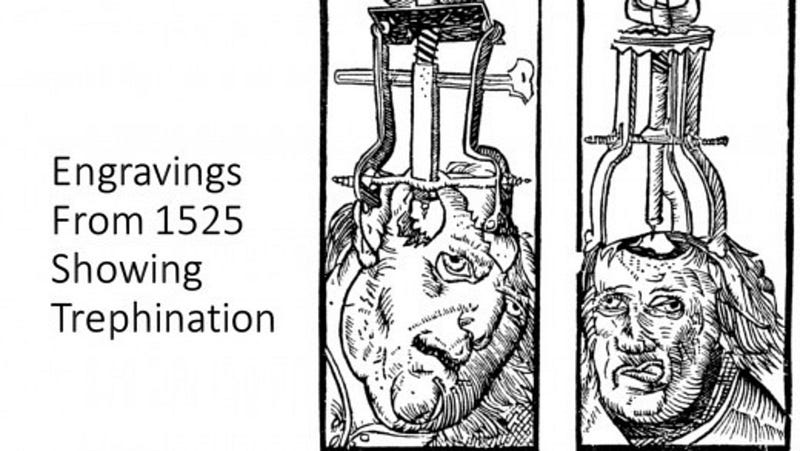
Trepanation (or Trephination)
Trepanation goes back to the Mesolithic era, 12,000 years ago, before humans used metal tools. In ancient Greece and beyond it was a cure for mental illness that often bordered on the mystical rather than scientific.
The practice allowed for the release of evil spirits and demons which were considered the cause of insanity. It was also used to treat migraines and epileptic seizures. However, it was also used to treat patients with skull fractures which might have been slightly more effective than as a way to cure madness.
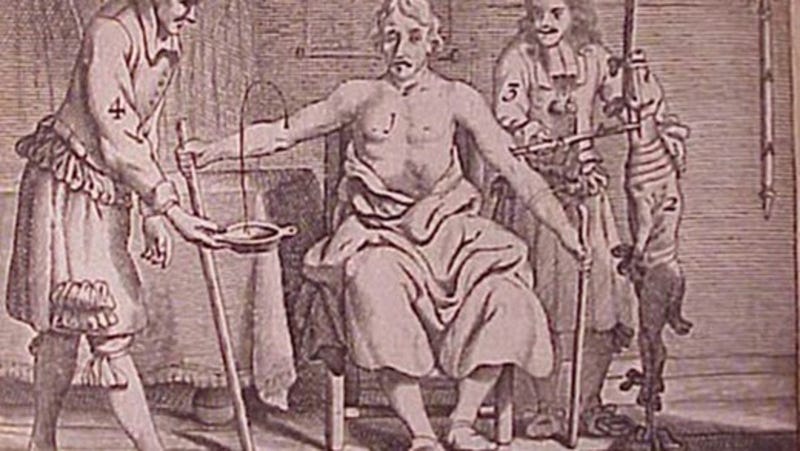
Bloodletting and Leeching
Bloodletting and leeching are practices that go back thousands of years. It was believed that blood loss balanced the humors as well as a way of releasing evil spirits from the body. The four humors were considered to be: phlegm, yellow bile, black bile and blood.
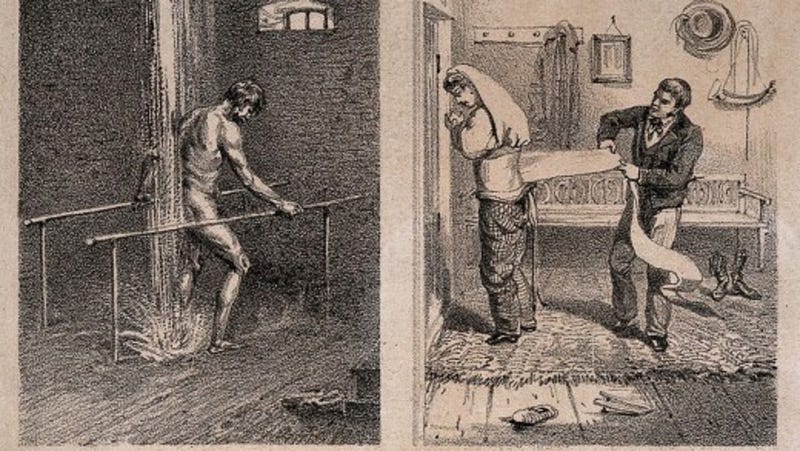
Hydrotherapy
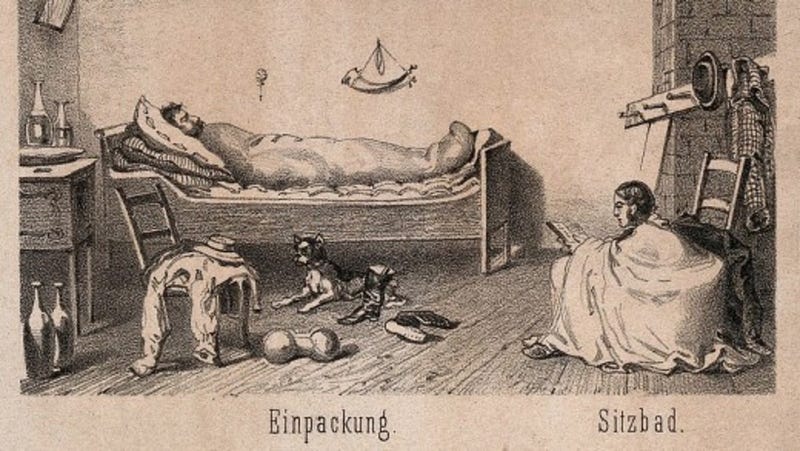
A popular treatment for mental illness in the 19th century, it was thought to be effective for treating insomnia, suicidal or self-destructive feelings, aggressiveness and agitated behavior.
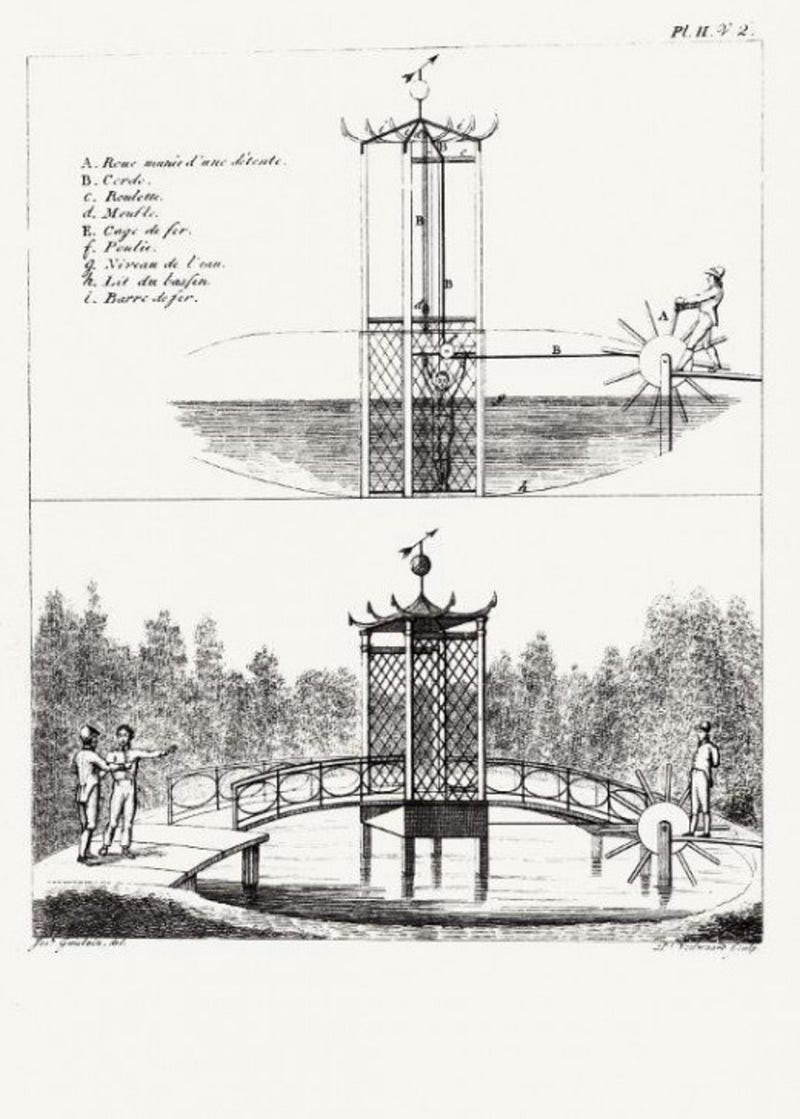
In the 17th century, Flemish physician Jan Baptist van Helmont would plunge patients into ponds or the sea. He felt that water could stop “the too violent and exorbitant Operation of the fiery Life.” Unfortunately, some patients at times drowned.
In the 19th century, some doctors would direct streams of hot or cold water onto patients' heads.
In the 17th century, patients were often dunked in ice-cold water as a way of controlling them or tranquilizing them.
Cages and Restrains
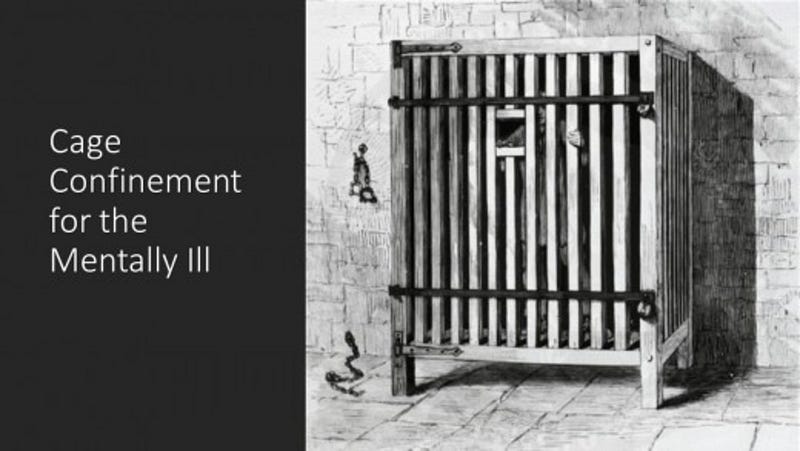
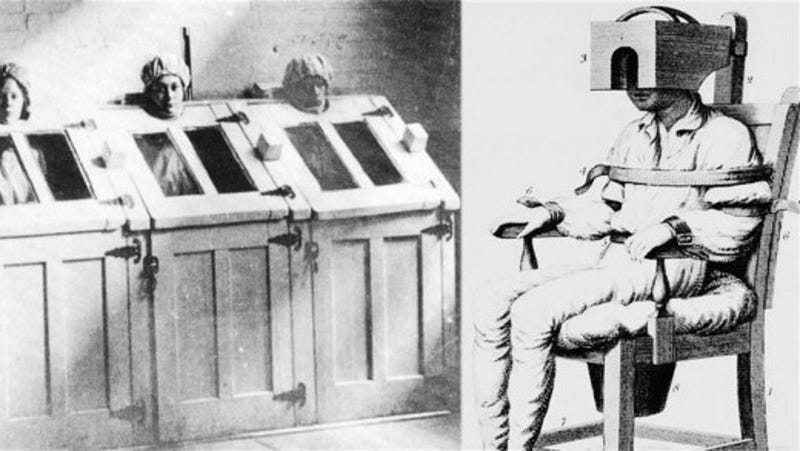
Due to the custodial nature of asylums in the 17th and 18th centuries, physical restraints were commonplace in Europe and in America. Considering that the keepers of asylums were nothing more than guards, patients were kept in chains, cages, or restraining chairs in order to keep them subdued. All restraints were meant to control anti-social behavior or prevent patients from harming themselves.
Resources and Further Reading
- The Ten Worst Mental Health Treatments in History
- Madness and Insanity: A History of Mental Illness from Evil Spirits to Modern Medicine
- Madness in the 18th Century
- A History of Mental Illness: Obsolete Practices
- Ancient Perspective on Mental Illness
- Islam Mental Health and Law: A General Perspective
- Psychiatry Ancient Origins
- History of Mental Illness
- Treatments for Mental Illness — American Experience
- History of Mental Disorders


