
THE CASE FOR THE 1619 PROJECT: ADDRESSING THE CRITICISMS
Critiquing Through White Lenses Doesn’t Solidify You as a Credible Source
Cry-tique all you want, but the truth is set in stone
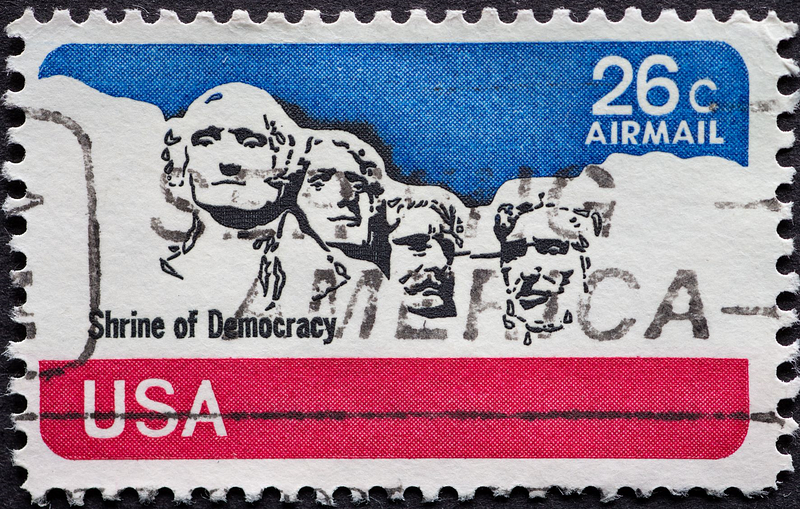
Our democracy’s founding ideals were false
when they were written.
Black Americans have fought to make them true. — Nikole Hannah-Jones
Pulitzer Prize Winner and Author Nikole Hannah-Jones is widely regarded for her 1619 project, which reframes the hypocrisy we’ve too long known as history. However, she has been heavily criticized by white supremacists. For example, twelve white male historians claim she’s rewriting history. But that is just a cover-up for what their ancestors have done to this country. The project is unraveling buried history that has been cropped out and tells a brutal yet profound story of how African Americans built this democracy.
In a letter to New York Times editor Jake Silverstein, twelve white historians address concerns with Silverstein promoting Hannah-Jones’ 1619 project. The cynical undertone of their letter attempts to undermine the project’s purpose. They take issue with recentering the significance that slavery had in America’s founding.
Critics of the 1619 project claim it is a historically limited view of slavery that cannot be compressed into a single-sized interpretation. They wrote:
“The 1619 Project asserts that every aspect of American life has only one lens for viewing, that of slavery and its fall-out.”
Further, the antagonism against Hannah-Jones’ article titled “America Wasn’t a Democracy Until Black Americans Made It One” is blatantly obvious. Conservatives all across the United States including the most controversial President documented #45 implies that Hannah-Jones’ project promotes segregation because she advocates for the project to be implemented and taught in K-12 schools. Trump went as far as signing an executive order to create the 1776 commission, which will promote “patriotic” education. In layman's terms, he doesn’t want white nor black children to know the truth.
Critiquing from a white lens does not make you more credible than a Black historian or scholar. Only the facts can do that.
Conservative historians repudiate the significance that slavery played. However, slavery was the ultimate motivation because white colonists benefited financially from human bondage.
The beginning of the chattel slavery system became a pivotal moment in American history. This protrusive era was also when African Americans became subject to oppressive circumstances. Those first twenty enslaved Africans that were forcibly transported to Jamestown, Virginia, in August of 1619 made a difference in designing America. Through backbreaking free labor, black bodies became the backbone of the economy which made America into a prosperous country. Until this day, no one enjoys the fruit of labor from slaves as much as white Americans.
Raw cotton was one of the nation’s most profitable commodities for decades, and slavers forced Africans into picking it for them. Look at how significant cotton is to our lives even now. Cotton is literally everywhere. It is in our clothing, furniture, bedding, and other essentials we use daily. Regardless of how often white historians and white supremacists attempt to spin the truth, slavery was, in fact, a big deal. America could not have amassed such power without the free labor of Black Americans.
Make no mistake. Slavery was a dehumanizing practice, and Black people were abused into working beyond what any human being could handle. Colonists made Black people work long shifts, and their greed was insatiable. Slaveholders expanded their cruel economic system into the deep south, with Louisiana and Mississippi becoming major slave ports. Slaves were forced to produce more than just cotton. They amassed high yield profits from rice, tobacco, indigo, and sugar. As the demand increased, colonizers needed more land and slaves to stay afloat. These white people did not want to work, but they wanted to profit.
By 1831, the country was delivering nearly half the world’s raw cotton crop, with 350 million pounds picked that year. Just four years later, it harvested 500 million pounds. Southern white elites grew rich, as did their counterparts in the North, who erected textile mills to form, in the words of the Massachusetts senator Charles Sumner, an “unhallowed alliance between the lords of the lash and the lords of the loom (Desmond 2019).”
Further, many well-renowned landmarks that people travel from worldwide to see were built through slave labor — starting with the largest and most respected house, The White House. In October 1792, over 200 slaves began building the White House. The entire U.S. Capitol was also built on the backs of slaves. There is no denying that. According to historian Fred Beuttler, one of the building’s most iconic symbols, the brass Statue of Freedom, was fashioned through Philip Reed, a former slave.
In 2012 Congress uncovered historical information and then honored slaves for building the U.S. Capitol. UNC-Chapel Hill was built in 1789, and many of the early buildings were also built by slaves. In 2005 an exhibit was released titled “Slavery and the Making of the University: Celebrating Our Unsung Heroes, Bond and Free.” This is just to expand on a few but keep in mind slaves built the plantations of George Washington, Thomas Jefferson, and James Madison.
Thomas Jefferson claimed in The Declaration of Independence that “all men were created equal.” Should we analyze his words against his actions, and would that make him a hypocrite? Before you answer, keep in mind that Jefferson was the same man who made enslaved men sit with shackles on their feet. Chains signified their bondage. He also raped Sally Hemings and kept her in bondage since childhood. Critics claim she was a mistress, but she was his property. Without question, he did not see black bodies equal to white bodies.
Critiquing from white lenses does not make you more credible than Black historians or scholars. Only the facts can do that. Yet, throughout American history, society has given white men the benefit of the doubt. Scheming their way to the top by abusing power and those less fortunate than them has placed them at the forefront of our nation for decades. Nikole Hannah-Jones’ 1619 project attempts to add a Black lens.
Hannah-Jones did not release the project to promote segregation as some would insist. Rather, she gave the world a broader view of how the legacy of slavery is foundational to this country. In the letter to Silverstein, these twelve white male historians quote, “The 1619 Project construes slavery as a capitalist venture yet it fails to note how Southern slaveholders scorned capitalism.” If they really scorned capitalism, slavery would have never been born in the first place, but it was. Obviously, some don’t see through those lenses of “justice and equality for all.” Just ask your forefather Abraham Lincoln who thought blacks were a troublesome presence.
Most white historians try to make people believe that there was not a momentous relationship between slavery and capitalism. They argue the work slaves did was insignificant. If their assertion were true, why did black people ever become white people’s legal property? Knowing history’s truth is fundamental not only for how you live in the present but also for how you see the future.
Works Cited
Hannah-Jones, N. (2019, August 14). America Wasn’t a Democracy Until Black Americans Made It One. The New York Times. https://www.nytimes.com/interactive/2019/08/14/magazine/black-history-american-democracy.html.
Desmond, M. (2019, August 14). American Capitalism Is Brutal. You Can Trace That to the Plantation. The New York Times. https://www.nytimes.com/interactive/2019/08/14/magazine/slavery-capitalism.html.
Lockhart, P. R. (2019, August 16). How slavery became America’s first big business. Vox. https://www.vox.com/identities/2019/8/16/20806069/slavery-economy-capitalism-violence-cotton-edward-baptist.
Twelve Scholars Critique the 1619 Project and the New York Times Magazine Editor Responds. History News Network. (n.d.). https://historynewsnetwork.org/article/174140.


