
Criticism And Hating Are Not The Same
Here’s the difference between them.
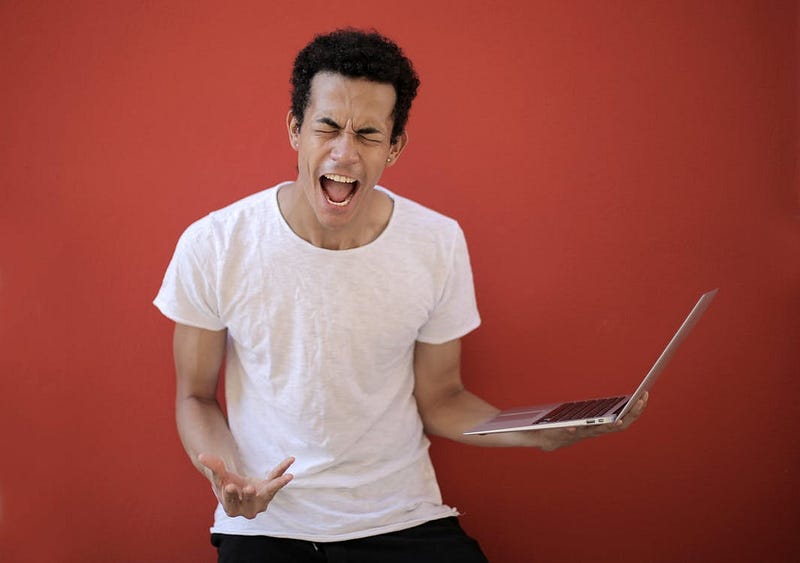
I’ve never understood what a “hater” is.
Is it someone who’d beat you up in the parking lot when they see you? Is it someone who isn’t afraid to talk shit to your face? Or is it someone who will “Jack the Ripper” you when you’re in a dark alley?
Turns out “hater” is used to describe people who leave nasty comments on social media — guess I won’t get my Mayweather moment in the parking lot.
It gets worse though.
Instead of your usual “kill yourself” comments, it’s now your “I don’t like this” comments. This leads me to my main point:
People who call constructive criticism hating, just want to be free-spirits with no consequences — while living in a social media cesspool.
People can’t tell if a word is a trigger word or not.
Hater language consists of a high volume of trigger words to cause you to feel some sort of anxiety, depression, or anger.
For example, curse words are trigger words. Saying the word “kill” is a trigger word. Anything gruesome (that I’m not going to get into) is a trigger word. Racist words like the n-word are trigger words.
For some reason, the social media cults have created three new trigger words that they seem to respond to the most: “I don’t like.”
This recording artist I like hasn’t released a song in almost three years. THREE. And she keeps pushing back her album which she said was dropping in 2018. As a fan, I’ll wait. But even though she’s still a relatively new artist, I have my criticisms.
A lot of the songs she’s released so far were mid to me and her performances haven’t been all that. Other fans have said that to her on her social media handles and have given her suggestions to improve it. But instead, she blocks those people instead of taking criticism.
Now her cult fans are getting their panties in a bunch trying to denounce every person who left those comments on her page and they’re plotting their deaths right now.
It’s too much bro.
My writing isn’t even halfway decent, so I’m open to criticism.
If you have any recommendations of ways to improve my writing from what you see now, feel free to leave a comment below. I won’t bite :)
Part of getting better at your craft is to take criticism for what it is. Quite frankly, I wish I had someone telling me my writing was crappy on every post. What’s wrong with extra motivation?
I take criticism as a challenge.
I think it’s an amazing way to keep me on my toes. I don’t want to slide on the pavement and break my ankles later on. I’d rather have a G.P.S. than drive blind.
Most people call others “haters” because they don’t know how to deal with a real “hater”.
If you got offended because someone said they didn't like your shirt in your Instagram comments, I’d love to see your reaction to a real hater. Heck, you might have a stroke.
I blame most of this social media sensitivity to good ol’ Gen Z (my generation).
Oh, the internet, look at how much you hurt us all. We’ve been so sheltered from the outside world that we have no idea how to react when there’s a real bully in our midst. Most of us would either run away or facetime the principal.
Do you know what makes us even more sheltered? Positive comments.
We all know what the underlying laws of social media are. When you first make an Instagram account, you just post into the wind. No one looks at your content and no one follows you — yet.
As you post a little more, you start building a cute little following. People start leaving positive comments on your page and you’re loving the validation. You’ll probably get one negative comment max.
Then you start getting bigger and you have five thousand followers. Now for every five positive comments you get, you receive two negative ones. Now the negativity is big enough for you to pay attention to.
I say all of this to show you that we get infatuated with the initial positivity so much and the shelter from the real world, that we forget how to deal with genuine haters out there.
We get so frantic about genuine haters that we start labeling everyone, even the people who leave constrictive criticism, haters as a defense mechanism.
Final Thoughts
Hating and constructive criticism are not the same.
You need to learn the difference between them before you start figuring out how to deal with real haters. Haters have certain trigger words in their language that separate them from the pack.
Constructive criticism gives you leeway to fix whatever you’re doing wrong.
You can grow from it.
So start growing.
And get off that positive comment dope too.
Get my free writing guide that can teach you how to build a writing habit in 90 days or less here.


